Full Article
about Alborge
Hide article Read full article
A Small Place with a Clear Rhythm
Some places make an immediate impression. You arrive, walk a few streets, and quickly understand how things work. Alborge is one of those places. Not because it is dramatic or full of landmarks, but because everything feels straightforward from the outset: market gardens, irrigation channels, low houses, and the River Ebro setting the pace.
If you come looking for tourism in Alborge, what you actually find is something quieter. This is a small village in the Ribera Baja of Aragón where daily life still revolves around the land. Just over a hundred people live here, and that shows. The streets are calm, there is little noise, and it feels as though most people know each other.
Inside the Village
The layout of Alborge is simple. A handful of streets, easy to navigate even on a first visit. There is no real need for a map.
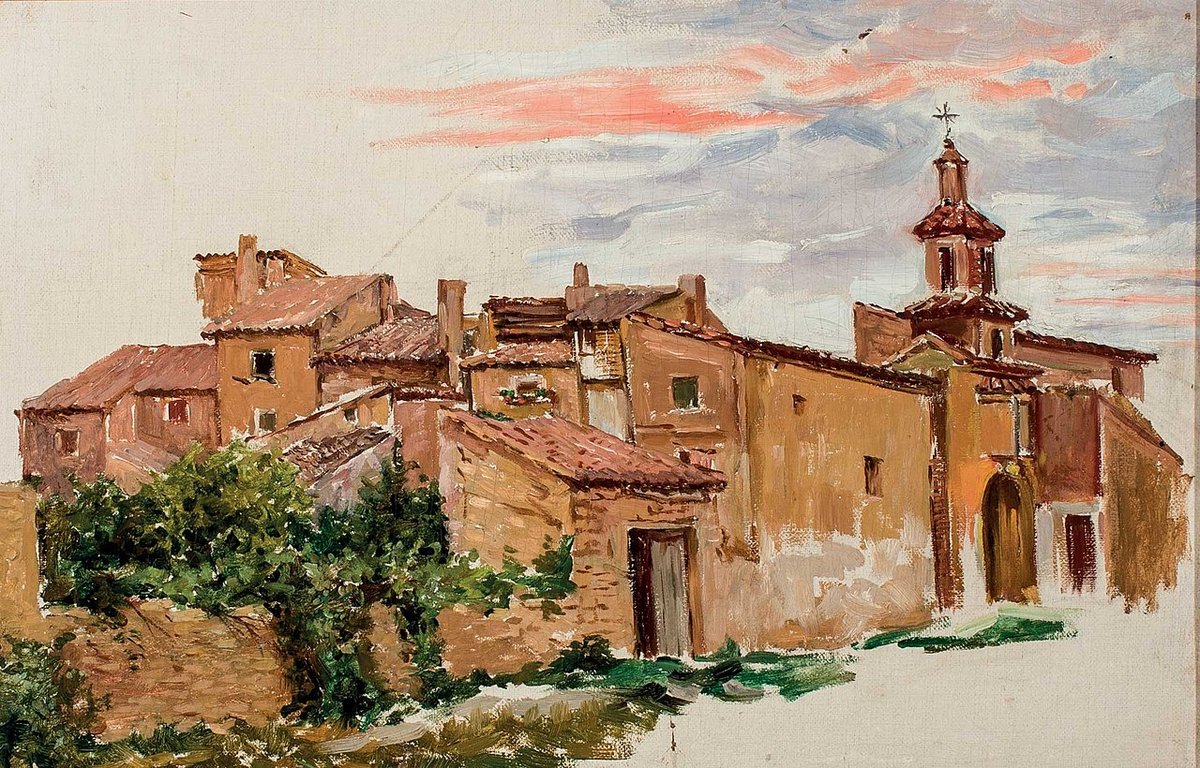
The parish church dedicated to San Vicente stands out as the main building. It is not monumental. Built in brick and stone, it reflects a style seen across this part of Aragón: practical, solid, without unnecessary decoration.
The surrounding houses tell their own story about how people have lived here over the years. Thick walls, relatively small windows, and in some cases interior courtyards. These are features shaped by the local climate, designed to cope with the cierzo, a strong, cold wind common in the region during winter, and the intense heat of summer. Some homes have been updated over time, while others remain much as they were, carrying the sense of many harvests passing through their doors.
The Ebro and the Market Gardens
Life in Alborge is closely tied to the River Ebro. You do not always see it from the centre of the village, but it is always present, shaping the surrounding landscape.
Much of the nearby land is given over to huertas, the small cultivated plots typical of riverside areas in Spain. These are clearly defined parcels of land, fed by acequias, traditional irrigation channels that distribute water across the fields. Along the riverbanks, rows of poplars grow, adding structure to a landscape that is not wild but carefully worked and maintained over generations.
Walking towards the river, it is common to spot birdlife. Herons stand motionless by the water’s edge, kestrels circle above the fields, and storks often settle on high points within the village. The setting feels active, but in a quiet and steady way.
Walking the Surroundings
Around Alborge, there are many agricultural tracks. These are used by local farmers to reach their land, but they also offer straightforward routes for walking.
There are no heavily signposted trails or marked routes every few metres. Instead, the experience is simple: dirt tracks, fields stretching out on either side, and an open horizon. It is the kind of walk where attention naturally shifts to the changing crops and how the landscape evolves with the seasons.
Some of these paths connect Alborge with nearby villages in the comarca, or local district. The terrain is generally flat, and the most noticeable feature along the way is the riverside scenery itself. It is not about reaching a specific viewpoint, but about moving through an environment shaped by agriculture and water.
Living with the River
The Ebro also draws people who come to fish. Several stretches in the area are used for recreational fishing, usually in line with seasonal regulations.
Species commonly found here include barbel and catfish. Still, it is important to understand the setting. This is not a managed leisure complex designed for visitors. The river is large, its banks are natural, and it is mainly frequented by people who have been fishing in these waters for years. The atmosphere remains informal and rooted in local practice.
Festivities and Everyday Life
The main celebrations in Alborge take place in August, in honour of San Vicente. During these days, the village changes noticeably. People return who have family ties here but live elsewhere for most of the year.
There are religious events, music in the evenings, and long gatherings either out on the streets or inside homes. Nothing on a large scale, but rather a series of shared moments between neighbours and families reconnecting over the summer.
This says a lot about Alborge. It is a small place where traditions continue because there are still people willing to maintain them, year after year.
Getting There and What to Expect
Alborge is located in the Ribera Baja del Ebro, less than an hour from Zaragoza by car. The final part of the journey follows secondary roads, the kind that naturally slow things down.
That slower pace suits the destination. This is not somewhere to come in search of famous monuments or a packed itinerary. The appeal lies elsewhere: seeing how a riverside village functions, where life is still closely linked to farming and water.
A short walk, time by the river, perhaps a brief conversation with a local resident if the moment arises. For many visitors, that is enough.