Full Article
about Alforque
Hide article Read full article
A place to pause, briefly
If you are looking into tourism in Alforque, it helps to be clear from the outset: this is a short stop. The village can be seen quickly and it does not have tourist infrastructure in the usual sense. Parking is rarely an issue. You can leave the car at one of the entrances and continue on foot without much thought.
In summer, the heat can be intense and there is very little shade, so even a simple walk can feel demanding. This is not a place built around visitors or long stays. It works better as a pause along a wider route through the Ribera Baja del Ebro.
Getting there and finding your way
From Zaragoza, the usual approach is via the A-68, followed by local roads heading towards the Ribera Baja del Ebro. The final stretch runs through open countryside, with wide, exposed fields on either side.
It is worth checking a map before setting off. In this area, temporary diversions due to roadworks or closed rural tracks are not unusual, and signposting is not always consistent.
Once you arrive, orientation is simple. The village is small enough that you do not need a plan. You enter, walk around, and in a short time you find yourself back where you started. There is no defined route or sequence of sights to follow.
The village itself
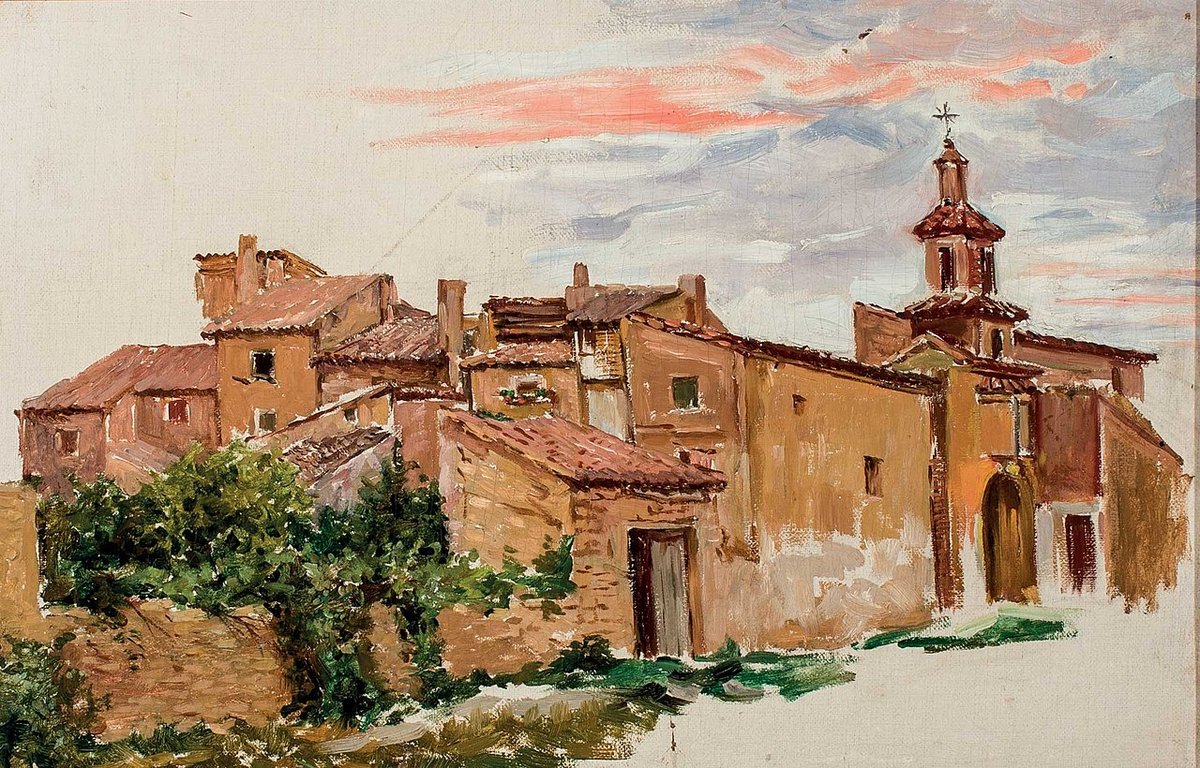
Alforque does not revolve around major landmarks. The most recognisable building is the parish church of San Pedro, dating from the 18th century. It has a simple bell tower and stands beside a quiet square that forms a natural focal point.
Beyond that, the interest lies in the overall feel of the place rather than individual highlights. The streets are narrow and often unpaved, with surfaces of dirt or gravel. The houses are low and practical in design. Many have large gateways that once allowed carts to pass through, a reminder of how closely daily life was tied to agricultural work.
Some homes have been renovated, while others remain much as they were. On the edges of the village, you can still spot corrals and old threshing areas, known locally as eras, where grain was once processed. These details offer a straightforward glimpse into how the village has functioned over time.
There is no attempt to present or interpret this heritage for visitors. It simply exists as part of the everyday landscape.
Fields, tracks and the wider landscape
As soon as you leave the last houses behind, the setting opens up into farmland. The surrounding area is made up of cereal plots and, depending on the season, fruit trees. In spring and summer, peach orchards are often visible.
Several rural tracks branch out in different directions from the village. They can be used for walking or cycling, though not all are signposted. If you plan to go further afield, it is sensible to carry a map on your phone or ask for directions beforehand. It is easy to lose your bearings among similar-looking fields.
The River Ebro itself lies some distance from the centre of Alforque, but its presence becomes noticeable as you move closer to the riverside area. The landscape changes gradually. The dry, open fields give way to greener zones, with poplar groves and irrigation channels, known as acequias, running through the land.
This contrast helps explain the agricultural patterns of the area, where water management plays a key role.
Birdlife and rural rhythms
At certain times of year, migratory birds pass through this region. With a bit of patience, it is possible to spot cranes or birds of prey flying over the fields. Alforque is not set up as a birdwatching destination, but if you happen to have binoculars with you, there is always a chance of seeing something.
The area also makes it easy to understand how traditional irrigation systems work. The network of acequias continues to shape how many of the fields are used, guiding the flow of water and influencing what can be grown.
This is not presented in a formal or educational way. It is simply visible in the layout of the land and the way the fields are maintained.
When to stop by
The main local celebrations take place in August, when the patron saint festivals are held. At that time, people who have connections to the village often return for a few days. The programme usually includes short processions and shared meals among neighbours, creating a more active atmosphere than usual.
Outside these dates, life in Alforque is quiet and steady.
The weather has a strong influence on any visit. Summer brings high temperatures and very limited shade, which can make even a brief walk uncomfortable. In winter, the cierzo, a cold, dry wind common in the Ebro valley, can make conditions feel harsher than the thermometer suggests.
Spring and early autumn are generally more manageable times to spend a little time walking around the village and its surroundings.
A stop that fits its scale
Alforque does not require planning or scheduling. You stop, walk for a while, and then continue your journey through the Ribera del Ebro. It is not a destination designed to hold your attention for long.
Expectations matter here. If you are looking for a compact, honest view of a small village in this part of Aragon, the visit does what it needs to do. If you expect more than that, you are likely to feel you have chosen the wrong place.