Full Article
about Cinco Olivas
Hide article Read full article
A small place that reveals itself slowly
Some places sit on the map without saying much, until you actually arrive. Cinco Olivas feels like that. The drive takes you through flat farmland, past irrigation channels and the occasional agricultural building, and then the village appears. It is small, quiet, and understated. The kind of place where everything seems to move at a different pace.
Tourism in Cinco Olivas is not about ticking off landmarks or following a packed itinerary. It is more about getting a sense of how life works in this part of the Ribera Baja del Ebro, a comarca in the province of Zaragoza where farming sets the tone and the river has shaped daily rhythms for generations.
Fewer than a hundred people are registered as residents, which makes it small even by local standards. A handful of streets, houses built to cope with harsh summers and wind, and fields stretching out in every direction define the setting.
Built for living, not for show
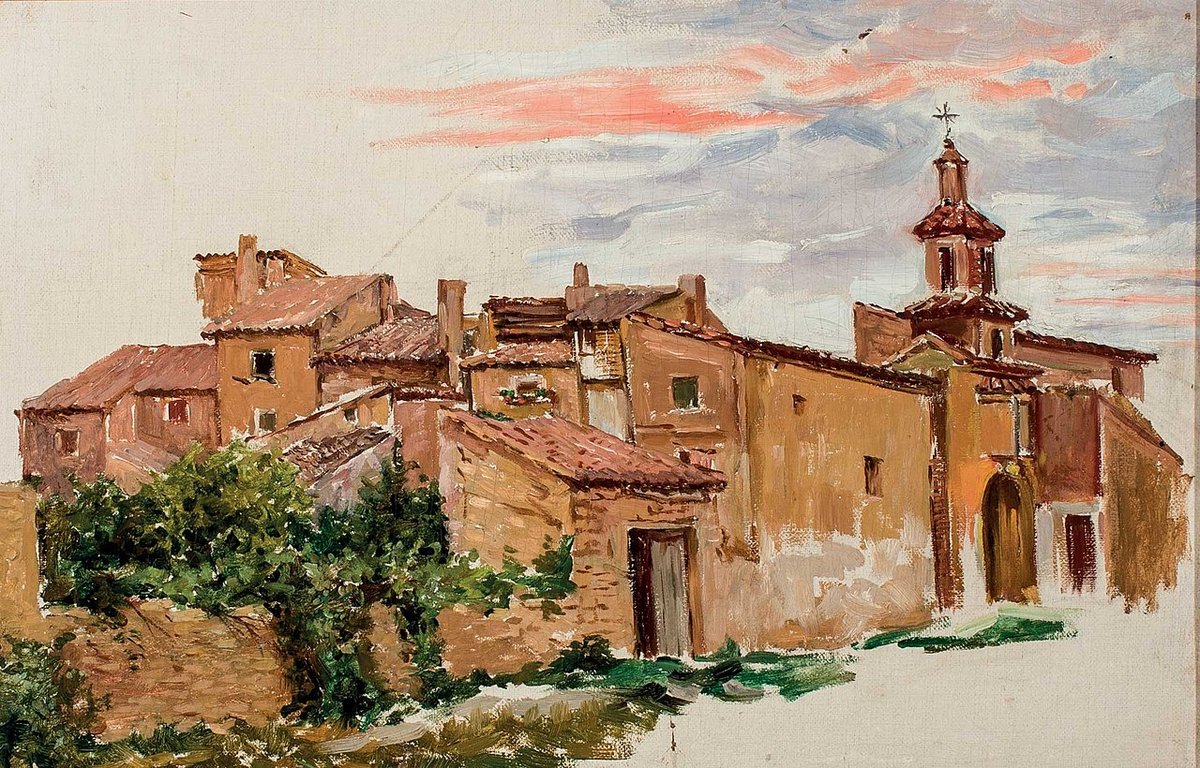
Cinco Olivas does not have a historic centre designed for postcards. The houses are mostly brick, some made with traditional rammed earth, many updated only as much as necessary. Practicality matters more than appearance here, and that shows in the architecture.
At the centre stands the parish church of San Juan Bautista. It is simple, without elaborate decoration. The square around it works as a shared living space for the village. At a quiet moment you might see a few people talking in the shade, doors left open, neighbours stopping for a chat as they pass.
From within the village itself, the surrounding fields are already visible. Many plots are used for cereal crops such as wheat or barley, depending on the year. Olive trees are also common, as the name Cinco Olivas suggests.
Water channels and the wider landscape
One of the most noticeable features around Cinco Olivas is the irrigation network. Channels, small canals and sluices carry water out to the fields. Some sections look relatively recent, others feel as though they have been there for decades.
A walk beyond the village quickly leads into this agricultural landscape. This is not mountain hiking or marked trails. It is a matter of following farm tracks and observing how the land is organised.
At times there is the sound of machinery at work. At others, complete quiet. In certain seasons, birds typical of irrigated areas appear. Herons can be seen, along with gulls that travel inland from the river, and groups of birds passing through during migration.
Moving through the village at its own pace
Cinco Olivas can be seen in a short amount of time. A relaxed stroll is enough to cover the whole settlement.
It makes sense to leave the car at the entrance and continue on foot. Traffic is not the issue. Walking allows small details to stand out. An old corral, an irrigation channel crossing a street, farming tools resting against a wall.
The tracks leading out of the village are straight and agricultural in nature. Some connect to other villages in the Ribera Baja del Ebro, though they are not always signposted as routes. Anyone who enjoys exploring can simply pick a path and follow it for a while without rushing.
The rhythm of the year
Life here still follows the agricultural calendar. The olive harvest brings a noticeable increase in activity when the season arrives. Family vegetable plots change with the time of year, with different crops planted as the seasons shift.
Local festivities are centred around the parish of San Juan Bautista and the village calendar. These are not large events. They are gatherings where residents and those who return for the occasion come together in the square or along the streets once the heat of the day fades.
Holy Week is also observed in a close, local way, with simple processions moving through the same streets used in everyday life.
Reaching Cinco Olivas
Cinco Olivas lies in the comarca of the Ribera Baja del Ebro, within the province of Zaragoza. The approach is along regional roads that cross wide stretches of farmland, typical of the Ebro valley.
Most visitors arrive by car from Zaragoza or from nearby villages in the comarca. The final kilometres lead fully into agricultural land, with irrigation channels and cultivated plots on both sides of the road.
This is not a place stumbled upon by accident. That may explain why it keeps its calm, close-knit atmosphere where everyone knows each other.
Anyone heading here should come with the right expectations. There are no major monuments and no clearly marked routes. What you find instead is a very direct glimpse of the Ribera Baja del Ebro: irrigated fields, olive trees, and a slower way of life that still holds in villages as small as this one.