Full Article
about Sastago
Hide article Read full article
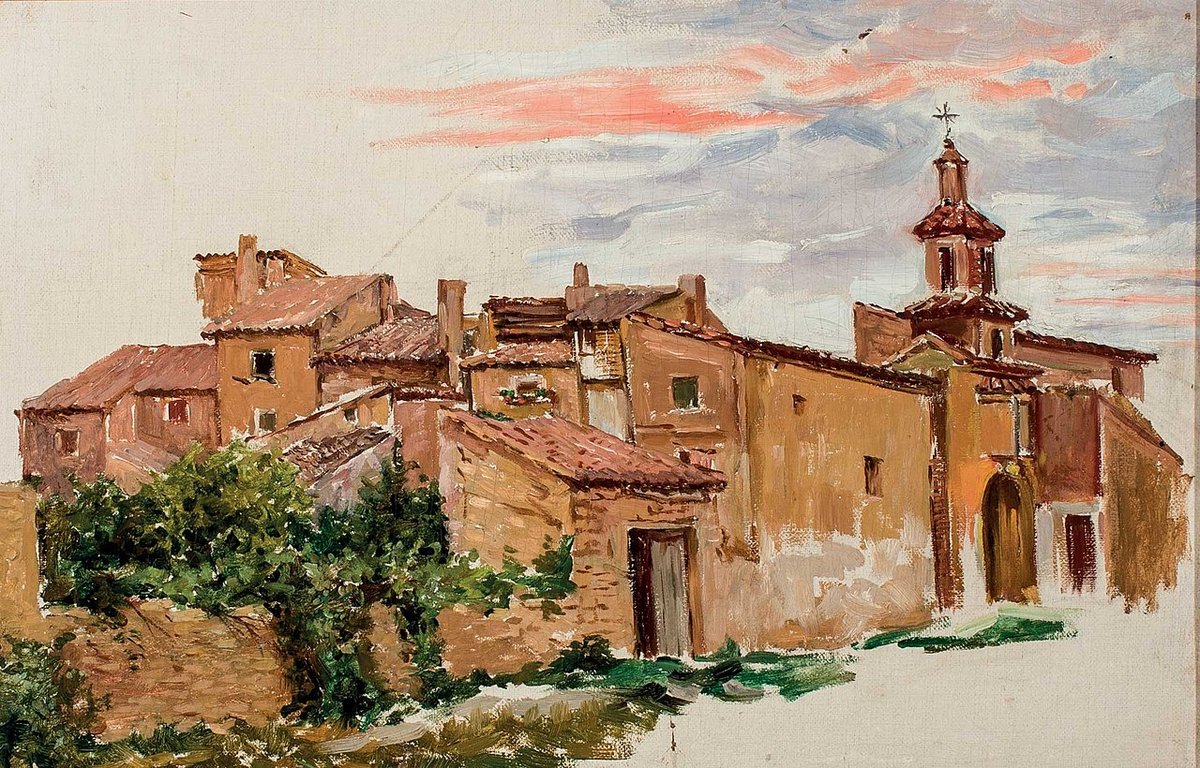
The Ebro moves slowly past Sástago as evening settles. The water makes barely a sound, and the poplars along the bank cast long shadows over the shore. From here the village appears in tones of brick and earth, with low roofs and the occasional tower rising above everything else.
Sástago, in the Ribera Baja del Ebro, lives facing the river. Not in a grand or symbolic way, but in a practical sense. The water sets the pace for fields, market gardens and the tracks that lead down to the bank. Daily life carries more weight than any historical narrative.
The tower and the streets
The tower of the church of San Pedro Apóstol can be seen from almost anywhere in the centre. Built in brick, it follows the Mudéjar tradition found across many towns in the Ebro valley. As the sun drops, its geometric patterns become more defined and the colour shifts from a muted red to a brighter orange.
Around it, short streets spread out in different directions. Some are paved with stone, others with uneven asphalt. There are dark iron balconies, wide doorways and façades where worn plaster reveals older brick beneath. At certain times of day there is very little sound beyond a shutter being raised or a car passing slowly through.
The main square gathers what little daily activity there is. It is not large, but it still feels like the centre of village life, where people cross paths more than once in a day.
The Ebro at Sástago
Here the river does not rush. It forms wide bends and small gravel banks where willows and reeds grow. In summer, shade becomes essential and the air carries the scent of fresh water and damp vegetation.
A short walk along the riverbank brings the sound of birds among the trees. Sometimes there is also the sharp splash of a fish breaking the surface. The landscape is open and agricultural, with plots of land that shift in colour as the seasons change.
Paths by the water
Near the village runs the GR‑99, a long-distance footpath that follows the Ebro for many kilometres. In this stretch it usually follows wide dirt tracks. There are no major climbs and the horizon stays open for most of the way.
It is best to avoid the middle of the day in summer. The sun falls directly on the fields and there is little shade away from the river. Early morning is much more manageable, with softer light and the river almost still.
This is also an area where people can be seen fishing at a relaxed pace. They tend to choose quiet pools or gentle bends in the river. It is worth checking current permits and regulations before doing the same.
Food from the land
Local cooking remains closely tied to what comes from nearby fields and gardens. In season, asparagus, chard and tomatoes appear in simple stews. Migas, a traditional dish made with fried breadcrumbs, still feature on many tables, especially when the weather turns cooler.
These are filling dishes, suited to long days spent outdoors. There is little in the way of decoration: bread, olive oil, vegetables and whatever has come from the annual pig slaughter.
The year in Sástago
The festive calendar still revolves around traditional celebrations. San Pedro marks one of the key moments of the year, with religious events and gatherings in the streets. In summer there are also local festivities that fill the squares for several days.
At these times the pace of the village shifts. People who live elsewhere return, and the nights stretch much longer than usual.
Getting there and when to go
Sástago lies about seventy kilometres from Zaragoza. The most common route follows the A‑68 towards the area of Fuentes de Ebro, then continues along regional roads that cross open countryside. The final stretch already reveals the river valley.
Spring and autumn tend to be the most pleasant seasons for walking along the riverbank. Summer brings intense heat and a drier landscape, although the early hours of the day still offer calm light over the Ebro.