Full Article
about Albarracín
Hide article Read full article
Parking and a steep start
Forget driving into the old quarter. Park in the designated areas down by the river or on the town's outskirts. That's it. From there, you walk. It's all slopes and steps. Arrive early in summer; by 11 AM the main lanes are congested and movement slows to a shuffle.
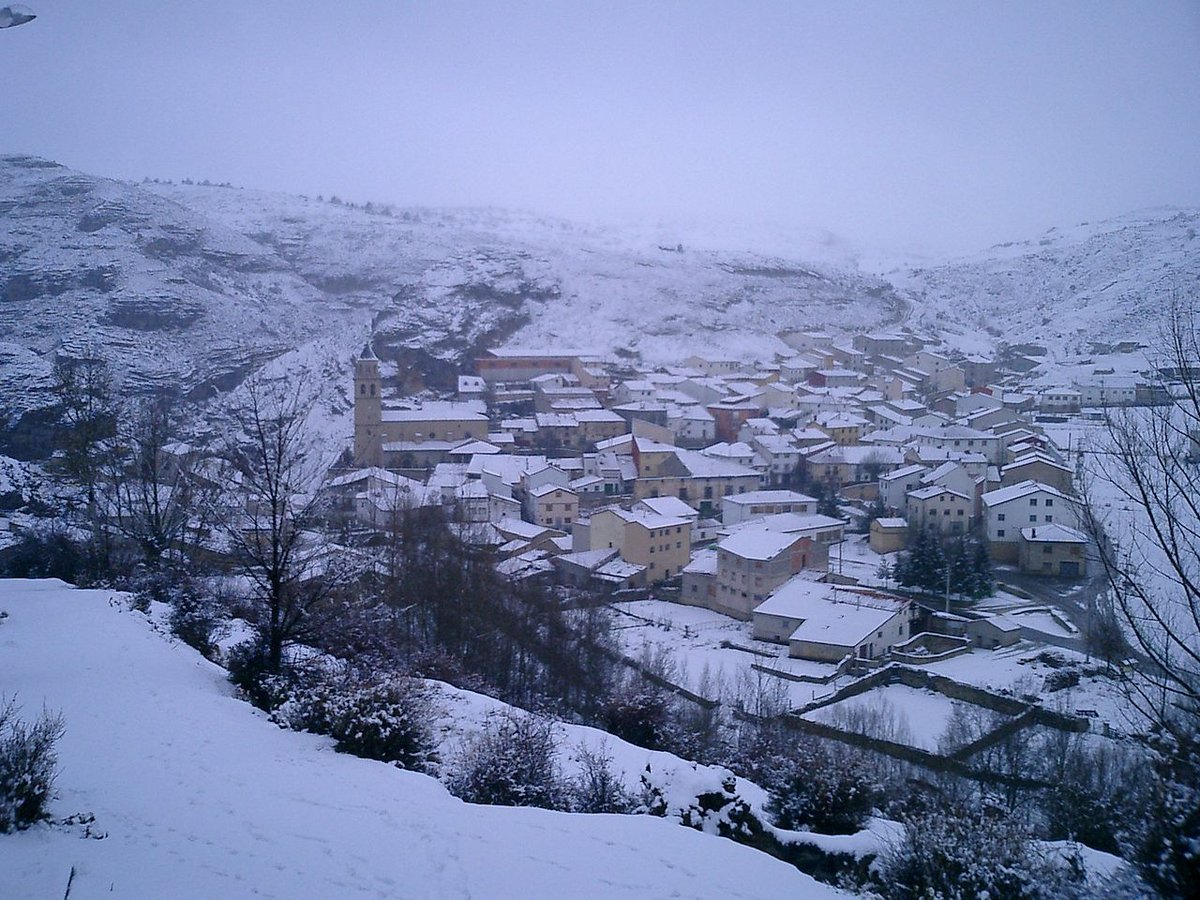
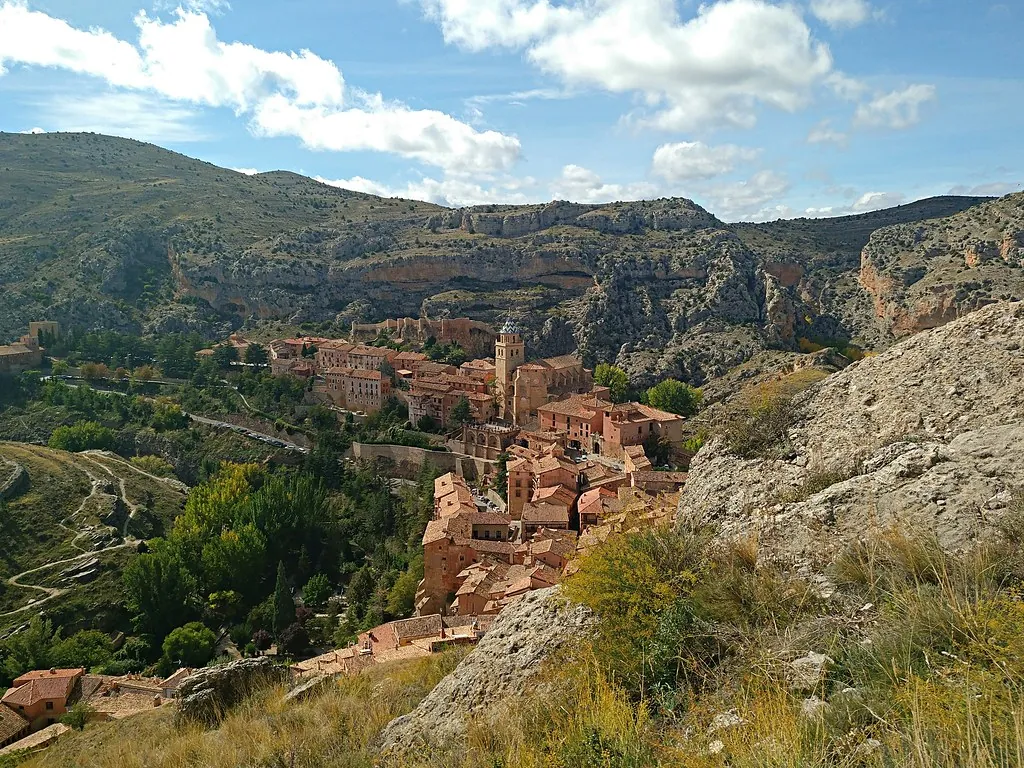
Albarracín sits inside a tight bend of the Guadalaviar river. Around a thousand people live here, their houses stacked on a hillside at 1,171 metres. The view from the road tells you everything: walls, rock, and terracotta-coloured plaster.
Walking its streets
The historic centre is small but vertical. Wear proper shoes; the cobbles get slick after rain.
The clearest entrance is through the Portal de Molina, an arched gateway that leads directly into the maze of streets.
For the best perspective, climb up to the Torre del Andador. It’s a steady, short hike. From there, you see how the village fits into the meander of the river and clings to the hillside.
What you actually see
Albarracín’s appeal is in its overall form—the twist of an alleyway, a sudden staircase, wooden beams jutting from a rust-coloured wall. People live here year-round; it’s not a museum piece.
Casa Julianeta is notable for its crooked angle and corner balcony on a narrow street. Casa del Chorro shows how buildings were grafted onto the bedrock.
The cathedral occupies one of the few open spaces inside. The interior holds a Renaissance altarpiece and some Flemish tapestries. If religious art isn't your interest, you'll be in and out quickly.
Above town lie scattered ruins of an 11th-century Muslim castle—foundations and fragments, not a standing structure. You go for the view over pine-covered valleys.
Outside town are several sites with prehistoric rock art (Doña Clotilde, Navazo). The panels themselves are modest; it's more about walking through sandstone landscapes to reach them.
Beyond the walls
Footpaths lead from town into pine forests and sandstone outcrops known as Los Pinares de Rodeno. Marked trails run through them; some have viewpoints.
This area has been popular with climbers for years due to its sandstone walls. Caving also happens in nearby caves—never without proper gear or a guide.
Food here is straightforward mountain fare: roast lamb, river trout when they have it, local cured meats and seasonal mushrooms in autumn. It’s simple cooking meant to fill you up after being outside.
For classic photos of Albarracín’s silhouette against its cliffs, walk five minutes along any path leading away from town. From there, the line of medieval walls along the ridge makes sense visually speaking .
Timing your visit
Major festivals follow traditional dates, with processions filling streets during summer months . There might be early music concerts held around then too , often in small venues within old buildings .
You can see Albarracín thoroughly within half a day . Park below , walk up , and wander without ticking off major sights . Its value lies in experiencing how a community has adapted over centuries to this specific fold in terrain .