Full Article
about Torres de Albarracín
Hide article Read full article
A place you don’t plan for
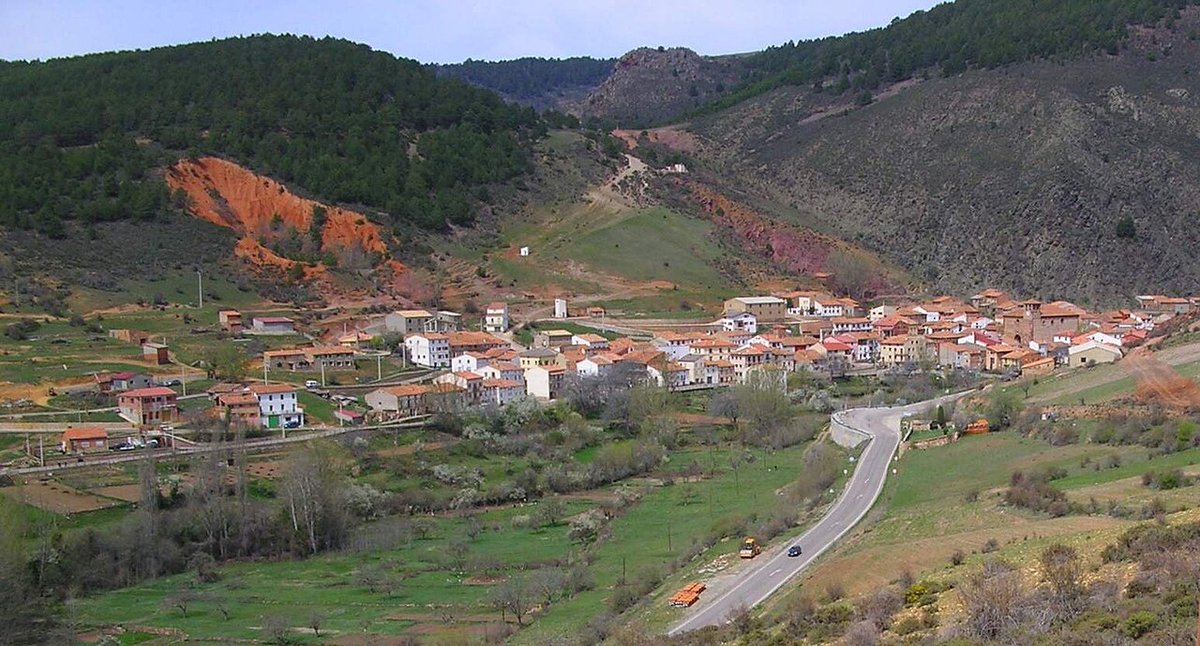
Some places appear almost by accident. You drive through the Sierra de Albarracín, pass kilometres of pine forest, and then a small cluster of stone houses comes into view in the middle of it all. Torres de Albarracín feels exactly like that: somewhere that rarely tops anyone’s list, yet where the landscape takes over from the very first moment.
Anyone considering tourism in Torres de Albarracín should adjust expectations early on. This is not a destination designed to keep visitors busy all day. The village is small, with fewer than two hundred residents, and it functions more as a rural community than a conventional tourist spot. That is precisely where its appeal lies.
High ground and pine forests
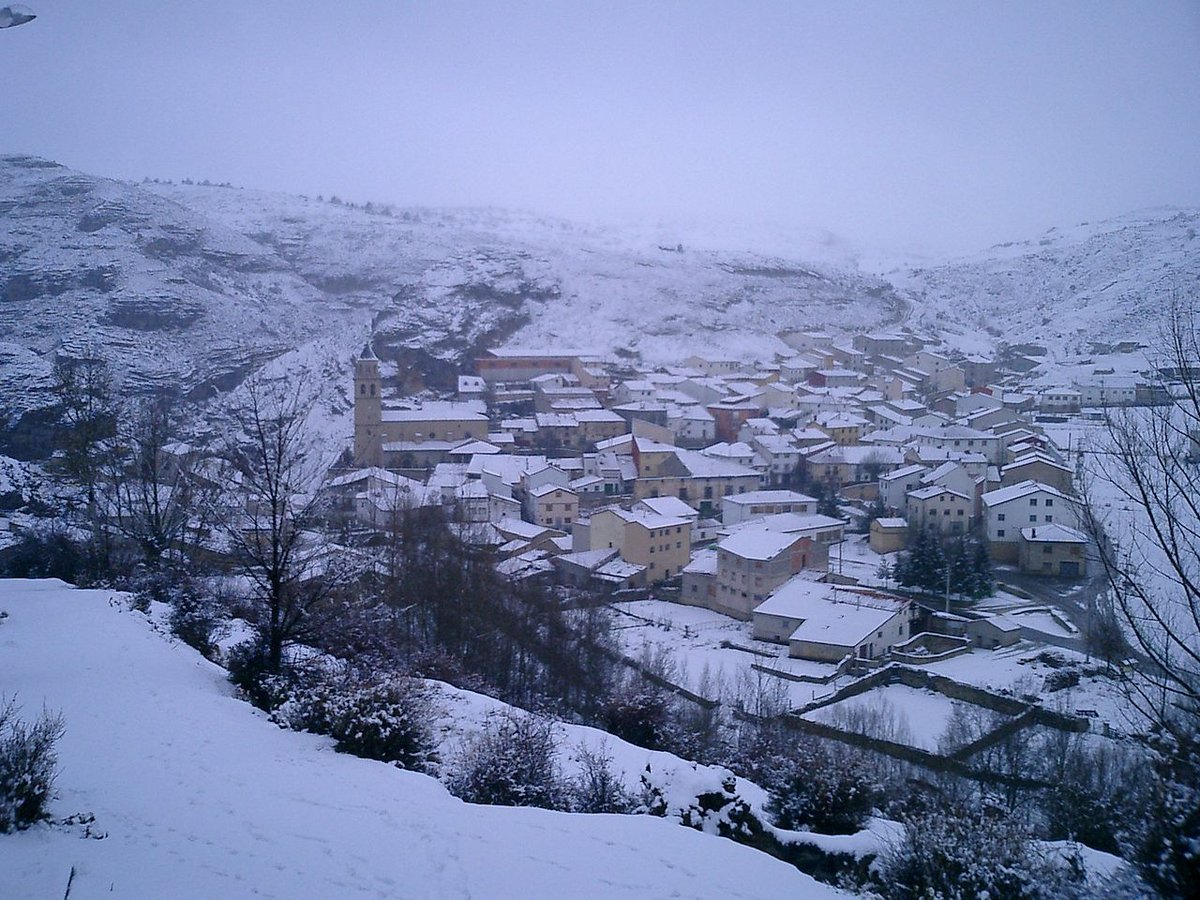
Torres de Albarracín sits at over 1,200 metres above sea level, deep within the Sierra de Albarracín. The altitude shapes daily life here. Winters are cold, summers stay mild, and there is a constant scent of pine resin that becomes part of the atmosphere.
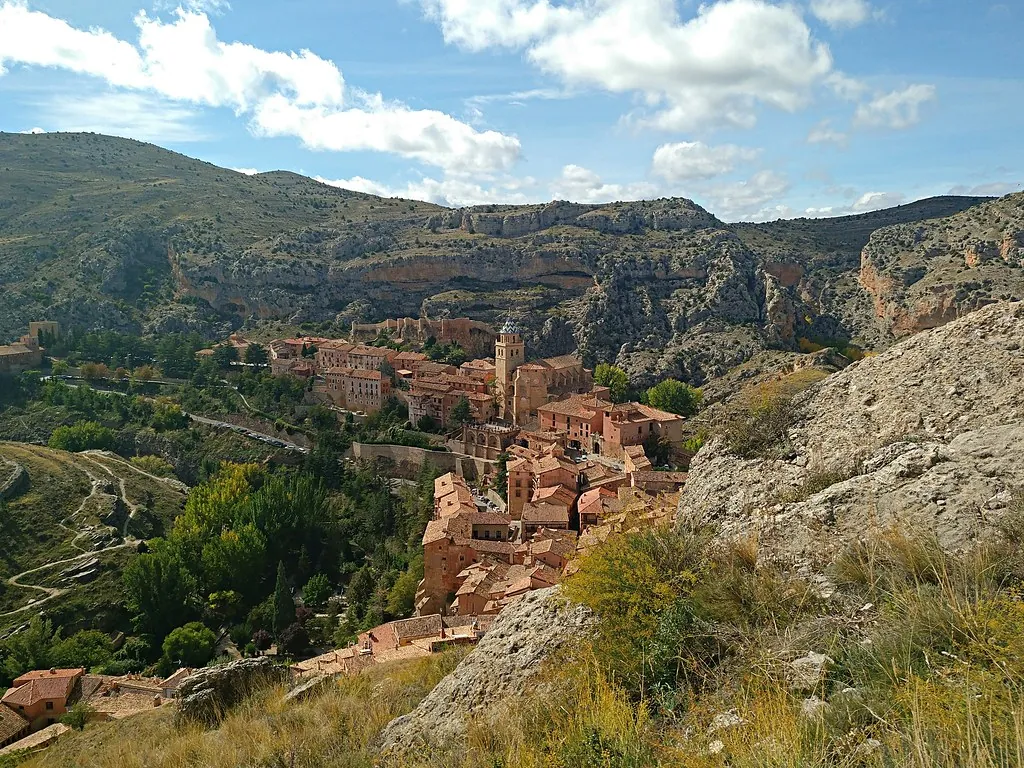
The village itself is compact and straightforward. Reddish stone houses line short streets that rise and dip without much apparent order. Sloping roofs and simple construction give everything a sense of continuity with the surroundings. Nothing feels imposed; the buildings look as though they were made from whatever was available nearby.
At the centre stands the parish church dedicated to Nuestra Señora del Carmen. It dates back to the 16th century, with later alterations over time. This is not a landmark that draws visitors on its own, but it suits the scale of the village well. The structure is restrained, with little ornamentation, and blends naturally into its setting.
Short streets, wide horizons
A walk through Torres de Albarracín does not take long. In around half an hour, it is possible to cross most of the village.
What stands out is how quickly the built space gives way to open views. A short walk to the edge of the last houses reveals the wider landscape: rolling hills covered in pine forest, stretches of limestone rock, and on clear days, long uninterrupted distances of mountain terrain.
There are no formal viewpoints or explanatory panels. The best views tend to be the ones found by chance, where a track widens slightly or a roadside stop opens onto the valley. It feels informal, almost unplanned, which matches the character of the place.
Paths through the forest
The natural surroundings are probably the main reason to come here. Forest tracks and traditional paths extend out from the village, linking Torres de Albarracín with other settlements in the sierra such as Albarracín and Tramacastilla.
Not all of these routes are marked. Many of them have been used for generations for practical purposes, such as accessing woodland or moving livestock, rather than for leisure walking. This makes the area appealing to those who enjoy exploring without much infrastructure, though it also means preparation matters. A map or GPS becomes useful rather than optional.
Pine forests dominate almost everything in sight. Their deep green tone remains constant for much of the year, though autumn introduces ochre shades that break up the uniformity. Winter changes the scene more dramatically, as snow covers the ground and alters the character of the landscape.
Wildlife that keeps its distance
There is more wildlife here than first meets the eye. Even if animals are not immediately visible, signs of their presence are common. Tracks of wild boar often appear near paths, and early in the day it is sometimes possible to spot a roe deer moving between the trees.
Birds of prey also form part of the environment. They tend to fly high overhead, and often the only indication of their presence is a shadow gliding across the ground.
This is not a place where wildlife is arranged for visitors. Animals follow their own routines, and any encounter tends to depend on timing and chance rather than certainty.
Food shaped by the mountains
The local cuisine reflects what has traditionally been available in the area. Meat plays a central role, along with cured sausages, filling stews, and seasonal mushrooms when the time of year allows.
These are dishes suited to the climate of the sierra. They are simple and substantial, designed more to warm you up after time outdoors than to serve as a culinary attraction in their own right.
A village that stays quiet
Torres de Albarracín follows a festive calendar tied to local traditions and religious celebrations, much like other villages in the Sierra de Albarracín. These events are primarily for residents and for people who have family connections to the area.
That detail sums up the place quite well.
A visit to Torres de Albarracín is very different from a trip to Albarracín, which lies just a few kilometres away and attracts most of the attention in the region. This village offers something else entirely: a small settlement surrounded by forest, where silence is part of the experience.
It suits those who enjoy walking, driving through mountain roads, and stopping in places where little happens. Sometimes the most memorable moments of a journey come from exactly that, pausing somewhere that was never part of the original plan.