Full Article
about Gistaín
Hide article Read full article
A village that doesn’t perform
Some places seem arranged for a quick photo. Gistaín is not one of them. The approach alone sets the tone. After a run of bends through the Chistau valley, the first impression is quieter than expected: smoke rising from a chimney, still air, and the sense that daily life carries on here whether anyone is visiting or not.
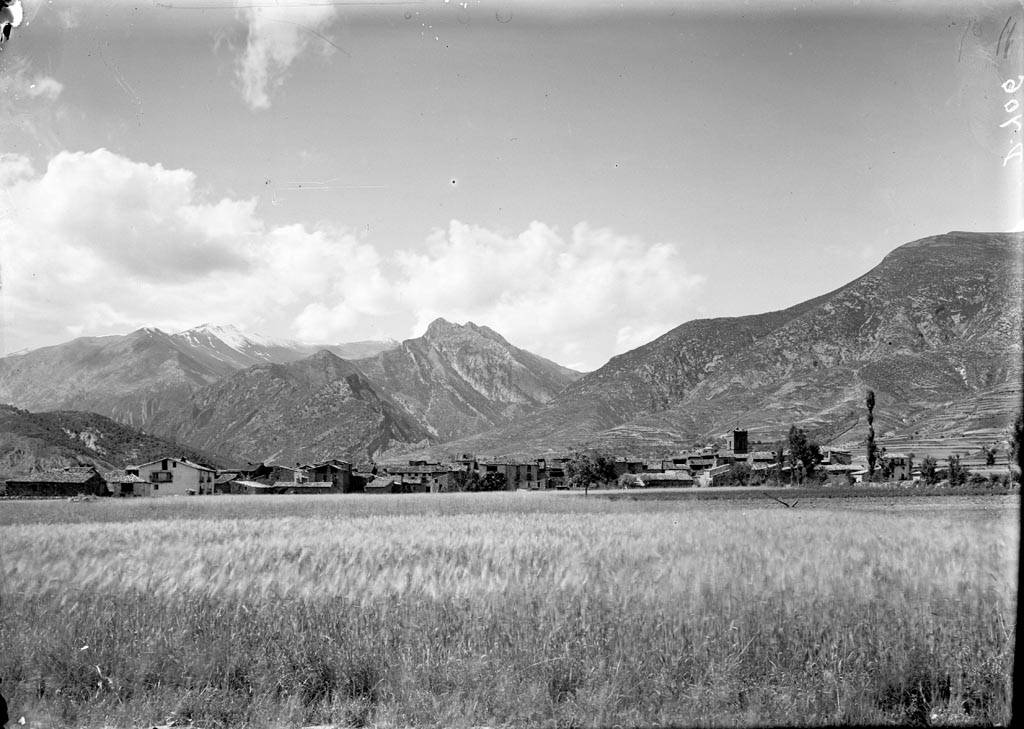
Gistaín has just over a hundred residents and sits above 1,300 metres in the Sobrarbe region of Aragón. Mountains surround it on every side. They are not a scenic backdrop but a real boundary, with high peaks, long winters and summers that are used fully while they last.
The road into the Chistau valley
Getting there is part of the experience. From the main road through Sobrarbe, the route turns into the Chistau valley and quickly becomes winding. There are many bends, the sort that naturally slow you down. The landscape keeps shifting: a rock face here, a stretch of forest there, then a glimpse of water that makes you ease off the accelerator.
The river Cinqueta runs alongside much of the route. Its sound follows you into the valley and can still be heard near the village, especially later in the day.
A slow walk through Gistaín
Gistaín is small enough to cross in an hour, and then cross again. It is worth taking that time, because the interest lies in the details of the buildings rather than in covering distance.
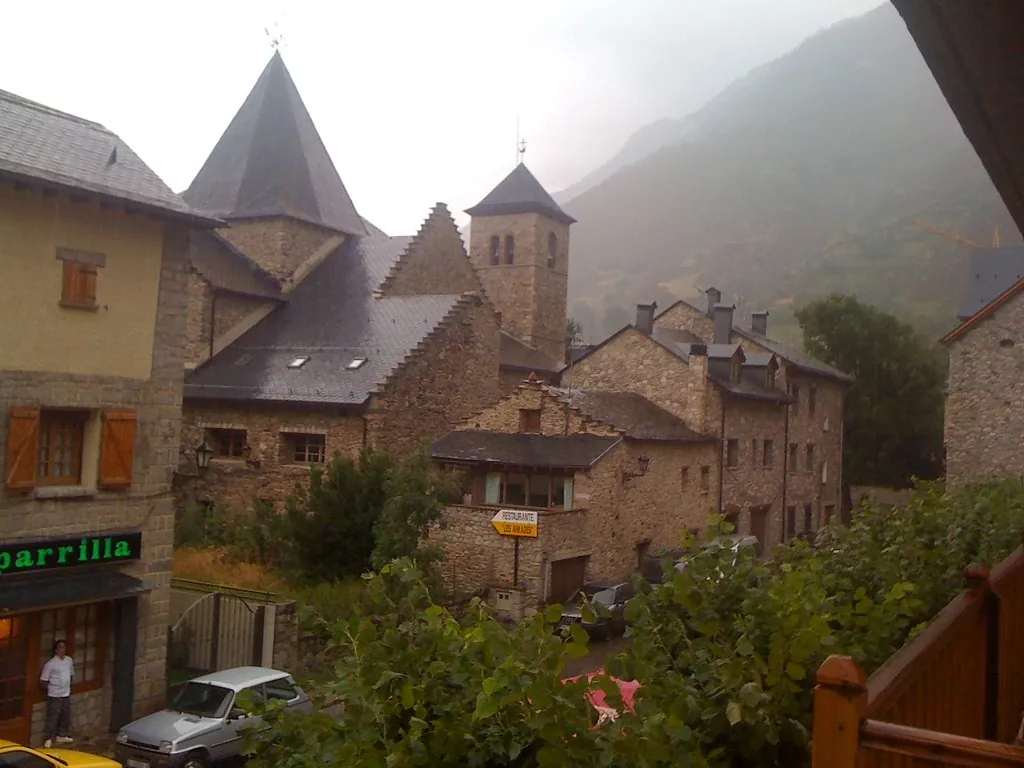
Calle Mayor, the main street, still preserves many traditional Pyrenean houses. Thick stone walls, wooden balconies and steeply pitched roofs designed to hold months of snow define the look. Some houses retain the typical truncated-cone chimneys found in this part of the Pyrenees.
The church of San Miguel, built in the 16th century, stands out over part of the village. Its square tower is visible from several points, which makes sense in a place where storms can arrive suddenly and the bell tower has long served as a reference point.
Mountains that set the terms
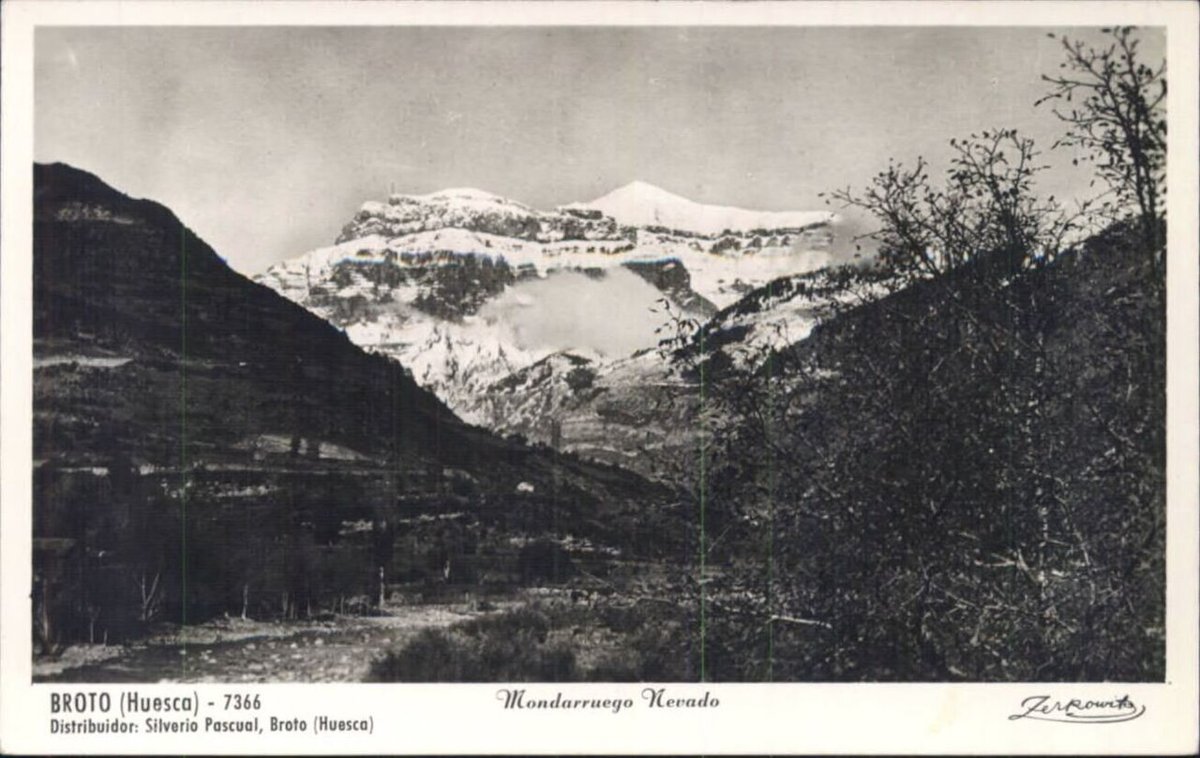
Gistaín lies beneath some of the highest mountains in the Aragonese Pyrenees. From many spots in the valley, the presence of Posets can be made out. It rises above 3,300 metres. There are also lesser-known peaks nearby, but they are far from easy. These are not mountains to approach without preparation.
In spring, thin streams of water appear on rock faces that are covered in snow during winter. By summer, the paths fill with walkers carrying large rucksacks and trekking poles. This is not casual strolling terrain. The mountains here demand attention.
Memory and language in the valley
Within the village there is a small space dedicated to explaining traditional life in the Chistau valley, known as the Casa de la Memoria del valle. It presents aspects of daily life that shaped the area for centuries.
One of the elements it highlights is chistabino, the local variety of the Aragonese language. It is still heard among older residents. The space also explains how livestock farming operated for generations and how it structured the local economy.
Transhumance is part of that story. Even today, at certain times of year, some herds move between high pastures and lower areas of the valley, following routes that have been used for a very long time.
Paths towards ibones and higher ground
Many visitors use Gistaín as a starting point for walking routes. Trails lead upwards towards ibones, which are high mountain lakes of glacial origin, and towards mountain passes where the landscape changes quickly. The route often begins in woodland, opens into meadows and then gives way to rock.
One of the better-known destinations in the valley is the ibón de Plan. It is not right next to the village, but many people combine it with time in the area. When the wind drops, the surface of the lake becomes still enough to reflect the surroundings.
Anyone considering higher summits needs to plan carefully. Elevation gains are significant and the weather can shift quickly in these mountains.
Winter conditions and local celebrations
Winter changes the rhythm of the village. Snow is frequent and nearby routes fill with tracks from snowshoes and ski touring. Mornings often begin with very low temperatures.
Local festivities continue to revolve around San Miguel, towards the end of September. During the summer there are also livelier days, with music and activities that bring together residents and people who return to the village during holidays.
Gistaín does not try to be anything other than what it is. A mountain village shaped by livestock, long winters and short summers. That becomes clear quickly. It is not a stage set. Life here continues in a way that is still close to how it was decades ago, with the difference that now travellers pass through its streets, curious to see it for themselves.