Full Article
about Laspuna
Hide article Read full article
A quiet village above the Ara
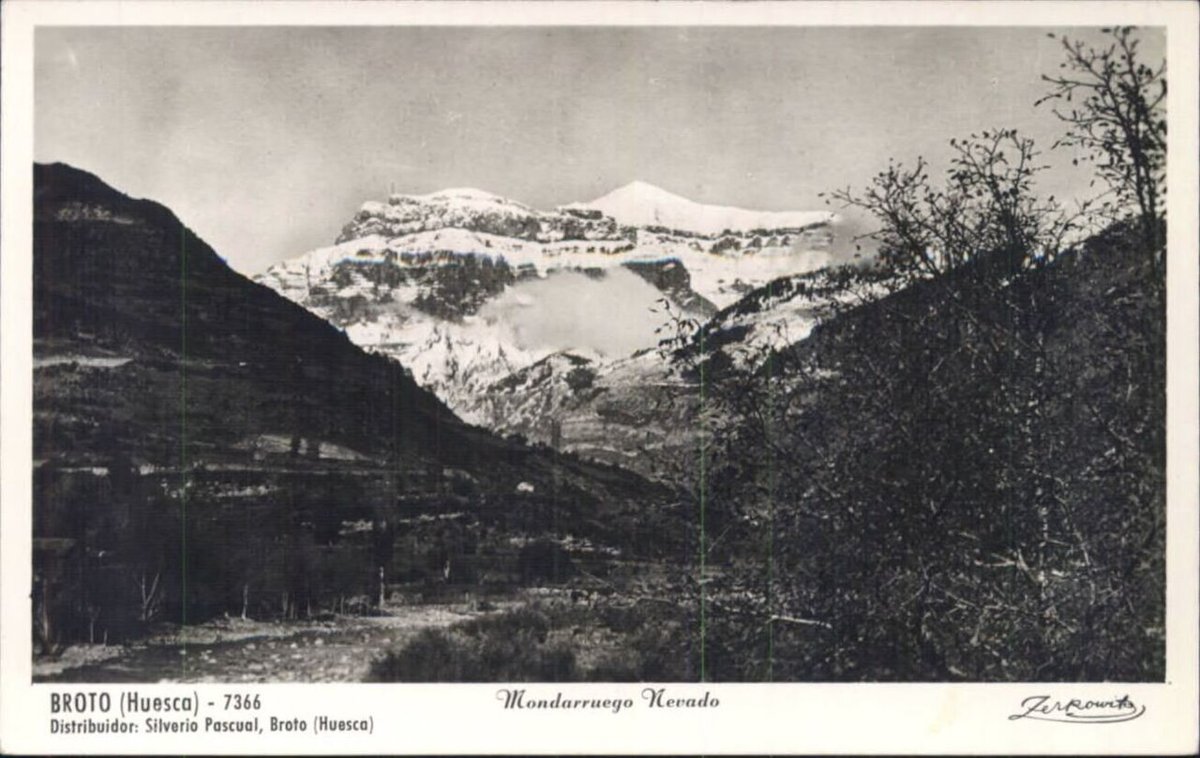
Early in the day, when light begins to touch the stone façades, tourism in Laspuña has not quite arrived. The village is still. A shutter opens with a dry clatter, a rooster calls somewhere nearby, and above the slate roofs the Peña Montañesa rises, vast and still partly in shadow. It is a small place, and that becomes clear straight away: footsteps echo along the street, there is the faint smell of firewood when the air turns cool, and the valley opens out just below.
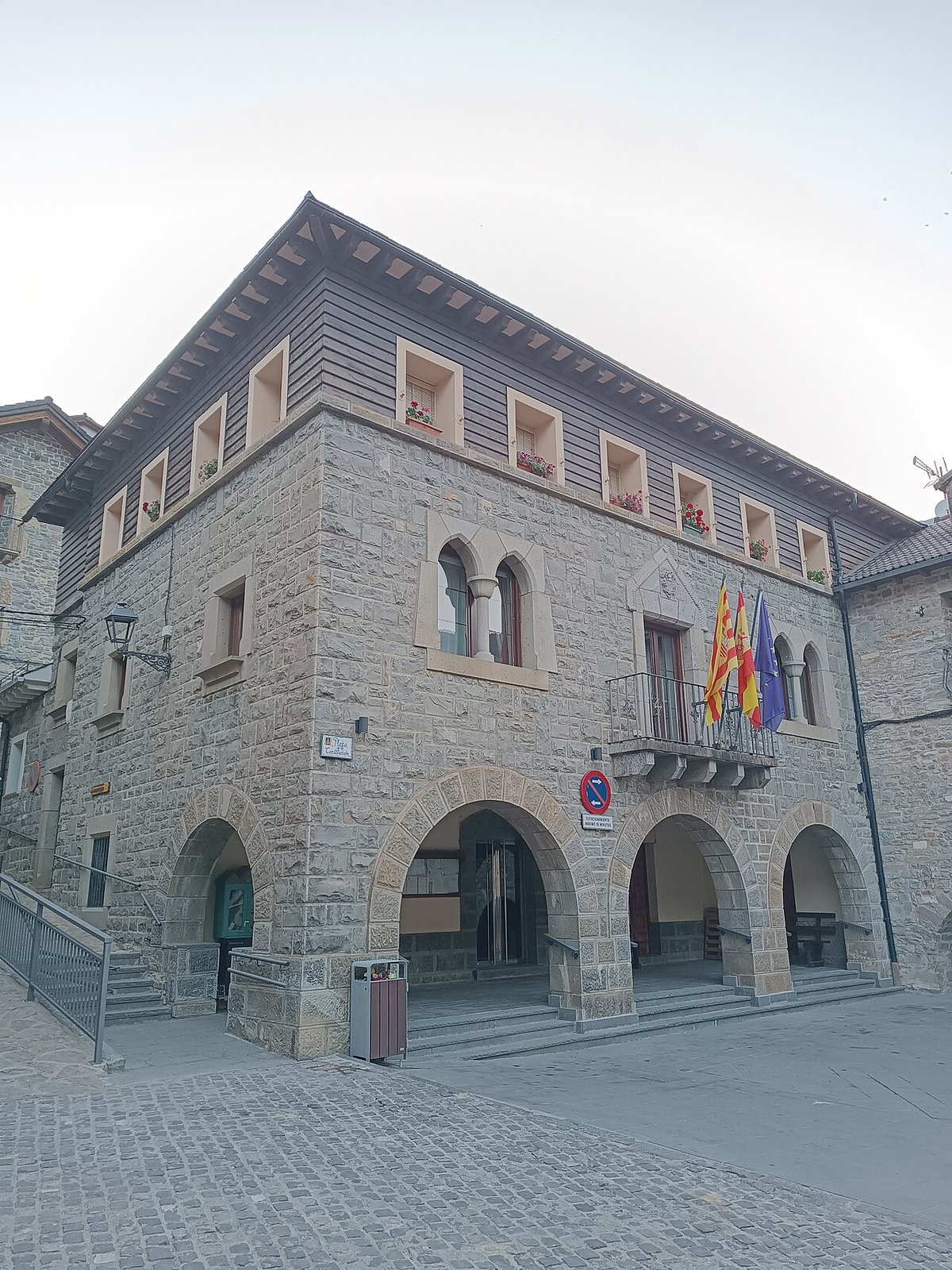
Laspuna sits on a slope in the Sobrarbe region of Aragon, looking across the Ara valley. The grey stone houses, steep roofs and wooden balconies respond to the demands of the mountain climate: long winters, sudden summer storms, and wind that sometimes drops down from the peaks. This is architecture built to endure rather than to impress.
The village remains very small, with just over two hundred people living here throughout the year, and that scale shapes the pace of life. The streets were not designed for wandering without purpose; they link houses, barns and small plots of land. Yet within a few minutes on foot, the wider landscape appears: the deep valley of the Ara and, beyond it, the mountains that mark the approach to the Ordesa y Monte Perdido National Park.
Stone streets and shifting light
The parish church of San Pedro stands out among the buildings in the centre. Its tower acts as a reference point when moving through the narrower streets, which rise and fall with the slope of the land. The structure dates back to the late Romanesque period, though later alterations are visible in the mix of stonework and volumes.
The old centre can be covered quickly, though it rewards a slower pace. Many houses still show traces of their former uses: wide gateways once used by carts, small internal courtyards, and old animal enclosures attached to the living spaces. The stone changes tone throughout the day. By late afternoon, when the sun drops towards the west, some façades take on an almost golden hue.
Higher up in the village there are several points where the view opens across the Ara valley. The river appears far below as a winding line between meadows and patches of woodland. On clear days, the horizon fills with Pyrenean ridges. In winter, the nearby peaks are often white. In summer, intense greens dominate, accompanied by the steady hum of insects along the edges of the paths.
Paths into the Sobrarbe landscape
Several walking routes begin in Laspuña, leading into the hills or linking with nearby villages in Sobrarbe. These are old paths, some still paved in sections, used for centuries to move livestock or reach more distant fields.
The terrain can be deceptive. Distances look short on a map, but the gradients are demanding. Anyone heading towards higher parts of the range should allow enough time and carry sufficient water, particularly in summer when the sun becomes strong from midday onwards.
At the start and end of the day, the character of the hillside shifts. Dry branches crack underfoot, a distant cowbell may carry across the valley, and large birds of prey can often be seen above, riding the thermal currents that rise from the slopes.
A calendar shaped by local life
Festivities linked to San Pedro bring much of the village together at the beginning of summer. During those days, people who live elsewhere return, and the streets take on a level of activity that is unusual for the rest of the year.
August brings further celebrations connected to the Assumption. These are not large-scale events, but rather gatherings organised by the residents themselves, with music and shared activities.
When autumn arrives, the atmosphere changes again. The valley becomes quieter, nearby woods turn shades of red, and attention shifts indoors. Firewood is prepared, vegetable plots are checked, and homes are readied for the colder months ahead.
When to experience Laspuña
Spring and autumn tend to be the calmest times to explore the area on foot and take in the valley at an unhurried pace. In high summer there is more movement, as Laspuña also works as a base for visiting Ordesa and other routes in Sobrarbe. During those busier months, it is best to leave the car at the entrance to the village and continue on foot, as the streets are narrow and even light traffic is noticeable.
In the end, Laspuña is not fully understood by looking only at its stone houses. It comes into focus when looking up towards the Peña Montañesa, listening to the river far below, and noticing how daily life follows the same rhythm as the surrounding mountain.