Full Article
about Palo
Hide article Read full article
A hillside village in Sobrarbe
By mid-morning, the quiet in Palo, in the Sobrarbe region of Aragón, is broken mainly by small birds moving through the orchards and by the wind stirring dry leaves along the walls. The light turns sharp as autumn begins, and the air often carries the smell of damp earth and freshly cut wood. There is no sense of hurry here. It is the sort of place where people stop for a moment and listen.
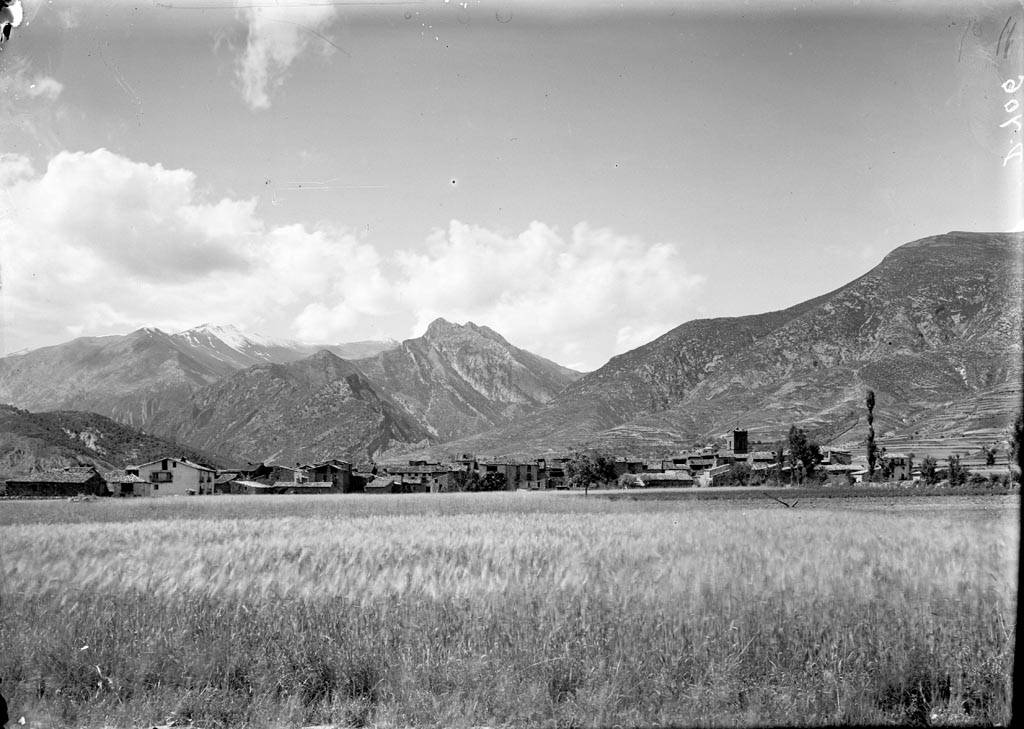
Palo is a very small village, barely more than thirty residents, set on a slope looking out towards the Ara valley. Its stone houses, with grey slate roofs and wooden balconies darkened by time, follow a long-established pattern. There are no wide streets or a defined square. Instead, a handful of narrow lanes twist between masonry walls, and a single track runs through the village towards the parish church.
Daily life has not disappeared entirely. Chickens can still be heard in some yards, and there are small terraces where people grow just enough for the household: a modest vegetable patch, a few fennel plants, potatoes depending on the year. At times, the sound of a tractor carries from a nearby track, or the dry thud of logs being stacked in a shed. The church, dedicated to San Juan, has a square bell tower visible from a distance as the road approaches the village. Inside, everything is simple, with modest altarpieces and an image of the saint.
Stone houses and Pyrenean chimneys
The interest of Palo lies in how well the whole settlement has been preserved. The houses are typical of Pyrenean architecture: thick walls, small windows designed to retain heat, and truncated cone-shaped chimneys rising above the slate roofs.
Walking slowly through the lanes brings out small details. There are worn wooden lintels, old iron locks and small cobbled courtyards where firewood is still stored. In summer, some balconies fill with geraniums. In autumn, the nearby woodland shifts to shades of red and gold, surrounding the village with a gradual change of colour.
Paths down to the Ara valley
Several paths leave the village and lead towards scattered oak and beech woods across the hillside. These are not especially prepared walking routes, and signposting is inconsistent. It is advisable to have the route saved on a phone or marked on a map. Some paths fade into meadows or shift over time.
One of these trails descends towards the Ara river, far below the village. The route crosses small ravines and passes an old stone bridge that is still in use. Near the water, willows and poplars grow along the banks. In quieter stretches, patience may be rewarded with the flash of blue from a kingfisher or the still figure of a heron at the edge of the river.
A working landscape
Around Palo there are still cultivated plots. These are not large fields but small parcels where cereals are sown or a small amount of livestock is kept. Farming continues to shape the rhythm of the place, though with fewer people than in past decades.
Wildlife is also present in the surrounding hills. Roe deer are often seen at dawn, and fox tracks appear along dirt paths. Above the valley, griffon vultures circle on thermal currents rising from the sides of the Ara.
Routes through the valley and nearby villages
Rural tracks connect Palo with other villages in the Ara valley. Some of these can link into longer routes across Sobrarbe for those with time and a good sense of direction. Not all are signposted, and junctions can be confusing, so it is best not to rely on improvisation without knowing the area.
For those who prefer a slower pace, the most rewarding option is often to explore the surroundings of the village itself and make the gradual descent towards the valley, especially early in the morning or towards the end of the day.
When to come and what to expect
Palo is extremely small and has no tourist services within the village itself. It is best to arrive with basic needs already taken care of in larger towns in the region.
Spring and autumn are generally the most pleasant times to visit, when the Ara valley shifts in colour and there is less traffic on the road. In summer, the village becomes a little livelier, particularly in August, when residents who live elsewhere return and simple gatherings take place among locals.
Anyone who comes here will find above all quiet, old stone and the landscape of Sobrarbe stretching out across the valley. It is a place for walking slowly and paying attention to what is around.