Full Article
about Bierge
Hide article Read full article
A village that changes your pace
Some places behave like a friend’s country house. You arrive thinking you will stay half an hour, and somehow the afternoon stretches on. Tourism in Bierge has a bit of that feeling. It is not about a long checklist of sights. It is more that the place quietly slows you down.
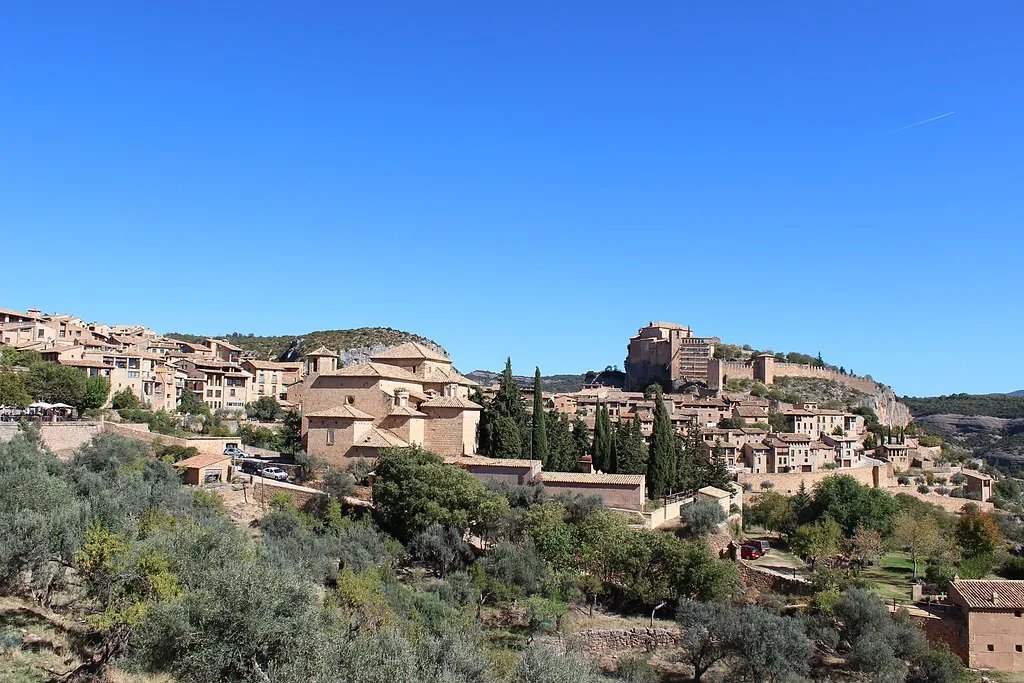
Bierge sits in the Somontano de Barbastro, in Aragón, and is home to just over two hundred people. Houses stand close together, kitchen gardens sit almost at the edge of the streets, and open countryside begins a few steps beyond. It is the sort of place where you park the car, walk ten paces and hear chickens or a tractor starting up.
The village, as it is
First impressions can be misleading. Bierge is not one of those villages that looks freshly painted for show. Here, façades reflect different periods of repair. Some have timber reinforcing the walls, others still keep old animal enclosures attached to the house.
A walk through the streets reveals small details. Wrought-iron window grilles, large gates once used for carts, inner courtyards that you can only guess at from the outside. The church of San Miguel Arcángel marks the centre. Its tower is visible from a distance, the kind of landmark you spot from the road before the first houses come into view.
This is not a place for ticking off monuments. It suits a slower walk, paying attention to how everything is laid out and how the village fits together.
Walking out into the fields
Leaving Bierge on foot is easy. Within minutes you are among fields.
The paths around the village cross cereal plots, a few vineyards and patches of olive trees. From a distance the landscape looks like a mosaic: one section green, another dry, another covered in scrub. A patchwork of different textures.
Along the way there are dry-stone walls, terraced land and traces of old irrigation channels. These are the kind of features that slip by if you are in a hurry, but start to make sense when you slow down and notice how agricultural work used to be organised.
In spring and autumn there is often plenty of movement from small birds. The wind is another constant presence here, something you hear clearly as it passes through the olive trees.
The Salto de Bierge and the river canyon
If there is one place that has brought attention to Bierge, it is the Salto de Bierge.
This is a low dam on the river Alcanadre where water spills into a wide pool below. In summer it fills up with people. Families, groups of friends, visitors looking to cool off after walking in the nearby hills. At first the atmosphere can feel quiet, like a natural swimming spot where voices stay low. A couple of hours later, it starts to resemble a neighbourhood gathering.
The area is also well known among those who practise canyoning in the Sierra de Guara, a mountain range in the region. Many people arrive in Bierge for that reason. Even so, stepping away from the water is often enough to find silence again.
Festivals that still bring everyone together
Local festivities continue to shape the calendar. The celebration dedicated to San Miguel usually takes place towards the end of September. During those days the village becomes busier than usual. There is a short procession, music and gatherings that tend to run late into the night.
A spring pilgrimage, or romería, is also kept alive. It heads to a small hermitage in the nearby hills. It is one of those days where religious and everyday life mix easily: a walk, shared food and long conversations between neighbours.
August brings a different kind of activity. It is less about tourism and more about people returning to the village for a few days. The atmosphere shifts noticeably. Streets that are quiet in winter fill with children playing and groups chatting about harvests, the heat and shared memories.
How long to stay
Bierge does not demand a tightly planned weekend. It works better as part of a wider trip around the area.
You can wander through the village, head to the Salto, walk for a while along the surrounding paths and then sit in the shade for a good stretch of time. It is a simple plan, like those long Sunday meals that begin mid-afternoon and carry on until evening without anyone quite noticing.
There are no grand monuments or postcard scenes every few metres. Yet for anyone curious about how a small village in the Somontano lives and breathes, Bierge offers plenty. The key is to walk slowly and look around.