Full Article
about Calatorao
Hide article Read full article
A village shaped by black stone
By mid-morning, the black stone of Calatorao has already warmed through. Touch a sunlit wall, the façade of the iglesia de San Esteban for instance, and it holds the heat, giving off a faint mineral scent with a slightly metallic edge. The dark tone that defines the village is not decorative or accidental. It comes from the piedra de Calatorao, a local black limestone quarried here for generations and sent in large blocks to construction projects across much of Spain.
Tourism in Calatorao tends to begin with that material. It appears in kerbstones, door frames and benches smoothed by years of use. Even without noticing, it is underfoot almost everywhere.
The stone that underpins the town
Walking through the centre means encountering this stone again and again. In older houses it frames entrances and lines lower walls. In the main square it appears in larger, more polished slabs that catch the light in a particular way, giving the black surface a subtle sheen.
Calatorao lies within the Valdejalón region, and for a long time its economy revolved around quarrying. That activity has not disappeared. The quarries remain active on the outskirts, and it is common to see lorries carrying dark stone blocks out of the municipal area.
Some streets still show traces of workshops or open yards where the stone has been cut and shaped over decades. They are not always open or intended for visits, yet passing nearby is enough to catch the dry, echoing sound of cutting or to notice the fine dark dust settled on the ground.
Quiet streets around San Esteban
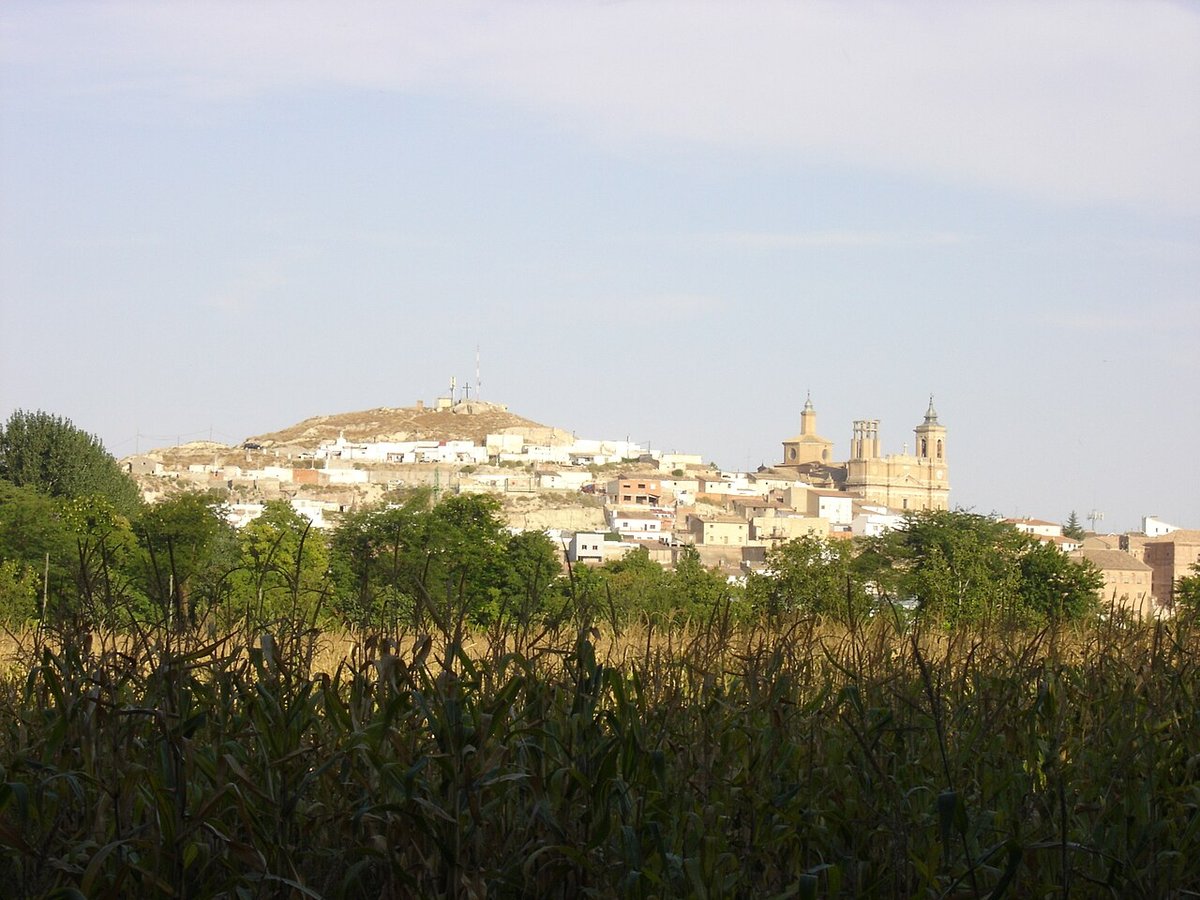
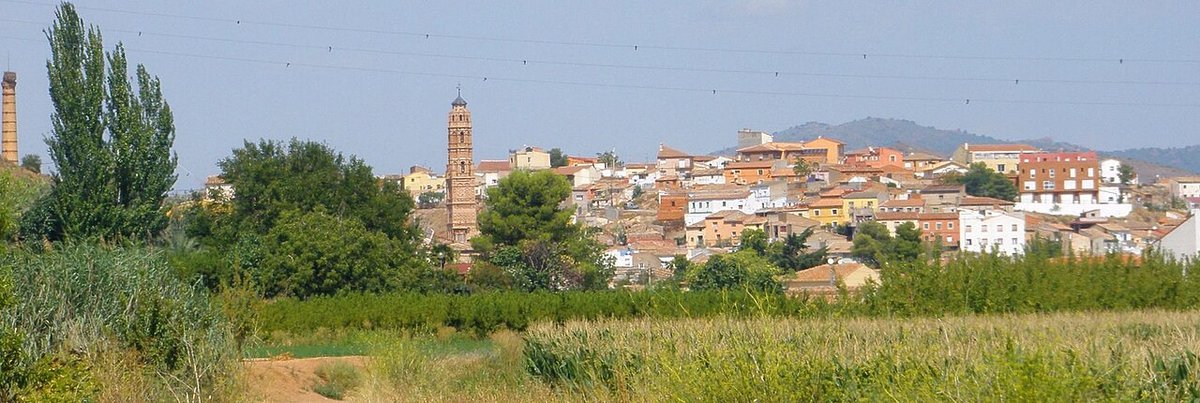
The iglesia de San Esteban appears suddenly among two-storey houses. Its tower rises into view before the rest of the building, and when the sun hits at an angle the dark stone can take on an almost bluish tone.
The surrounding streets invite a slower pace. This is not because of a dense cluster of monuments, but because the village keeps a steady, unhurried rhythm. A conversation drifts from a window, a car moves past slowly, a shutter lifts halfway through the morning.
In summer, this part of Calatorao is best explored early in the day or later in the afternoon. Around midday, heat gathers between the dark façades and narrow streets, lingering in the air.
Out towards the quarries
The outskirts make it easier to understand where all this material comes from. The landscape opens out into extraction areas where the ground is cut into straight planes and the black rock is exposed.
It is not always possible to get close, as many quarries are still in operation, but the surrounding tracks allow a clear view of the setting: terraced levels, slopes of dark stone and machinery breaking the quiet of the countryside.
The contrast with the village is striking. In Calatorao itself, the stone is polished and carefully placed. Here it appears raw, marked by grey veins and uneven edges.
The nearby sierra
A few kilometres away rises the sierra de Vicor, a low but clearly visible range from the fields of Valdejalón. On clear mornings, its slope casts a bluish shadow across the crops.
There are paths and tracks leading up into the sierra, used locally for walking or cycling. In spring, the air often carries the scent of thyme and damp earth after rain. During summer, the central hours of the day are best avoided, as shade is scarce and the heat becomes intense.
When to go
Calatorao sits less than an hour by car from Zaragoza, which means many people come just for the morning. During the week, the atmosphere remains calm. At weekends, there is a little more movement around the square and nearby streets.
The fiestas of the Santo Cristo usually take place in September, and during those days the village feels noticeably different. There are more people out in the streets, music in the background, and family gatherings that continue into the evening.
For a quieter visit, spring and early autumn work well. The light is softer, and when the afternoon sun hits the black stone it can look almost damp, even after days without rain. It is the kind of detail that only becomes clear when standing still for a moment and watching closely.