Full Article
about Castrillón
The beach of Asturias
Ocultar artículo Leer artículo completo
The Bayas boardwalk ends abruptly in a tangle of marram grass and warning signs. Step past it and your footprints vanish within seconds; the dune system is so mobile that yesterday’s path can be tomorrow’s cliff edge. This is Castrillón’s calling card: a coastline that refuses to stay still, even when the rest of northern Spain is plastered across Instagram.
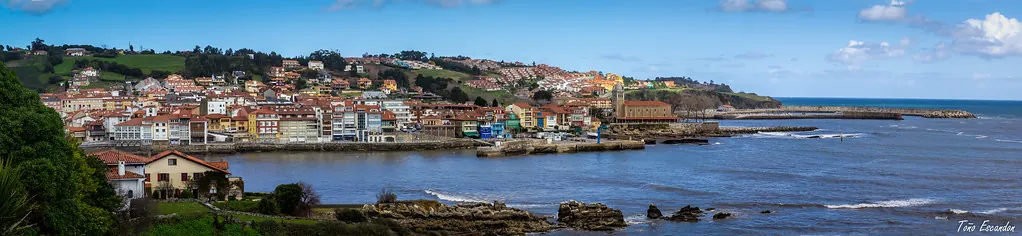
Castrillón sits on a wind-lashed wedge of coast fifteen minutes west of Avilés and five from Asturias airport. Technically it’s a municipality, not a single village, stitched together by the N-632 and a string of beaches that change colour with every tide. Most visitors come for the sand, then discover the hinterland is less “chocolate-box” and more “working corner of a province that happens to have cracking seafood”. Piedras Blancas, the administrative centre, is where the bins get collected and the secondary schools actually function; expect 1970s apartment blocks rather than cobbled arcades.实用性 saves the day, though: there’s a 24-hour pharmacy, a covered market open till 2 p.m. and a cider bar every forty metres.
Salt on the timetable
Salinas beach is the obvious first stop. The curve of sand is wide enough that even on the busiest August Sunday you can still lay out a towel without touching a stranger’s foot. A paved promenade runs the full length, backed by low-rise villas painted in colours that fade to pastel after too many winters. Surf schools stack boards against the railings from Easter onwards; instructors speak serviceable English and won’t laugh when you confuse a wetsuit with a fashion statement. Board rental is €20 for two hours, including swap-out if the swell picks up and you decide you need something floatier. The best waves usually arrive after a stiff southwest wind – check the life-flag system, because the Cantabrian can switch from docile to brutal while you’re unwrapping your sandwich.
At the western end, the old Real Balneario casino – now a Michelin-starred restaurant – sticks out over the rocks like a cruise liner that ran aground in 1920. You don’t have to remortgage to eat well: the downstairs terrace serves a three-course menú del día for €22, cider included, and the view is the same one that earns the upstairs dining room its stars. Book ahead; they shut Monday and Tuesday, and the only cash machine on this side of town hides inside the lobby.
If Salinas feels too cosmopolitan, walk fifteen minutes east along the cliff-top path to Santa María del Mar, a scoop of sand barely a kilometre long but usually half-empty. The path is pushchair-friendly, though you’ll need to lift over one short flight of wooden steps. Locals call it “the beach for when Salinas sneezes”; when the main strand is blowing a gale, this cove can be flat-calm and warm enough for a quick paddle.
Dunes that swallow footprints
Bayas, further west, is the region’s wild card. At low tide the sand stretches almost three kilometres, exposing rock pools warm enough for shrimp to survive a child’s net. The protected dune system behind it is one of the last in Asturias still shifting naturally; wooden walkways keep you from trampling dwarf marram and the tiny white daffodils that bloom in February. Park at the Espartal car park before 11 a.m. in summer – it’s free but only holds eighty cars. Arrive late and you’ll circle for twenty minutes, then abandon the vehicle halfway up the N-632 and walk anyway.
Behind the beach, the Philippe Cousteau Anchor Museum sounds grand until you realise it’s nine rusting ship’s anchors bolted to concrete plinths. Kids clamber, parents photograph, everyone googles who Philippe Cousteau actually was. The beauty is the price: free, and the plateau behind gives a horizon-wide view of cargo ships queuing for Avilés. Bring a kite; the wind is reliable.
Up the hill where the cows outnumber people
Leave the coast and the temperature drops two degrees for every hundred metres you climb. The AS-231 switchbacks through eucalyptus plantations into the interior, where hamlets of six houses and a chapel cling to slopes too steep for tractors. Here the hórreos – maize granaries on stilts – still function, though the maize has been replaced by sacks of animal feed. Stop at San Cristóbal de Lena, altitude 220 m, for a cup of coffee so strong it could revive driftwood. The bar owner keeps a visitors’ book; flip back and you’ll find entries from Sheffield, Norwich and a couple who cycled from Santander and couldn’t face the hill back.
Walking options are gentle rather than Himalayan. A 5-km loop from Bayas car park climbs through gorse and heather to the Mirador del Sablón, a wooden platform that hangs over the cliffs. On a clear day you can see the lighthouse at Cabo Peñas, Asturias’s northernmost point; on a murky one the Atlantic simply disappears and gulls fly below you like scraps of paper. Allow ninety minutes, wear shoes you don’t mind soaking – the path stays boggy until June.
Winter brings a different coast. January storms whip spray over the promenade and most cafés close their terraces, but the waves draw surfers in 5 mm suits and the cider houses light their wood-burners. Accommodation prices halve; a two-bedroom apartment with frontal sea view drops from €140 to €70 per night. Roads are rarely icy, but the AS-231 can fog up suddenly – descend in third gear and pray the local bus isn’t climbing in the opposite direction.
What lands on the plate
Asturian cooking is built for weather that can’t decide between rain and more rain. Start with fabada, a bean and pork stew thick enough to stand a spoon in; it tastes like cassoulet on holiday. Restaurants will offer a media ración (half portion) if you ask – otherwise you’ll be defeated halfway through. Fish arrives simply: sea-bass grilled with nothing but olive oil and sea salt, then flambéed in cider at the table for theatre. The cider pour is the regional sport: a metre-high stream that aerates the apple must and soaks the floor. Locals drink it in one gulp; visitors usually need two and a paper napkin.
For reluctant teenage palates, queso Cabrales burgers at Restaurante Diego give the flavour of Spain’s infamous blue without the full nostril-clearing punch. Pudding is arroz con leche, rice pudding heavy on cinnamon and lemon zest – reassuringly close to what grandmother used to burn. Budget on €15–18 for a three-course menú del día along the coast; Piedras Blancas bars knock out a sandwich and coffee for €4 if you’re in a hurry.
Getting it right, getting it wrong
Arriving at Salinas at noon in August is the classic error. Cars queue back to the roundabout, the pavement sizzles and every parasol is taken. Come at 9 a.m. instead: park easily, swim before the wind chops the surface, then eat an early lunch while Spanish families are still arguing over sunscreen. Conversely, don’t write off a blustery day. When the red flag flies the beaches empty, but the coastal path is at its most dramatic – and the cider tastes better when you can hear the sea hammering the rocks below.
Leave the car in Piedras Blancas if you’re overnighting. A free blue-bus shuttle runs to Salinas every twenty minutes in summer; the same ticket gets you as far as Avilés if you fancy medieval streets and a proper department store. Taxis back from the beach after midnight cost a flat €9 – write the number on your phone before the battery dies.
Castrillón won’t give you tiled alleys or a cathedral square. What it does offer is a coastline that still reacts to the moon, villages where the butcher knows the farmer’s name, and a weather forecast that guarantees conversation. Pack a windproof and an appetite; the Atlantic will do the rest.