Full Article
about Aller
Mountains and snow in the Central Mountain
Ocultar artículo Leer artículo completo
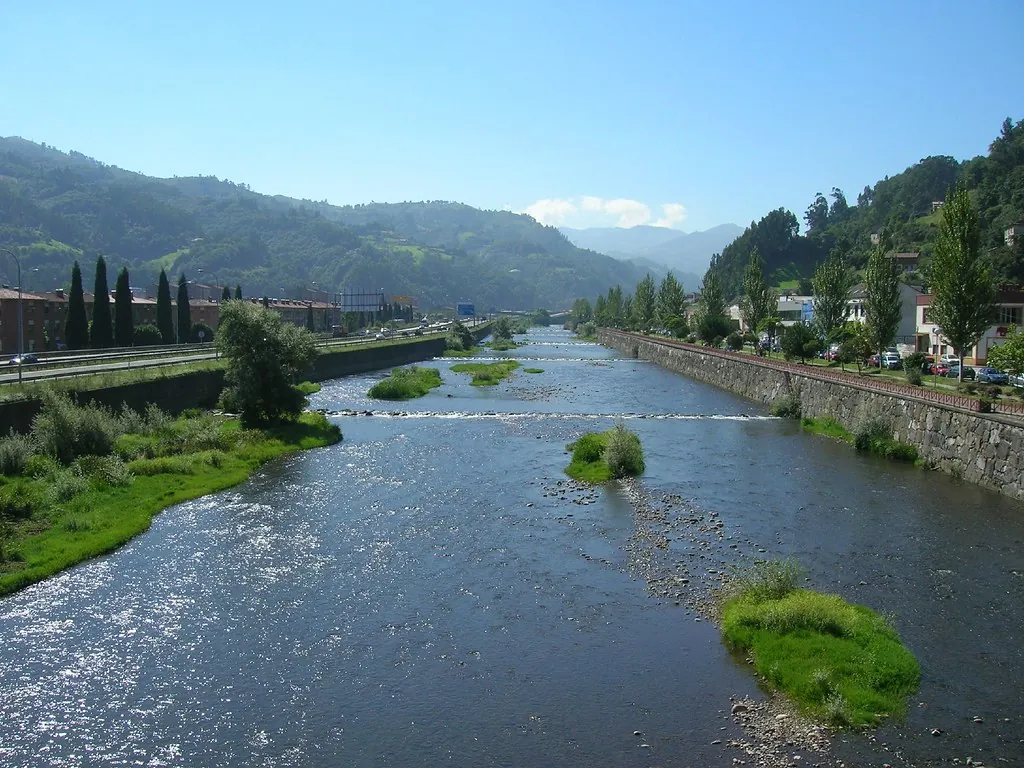
The road north from León twists through limestone ridges until, quite suddenly, the horizon fractures into a wall of beech-clad summits. First-time drivers often pull onto the hard shoulder here, not for mechanical trouble but because the Sierra de Aller appears so abruptly theatrical. Below this granite rampart lies a 40-km valley that still smells faintly of coal smoke and wet fern, a place where industrial head-frames rise above meadows grazed by tan-coloured cows.
Aller’s geography is simple: one river, one road, dozens of hamlets strung along the slopes like washing on a line. Cabañaquinta, the only settlement large enough for a petrol station and a proper supermarket, sits halfway up the valley. From its single traffic light, the AS-112 continues to climb until the tarmac thins and the hedgerows disappear into cloud. Turn off at any point and you are soon on a cart track that doubles as a cattle drovers’ highway. The OS-style maps sold in Oviedo mark these as footpaths, but locals still drive 4×4s along them; step aside and you will be greeted with a raised finger from the steering wheel, the Asturian version of a royal wave.
Romans, monks and miners
History here is layered like the valley terraces. Bronze-age gold pickers worked the river bars; Romans later carved a road that later became the silver route to Galicia. The earliest stone still standing is the ninth-century church of San Vicente de Serrapio, a squat rectangle of grey slate with a bell the size of a flowerpot. The key hangs in the neighbouring farmhouse; if no one answers, the porch alone is worth the detour—Visigothic beak-marks are etched into the impost blocks, evidence of stonemasons recycling older altars.
Coal changed everything. Between 1880 and 1970 British, Belgian and home-grown companies sank shafts every kilometre. Head-frames in brick and riveted iron still punctuate the ridges; one outside Moreda has been painted traffic-cone orange and fitted with LED floodlights, a surreal beacon for night-time drivers. Walk up the spoil heaps and you will find fossil ferns pressed into shale, shiny as jet, perfect pocket souvenirs if customs don’t mind a little Carboniferous ballast.
Walking with bellowing soundtrack
Come mid-October the soundscape shifts. Stags move onto the higher brañas, the summer pastures, and begin their annual shouting match. The roar carries for miles, a bass note that makes sheep pause mid-chew. A short but steep circuit starts at the Alto del Caleyo pass: follow the fence line west for two kilometres, drop through a tunnel of birch, then contour back along the old flint railway. Allow three hours, plus another thirty minutes if the cloud rolls in and you need GPS confirmation that the path really does cross that seemingly vertical field.
For something gentler, drive to the Desfiladero de Los Arrudos where the Aller river squeezes through a gorge only twelve metres wide. A forestry track has been blasted into the rock; the walk in and out takes forty minutes, yet the humidity is so high that lichen drips from the overhangs like green rain. After wet weather the slate underfoot turns into an ice-rink—hiking poles save both dignity and ankles.
Food that demands a siesta
Menus are printed once a year and laminated against mountain dew. Expect fabada, the local bean and chorizo stew, served in deep ceramic bowls that retain heat like storage heaters. At Ca’l Xabu in Moreda the kitchen finishes the dish with a splash of cider, giving a tart edge that cuts the pork fat. Portions are built for miners who spent eight hours hewing at a coal face; ask for una media ración and you will still receive enough to silence any appetite.
Trout appear between April and June, simply grilled with almonds and a squeeze of lemon. The flesh is pale coral, the flavour closer to sea bass than the farmed rain-bow variety sold in British supermarkets. Wash it down with a bottle of Caleyo, the valley’s own cider. Pour from elbow height—waiters offer a quick tutorial if your wrist trembles—and drink in one gulp while the bubbles still fizz.
Weather that makes its own rules
Aller has two climates for the price of one. At valley level (300 m) July peaks at 23 °C and mimics an English summer’s day. Climb 600 m more and you enter Atlantic cloud forest where the thermometer rarely tops 15 °C. Pack as if heading for the Lake District in October: fleece, waterproof and a wool hat even in August. The reward is solitude; on a weekday outside school holidays you can walk all morning and meet only a shepherd berating his dog in Asturian dialect.
Winter brings snow, though rarely enough for mass tourism. Fuentes de Invierno, Spain’s smallest ski resort, offers four lifts and 12 km of pistes on a north-facing bowl above 1,500 m. Day passes cost €30—half the price of Sierra Nevada—and queues are non-existent. When the wind tops 50 km/h the resort shuts; have a Plan B that involves the ethnographic museum in Cabañaquinta, or simply drive to Oviedo for cider-house tapas.
Getting there and away
From the UK, fly to Asturias airport via Madrid or Barcelona, collect a hire car and head south on the A-66 for 45 minutes. Public transport exists—ALSA runs one morning and one afternoon bus from Oviedo—but timetables are aligned with hospital appointments rather than hikers. Petrol pumps close at 20:00; fill up in Moreda if you plan a dusk ascent. Phone signal dies beyond the 600 m contour; download offline maps the night before.
The honest verdict
Aller will not deliver manicured selfie backdrops. Many villages are an architectural jumble of 1890s stone, 1970s breeze-block and 1990s aluminium garage doors. What it does offer is continuity: bread ovens still fired on Fridays, hay lorries blocking the road at milking time, and pub-conversations held entirely in Asturian. Treat the valley as one long cultural walk rather than a checklist of sights, and the reward is a slice of upland Spain that package tours have not yet diluted. Come with time to spare, a waterproof in your rucksack, and enough Spanish to order a second cider. The mountains will do the rest.