Full Article
about Lena
Gateway to Asturias and home to Pre-Romanesque churches
Hide article Read full article
Woodsmoke and Warm Bread
The scent reaches you first, a mix of woodsmoke and warm bread, before you even see the square. It’s a cool spring morning in La Pola, and some shop shutters are still half-closed. Light slips in with a bluish tint between the buildings as you cross the square. Someone is loading boxes into a van. In Lena, the day begins with the metallic rattle of shutters and the first coffee at the corner bar.
Life settles into a steady rhythm here. By mid-afternoon, Calle Real fills with voices and the familiar sound of cider glasses tapping against counters. The train station sits right in the centre, shaping part of the day: people heading to Mieres or Oviedo for work, students with backpacks, pensioners watching who comes and goes. Routines are visible and shared.
Santa Cristina on the Hill
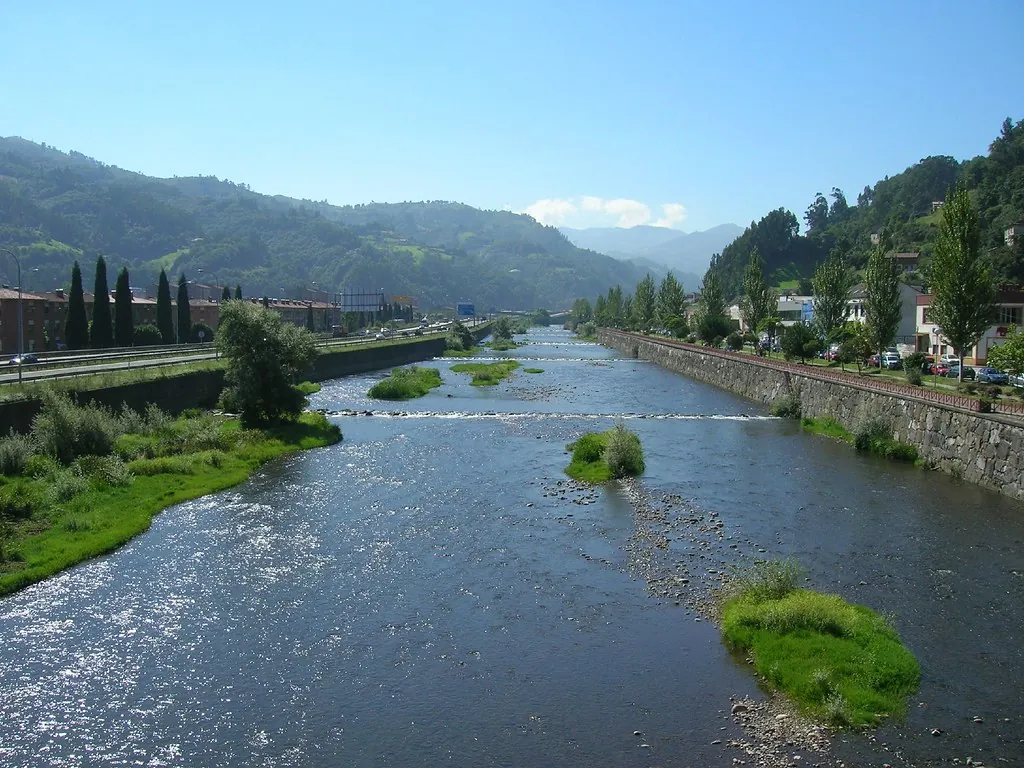
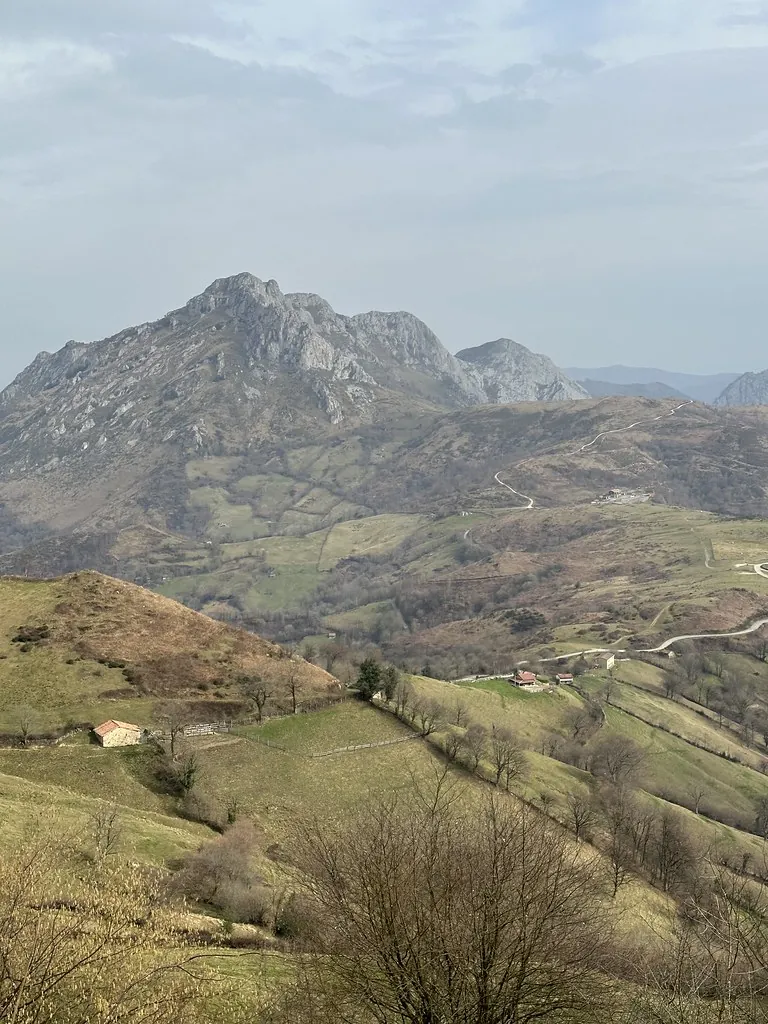
Santa Cristina de Lena appears after a bend that seems to lead nowhere. The valley opens out below, deep green and wide, and the 9th-century church stands there, small and still. The building is compact, almost geometric. When the wind blows in from the Pajares pass, that is all there is to hear: air moving through the grass.
Inside, the dim light carries the smell of damp stone. Narrow windows let in thin lines of light that fall sharply across the floor. Check opening times in advance or stop by the Prerrománico classroom next door; the key is often kept there when the church is closed. The setting, quiet and slightly exposed, feels unchanged.
The Time of the Cántaros
Around Pentecost, La Pola celebrates the romería de La Flor. Early in the day, clay pitchers appear, covered with moss and ribbons. They are mostly carried by women, though more young people take part each year. The walk uphill is done together, with conversation flowing.
At the top, people share food and cider from home. Arbeyos from Somerón often make an appearance—small peas known for their sweetness when the season is good. The atmosphere is calm, shaped by a community where many have known each other for years.
Outside these days, La Pola moves at a quieter pace.
Traces of Stone
The Roman road of La Carisa draws a clear line towards the mountains. In some stretches it is little more than a strip of stone through grass; in others, old paving is easier to make out. The route climbs from Carabanzo towards the high ground separating Asturias from León. Walking here feels exposed: there is a steady wind, cattle grazing in the distance.
From time to time, historical re-enactments take place here. Locals set up small camps and children run around with wooden shields. It’s not a grand spectacle, more a way of remembering who passed through these ridges long before.
Further down, in Vega del Ciego, a Roman mosaic sits under a simple protective structure. Its colours still come through clearly when light enters from the side: blues, earthy reds. It was discovered by chance while the land was being worked. On a weekday, you might find the place empty.
Mountain Flavours
In Agüeria and villages facing Pajares, the dominant smell is often meat roasting slowly over fire. Some local festivals revolve around cordero a la estaca, lamb cooked for hours over embers. Long tables are set up; conversations drift between football and politics.
In villages like Pajares or Carabanzo, some houses still have ovens in the yard. They are not used every day, but when lit, the heat radiates into the street. Rye bread keeps well for several days and has a dark crust that cracks when broken.
The valley changes shape with the seasons. Late spring brings vivid greens and usually dry paths. Santa Cristina receives light well into the afternoon.
August brings more traffic as people head towards Pajares or cross into León. La Pola becomes louder; parking near the centre is harder.
Winter transforms everything. When snow settles on the pass, the valley grows quiet and smells of chimney smoke all day. It’s not an easy season for getting around, but it is a calm one.
If you head to the Roman mosaic, take water. From the road it looks close, but the walk is longer than it seems.