Full Article
about Mieres
Cradle of mining and cider
Ocultar artículo Leer artículo completo
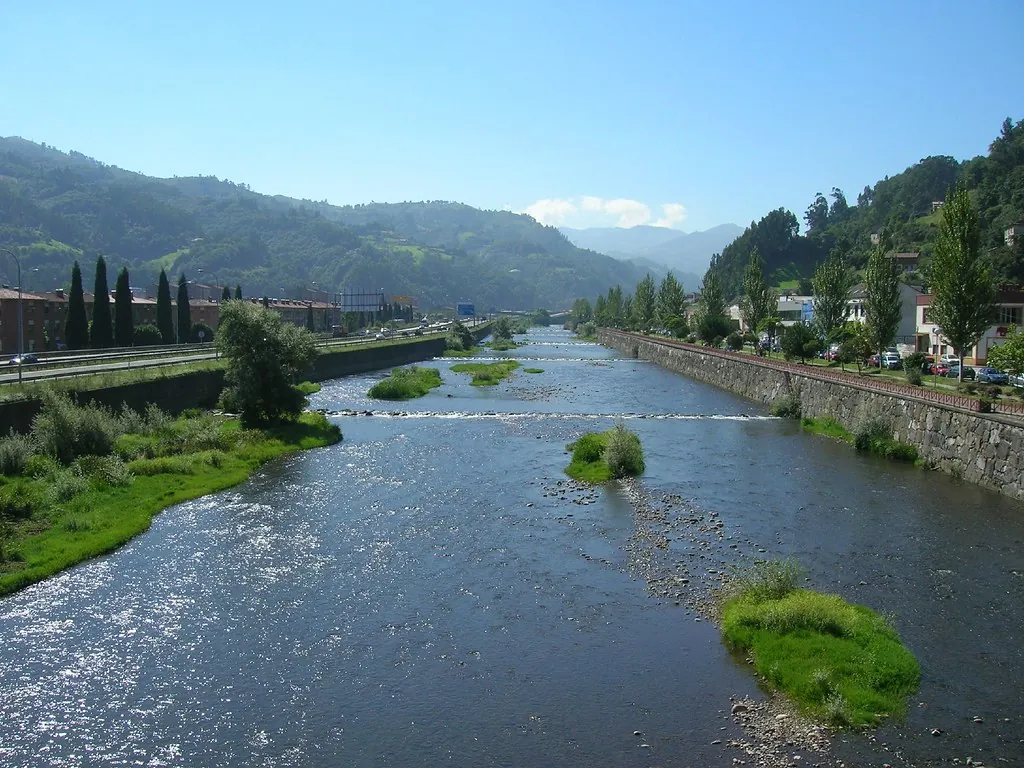
The morning mist lifts over the Caudal Valley to reveal not chocolate-box cottages but brick chimneys, coal tips turned into viewpoint parks, and apartment blocks whose balconies display both hanging laundry and hiking boots. Mieres doesn't do postcard pretty; it does honest, lived-in Asturias, a town where the industrial past is still being negotiated rather than polished for visitors.
At 300 metres above sea level, the town sits low enough to miss the worst mountain weather yet high enough for the air to carry a metallic tang from the river and a whiff of wood smoke from breakfast stoves. That altitude matters: when Oviedo basks in 25 °C, Mieres can be five degrees cooler under the same cloud. Even in July, locals keep light jackets by the door for the sudden Atlantic fronts that roll up the valley.
Coal, Cider and Everyday Life
Coal built the place. Follow Calle La Vega eastwards and the terraces of workers' housing end abruptly at the green cone of an old spoil heap now seeded with oaks. Turn west and you'll pass the converted saw-tooth shed of the former La Pereda washery, its brickwork smartened up but the pit-head gear still bolted to the roof. No ticket office, no audio guide: the heritage is simply there, part of the street furniture like the ceramic street signs in Asturian and Spanish.
Drop into Bar El Carmen before eleven and you'll see the mining connection isn't museum-piece. Retired pitmen in flat caps argue over football while the barman opens bottles of cider with the obligatory high pour, the golden stream arcing over his head into wide glasses that are knocked back in one sour-sweet gulp. Tourists are welcome to try; splashes on the floor are expected, so step clear of the sawdust.
English is scarce. Even the twenty-something waitress who studied tourism in Gijón hesitates over "still or sparkling", so memorise a handful of phrases: "una ración de fabada para uno" gets you a individual portion of the famous bean stew, "cuánto es?" sorts the bill. A little effort unlocks generous portions: a plate of cachopo – two veal steaks crimped around Serrano ham and cheese, breadcrumbed and fried – arrives hanging over the plate edges and could comfortably feed two hungry cyclists.
The Senda and the Slopes
Most British visitors treat Mieres as a staging post for the Senda del Oso, the 22-kilometre greenway that follows a disused mining railway into the Cordillera Cantábrica. The logic is sound: an early Cercanías train (€2.40, 18 minutes) drops you at the Pola de Lena hire kiosk where hybrids cost €15 for four hours and bike trailers for children are available on spec. Trains allow bikes free outside rush hours; the red ticket machines at Oviedo station have an English menu that actually works.
But staying overnight in Mieres rather than racing back to Oviedo has advantages. The town's hostals charge €35–45 for a double, half the capital's rate, and you wake to mountain views without the resort mark-up. Sunday breakfast in the covered market costs €3.50: strong coffee, churros still blotting oil, and a chance to watch grandmothers haggle over pixin (monkfish) while farmers unload cabbages the size of footballs.
If the Senda feels too gentle – the gradient never tops two percent – head south on the C-142 towards Cangas del Narcea. After 12 kilometres the road forks left onto the Ruta del Alba, an old miners' path that climbs through chestnut woods to the ghost colliery of Bustiello. Interpretive panels (Spanish only) explain how Welsh engineers arrived in 1858 to sink the shafts; stone terracing once supported British-built terraced houses long since demolished. The five-kilometre walk gains 250 metres of elevation, just enough to work up an appetite for cider without requiring Alpine kit.
Rain, Railways and Realistic Expectations
Asturias green comes at a price. Monthly rainfall in Mieres exceeds Manchester's in every season except August, and summer storms arrive without warning. A lightweight waterproof lives in daypacks here year-round; locals judge visitors by their footwear, and canvas pumps soaked on the Senda mark you out immediately.
Transport links are good, but not round-the-clock. The last Cercanías back from Oviedo leaves at 22:40; miss it and you'll discover Mieres has no taxi rank. A phone number taped inside the station door reaches a single operator who may, if you're lucky, dispatch a car within 30 minutes. Plan cinema trips accordingly.
Evenings can feel subdued. Once the siesta shutters come down at 14:00, many don't reopen. By 21:00 the central streets are quiet except for teenagers circling on scooters and the clatter of cider bottles emerging from cold storage. Night-life exists but it's hyper-local: poker-dice games in neighbourhood bars, brass-band rehearsals in the cultural centre, the occasional cover-band tribute to Extremoduro echoing from the Teatro Municipal Aza. Check the billboard; at €12 a ticket it's cheaper than a West End coffee.
When to Come, When to Skip
Spring brings wild azaleas to the valley slopes and the fiesta calendar kicks off with San Juan in late June, when bonfires on disused railway land light up the night sky and cider consumption doubles. Accommodation books up early, prices don't budge much but earplugs become essential if your hotel overlooks a verbena.
Autumn is quieter, ideal for walking: oak and beech turn copper above the mine workings, and mushrooms appear in the market alongside the first cabrales cheeses wrapped in plane-tree leaves. Winter rarely sees snow in town, but the humid cold seeps through stone walls; central heating is standard but check before booking if you dislike the scent of paraffin heaters still used in older pensions.
August is a mixed bag. Many residents desert for the coast, leaving half the bars closed, yet the Senda is at its busiest with Spanish families on hired tandems. Accommodation remains cheap but choice shrinks; expect to breakfast in the one café still serving tostada while the owner watches Netflix behind the bar.
Leave without expecting pretty. Come prepared for weather, for Spanish-only menus, for a town whose pride lies in graft rather than glamour. Do that and Mieres offers something rarer than yet another tiled plaza: an unvarnished slice of Asturian life where the mountains meet the marks of industry, and where the cider tastes better because the barman has already forgiven your clumsy pour.

