Full Article
about Morcín
Sacred mountain and cheeses
Hide article Read full article
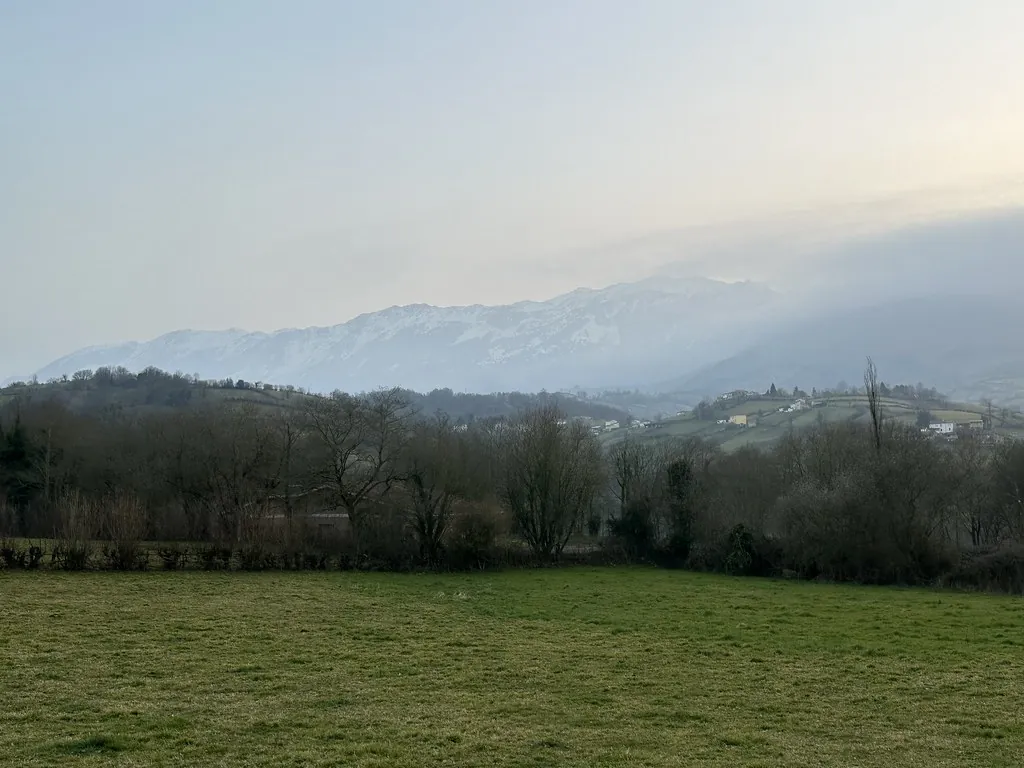
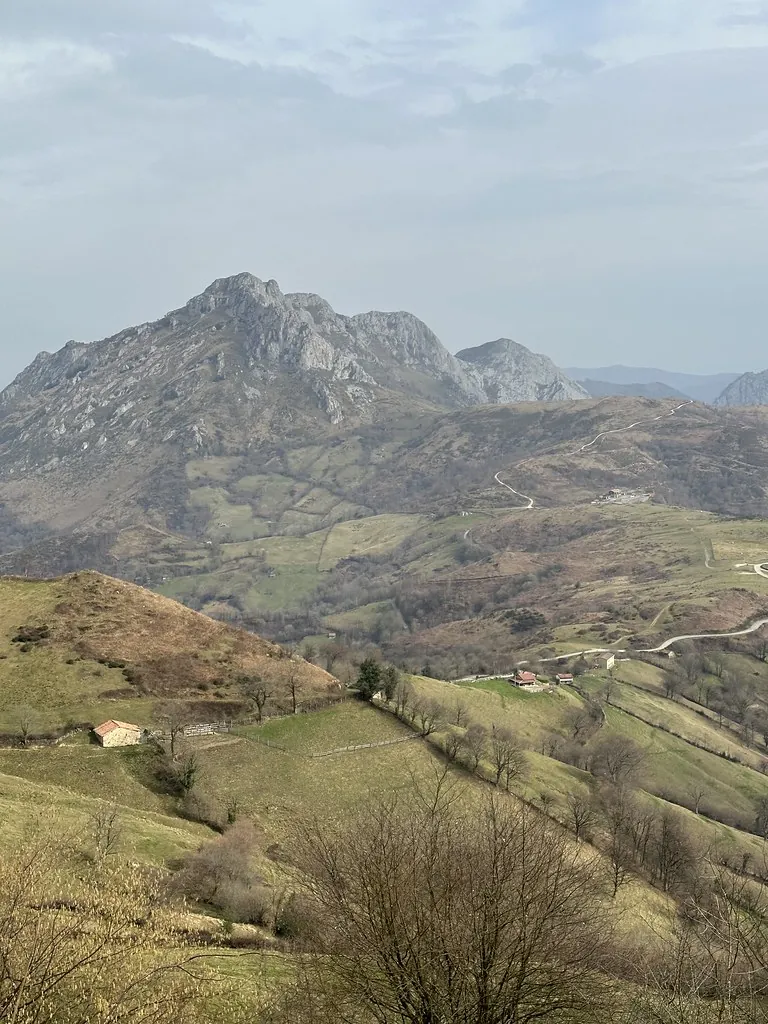
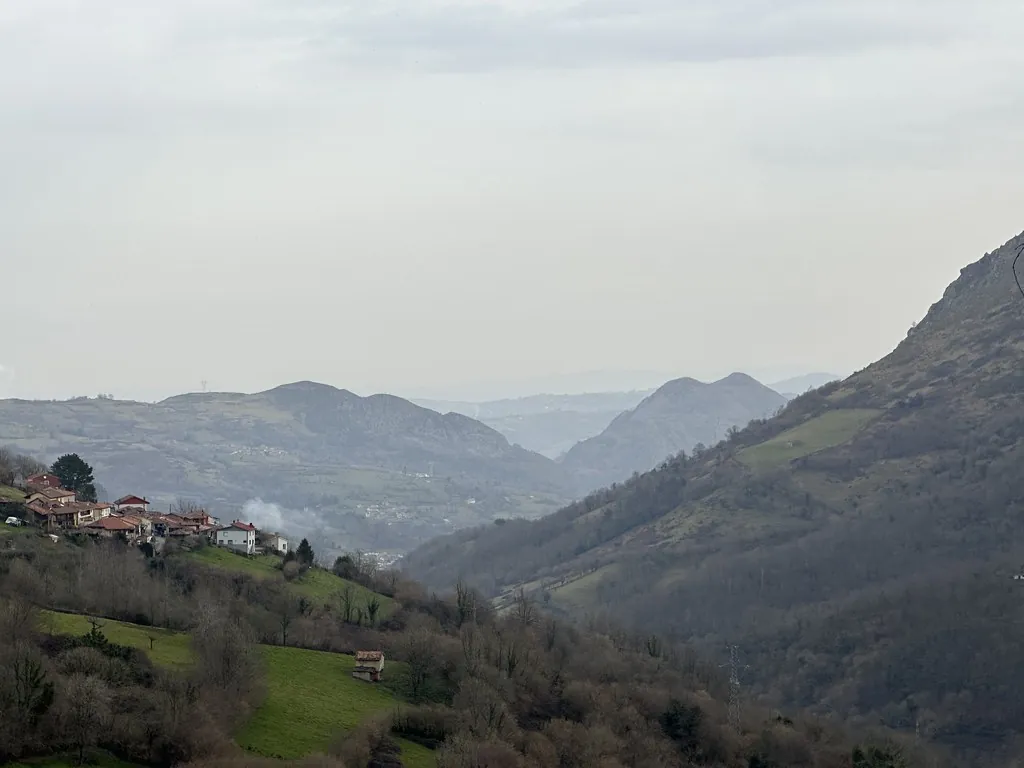
A glance at a map explains Morcín better than any brochure. The municipality is small, yet dramatically vertical. From the heights of the Aramo range and the distinctive bulk of Monsacro, the land drops quickly towards the valley of the Nalón. Villages cling to slopes or spread across narrow strips of flatter ground by the river, and the sense of living between summit and valley floor shapes everything.
This is not a whitewashed southern pueblo. Expect slate roofs, green hillsides and cattle in high meadows. Morcín has long been a place of passage as well as pasture. One of the variants of the Vía de la Plata once crossed here, used by traders and livestock herders moving between the coast and the Meseta. It was never a grand urban centre, more a working rural territory on an old route north to south. That layered history still shows in its cheese, its chapels and even in the scattered remains of mining.
A Valley Shaped by Water and Work
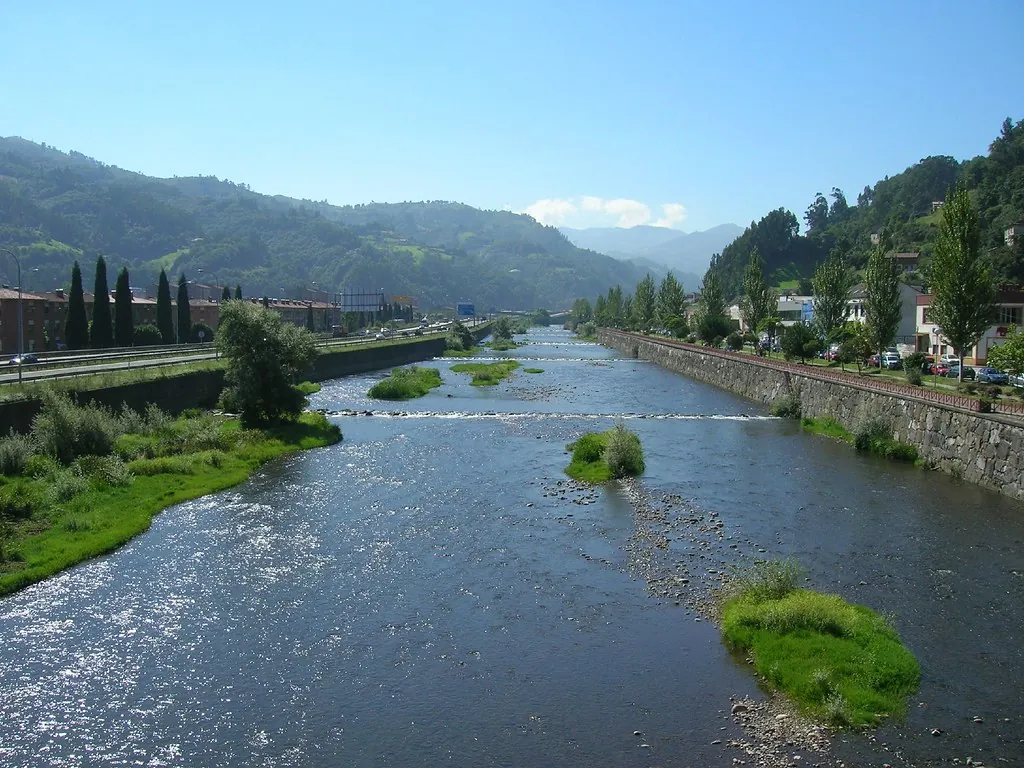
La Foz, the administrative centre, sits in a bend of the River Morcín. Houses climb the hillside behind it, while the flatter vegas by the water were traditionally reserved for orchards and meadows. It feels compact rather than busy, a place where daily life revolves around the valley floor.
On the outskirts stands a restored watermill. Its mechanisms help make sense of how the local economy functioned before agricultural mechanisation. As in many Asturian valleys, mills were shared between neighbours and operated in turns, a practical arrangement in communities where cooperation mattered.
Higher up, in the village of Peñerudes, a medieval tower survives from the Late Middle Ages. It is not a castle in the romantic sense, more a defensive or controlling structure tied to historic routes through the valley. From its surroundings the logic becomes clear: this was a natural corridor towards the uplands of the Aramo, worth watching and protecting.
Monsacro: Faith on a Plateau
The profile of Monsacro dominates Morcín. It has carried religious associations since the Middle Ages, linked to traditions of relics and pilgrimage. Documentary references to some of its chapels date back to the 13th century.
At the summit stand two small Romanesque hermitages, unusually preserved in Asturias. The better known is Santiago, rectangular in plan with thick stone walls. The scale is modest. The setting is anything but. The plateau opens over the valleys of the Nalón and the Caudal, and on a clear day the sense of height is unmistakable. It is easy to understand why this mountaintop retained symbolic importance over centuries.
Each spring a romería climbs to these chapels. It remains more a gathering of local residents than a staged attraction. Visitors are welcome, but the atmosphere is rooted in community rather than spectacle.
Reaching the top on foot is one of the most common walks in the municipality. The route from near La Foz gains height steadily through woodland and then more open ground until the upper plateau is reached. The ascent is not especially long, yet it is sustained. Stone and earth sections can be slippery in damp weather, so a measured pace and proper footwear matter. Weather changes quickly at altitude; sunshine in the valley does not guarantee warmth on the summit.
Those who prefer broader terrain often head towards the tracks and paths of the Sierra del Aramo. High pastures used for grazing stretch out here, and in clear conditions views extend across central Asturias and even, in the distance, towards the coast. It is open country, shaped by livestock and wind.
Cheese with a Story
If Monsacro is Morcín’s skyline, Afuega’l Pitu is its flavour. The municipality forms part of the historic production area of this protected denomination of origin cheese, made from cow’s milk and traditionally shaped in cloths or simple moulds. That method explains its irregular forms.
Two main varieties are common. One is white; the other is mixed with paprika, giving it a distinctive reddish tone and a stronger taste. The name translates literally as “choke the chicken”, often explained as a reference to its texture. For generations it was practical food for shepherds and rural workers, easy to transport and sustaining.
In La Foz a small exhibition space is dedicated to traditional cheese-making. Housed in a building that once served as a school, it displays wooden utensils, moulds and other tools linked to domestic production. It is modest in scale, but it grounds the cheese in everyday life rather than marketing.
Food in this part of Asturias tends to be hearty. Portions can be generous, and dishes built for manual labour remain common across the region. Morcín’s cheese fits naturally into that culinary landscape.
From Pastures to Pits
Although today Morcín is often associated with rural scenery, the valley of La Esperanza tells another story. For much of the 20th century coal mining operated here, connected to the wider central Asturian basin.
With the closure of the mines, a particular landscape remained: spoil heaps, mine entrances and industrial remnants gradually softened by vegetation. Some signposted routes pass through this area and explain the work of mining and life in nearby villages. It is not a conventional museum with walls and ticket desks. Interpretation is spread across the terrain itself, and walking through it requires a little imagination.
The contrast between upland pasture and industrial remains is part of Morcín’s character. Agriculture, transit routes and mining have all left marks within a small geographic space.
Practicalities in a Vertical Municipality
Morcín lies a short distance from Oviedo and is easily reached by the motorway that runs through the Nalón valley. From the regional capital, the drive to La Foz takes a little over half an hour. A car makes exploring simpler, especially for reaching higher paths or the valley of La Esperanza. Public transport exists but is limited.
The steep topography shapes daily logistics. Roads wind and climb; villages sit at different elevations. In wet conditions, surfaces can be slick, and mist may reduce visibility on higher ground. Spring and autumn often offer the clearest light and more moderate temperatures for walking. Summer can be pleasant in the valley while still fresh at altitude. Winter brings shorter days and changeable weather on the slopes.
Services are concentrated in La Foz. Elsewhere, settlements are small and dispersed. Planning ahead for meals and supplies is sensible, particularly outside peak periods.
Morcín does not overwhelm with headline sights. Its appeal lies in how closely everything fits together: river bends, medieval routes, Romanesque chapels, high meadows and the memory of coal. Stand on Monsacro and the geography falls into place. Back in the valley, with a slice of Afuega’l Pitu on the table, the continuity between land and livelihood feels equally clear.