Full Article
about Noreña
Asturias’s cured-meat capital
Hide article Read full article
The first sign you’re getting close to Noreña isn't a skyline. It's that smell. You roll down the car window somewhere on the AS-377 and it hits you: paprika, garlic, curing pork. It’s the smell of chorizo, and it tells you exactly what kind of place you're about to enter.
There’s even a stone pig on a roundabout here, a monument to the gochu. It’s the kind of thing that could feel like a joke in another town, but here it just feels honest. In Noreña, the pig is everything.
Un pueblo que huele a chacina
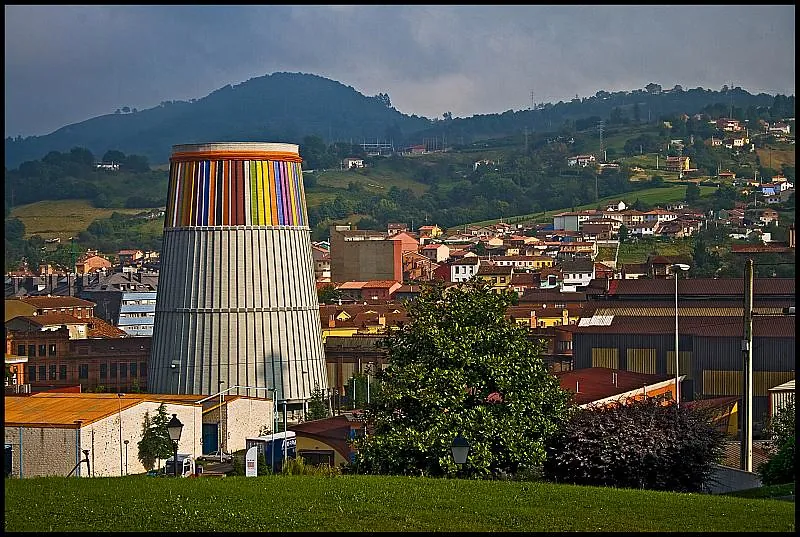
On paper, Noreña is just another council in central Asturias. But it feels dense, packed-in. Over five thousand people live here, and the centre has that vibe of a place where everyone knows each other. You’ll hear conversations spilling out of doorways, people catching up in the plaza. It’s not putting on a show; this is just how it is on a Tuesday.
Start at the Torre del Reloj. It’s functional, not fancy, and houses what must be one of Asturias’ more compact tourist offices. Pop in for a map if you want, but truthfully, you won't need it for long. The whole place unfolds over a few streets you can walk in an hour.
Una plaza, una iglesia y un palacio cerrado
From the tower, you naturally drift into the main square and past the church of Santa María. It’s been added onto and tweaked over centuries, so it feels layered rather than designed. It’s quiet inside—the kind of quiet that comes from being used for actual baptisms and funerals for hundreds of years.
On one side of the square is the Palacio del Rebollín. You can’t go in—it’s one of those buildings you walk around once, look up at, and make up your own stories about. It whispers about a time when there was more money floating around here.
That theme continues with the story of the indianos, Asturians who came back rich from the Americas. In Noreña, they talk about Pedro Alonso, back from Cuba. He paid for things like running water and schools back in the day. Now he’s got a square named after him, which feels about right.
And then there's the bandstand. An old iron kiosko de la música that looks like it hasn't hosted a proper concert in years. But it gives the square its shape, its centre. You can picture families gathered here on a Sunday afternoon decades ago.
Aquí se viene a comer (y punto)
Let's be clear: people come to Noreña to eat. Specifically, to eat sausage.
If you time it right, you might hit the Picadillo and Sabadiego festival in spring. There's ceremony—people in traditional gear, capes, medals—and there's a lot of cider poured by something called the Orden del Sabadiego. But mostly, there's tasting. The sabadiego is a dark sausage made with blood and onion. It sounds intense because it is intense. The first bite is all iron and spice; by the second or third, you get it.
Even without a festival on, that scent of cured meat follows you down every street. The butcher shops here aren't for tourists; they're supplying half the region.
Lo que no vas a encontrar
Don't come looking for postcard-perfect medieval corners or sweeping mountain views. You won't find them.
What you get instead is something simpler: an unvarnished look at small-town Asturian life that happens to revolve entirely around pork. You can "do" Noreña in a morning easily—see the tower, wander the square, peer at the palace facade.
My take? Come with an appetite and low expectations for big sights. Get a bocadillo from one of the local butchers (they won't have fancy names), sit on a bench by that silent bandstand, and just watch the place go about its business.
That stone pig on the roundabout will make perfect sense when you leave