Full Article
about Riosa
The cycling colossus: L'Angliru
Ocultar artículo Leer artículo completo
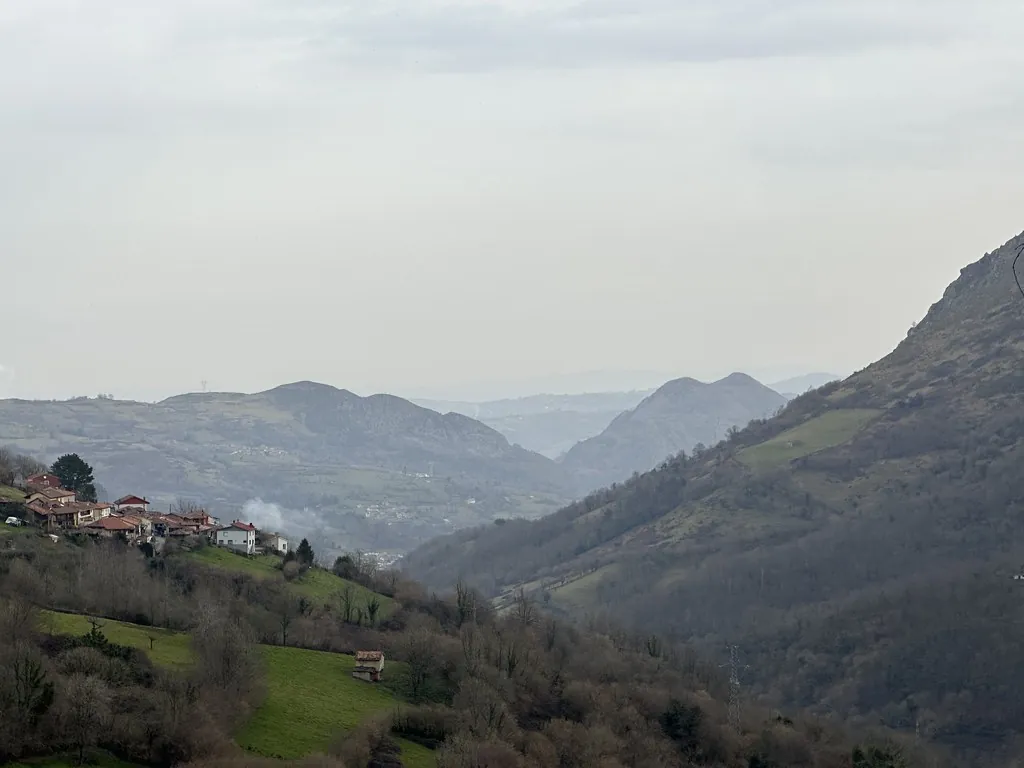
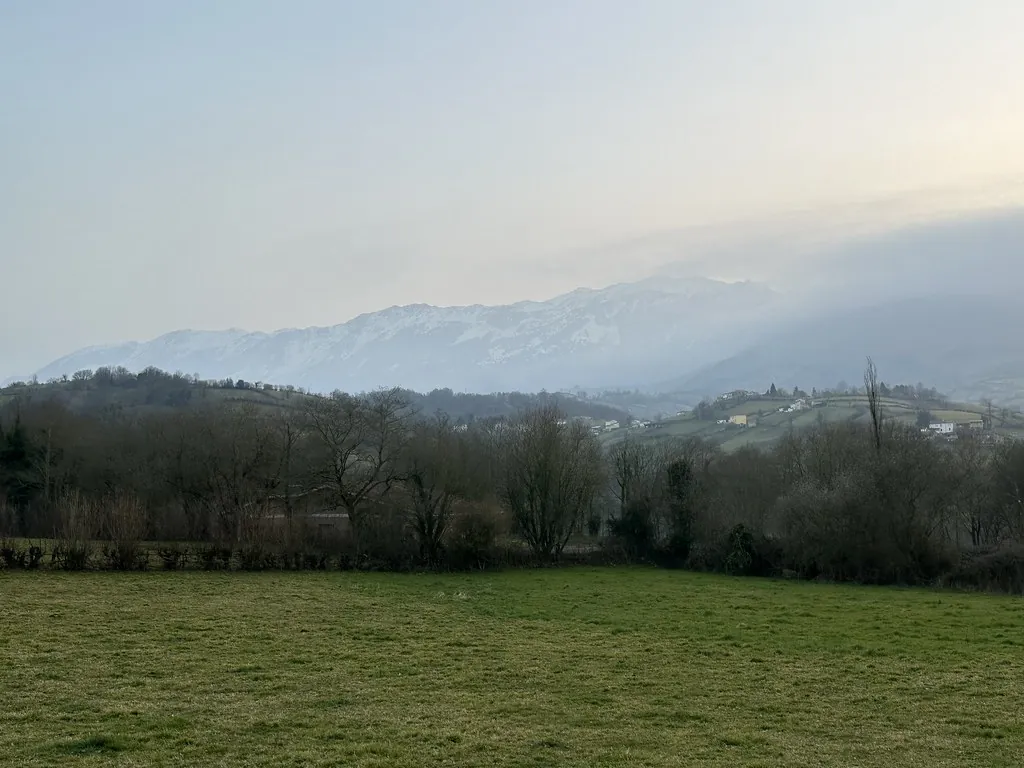
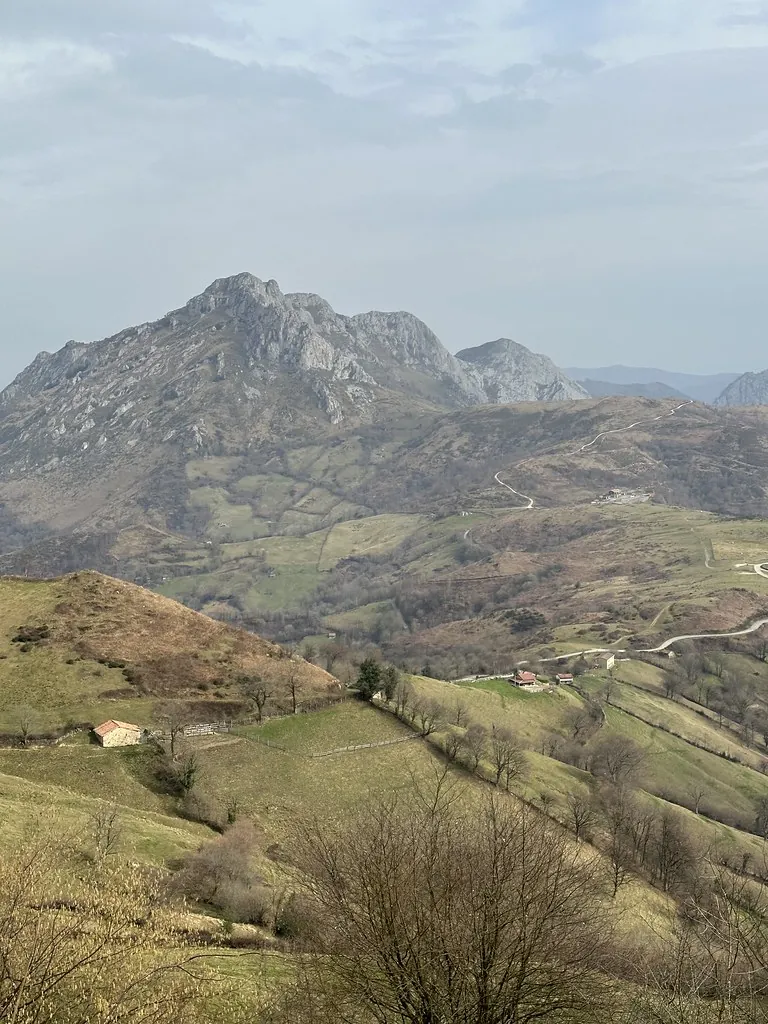
The road sign reads 23 %. You’re still in bottom gear and the tarmac keeps tilting upwards until only sky fills the windscreen. This is the Alto de l’Angliru, the climb even professional cyclists call “savage”, and it begins 3 km above the village of Riosa, 40 minutes’ drive south of Oviedo. Stand at the summit on a clear morning and the reward is a 60-kilometre sweep of horizon: the Aramo ridge to the north, the Cantabrian Sea glinting to the north-west, and directly below, the folds of the Nalón valley stitched together with stone walls and cow pasture. Turn round and you’ll see the scarred flanks of Spain’s last working coal seams, pit-head frames rising like exclamation marks above the woods. One village, two landscapes – green and grey, pastoral and industrial – that’s Riosa’s calling card.
A Valley That Refuses to Be Rushed
Riosa isn’t a single nucleated settlement but a scatter of 47 parishes strung along the AS-242 and a web of narrower lanes. The council offices, chemist and one decent bar occupy a low-rise block beside the river; everything else – chapels, corrals, bread-ovens – hides up side roads that double back on themselves. Distances feel elastic: San Esteban de Riosa, the nominal “centre”, is 8 km from the biggest parish, Lena de Riosa, yet both share the same postcode. Allow twenty minutes between sights, not five, and expect to share the tarmac with tractors, free-roaming dairy cows and the occasional Asturcon pony.
Saturday is market morning in the small square. Farmers offload cabbages the size of footballs and homemade queso de Riosa, a gentle blue that sidesteps the ammonia punch of its cousin Cabrales. Ask for semicurado; the middle-aged wedge costs €9 a kilo and keeps for a week in a cool bag. Bring cash – the nearest cashpoint is back down the valley in Mieres.
Walking the Slack-Time Paths
Mining shaped the economy for a century, yet most visitors come for what lies above the seams. The council has revived a lattice of old mule tracks that linked field to forge. The easiest introduction is the 5-km circuit from La Vega picnic area to the ruined foundry at Los Caleros: 90 minutes, 180 m of ascent, river crossings on flat stones and a mid-point spring cold enough to chill a can of cider. Yellow waymark discs appear every 300 m; if you miss two in a row you’ve wandered onto private land where dogs work unrestrained. Close every gate – the brown Asturiana cattle look docile but can clear a wall when startled.
After rain the clay holds boot prints like wet concrete. Pack lightweight waterproof trousers; Atlantic weather arrives fast even in July. Locals swear by the 07:30 glance at the Angliru radar mast: if the tip is lost in cloud, carry an extra layer and expect drizzle by coffee time.
The Mine That Won’t Close
The last shift at the San José pit ended in 2015, yet the headframe still rattles as contractors pump water from the lower galleries. You can’t go underground – the shaft gates are welded – but a signed footpath skirts the slag heaps where broom and birch are recolonising the spoil. Interpretation boards, in Spanish and surprisingly good English, explain how Welsh engineers arrived in 1857 to sink the first shaft and left behind a fondness for brass bands and rugby. The café in the former lamp room serves a respectable cortado for €1.40 and will fill your water bottle, useful because the next bar is 6 km up the valley.
Industrial heritage here is lived-in, not prettified. Children play football beside the conveyor house; someone’s washing flaps on a balcony bolted to the office block. It’s the sort of honest juxtaposition that photographers claim to seek, yet the scene is so ordinary that no one stops to pose.
Eating Like a Collier (or a Cyclist)
Casa Chus, opposite the church in Viapará, has four tables, a handwritten menu and a reputation that ripples as far as Santander. The house fabada arrives in an individual clay cazuela: white beans, morcilla, pancetta and a single chorizo the size of a relay baton. Order the medio ración unless you’re fresh off the bike; at €9 it feeds two modest appetites. Follow with retena beef – mountain-reared veal charred on the outside, pink within, served with hand-cut chips that taste of the local potato variety, Kennebec. The owner will insist on pouring your sidra: bottle held overhead, liquid arcs into the glass, you knock it back in one while it’s still fizzing. Refuse politely if you’re driving; the Guardia Civil set up random stops at the bottom of the Angliru road on Sunday afternoons.
Vegetarians get a look-in via pote asturiano, a cabbage-and-bean stew that omits the customary bacon bone if you ask before 11 a.m. when the pot is assembled. Gluten-free diners should note that bread is viewed as cutlery; bring your own if contamination is an issue.
When the Clouds Win
Riosa’s mood swings are meteorological. A dawn sharp enough to frost the windscreen can flip to muggy 24 °C by lunchtime, then collapse into hill fog that erases the valley walls. The Angliru road (AS-254) is officially closed when snow blankets the 1,570 m pass, though winter closures usually lift by 10 a.m. Chains are compulsory between December and March; car-hire firms at Oviedo airport will charge €60 a week for a set. If the summit barrier is down, the alternative mirador at La Cobertoria (1,190 m) gives almost identical views and stays open in all but the fiercest storms.
Summer brings a different hazard: convoys of amateur cyclists. The road is single-track with passing bays; go early or accept a 15 km/h procession behind puffing riders grateful you didn’t force them into the ditch. Mountain bikers have their own network of gravel forest roads starting at La Barraca; download the GPX tracks at the tourist office because phone signal dies 2 km beyond the tree line.
Leaving Without the Gift-Shop Moment
There isn’t one. Riosa’s souvenirs are edible or experiential: a wheel of blue cheese wrapped in chestnut leaves, a hand-drawn map of tomorrow’s hike, the memory of cowbells echoing across a fog-filled corrie. The closest thing to merchandise is the miner's helmet repurposed as a planter outside the library – not for sale, but the caretaker will lend you a trowel if you ask nicely.
Drive back down the AS-242 at dusk and the valley lights switch on one parish at a time, each hamlet a small constellation pinned to the slope. Somewhere above, the Angliru mast blinks red, warning aircraft of a mountain that once swallowed men whole and now releases them slowly, one footpath at a time. Riosa doesn’t do grand finales; it just lets you leave with your lungs full of Atlantic air and the realisation that Spain still has edges the tour buses haven’t rounded.