Full Article
about Teverga
Prehistory and mountains
Hide article Read full article
Where the Valley Tightens
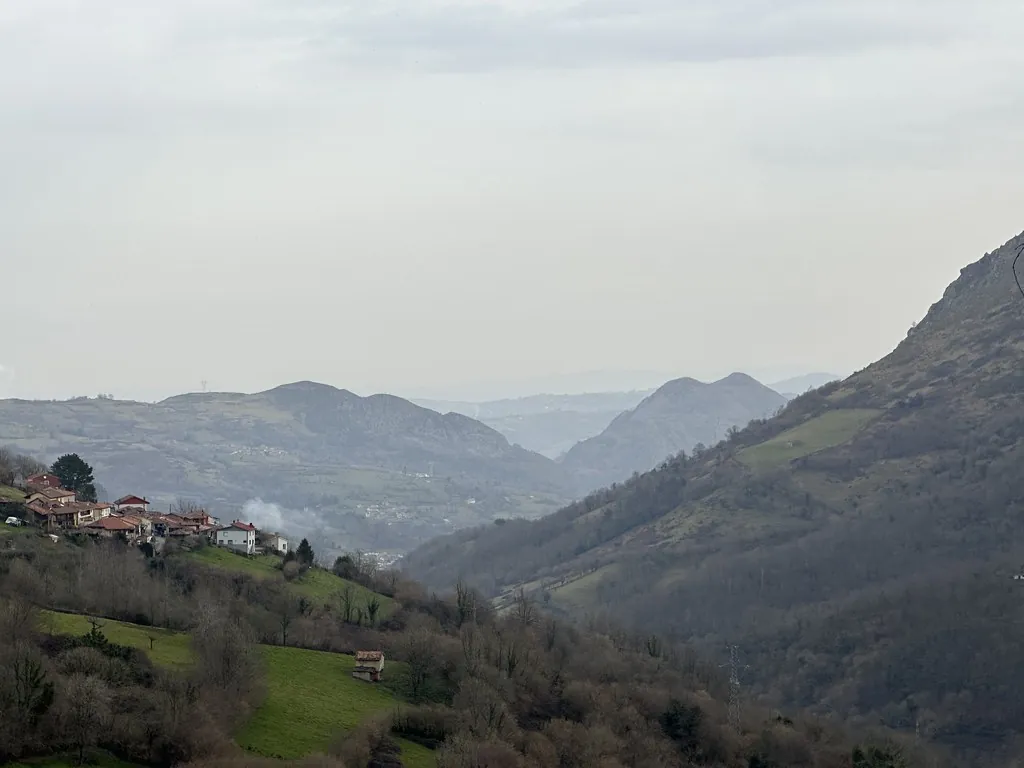
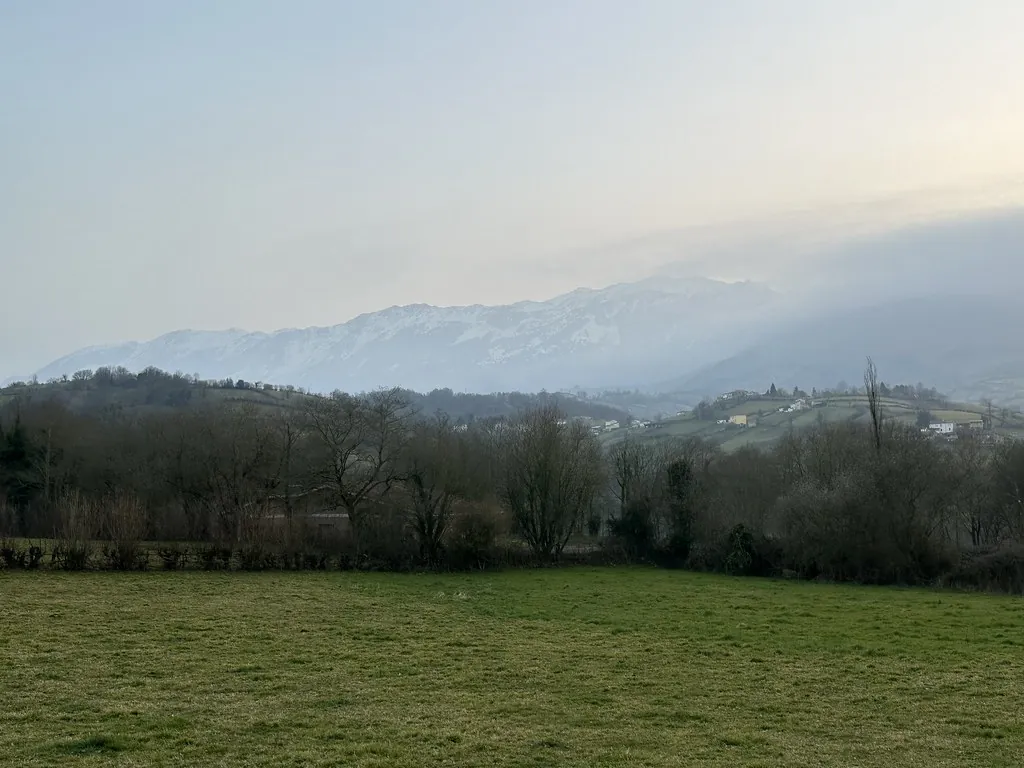
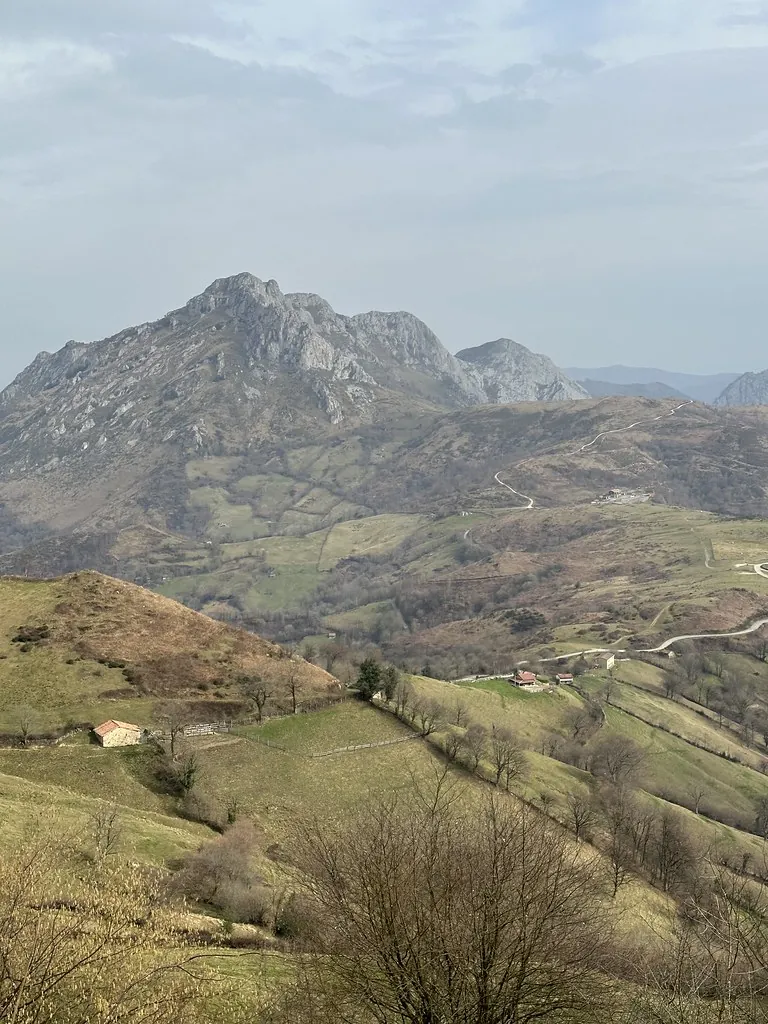
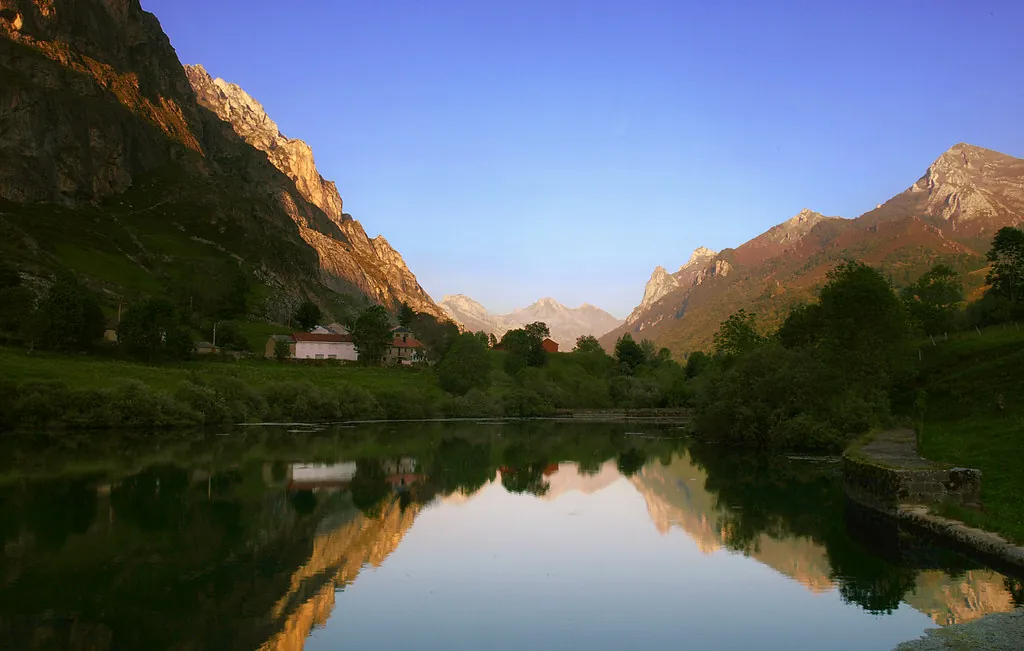
The road narrows, the rock walls close in, and suddenly the landscape feels vertical. Teverga sits in the interior of Asturias, carved into a series of tight valleys and limestone slopes that rise quickly towards the Cantabrian mountains. In a matter of kilometres the terrain shifts from valley floor to peaks that exceed 2,000 metres. That constant climb explains almost everything about the place.
Around 1,500 people live here, spread across small hamlets rather than gathered in a single centre. Entrago, La Plaza and Páramo are clusters of stone houses set where the land allows, often on modest terraces above the valley. There is no grand urban plan. Homes were built where they could be, shaped by gradient and weather rather than aesthetics.
For centuries Teverga functioned as a route between the Spanish meseta and central Asturias. It was never an easy crossing. Mountain passes, winter snow and the narrowness of the valleys dictated daily life and limited growth. That relative isolation still defines the area. Services are thin on the ground and distances can feel longer than they appear on a map. The reward is space and a sense of scale that has not been engineered for visitors.
Romanesque Stone and Deep Time
In La Plaza stands the Colegiata de San Pedro de Teverga, a 12th-century Romanesque church that serves as the area’s architectural anchor. The building is sober, almost austere at first glance. Its interest lies in the details: capitals carved with plant and animal motifs, traces of medieval polychromy, and several tombs linked to the former collegiate community. For centuries this was more than a parish church. It acted as a religious and administrative centre for the territory, which gives its solid walls a certain authority.
A short distance away in San Salvador de Alesga, the Parque de la Prehistoria steps much further back in time. Rather than displaying original cave art, which in many cases survives in caverns with very restricted access, the park uses reproductions and interpretive panels to explain the rock art of the Cantabrian cornice. The aim is context. Visitors leave with a clearer sense of how Palaeolithic paintings and engravings fit into the wider landscape, even if the originals remain out of reach.
Nature provides its own geology lesson in the Valdecerezales gorge. The road threads between tight rock faces that reveal the limestone structure of the council area. In good light, the strata and cuts in the stone are easy to read. It is a brief but striking stretch, and it underlines how much of Teverga’s identity rests on rock.
Walking the Old Railway, Climbing the High Ground
The gentlest way to understand Teverga is along the Senda del Oso. This path follows the route of a former mining railway and runs through the valley, often close to the river. The gradient is mild, which makes it popular with both walkers and cyclists. Even when the weather turns unsettled, it remains a sensible option because it avoids major climbs. A so-called flat walk in this part of Asturias still involves steady gradients, but here they are manageable.
Those who look up towards the skyline will notice more serious objectives. Peña Sobia and the area around the peak of Ferreirúa draw walkers seeking longer days and bigger views. These are substantial mountain routes. Weather changes quickly, mist forms without much warning and the ground becomes awkward when wet. Extra time and basic navigation skills are sensible precautions. Ten kilometres in the hills can turn into several hours if mud or low cloud intervene.
Montegrande’s beech wood offers a different pace. It is one of the best-known forests in the area and feels dense and damp for much of the year. In autumn the ground disappears beneath fallen leaves. Moisture lingers, roots twist across the path and soft earth slows progress. This is less about distance and more about immersion in woodland.
Spring and autumn tend to be the most stable seasons for walking through valleys and forests. Temperatures are moderate and the hills feel active rather than harsh. Summer brings longer days, but early starts are wise for higher ground. Cloud and storms often gather in the afternoon, and when visibility drops the valley floor or a visit to a heritage site is the more prudent choice.
Life in Small Hamlets
Architecture here follows function. Stone houses with sloping roofs line narrow lanes. Hórreos and paneras, traditional raised granaries, stand beside homes as part of the everyday landscape rather than as museum pieces. The overall impression is practical. Farms outnumber photo opportunities and the stone seems to fold into the slope instead of sitting proudly on it.
Festivities retain a local scale. The feast of San Pedro, towards the end of June, brings together residents from different parishes with traditional music and shared meals at the centre of the celebration. Summer sees many hamlets organise their own events linked to old agricultural calendars. In autumn, the amagüestu celebrates the chestnut, a custom widespread in the Asturian mountains, though each village marks it in its own way.
Food reflects the climate and altitude. Pote tevergano, a substantial mountain stew of cabbage, beans, potato and assorted pork cuts, appears in colder months and is as filling as the landscape suggests. Pan de escanda, a dense spelt bread, is common and keeps well. Game dishes such as wild boar or venison feature seasonally. Meals tend to be robust and shaped by what the terrain provides.
Practicalities in the Hills
Oviedo lies within reach, and the drive to Teverga follows the AS-228, a mountain road with frequent bends. Rain or fog call for patience. The Valdecerezales gorge forms part of this approach, and while it is scenic, it demands attention at the wheel. Public transport exists but is limited, so a car makes exploration easier, particularly when moving between scattered hamlets.
Parking is available in the main villages, though spaces fill quickly on busy days. Even in summer, carrying an extra layer is wise. Temperatures can drop sharply in the evening or when cloud rolls in, especially near higher ground. Weather shifts quickly at altitude, and what feels like a settled morning can become damp and cool by mid-afternoon.
Mobile signal can weaken in the valleys, and shops and cafés keep modest hours. Planning ahead helps, particularly outside peak season. Teverga rewards those who move slowly, who stop in La Plaza for a wander, who step inside the collegiate church if it is open, who walk a quiet stretch of the Senda del Oso without feeling the need to complete it.
A quick drive through the gorge offers only a glimpse. The place reveals itself at walking pace, between stone walls and under shifting mountain light. It is not designed for spectacle. It is shaped by slope, weather and time, and it makes most sense on those terms.