Full Article
about Mieres
Cradle of mining and cider
Hide article Read full article
A town that wears its past on the surface
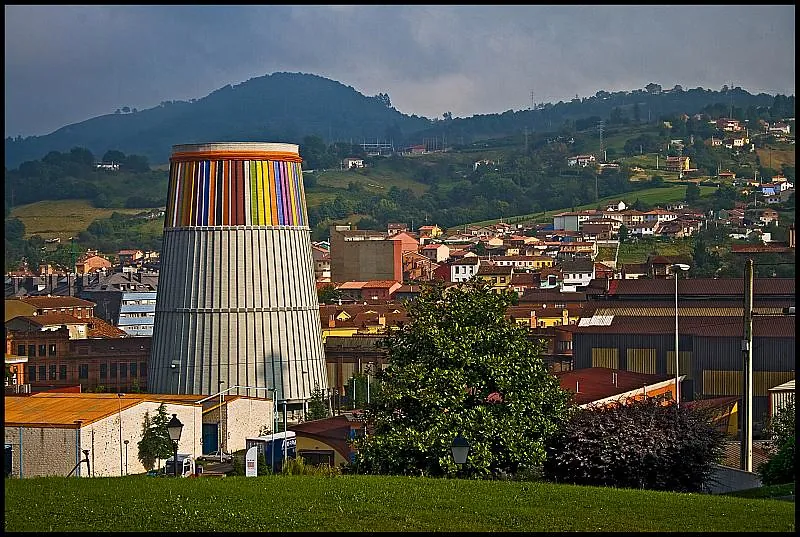
There are places in northern Spain that trade on medieval lanes and sea views. Mieres does not. Chimneys rise above the rooftops, old industrial structures sit beside residential streets, and the valley feels lived in rather than arranged for effect.
This is Mieres del Camino, to give it its full name, a small Asturian town shaped by coal and the people who extracted it. The mines no longer dictate the rhythm of daily life, yet the industrial era remains visible. A French industrialist, Numa Guilhou, built a factory here in the mid-19th century. It no longer smokes, but its chimneys still punctuate the skyline, reminders of a time when sulphur and sweat were part of the air.
What surprises many visitors is the tone. In other former mining towns, the conversation can drift towards nostalgia or regret. In Mieres, the mood is steadier. The past is acknowledged, even respected, but it is not treated as a museum piece. The town reorganised itself when coal stopped setting the pace. Life continued.
The centre has the hum of an ordinary Asturian afternoon. Conversations spill out of bars. Cider is poured in the traditional way, from shoulder height into a wide glass, a quick splash that is drunk immediately. The floor may be damp from deliberate spillage, which rinses the glass and releases aroma. It is ritual rather than performance.
The Camino, but not as imagined
The “del Camino” in Mieres del Camino is not decorative. The Camino de Santiago passes through the municipality, though this stretch bears little resemblance to the vine-covered villages and Romanesque churches that often appear in guidebooks.
Here, the route threads through working-class neighbourhoods, past industrial remnants and buildings from the years when coal brought prosperity. The Liceo de Mieres, with its 1920s art deco air, seems to belong to a different chapter of Spanish history. Its façade hints at the period when money and ambition reshaped the valley.
Pilgrims who arrive expecting a sepia-toned interlude find something else: real life. Laundry on balconies. Traffic at junctions. People heading home with shopping bags. It is one of those stretches where the Camino shifts register. Less postcard, more present tense.
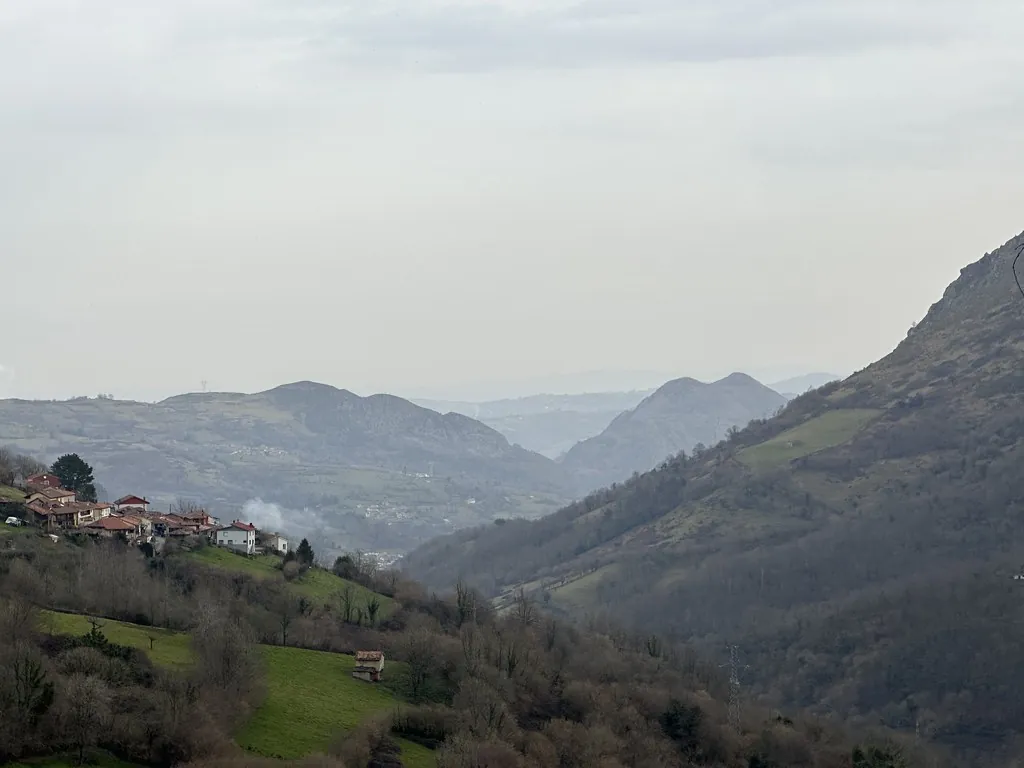
The town itself sits in a steep valley. Streets rise sharply away from the river and tiled roofs stack up the slopes. Good shoes make a difference. So does a willingness to accept that this is Asturias without cosmetic smoothing.
Bustiello and the logic of a company town
A few kilometres from the centre lies Bustiello, often described as the best-preserved mining settlement in the area. It was built by a mining company for its workers, and the original idea remains legible in the layout. Houses line up in orderly rows. There are shared spaces. A church and a school anchor the plan.
The design speaks of a particular vision of community, organised around the mine. Families lived, worked and socialised within this small, structured world. Some houses today are well kept; others wait for attention. Together they form a portrait of how mining shaped domestic life in the valley.
A slow walk through Bustiello on a quiet morning reveals layers rather than spectacle. Curtains shift. Dogs bark behind gates. The place does not perform for visitors, which is precisely its strength. It feels inhabited.
Reaching Mieres and its surroundings is easiest by car, especially if the plan includes Bustiello and other parts of the valley. Public transport exists but can be limited, and flexibility helps when exploring former industrial areas that were never designed with tourism in mind.
Along the old railway line
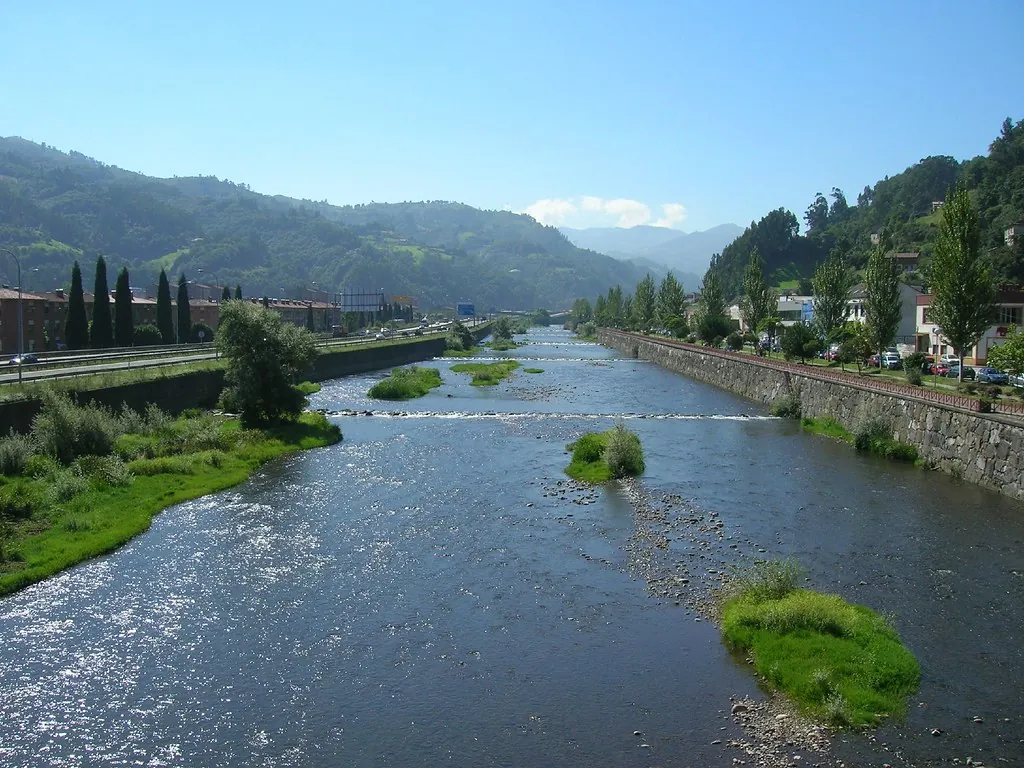
Coal once travelled out of the valley by rail. Today, part of that infrastructure has found a gentler purpose. The Turón greenway follows the route of a former mining railway, running parallel to the river.
The path is straightforward rather than dramatic. It suits walkers who prefer a long, steady stroll to a thigh-burning ascent. Bridges appear along the way. Remains of small stations and industrial buildings stand quietly among trees. Water provides a constant soundtrack.
At certain points, the scene turns unexpectedly calm. It takes an effort of imagination to picture wagons heavy with coal rolling past. The contrast between former industry and present quiet is part of the appeal.
Weather matters here. Mieres receives its share of rain, and when it arrives in earnest, outdoor plans shrink quickly. A light waterproof belongs in any bag, even in summer. The upside is that greenery thrives in this climate, and the valley rarely looks parched.
Food for working people
Rain has always been part of life in Asturias, and the cooking reflects that. In Mieres, plates are built for appetite. Fabada, the region’s famous bean stew, appears with its rich assortment of pork. Lamb prepared in the local style is common. Hearty potes, thick with greens and meat, answer the kind of hunger that follows manual labour.
This is not delicate cuisine devised for travellers. It is domestic food, shaped by the needs of mining families who required substance over refinement. Portions can be generous by British standards, and sharing is common.
Dining hours may surprise visitors from the UK. Lunch drifts into mid-afternoon and dinner rarely begins early. Patience is rewarded with lively evening streets, especially in summer when the heat softens and residents come out to stroll through the centre.
At the end of September, the fiestas of San Cosme and San Damián alter the rhythm again. Streets fill with people who return to the town even if they now live elsewhere. Music carries across squares. The atmosphere becomes celebratory, direct and unapologetic, very much in keeping with the character of the place.
Why come to Mieres?
Mieres does not appear on many lists of the “most beautiful” places in northern Spain. There is no beach and no preserved medieval quarter arranged around a perfect plaza. Visitors in search of flawless façades may leave puzzled.
Yet the town offers something rarer: clarity about what it is. The industrial structures remain visible. The mining story is not edited out. The Camino passes through without softening the edges. The valley landscape presses in close, river below and wooded slopes above.
Spring and autumn suit Mieres well. Temperatures are moderate, and the surrounding greenery feels fresh. Summer brings more street life, particularly in the evenings. Winter can be damp, and rain is always possible, but that too is part of the Asturian script.
Locals may ask why a British visitor has chosen Mieres. The question is usually genuine rather than defensive. The answer can be simple. This is a place that tells its story plainly. It does not promise a postcard. It offers a working valley that adapted when its main industry faded, and carried on regardless.
For travellers willing to look beyond façades, that straightforwardness can be reason enough.