Full Article
about Langreo
Heart of the mining basin
Hide article Read full article
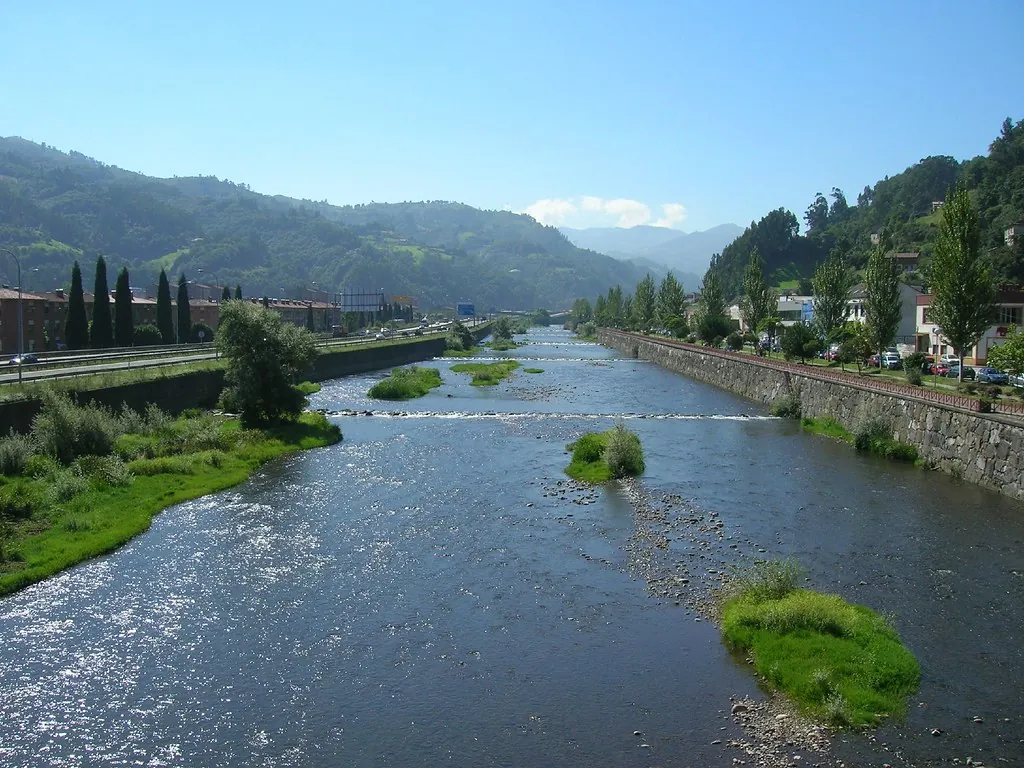
At nine in the morning, the sun has yet to fully reach the floor of the Langreo valley. From the bridge in La Felguera, pale smoke rising from a few chimneys blends with the mist that often lingers over the Nalón on cold days. Below, rows of workers’ houses climb the hillside, their narrow balconies edged with painted iron, as if they had grown alongside the factories themselves.
Langreo does not present itself all at once. There is no central square organising the view. The valley stretches through a chain of neighbourhoods that for decades revolved around mines, workshops and blast furnaces. The river can be heard between buildings, old trade union murals appear on some walls, and there are still doorways where a metallic smell seems to cling to the stone when it rains.
Walking the industrial spine
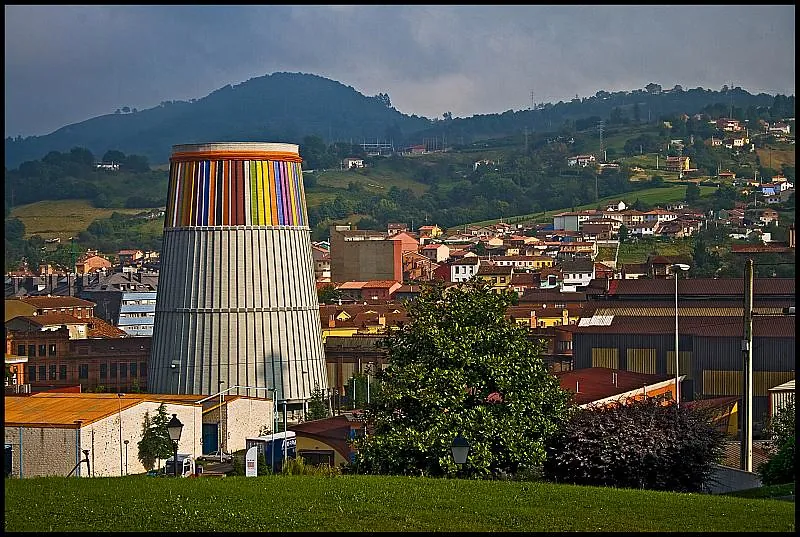
In La Felguera, the Museo de la Siderurgia occupies part of what used to be one of the valley’s major steelmaking complexes. From one of the tall structures on site, sometimes included in guided visits, the layout of Langreo becomes clear: a long valley floor, neighbourhoods pressed closely together, and steep hills rising abruptly on either side.
Guides often explain how daily life once revolved around the factory whistle. Workers’ housing was built close to the workplace, and many streets developed according to that logic: industry first, then the neighbourhood. In Sama and La Felguera, rows of early twentieth-century houses still reflect that period.
A few minutes away stands Pozo San Luis, one of the preserved mining shafts in the area. Visits involve going down into the facilities with helmet and jacket. The smell of damp, oil and rusted iron lingers for a while. At certain points, when the lights are switched off in the galleries, the darkness is so complete it feels solid. It’s a heavy quiet that makes you think about eight-hour shifts spent in that blackness.
The sound of water under concrete
The Nalón river runs the full length of Langreo. It is not always visible from the streets, as the valley grew for years turned away from the water, taken up by factories and railway lines. Even so, some stretches now have riverside paths where you can hear water running over stones.
On quiet mornings, fishermen can be seen leaning on railings or walking slowly along the bank. The Nalón has long been known for trout, though catches now depend on season and yearly regulations—ask locally before you think about casting a line.
When the sidra flows in summer
When summer festivals arrive in Langreo’s neighbourhoods—Sama, La Felguera, Ciaño—the pace of the valley shifts. For a few days, streets fill with music from temporary stages and open-air dances that continue past midnight. These are not events designed for visitors; they’re rooted in neighbourhood memory.
An evening walk reveals older residents sitting on folding chairs by their doorways. Many still recall when factory sirens marked the rhythm of the day and talk about what happened when those sirens fell silent for good.
The view from above
It only takes a short uphill walk to leave the urban setting behind. As you gain height, chestnut trees and ferns appear, along with dirt tracks once used by miners moving between villages.
One of the best-known nearby peaks is Peña Villa. The ascent follows paths that cross woodland and former meadows. In autumn, the ground is often covered with damp leaves and split chestnuts. From the top, Langreo looks different: a green strip cut through by roads and railway lines, its neighbourhoods fitted tightly between slopes.
Check the forecast before heading up. Fog moves in easily here and can cover everything within minutes.
A practical note on light and traffic
Langreo is well connected by road to Oviedo and Gijón. Local trains also reach several main neighbourhoods—useful if you’re travelling without a car.
In winter, fog often settles in the valley until mid-morning; driving early requires patience and low beams. Clear days in spring and autumn bring a sharp quality of light: hills appear vividly green against grey slate roofs.
If you plan to walk through the valley or explore nearby paths, weekdays are quieter. Summer weekends bring more activity to the neighbourhoods, and finding parking near festival areas can take time.