Full Article
about San Martín del Rey Aurelio
Living mining history
Hide article Read full article
A valley that reveals itself slowly
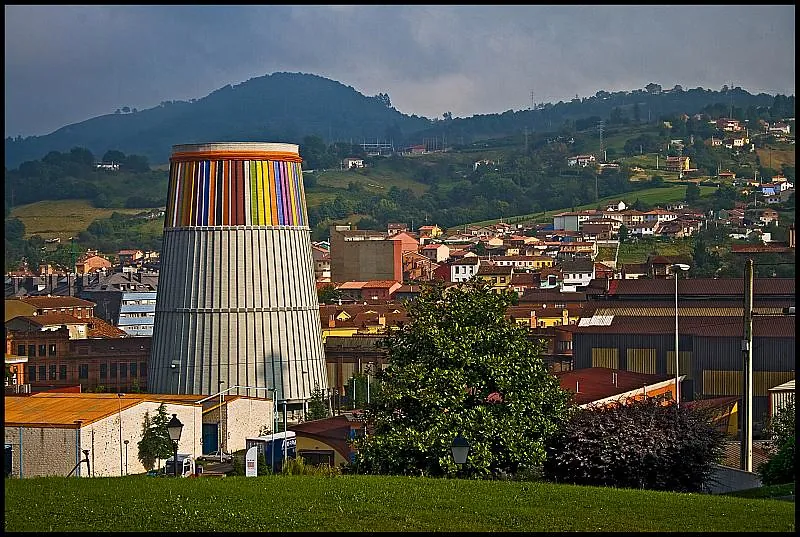
From the road, San Martín del Rey Aurelio can look like another stretch of former industrial Asturias: brick housing, low hills, a chimney or two interrupting the skyline. Then you pull into El Entrego early in the morning and the picture shifts. There is the smell of fresh bread drifting from a bakery, people heading in and out with carrier bags, the everyday rhythm of a working valley. And just above, a former mine shaft now turned into a viewpoint.
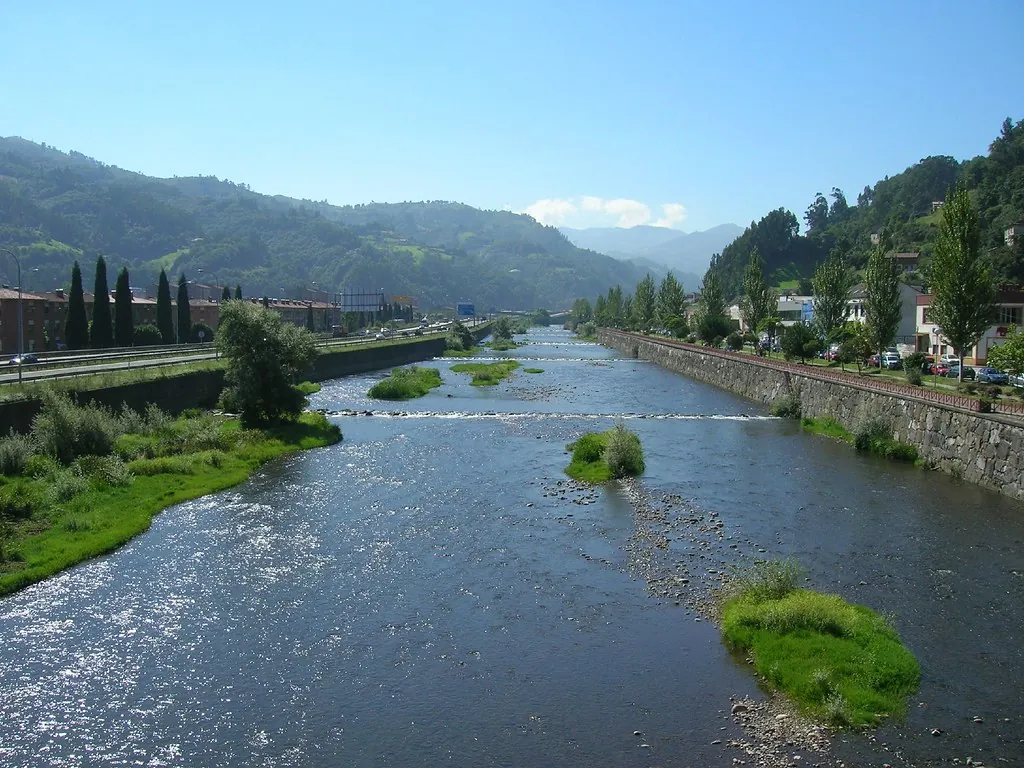
This is not a village arranged around a postcard square. It runs along the Nalón valley in a long, slightly improvised line, its neighbourhoods linked by road and river. The effect is layered rather than theatrical. Past and present sit side by side without much fuss.
San Martín del Rey Aurelio has around 5,000 residents. Locally, many shorten the name to San Martín, but the full historic title hints at older stories.
From royal burial to coal seams
The name comes from King Aurelio, who ruled Asturias in the eighth century. According to tradition, he died and was buried here. In the church of San Martín a tomb is associated with him. It is not presented as a grand spectacle. You step inside, look around, and life in the village continues outside. There are no queues, no fanfare, just a sense that history is woven into the ordinary.
The valley has changed professions more than once. It began with livestock and small rural settlements. The Romans passed through the wider area, and routes are said to have connected inland territories via the Puerto de Tarna. Later it was tied to the Asturian crown. Then coal arrived, and coal reshaped everything.
Look up and the transformation is clear. Scrubby hillsides rise behind rows of brick houses. An industrial chimney appears, then disappears behind another fold of green. It feels as if each century added a new layer without erasing what came before.
For visitors expecting an untouched rural idyll, this can be a surprise. The landscape is worked, not polished. Yet that is precisely the point. Pride here is industrial as much as historical, and conversations often turn as readily to pits and mining life as to scenery.
Walking between chapels and kitchen gardens
Several signposted routes link small churches and chapels scattered across the municipality. These are not monumental cathedrals. They are modest temples, some very old, others rebuilt more than once, standing quietly among houses and fields.
The route to San Roque in Blimea is often mentioned because medieval burials were found nearby. The hermitage of Santo Toribio in Cocañín is so discreet that from a distance it can resemble a shed. The chapel of Cristo de la Paz has a history connected to mining activity and later reconstructions.
The appeal lies as much in the stretches between these buildings as in the structures themselves. Quiet lanes. Vegetable plots. Someone walking past with a bag of bread who offers a greeting without hesitation. The valley feels close-knit in that understated Asturian way.
Footwear matters. Some slopes begin gently and then tighten without warning, the sort of incline that leaves you short of breath before you quite realise it. The valley sides rise steeply, and even short walks can feel more strenuous than the map suggests, especially if the air is humid.
Higher paths provide a little relief from the closeness of the gorge in summer. In spring and autumn, often the best seasons to visit, the temperatures are kinder for walking and the greenery is at its most vivid. Rain can arrive quickly at any time of year, so waterproofs are sensible even if the morning looks clear.
Out on the hillside sits the dolmen of Campa L’Españal. There is no elaborate infrastructure around it. It is simply there, in the open, which adds to the sense that this is a place where history is encountered rather than staged.
Food built for weather and work
The cooking in San Martín del Rey Aurelio makes immediate sense once you understand the climate and the mining past. Winters are damp and cool, and physical labour shaped appetites. Dishes are substantial, often served in deep bowls, and designed to warm.
Nabos callos, tripe cooked with turnip, may sound unusual at first glance. After a walk in the hills, the combination feels logical and comforting. Fabada, the Asturian bean stew rich with pork, appears regularly and is treated as a proper midday meal rather than a side dish.
Casadielles provide a sweet counterpoint. Fried or baked pastries filled with walnut, anise and sugar, they tend to disappear from the plate while conversation carries on.
In Blimea, an annual winter festival celebrates stuffed peppers and draws crowds from across the valley. The smell of peppers and slow-cooked fillings is noticeable as soon as you step out of the car. The atmosphere shifts on those days. Streets fill, and the otherwise steady rhythm becomes animated.
Eating here usually means following local advice. Ask, and someone will point towards a comedor or simple dining room where the menu depends on what is simmering that day: stew, potaje, fabada. Evening dining in Asturias starts late by British standards, and kitchens often pause in the late afternoon, so planning around Spanish meal times avoids frustration.
Cider is the drink most associated with the region. It is poured from height to enliven the bubbles and served in small measures that are meant to be drunk promptly. It is part of the wider Asturian culture that shapes daily life in the valley.
Visiting without a script
Reaching San Martín del Rey Aurelio is straightforward if travelling by car along the Nalón valley from Oviedo or nearby Langreo. The road follows the river and links a chain of former mining towns until El Entrego appears as one of the main centres of the municipality. Public transport exists but tends to be limited, and a car makes it easier to explore neighbouring villages.
A useful starting point is the area around Pozo Santiago. There are viewpoints and information panels explaining how the mining operations functioned. From there, the urban area can be explored on foot, or you can drive to other parts of the municipality such as Sotrondio or Blimea.
This is not a place that runs on tight tourist timetables. Some churches open when the key holder is available. Certain historic buildings may require asking at the town hall or parish in advance. Sunday and Monday can feel subdued, with much of everyday life slowed down.
Summer brings more activity because families return to visit relatives, and the valley feels busier. Mid-summer heat can be muggy in the gorge, the air sitting heavily between the slopes. Winter is quieter unless a local festival is taking place.
A few words of Spanish are appreciated. English is rarely heard in daily exchanges, and interactions tend to be polite and curious rather than effusive.
San Martín del Rey Aurelio does not attempt to impress at first glance. It asks for a little patience. Spend time in El Entrego, walk up towards a chapel, look out from a former mine over the layered hillsides, and the valley begins to make sense. It is a place shaped by work, weather and centuries of adaptation. The more attention given to those layers, the more coherent it becomes.