Full Article
about Castropol
Balcony over the Eo estuary
Hide article Read full article
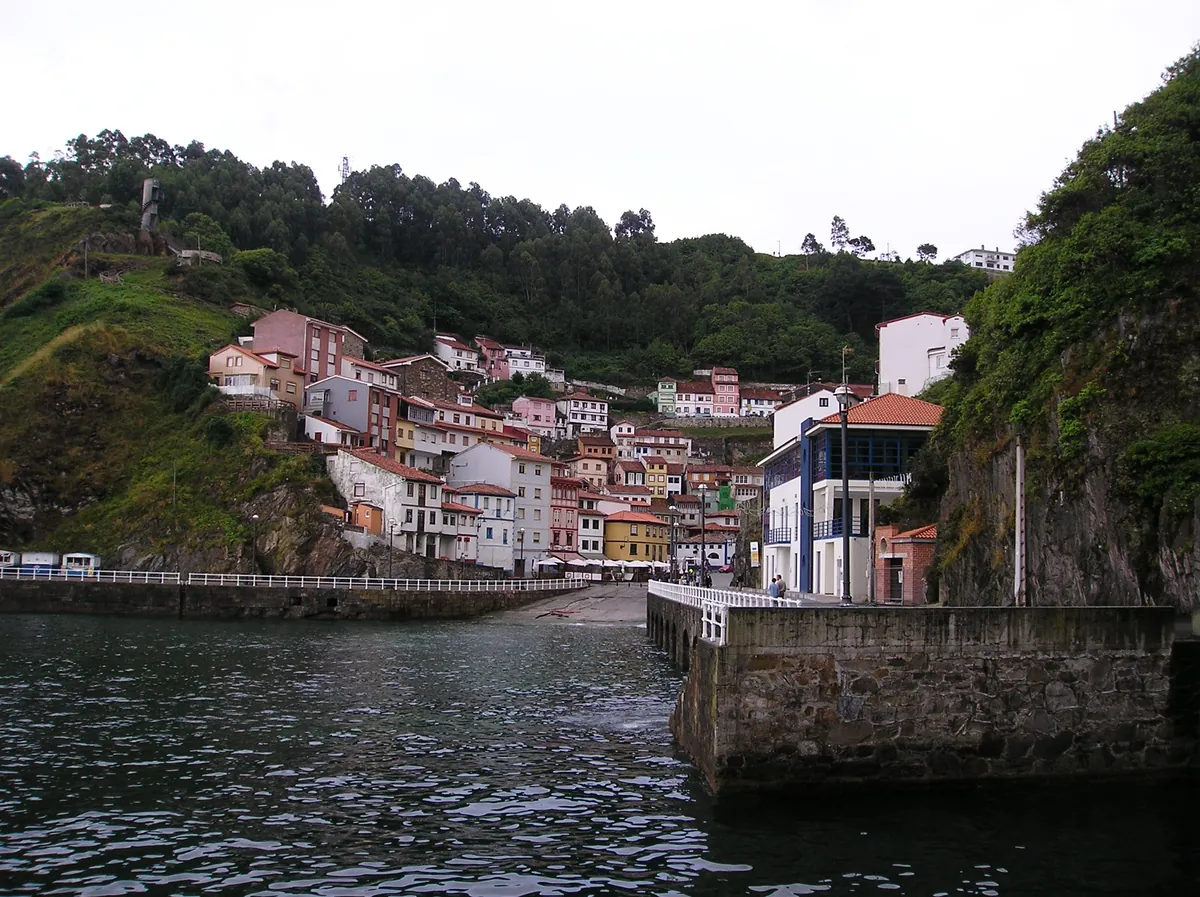
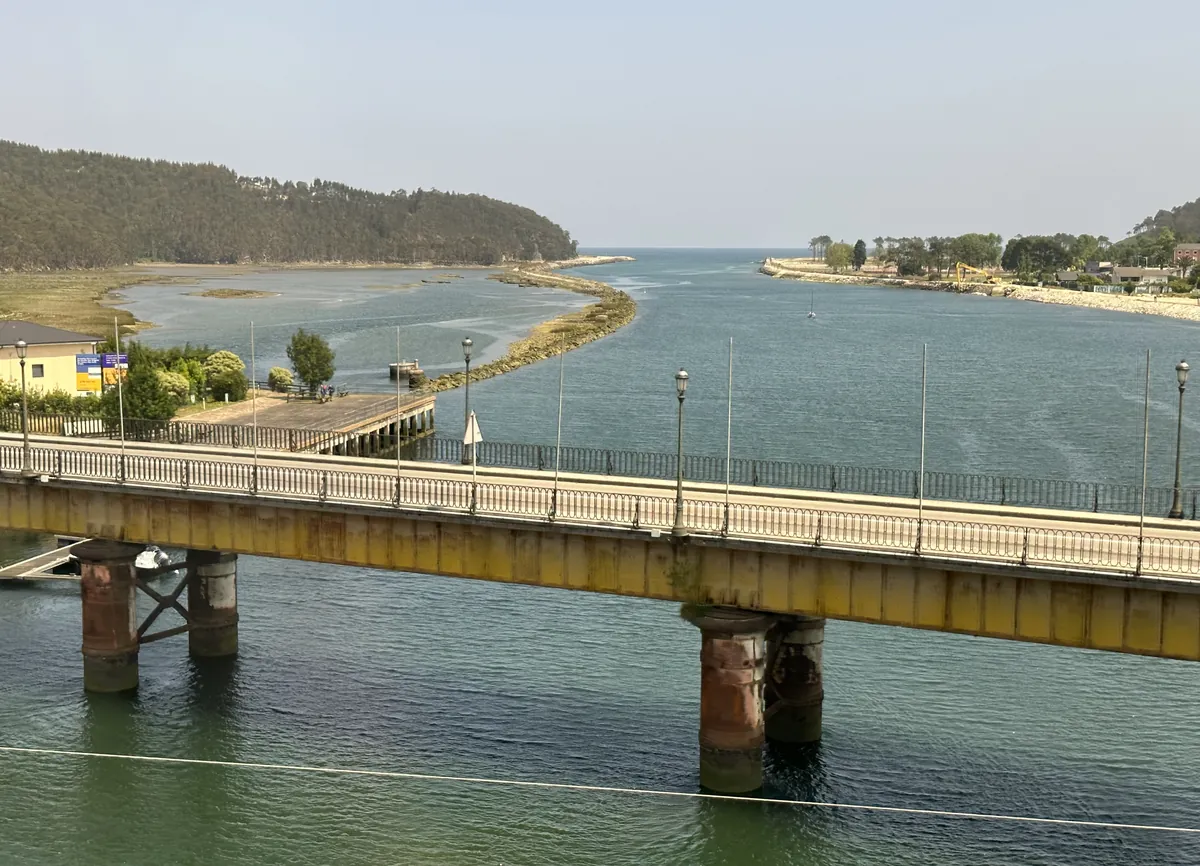
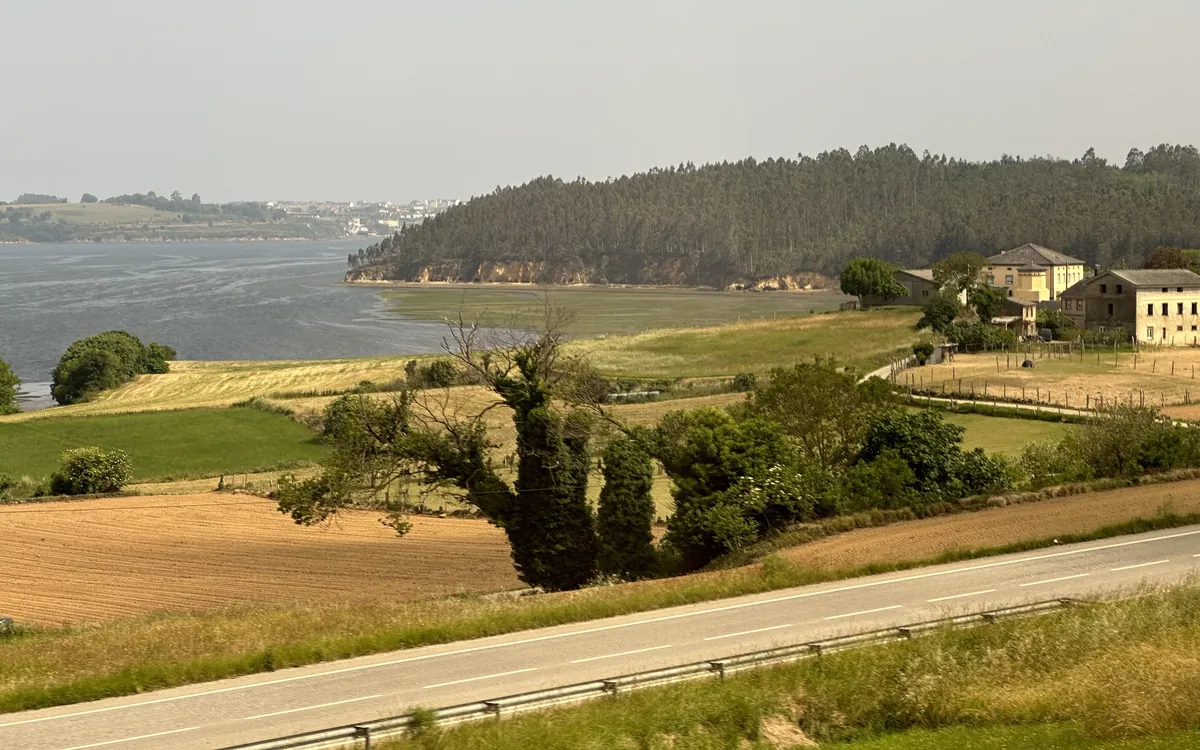
Low tide in Castropol has a smell. Seaweed and living mud cling to the wooden slats of the quay, and the River Eo draws back to reveal a dark, gleaming floor where crabs dart between holes. From the N‑634 bridge, the village looks like a ship paused mid‑estuary: white houses climbing the hill, the church tower rising above the roofs, Ribadeo visible across the water as if it were simply another neighbourhood reached by boat rather than road.
This is Asturias, but Galicia sits just over the estuary. The sense of border runs through daily life, from the language heard in the street to what lands on the plate.
An Estuary That Feels Like Sea and River
The Eo is never quite one thing. At certain hours it looks and smells of the Atlantic. At others it behaves like a broad river, flattening into silence when the tide retreats. Early in the morning, before traffic starts to cross the bridge, the water shifts shape almost imperceptibly. Mudbanks appear. The landscape grows hushed.
Oyster farming has been part of this scene for decades. Black ropes hang in the water like suspended necklaces, and when they are hauled up on working days the oysters are sorted with practised speed. Hands move over damp crates, separating sizes without hesitation. The scent of salt lingers on clothes long after the work is done.
The estuary shapes the kitchen as much as the view. Sea bass is often split open along the back, the skin toasted, the flesh pale and firm. Cider flows freely and tastes sharper than expected so close to Galicia, perhaps because of the air that drifts in from the water. Visitors should know that cider here is poured from height to aerate it. If the ritual holds little appeal, it is better to say so before the bottle is opened.
The local speech, eonaviego, slips between Galician and Asturian sounds. Snatches of “o pan” or “graciñas” carry across small squares. Some homes still prepare cereixolos, a delicate, almost fragile pastry made with lard and a touch of lemon. These tend to appear at family gatherings and winter celebrations rather than in shop windows.
After the Fire
Climbing into the upper streets means climbing into history. The lanes smell of damp stone and ivy. Steps are worn smooth and reflect the light after rain, so decent shoes are essential even in summer. The old quarter is compact. A slow wander takes less than an hour, though it rewards lingering.
At the end of the 16th century a fire destroyed much of the town. Little remains from before that time apart from the chapel of Santa María del Campo. Romanesque and restrained, it carries the cool scent of stone and candle wax typical of small rural churches. The rest of the historic centre rose gradually afterwards.
Noble houses line certain streets, their stone doorways and weathered coats of arms hinting at fortunes made elsewhere. Some belonged to families who returned from the Americas with enough money to build large homes facing the estuary. Wooden galleries project towards the water. From those balconies Ribadeo sits close enough to study in detail, separated by tide rather than distance.
Near the quay stands an old modernist building commissioned by one of those returnees at the end of the 19th century. Its façade shows the wear of sea air. Palm trees in the garden lean under the north wind, a reminder that the estuary once carried more boat traffic than it does now.
Walking the Edge of the Water
When the estuary empties, Castropol feels suspended. The dark mud gleams. Herons stand motionless for long stretches, as if placed deliberately among the salt grasses. The Senda del Eo follows part of these marshes for several kilometres, keeping close to the water and the wind. It is an unhurried walk, more about atmosphere than landmarks.
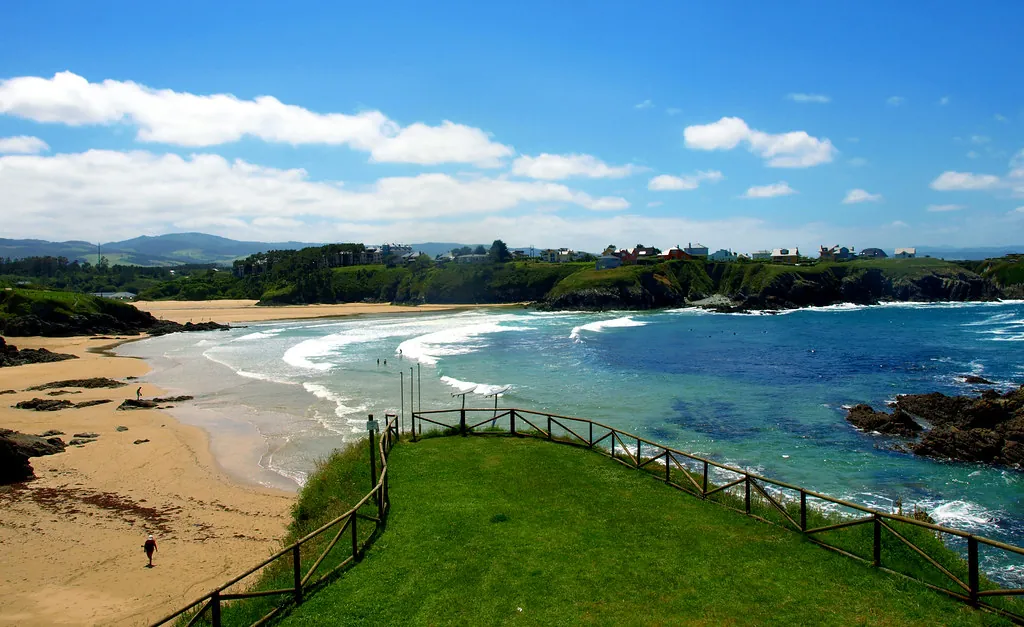
To the west lies Peñarronda beach, a broad half‑moon framed by low cliffs. At low tide it is possible to walk around the rounded rock known as the Castelo, shaped and hollowed by the sea over time. Tide times matter here. The water returns quickly and the passage disappears.
The relationship with the sea remains practical rather than decorative. In workshops along the estuary, small wooden boats are still built or repaired. When the doors are open, the smell of resin and linseed oil drifts into the street. Inside, there is the thud of hammers and the creak of planks being coaxed into place. These boats are designed for shallow waters, with rounded bottoms suited to the changing depth of the ría.
Practicalities on the Border
Castropol has around 5,000 residents, and the centre is small. This is not a place for days of urban sightseeing. It works better as a base for exploring the estuary and the nearby coast, or as a slow afternoon stop on a wider journey through western Asturias and the Galician borderlands.
Public transport is limited. A car makes reaching the beach and the surrounding countryside far easier, though taxis from Ribadeo are an option. In summer the atmosphere shifts, particularly at weekends when many visitors arrive from the Galician side. Parking near the centre becomes complicated and the narrow streets feel busier. Spring tends to bring estuary activity with fewer people around, and autumn has a similar calm.
The weather can surprise. Summer afternoons may be warm, but the breeze off the water cools the evening quickly. A light layer is useful throughout the year.
Shops close for part of the afternoon and Sundays are quiet. Plan ahead and expect a slower rhythm. That rhythm is part of the appeal. At dusk, from the higher streets, the Eo turns gold and Ribadeo becomes a dark outline across the water. Gulls cut across the sky. The quay settles.
Castropol does not overwhelm with sights or grand monuments. It offers something subtler: a village that faces the estuary, listens to the tide, and carries the memory of fire, migration and boatbuilding in its stone. Time here is measured less by a list of attractions and more by the movement of water under the bridge.