Full Article
about Grandas de Salime
Key stop on the Camino Primitivo
Hide article Read full article
A slow morning by the reservoir
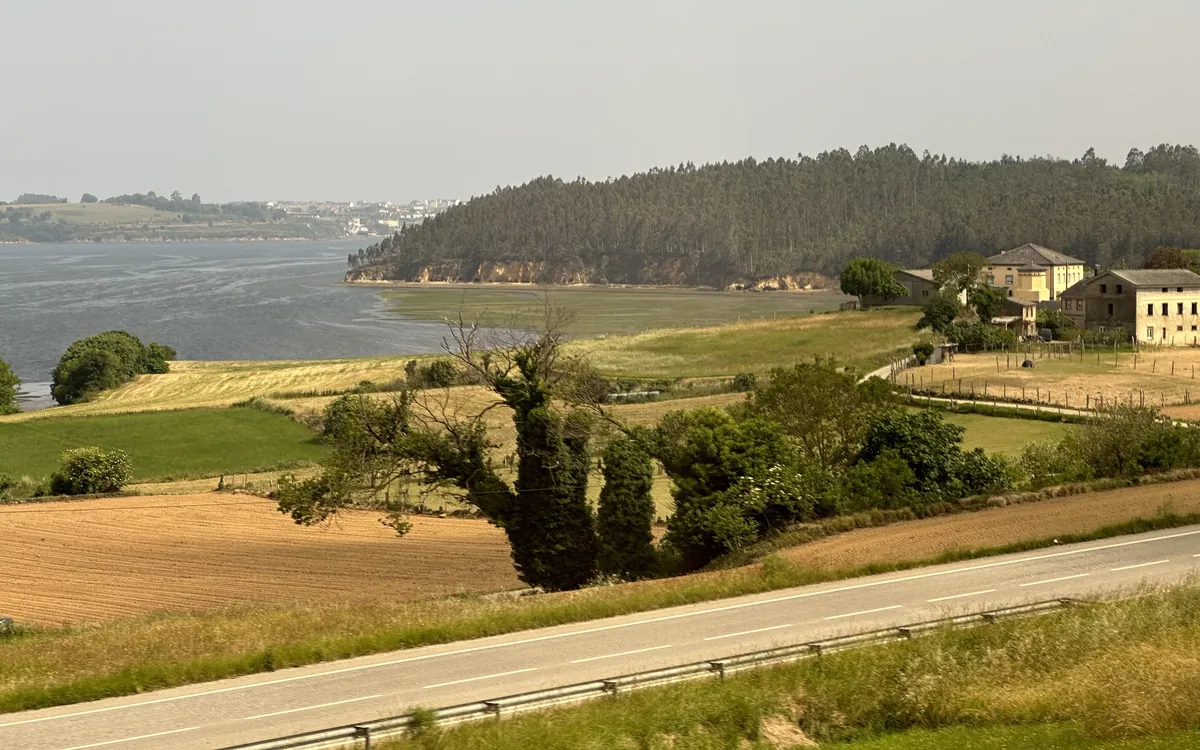
Early in the day, when everything still feels half-started, the Salime reservoir appears between the houses of Grandas de Salime as a grey-blue sheet of water. It is not always fully visible. At times it slips in and out of view between slate roofs and damp stone walls. The quiet is striking at that hour. A car passes now and then, a door opens somewhere, and little else interrupts the stillness.
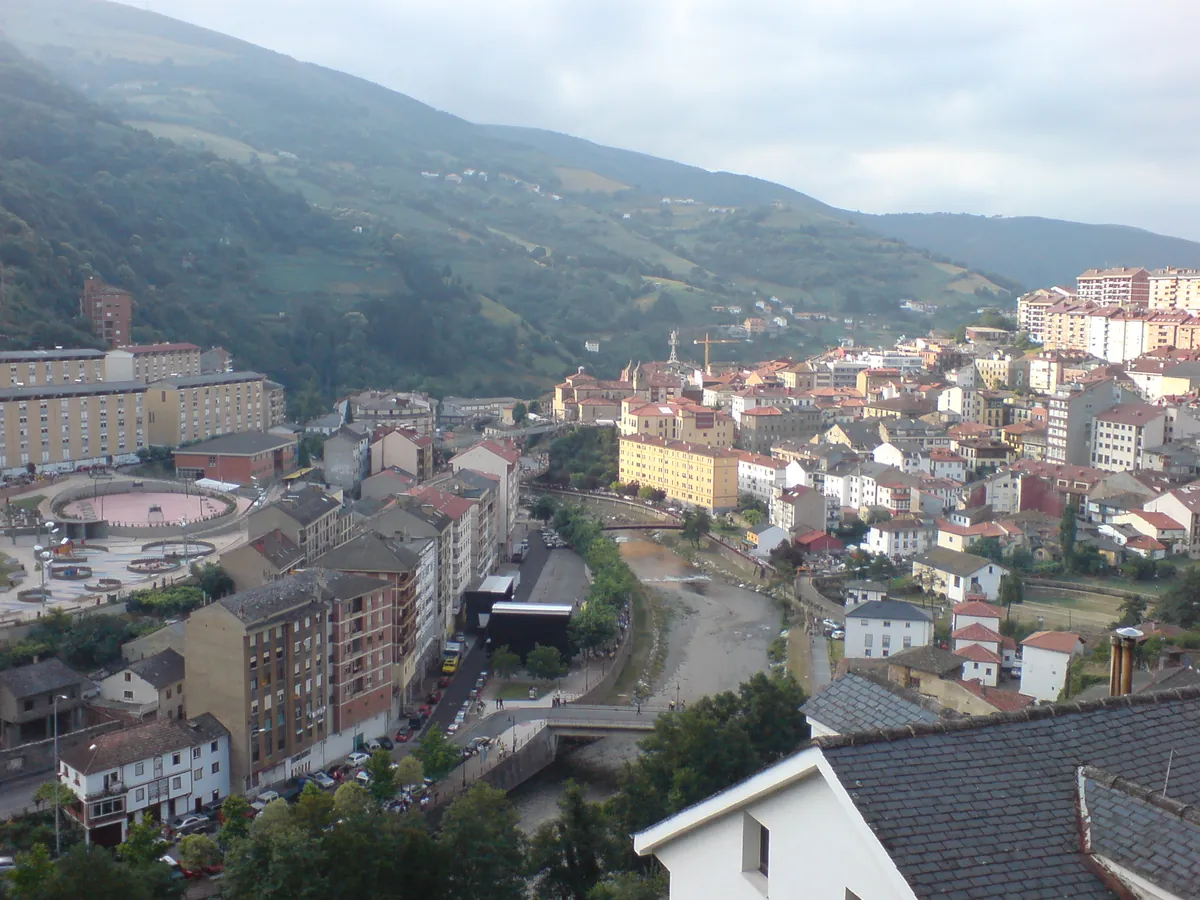
Grandas de Salime sits at the far western edge of Asturias, close to Galicia. The reservoir shapes almost everything here: the landscape, the winding roads, and the way the valley opens or narrows as you approach the water. The village itself is small and easy to walk through in a short time, yet beyond it the area spreads out into scattered hamlets, fields and hillsides where life continues at an unhurried pace.
The buildings follow the familiar pattern of western Asturias. Thick stone walls, dark slate roofs, and relatively small windows designed to keep out the winter cold. In some corners you still come across hórreos and paneras, traditional raised granaries used to store food. Some stand attached to houses, others sit alone in small plots of land.
The Camino Primitivo, the oldest route of the Camino de Santiago pilgrimage, passes through Grandas de Salime. This brings a steady flow of walkers with backpacks and walking poles, though the movement tends to be low-key rather than overwhelming.
Reading the landscape through its key places
A few kilometres from the village centre lies the Castro de Chao Samartín. It stands on a gentle hill with wide views over the surrounding area. Archaeological work here has uncovered remains that help explain how settlements in the north-west of the Iberian Peninsula evolved over time. The site traces a long sequence, from early hillfort communities to Roman presence and later periods. A nearby museum explains these stages in detail, so it is worth allowing enough time rather than rushing through.
Back in the village, the Museo Etnográfico de Grandas de Salime provides another way to understand the area. It goes beyond displaying objects behind glass. Instead, it recreates spaces connected to daily life and work. There are agricultural tools, workshops, schoolrooms, and domestic interiors that make it easier to picture how these communities functioned before roads and machinery reshaped routines.
The Salime reservoir itself defines the scale of the territory. When the road drops down and the water suddenly comes into view, it tends to feel more imposing than expected from a map. From higher viewpoints, the dam wall can be seen clearly, along with the stretch of water held between the surrounding hills. Light plays a big role here. Early morning and late afternoon often bring out silvery tones on the surface, with the wind creating small ripples.
In the centre of the village stands the parish church of San Salvador. It is simple in appearance, without elaborate decoration, yet it fits naturally into its surroundings. Pale stone, compact proportions, and a quiet square nearby give it a steady presence rather than a dominant one.
Walking the area at ground level
The best way to get a feel for Grandas de Salime is by following its traditional paths. Many of these routes trace older connections between hamlets, small vegetable plots, and grazing areas. Some sections are paved with stone, others are just earth tracks. After rain, which is frequent in this part of Asturias, they can become slippery.
Walking a section of the Camino Primitivo is an easy way to orient yourself. There is no need to cover long distances. Even a short stretch gives a sense of the landscape that accompanies pilgrims along this part of the route.
Near the reservoir, it helps to slow down. The appearance of the water shifts noticeably depending on the time of day and the wind. Early on, it is not unusual to spot water birds resting along the banks or perched on rocks just above the surface. With binoculars, species such as herons or cormorants can sometimes be seen.
Local cooking reflects the climate and terrain. Dishes tend to be hearty and suited to cooler weather, often based on stews and pulses. Seasonal products from the surrounding countryside also appear, especially when mushrooms or chestnuts are available. Cheeses made locally or in nearby municipalities are common too, usually with strong flavours and a firm texture.
Fishing still has a presence in the River Navia and in parts of the surrounding area. Anyone interested in it should check current rules and permits in advance, as these tend to change depending on the season and water levels.
When the landscape feels at its best
Spring and autumn are generally the most pleasant times for walking in this area. Temperatures are mild, and the landscape is especially green after periods of rain.
Summer brings more movement, partly due to the flow of pilgrims along the Camino Primitivo and partly from visitors drawn to the reservoir. Even so, the middle of the day can become quite warm, so earlier or later hours are often more comfortable for being outdoors.
Rain is part of everyday life here for much of the year. It does not necessarily disrupt plans, but it does mean that sturdy footwear with good grip is a sensible choice if you intend to walk on trails or unpaved tracks.
Beyond the village centre
A quick walk around the centre of Grandas de Salime can make it seem very small. Its real scale only becomes clear when you begin to explore further out. The surrounding area is made up of dispersed villages, narrow roads, and hillsides that shift in character as you move through them.
The reservoir, the routes that link one settlement to another, and the gradual changes in the landscape all shape the experience more than any single landmark. It is a place that reveals itself slowly, through movement and attention rather than through obvious highlights.