Full Article
about Santa Eulalia de Oscos
Birthplace of rural tourism
Hide article Read full article
A Village That Wasn’t Built for Visitors
In Santa Eulalia de Oscos, the streets were not designed to be admired. They were laid down to get from house to field, from field to river, from river back home again. That practical logic still shapes the place today.
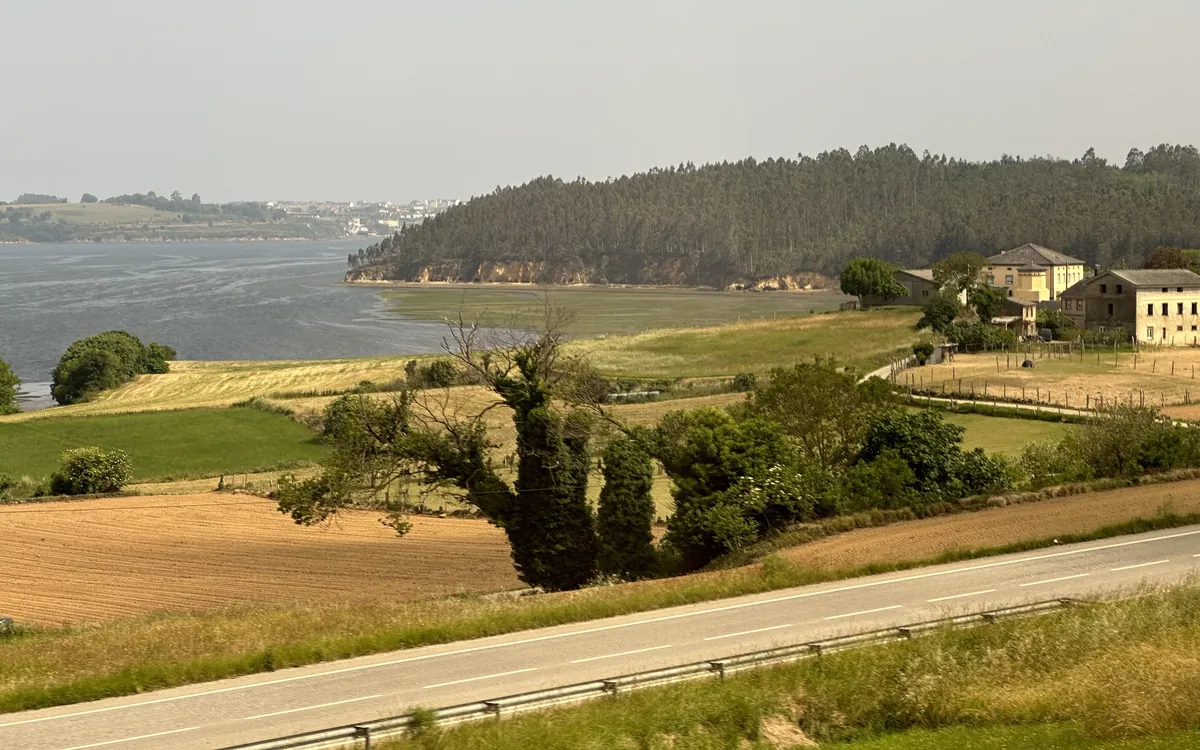
This is western Asturias, close to the Galician border, where the landscape seems to take the lead. The village is less a single, neat settlement and more a scattering of small communities spread across damp hills and wooded valleys. You do not arrive to find a showpiece square or a line of souvenir shops. You arrive to stone walls, slate roofs and the sense that daily life is continuing much as it always has.
The centre revolves around the parish church. Around it sit clusters of houses in stone, their dark slate roofs heavy against the sky. Cars are parked beside doorways. Vegetable patches run along the edges of lanes. People pass through without paying much attention to cameras. Nothing here has been arranged to impress.
Look more closely and details emerge. Hórreos, those traditional raised granaries, stand on stone pillars beside houses. Larger paneras stretch out on multiple supports. Some have been restored, their woodwork tidy and solid. Others show the wear of many winters, boards silvered and slightly warped, but still in use. These structures are not decorative relics. They remain part of the working landscape.
Between One Hamlet and the Next
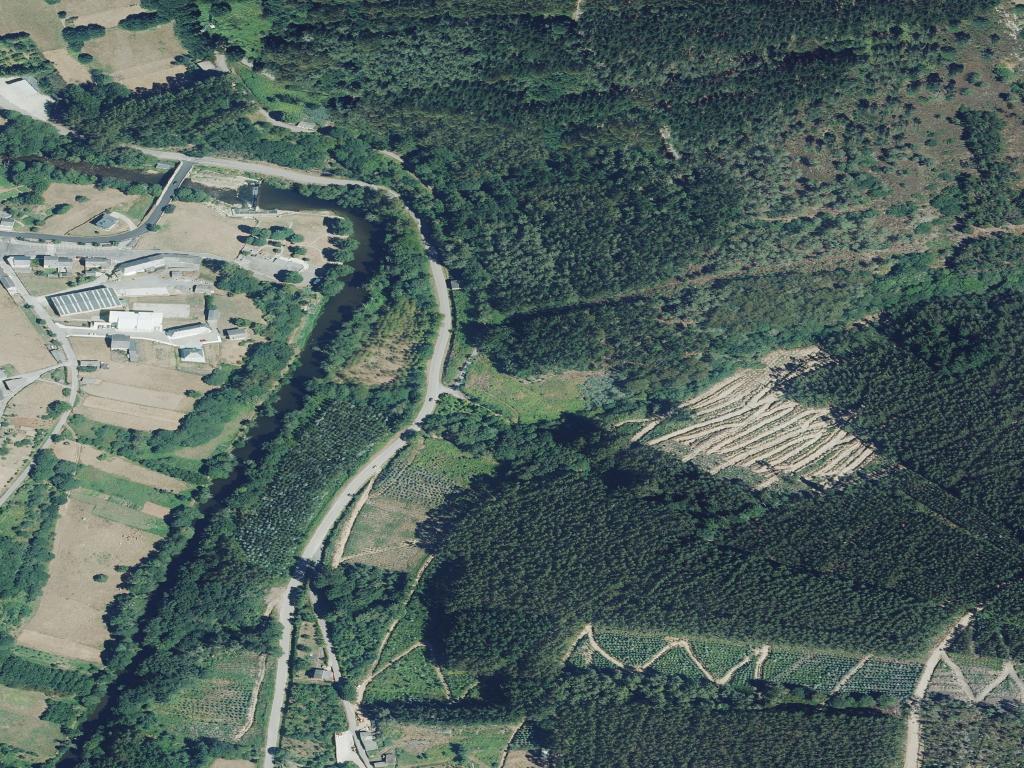
To understand Santa Eulalia, walking matters more than sightseeing. The municipality is dispersed, with small hamlets such as Pumares and Villamartín appearing between folds of forest and pasture. Dirt tracks and narrow roads link them, often with barely a car in sight.
It is easy to set out with a modest plan and end up somewhere unexpected. A turning leads to another cluster of houses. A path dips towards a stream and climbs again through chestnut trees. Distances on the map look short. On the ground, the curves and gradients stretch them out.
Near the rivers, traditional mills remain. Some have been restored; others sit half hidden among ferns and branches, water still running beneath their dark beams. There are rarely prominent signs or carefully marked circuits. They reveal themselves gradually if you follow the paths that connect one hamlet to another.
The terrain is not high mountain, yet it should not be underestimated. There is noticeable elevation change and persistent damp underfoot, even when rain has not fallen recently. In spring, the green is intense and fresh, but showers are frequent and tracks can turn muddy. Good footwear is not an optional extra.
Autumn brings a different rhythm. Chestnut trees shed their leaves across the paths and the smell of wet earth hangs in the woods. Many people head into the forest in search of mushrooms at this time of year. For anyone unfamiliar with the area, it is wise to stick to main routes or go with someone who knows the terrain. The woodland is dense and it is surprisingly easy to stray onto private land without realising.
Winter slows everything down. Daylight hours are shorter, roads stay wet and mud gathers quickly if you leave the tarmac. It can still be rewarding for a short walk around the main village, but long rambles require a bit more thought. Summer draws visitors from the Asturian coast who are looking for cooler air. The surrounding forests help with that, although warm afternoons are still possible. Waterfalls in the wider area attract attention in the hotter months; many combine a visit here with nearby cascades.
Food That Matches the Landscape
The cooking follows the same logic as the setting: seasonal, substantial and direct. Chestnuts appear when they are ready. In winter, pork from the traditional slaughter season shapes many dishes. Plates are filling and built to sustain long days outdoors rather than to decorate a table.
Meals tend to be hearty without fuss. Bread arrives as a practical companion, there to accompany stews and soak up broth. Local cheeses can be robust in flavour, stronger than some visitors might expect. This is not delicate, minimalist cuisine. It suits the damp air and the physicality of walking these hills.
Do not expect a constant buzz of cafés and shops. Services are limited and may open only on certain days or at particular times. Midweek can feel especially quiet. Planning ahead is sensible if something specific is needed, as this is not a place of endless options.
Roads, Rain and Realities
A glance at a map can be misleading. The distances between hamlets may appear modest, but the roads are narrow and winding. Ten kilometres here take longer than expected. A car is the most practical way to move around the wider municipality, especially if time is limited. This is not a village where everything can be seen in a single hour on foot from one parking spot.
Care is also needed when driving into the smaller settlements. Many lanes are effectively access routes to homes and fields. Parking requires thought, leaving space for tractors and residents to pass. The place functions as a lived-in rural community first and a destination second.
Signage is minimal. Trails are not always clearly marked, and information panels are scarce. Mobile signal can drop in lower areas near the river, so relying entirely on live navigation is unwise. Weather adds another layer of unpredictability. Mist can cling to the valley in the morning and rain showers can arrive quickly, even in summer. A waterproof layer earns its place in the rucksack throughout the year.
If Time Is Short
With only a couple of hours, it makes sense to remain around the main village of Santa Eulalia itself and wander without a strict plan. A short circuit will reveal stone houses of considerable age, hórreos raised above the ground, and paths slipping away towards woodland. The parish church anchors the scene, but the interest lies in how everything fits together rather than in a single landmark.
This is not a destination built around a checklist. There are no headline monuments competing for attention. Instead, the appeal comes from observing how the landscape and settlements remain intertwined. Fields sit beside homes. Mills linger by streams. Footpaths link communities that still function as places to live rather than as museum pieces.
Spring and autumn tend to show the area at its best, when the colours are strongest and walking feels particularly rewarding. Summer offers fresher air than the coast, while winter provides quiet and a slower pace for those content with shorter outings.
Santa Eulalia de Oscos will not deliver instant spectacle. It asks for time, decent shoes and a willingness to accept that the territory sets the terms. For visitors used to seaside resorts or tightly packed historic centres, that can feel unfamiliar. For others, it is precisely the point.