Full Article
about Somiedo
Sanctuary of the brown bear
Hide article Read full article
At first light, the mist sits heavy in the valleys, smelling of damp earth and last night’s rain. Cowbells sound from somewhere up the slope, a hollow clank that travels further in the cool air. This is a place of slow mornings and early nights, where the mountains are a constant, quiet presence.
The talk of bears is woven into daily life here. You see it in the way people glance towards the wooded slopes, in the posters at the bar, in the careful tone of voice used for recent tracks. It’s a presence felt more than seen, a knowledge that shifts your attention in the woods from the path underfoot to the shadows between the trees.
The lay of the land
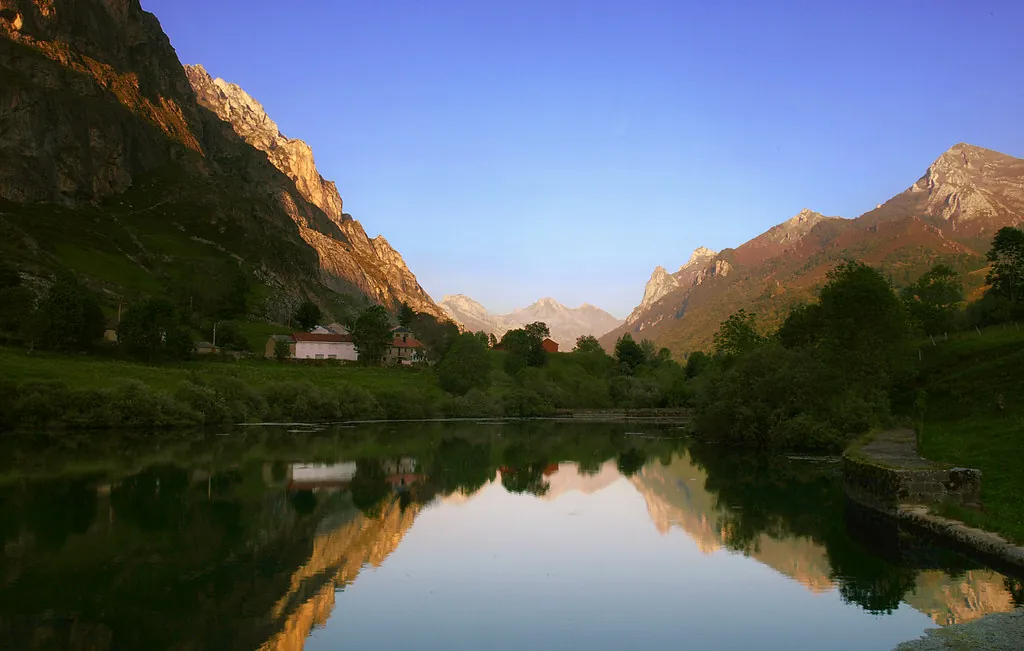
Somiedo is a collection of valleys, each with its own character. The Pigüeña, Saliencia, Valle del Lago. Roads connect them, narrow ribbons of asphalt that twist and climb. You drive from one to another not just across distance, but into a different light, a different sound. A bend reveals a village of stone and slate, then you’re back among beech woods.
The high brañas, the summer pastures, are where the old structure of life remains most visible. The teitos, huts with roofs thick with vegetation, dot the slopes. They are working buildings, not museum pieces. Gates are often closed. If you walk up, tread carefully and give space to any livestock.
Pola de Somiedo holds the park’s visitor centre. It’s a practical first stop to check which paths are clear or if any tracks have been seen recently. The village itself feels like what it is: a functional heart. People come for bread, fuel, news. The mountains press in on all sides.
On foot
To move through Somiedo properly, you walk. The paths to the Saliencia lakes—La Mina, Cerveriz—are well-trodden, crossing open ground where the wind has a clear run. Lago del Valle requires more commitment: a long, gradual climb from the village until the water appears, dark and still under the peak of Cornón.
If you come in July or August, start walking early. By ten, cars fill the small parking areas and the wider trails feel different. For solitude, look to the lesser-known routes that branch off from the main valleys; a detailed map is essential here.
The higher you go, the more the weather dictates terms. Sunshine can give way to a cold wind rolling off the peaks within an hour. In autumn, fog can settle in the valleys by mid-afternoon, muting colours and obscuring waymarks.
A practical rhythm
This is not country for hurry. Distances deceive. A ten-kilometre drive can take forty minutes. Plans should hold loosely.
What you wear on your feet defines your day. Trail shoes or boots are not an accessory here; they are a necessity for stability on wet rock, muddy slopes and loose scree. Jeans become heavy and cold if rain finds you.
Rain itself is not an interruption; it’s part of the texture. It deepens the green of the beech leaves to near black and brings out the scent of moss and rotting wood. It also makes stone steps slick and turns earth paths into mud. Adjust your pace accordingly.
With little time
If hours are limited, don’t try to chase lakes or peaks. Stay near Pola de Somiedo. Walk up any of the tracks behind the village towards the nearest braña. You’ll pass stone walls, grazing horses, patches of oak woodland.
You get the composition of the place from there: meadow, forest, mountain, sky. Wait until late afternoon when the sun drops behind the western ridge. The temperature falls sharply and light turns a cool blue. Then you’ll hear Somiedo’s quietest hour before night settles in completely.