Full Article
about Tapia de Casariego
The mecca of Asturian surfing
Ocultar artículo Leer artículo completo
The 11-kilometre spur road peels off the A-8 autopista, cuts through dairy pastures, then drops so suddenly that the Cantabrian Sea fills the windscreen like a cold blue wall. First-time visitors instinctively lift off the accelerator—partly for the bend, mostly because the horizon looks too close to be real. That moment sums up Tapia de Casariego: a village that never quite prepares you for how directly it meets the water.
Harbour First, Beach Second
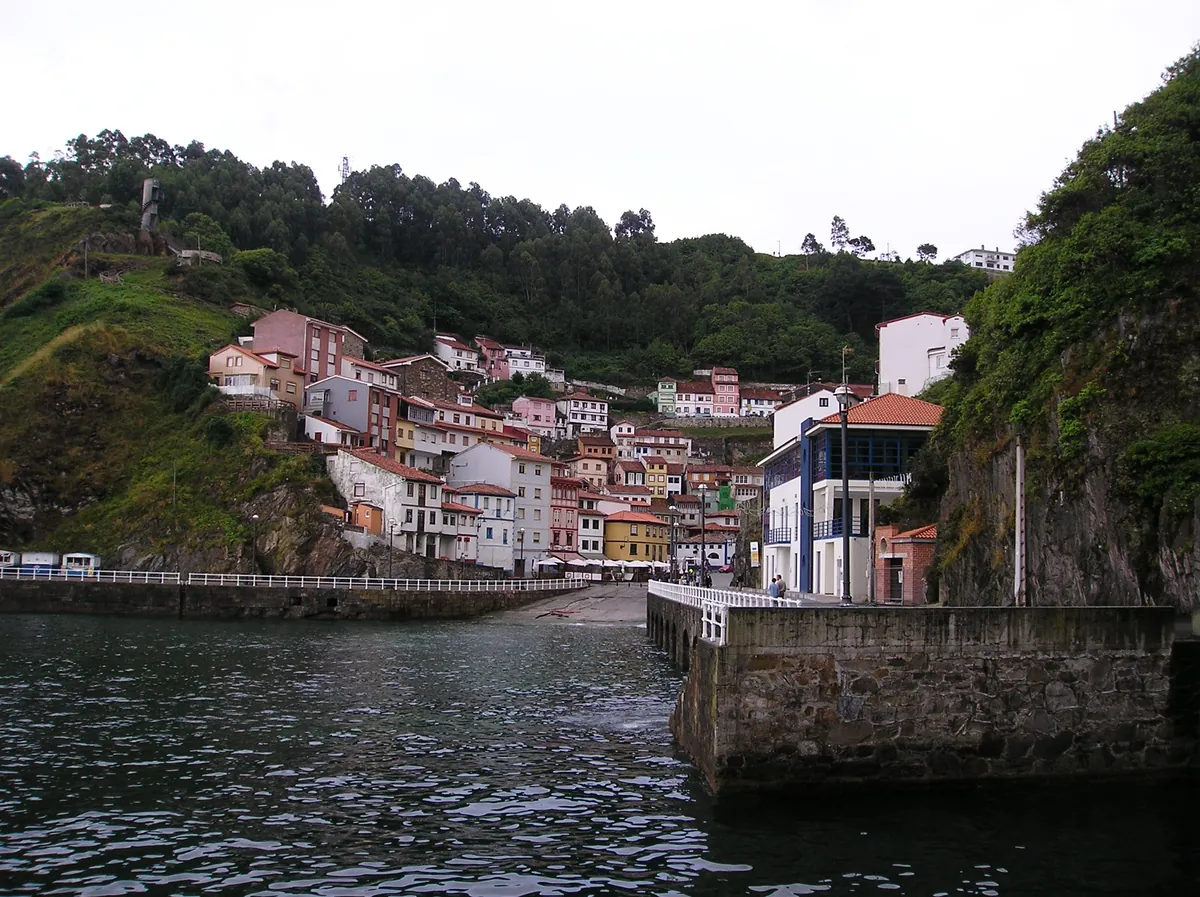
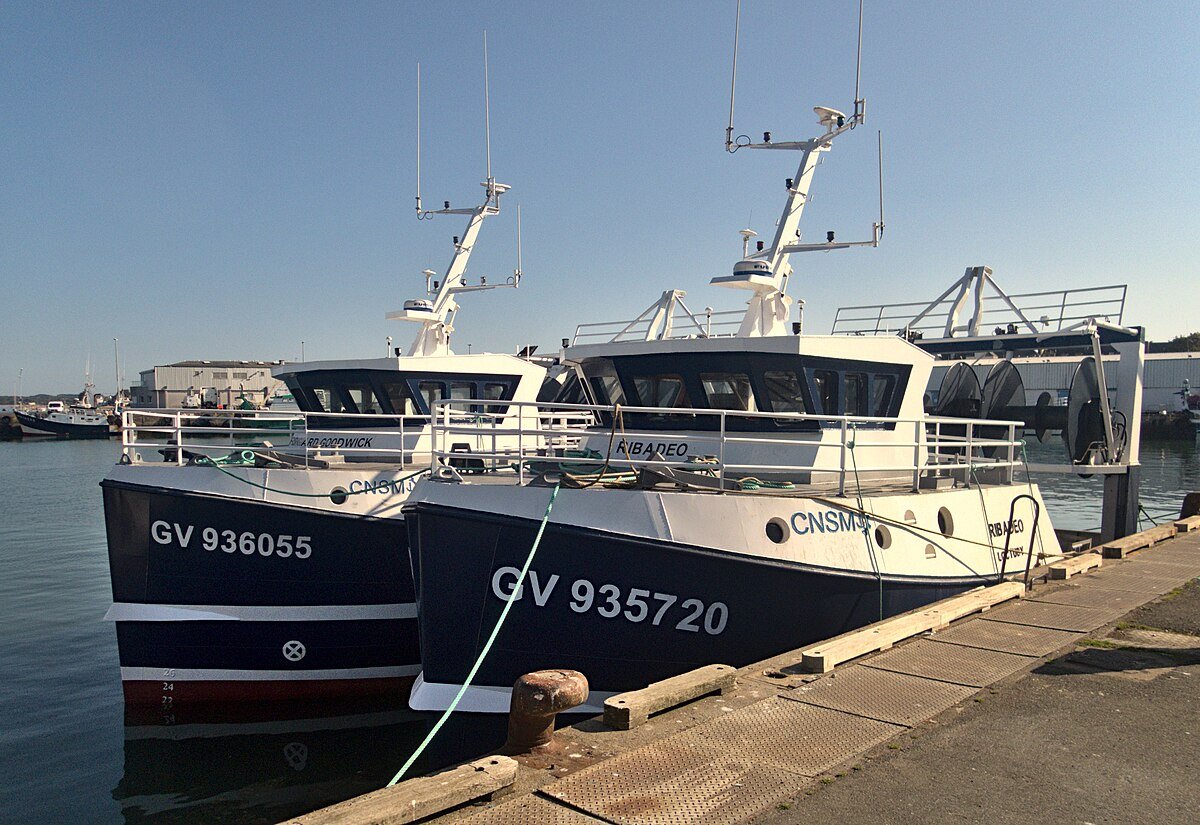
Most Spanish coastal towns tack a marina onto the edge of a promenade. Tapia does the opposite. The fishing harbour is the centre of gravity; the weekly market sets up on the pier, children chase footballs between crates of velvet crabs, and the evening paseo begins at the slipway, not the church. Walk the outer mole at 17:00 and you’ll see the day’s decisions being made: skippers hosing down decks, grandmothers scanning the swell to decide whether tomorrow’s laundry dries indoors, and surf instructors squinting at the same horizon for entirely different reasons.
The harbour wall is also the place to gauge the Atlantic mood. When a north-westerly is blowing, spray arcs over the lighthouse and the whole village smells of iodine and wet rope. On those evenings the bars fill early; nobody queues for a table with a sea view because every table has one, and windows rattle like loose change.
Sand, Rock and the Spaces Between
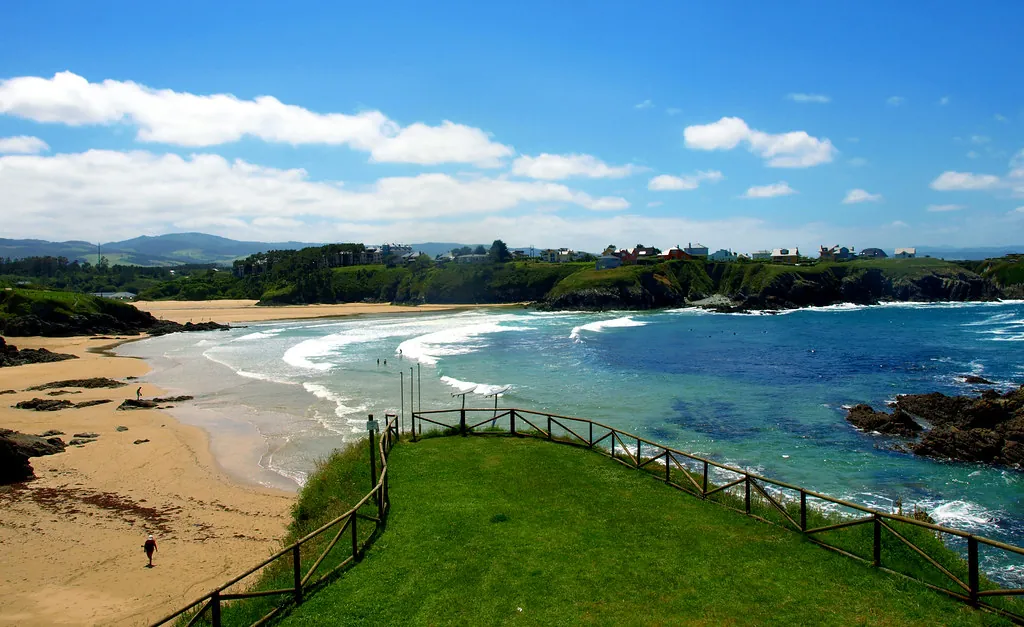
Playa Grande—literally “Big Beach”—lies 200 m south of the harbour mole. It’s a crescent of pale sand barely 600 m long, but its size isn’t the point; its accessibility is. You can park (if you arrive before 11:00), cross one road, and be ankle-deep in surf within three minutes. Lifeguards operate June-September, yet the flag system still feels reassuringly old-school: green means the local doctor’s children are in the water, yellow means the doctor himself is watching from the promenade, red means even the doctor’s dog stays dry.
Round the headland, Anguileiro beach shrinks to a pocket-handkerchief at high tide. Low tide reveals rock-pools warm enough for small children to wallow in, provided wellies are packed. A ten-minute drive west, Peñarronda is a broader, wilder scoop backed by low dunes and cow fields. On weekdays you may share it with two dog-walkers and a tractor. On Saturdays the car park overflows onto the verge and someone always blocks the gateway with a Madrid-plated SUV—arrive before 10:30 or walk the final kilometre.
Houses that Came Back from Cuba
Between the harbour and the upper town, several mansions wear wooden balconies wide enough for a ballroom dance. These are the casas de indianos, built by nineteenth-century emigrants who returned from Cuba or Venezuela with enough pesos to outshine the neighbours. One pink villa on Calle San José now sells insurance; another, painted a shade Dulux would call “Unripe Mango”, contains four holiday flats and a permanently locked gate. The architecture isn’t museum-standard, but it’s authentic: prosperity shipped home, weathered by salt, repainted when the mortgage allowed.
What the Atlantic Actually Tastes Like
Lunch begins at 14:00, sharp. Harbour-side cafés grill hake so fresh it still holds the curve of the crate; a plate arrives with nothing more than olive oil, sea salt and a lemon wedge that rolls with the table tilt. Octopus is cooked in the Galician style—snipped with scissors, sprinkled with hot paprika, served on a wooden platter scooped hollow by decades of knife blades. If you’re squeamish about tentacles, order the empanada de bonito, a square slice of tuna pie that tastes like a Cornish pasty that learnt Spanish.
Vegetarians face limited choice: the regional speciality is beans stewed with sausage and black pudding. Most kitchens will swap in spinach and chickpeas, but you’ll still pay the full €12 because the chef can’t imagine the dish without pork fat. Cider pouring is obligatory theatre: the waiter raises the green bottle above his head, aims for a glass held at knee-height, and produces three fingers of froth that must be drunk in one go or the next round is on him. Ask for sidra sin alcohol and you’ll be offered fizzy apple juice; children love the ceremony, parents love the price—€1.80 a bottle.
When the Surf is Up, the Bells Don’t Ring
Tapia claims the first documented surf session in northern Spain—1960s, two lifeguards from Santander, one borrowed Malibu board. Today the village hosts the Easter Open, when wetsuited competitors share the line-up with dairy farmers on annual leave. Conditions are fickle: a 1.5 m swell can vanish overnight, replaced by a wind-swept mess that locals call pan de leña—literally “loaf of firewood”, because that’s what your board becomes. Rental shops cluster behind Anguileiro; €20 buys a 3 mm suit and a soft-top for half a day. Beginners are towed onto forgiving white water; experts paddle across to the reef off Peñarronda where a left-hander works best two hours before high tide. If in doubt, ask the harbour master—he also shapes boards in a shed smelling of resin and diesel.
Walking off the Fish
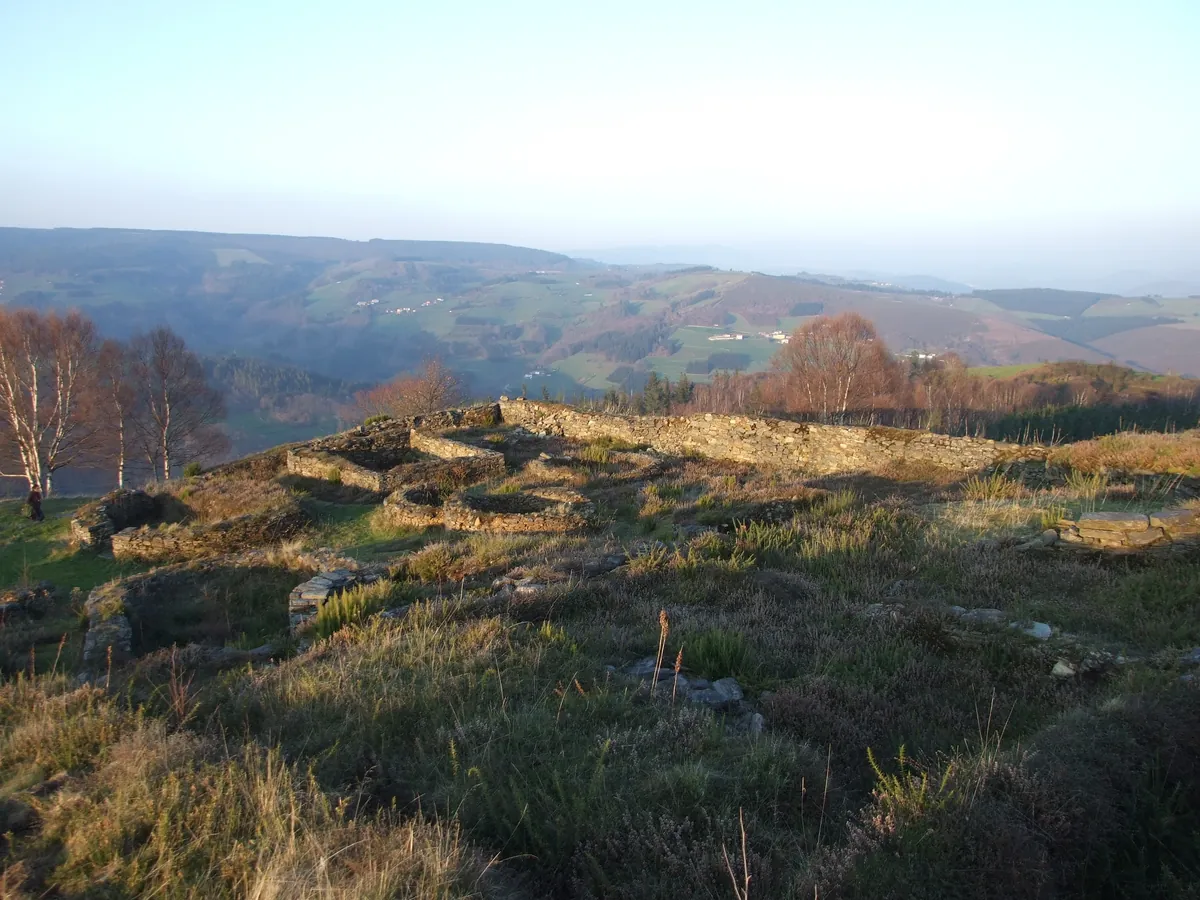
A footpath leaves the north edge of town, climbs through bracken and eucalyptus, then traces the cliff edge for 7 km to the Ría de Porcía. The route is way-marked but not way-groomed: after rain the clay grips boots like fresh tar, and cattle have right of way. The payoff is a succession of natural balconies where the Cantabrian breakers detonate against granite. Take binoculars—storm petrels skim the spray line, and on clear days the Galician lighthouse at Cabo Ortegal pricks the western horizon.
Inland, a narrower lane switchbacks up to the Mirador de la Atalaya, 140 m above sea level. The stone bench faces due west; on midsummer evenings the sun drops exactly between two offshore islets, a local secret that beats any crowded Costas sunset. Even in August you may have it to yourself—most visitors are back in the bars by 20:00, arguing about tomorrow’s surf forecast.
Getting There, Getting Stuck, Getting Out
Oviedo airport is 95 minutes east on a toll-free motorway; Santiago de Compostela is the same distance west. Car hire is essential—public buses reach Tapia twice daily on weekdays, zero times on Sundays. The final approach is single-carriageway but scenic: stone walls, Holstein cows, and the Atlantic winking between farmhouse chimneys. Petrol is cheaper at the supermarket just outside Navia; fill up before you arrive because the village garage closes at 19:00 and doesn’t open Sundays.
Parking discs operate July-September; scratch cards cost €3 per day and are sold by the tobacconist whose shutter doesn’t rise before 09:30. Ignore the blue bays at your peril—the local police wheel-clamp with evangelical zeal and the release fee is €90 cash only. ATMs are equally temperamental: bring euros, preferably in small notes, because the harbour bars still run tabs on paper napkins and some regard foreign cards as a passing fad.
Seasons, Crowds and the Quiet Bits
May and June deliver 20 °C afternoons, empty beaches and orchids along the cliff path. September keeps the sea temperature but loses the August crowds; surfers call it “the second Easter” and hospitality prices drop 20%. Mid-July to late August is hot, bright and noisy—Spanish families colonise every rental flat, the campsite turns away tents at 22:00, and the municipal loudspeaker pumps out bingo numbers at beach volume. If that’s your scene, book a year ahead; if not, come before or after.
Winter is a gamble. Storm systems roll in every ten days, whipping 4 m swell against the promenade railings. On those nights the streetlights flicker and the village feels like a ship at sea. Between fronts, days are crisp, skies porcelain-blue, and you can walk the entire coast without meeting another boot print. Hotels cut rates by half; some restaurants close, others switch to weekend-only menus. Bring a 4 mm wetsuit and a taste for solitude.
Leaving Without a Souvenir
Tapia doesn’t sell fridge magnets shaped like Spain. The nearest gift shop is 25 km away, and the local supermarket’s idea of memorabilia is a tea-towel printed with hake recipes. What you take home is subtler: the memory of salt crust on your lips after an evening swim, the way the harbour bell clangs at 07:00 exactly, the realisation that somewhere on this coast the working day still follows the tide chart, not Google Calendar. Drive away at dusk and the rear-view mirror shows the lighthouse flashing once every eight seconds—steady, indifferent, still doing the job it was built for when your great-grandparents thought foreign travel meant a ferry to Calais.