Full Article
about Taramundi
Pioneers of rural tourism
Hide article Read full article
The Tuesday Without Bread
On Tuesdays there is no bread in Taramundi. The oven in one of the nearby hamlets rests that day, and if you arrive late on any other morning you may find the shelves empty anyway. It is a small detail, but it explains a great deal. This is a municipality in western Asturias where daily life still follows the pace of hands at work: forging a knife, turning a millstone, walking up into the hills to check livestock.
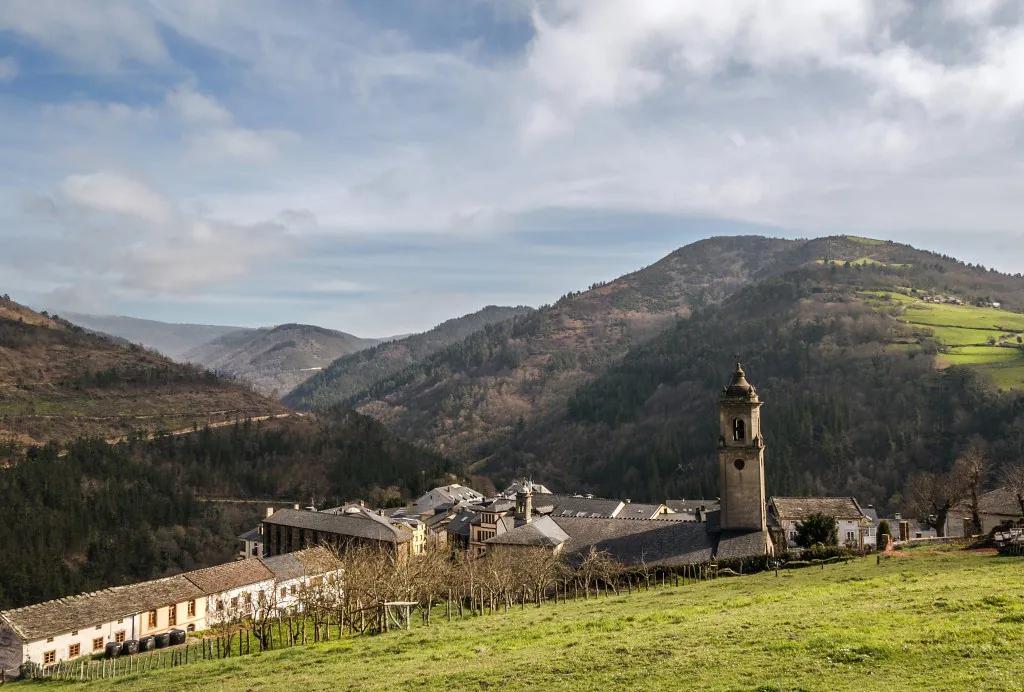
Taramundi sits at around 270 metres above sea level, far from Asturias’s main cities. Historically it looked more towards the Eo valley and neighbouring Galicia than towards the coast. That orientation still shapes the place. The valley gathers settlements that are scattered rather than concentrated, houses separated by meadows and woods that have crept back over land once cultivated.
Do not expect a single compact village square with everything arranged neatly around it. The council area covers more than eighty square kilometres divided into four parishes and two dozen hamlets. The dispersal is part of the landscape. So is the sense that this is a working rural community which happens to receive visitors, rather than the other way round.
Steel and Water
Knife-making made Taramundi what it is. The craft did not begin as a show for outsiders. From at least the eighteenth century, blacksmiths across the municipality used the force of local streams to power trip hammers and sharpen blades. Production was domestic and scattered, workshop attached to house, water channelled with care.
That small-scale industry helps explain why Taramundi has managed to retain population while other nearby areas have declined. The trade created work rooted in place. Even today there are workshops where steel is shaped and tempered in ways that have barely changed. Arrive in the morning and the first thing noticed may be the rhythm of hammer on metal, or the dull thud of machinery driven by water, before the workshop itself comes into view. This is not a scheduled performance. It is someone earning a living.
The knives and clasp knives made here are known for flexibility and strength, qualities achieved through a slow process of forging and tempering. The emphasis remains on durability rather than decoration. In a region where tools were once essential to farming and forestry, that mattered.
A few minutes from the main settlement, a group of restored hydraulic mills stands beside the river. A footpath links them, descending between meadows and woodland. Some of the mills are occasionally set in motion to show how grain was ground. The atmosphere feels closer to a rural workshop than to a formal museum: heavy machinery, worn timber, the sense of water doing patient work. Explanations often come from people who have spent much of their lives around these stones. It adds context that no information panel can quite supply.
A Church With Layers
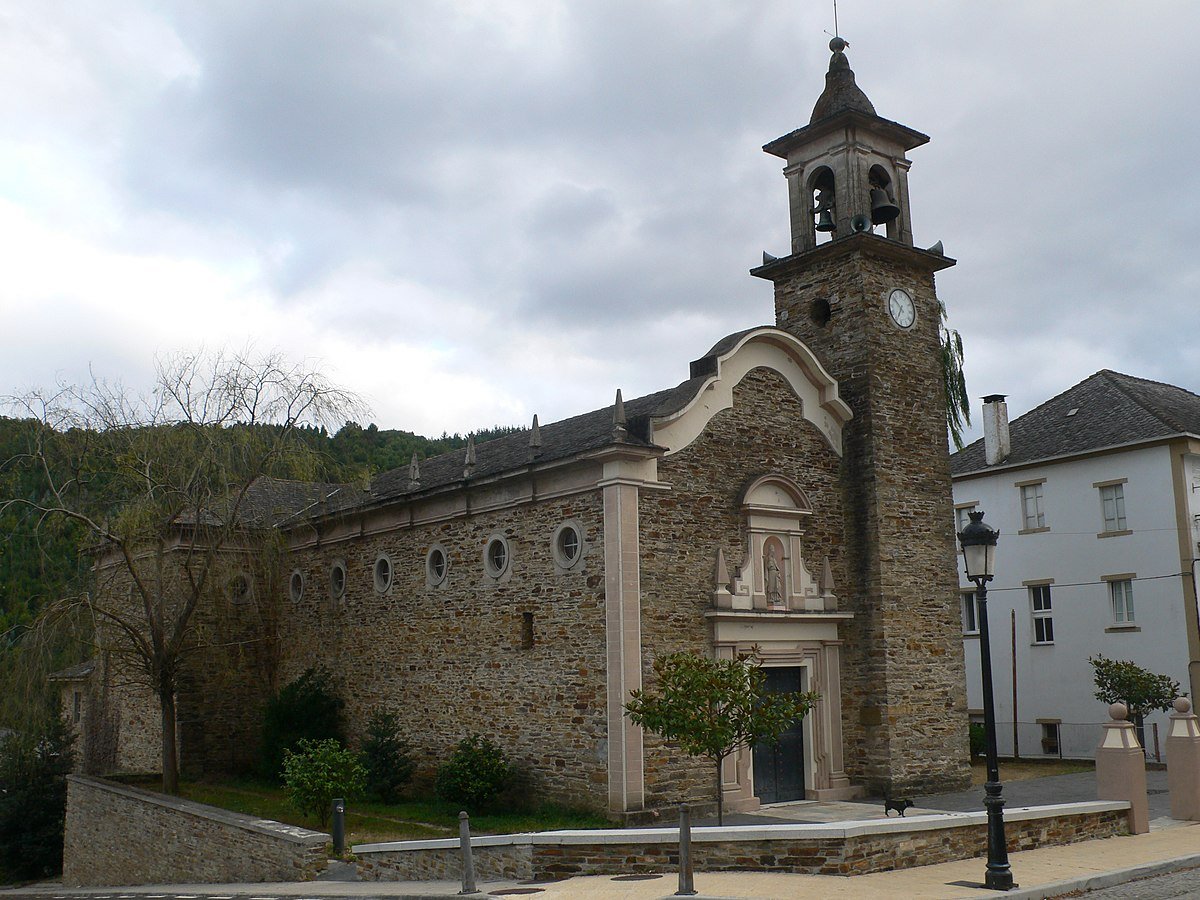
At first glance, the church of San Martín appears older than it is. The present building dates from the eighteenth century, raised after the demolition of an earlier temple. Elements of the previous church were preserved, including the main altarpiece. Local tradition holds that its gilded plaster pieces arrived from Castilian workshops at a time when communication with the interior was still difficult.
The church remains central to village life. The small square around it functions as a meeting place, somewhere to pause and talk. Opposite stands the former rectory, one of the historic buildings of the ensemble. It was restored for tourist use at the end of the twentieth century, when rural tourism in Asturias was only just beginning to organise itself. The adaptation reflects a broader shift: finding new roles for old structures without erasing their past.
Elsewhere in the municipality, reminders of earlier generations appear in quieter forms. In Bres, a school promoted by returning emigrants at the beginning of the twentieth century still stands. Many who had made their fortunes in the Americas invested in education and public works in their home villages. The building is sober and carefully maintained, an echo of that impulse.
In Ouria, the summer pilgrimage of the Virgen del Carmen descends to the river Eo. Older residents recall a time when the final stretch could be made by boat, before regulation altered the river’s flow. Today the approach is on foot, but the image is still brought to the water. It is a symbolic gesture that binds faith, memory and landscape.
The Eo and the Valley
The river Eo forms the natural border with Galicia. It is not a vast waterway, yet it structures the valley and its communications. For centuries it served as a route for passage and trade, linking communities on both banks.
A simple path follows part of its course between several hamlets in the municipality. The route is largely flat, crossing woodland and open meadows. In spring the air often carries the scent of freshly cut grass and hedge flowers. The walk is unhurried. Greetings are exchanged, sometimes accompanied by an explanation of which hamlet someone has come from. Place here is defined by these small references.
The wider terrain is gently undulating rather than dramatic, but do not underestimate it. The road into Taramundi descends from the Puerto de San Tirso in a series of bends through scrub and low hills before the Eo valley comes into view. Lanes within the municipality can be narrow and winding. A car makes access far easier, and a smaller vehicle is more comfortable on tight stretches. Public transport exists but is limited.
Leave the car at the entrance to the main settlement and continue on foot. The centre is compact and quickly covered. Beyond it, paths lead out towards the countryside, including the route to the hillfort known as Os Castros. Footwear matters. Signposting is in place, yet loose stone is common and rain can make surfaces slippery. Weather shifts quickly in the valley. Mist may descend even in summer, and a light waterproof is rarely wasted space in a bag.
Mobile signal can disappear in parts of the valley, so it helps to have directions sorted before setting off. English is not widely spoken. A few basic Spanish or Asturian greetings go a long way.
A Different Rhythm
Taramundi feels self-contained. Trades continue because they are needed, not because they are displayed. Conversations turn easily to water rights, livestock or the state of a path after heavy rain. The pride lies in making and mending, in keeping mills turning and blades sharp.
There are pleasures here that depend on patience rather than spectacle: the steady sound of a hammer from behind a half-open door, the smell of damp grass by the Eo, the sight of scattered houses across a green valley. Spring and autumn suit the place particularly well, when temperatures are mild and the countryside is at its most vivid. Summer brings more visitors, and booking ahead is sensible if planning to stay.
On Tuesday there may be no bread. On other days it may sell out. That small uncertainty is part of the appeal. Life in Taramundi follows its own timetable, shaped by water, work and the slow curve of the valley.