Full Article
about Vegadeo
Gateway to Galicia
Ocultar artículo Leer artículo completo
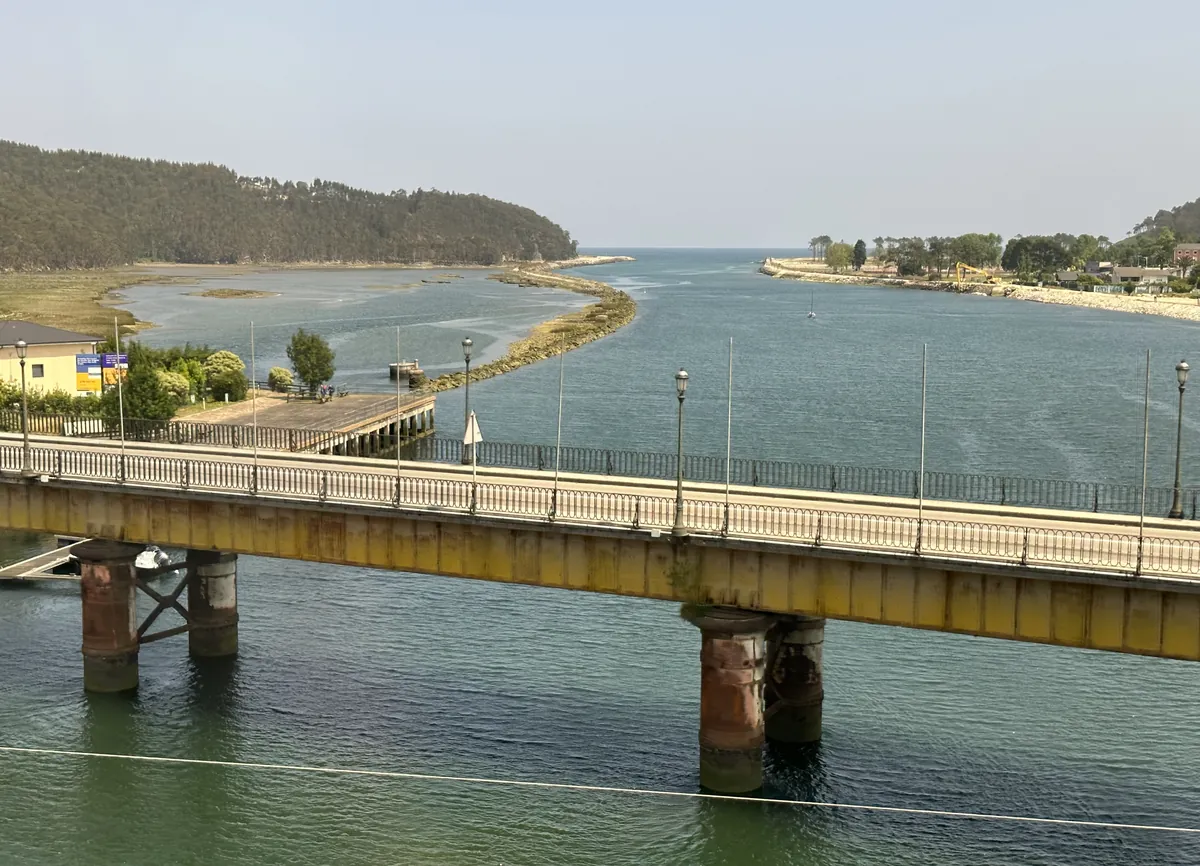
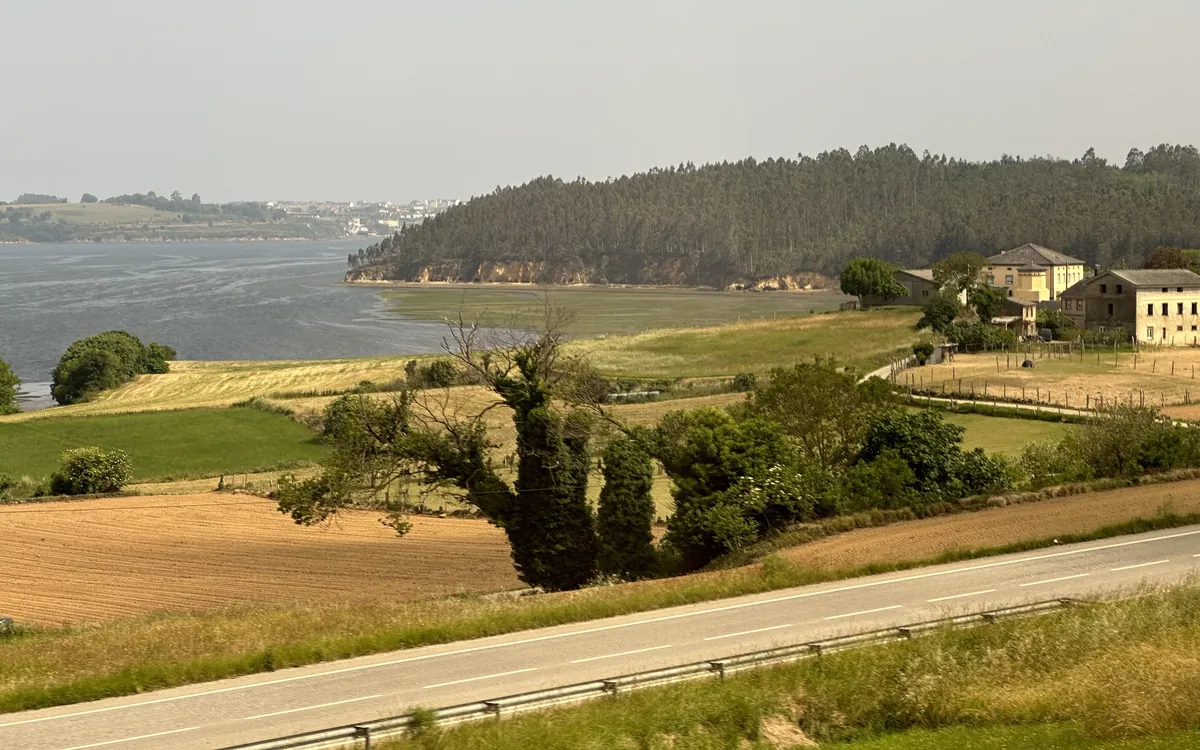
The tide chart matters more than the train timetable in Vegadeo. When the Atlantic rolls back, the Eo River reveals mudflats that stretch halfway to Galicia. Herons land where yesterday there was three metres of water, and locals in wellies stride across what looks like a temporary continent. This is western Asturias at its most practical: a place where neighbours check WhatsApp groups called "Marea baja" before walking the dog, and where the same road can flood twice daily if the moon is feeling dramatic.
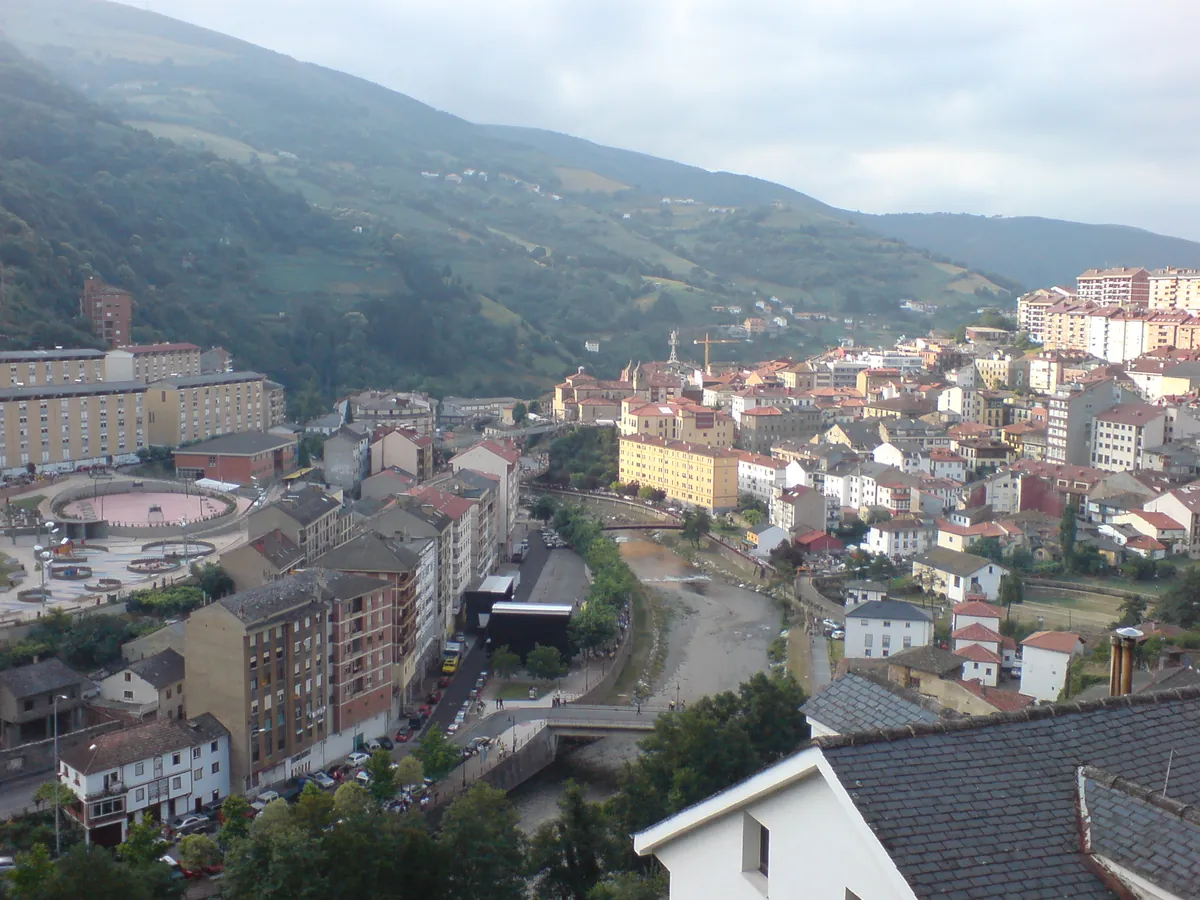
Vegadeo's high street won't detain anyone long. There's a chemist, a bank with perpetually half-drawn blinds, and a bakery that sells doughnuts filled with crème pâtissière at seven in the morning. The real geography starts at the river wall. Follow the concrete steps down beside the old mill and you're on a path that smells of salt and cow parsley. Information panels show waders you probably can't identify without the RSPB handbook, but the pleasure is in the scale: broad water, low hills, and the constant sense that Portugal might be just out of sight. (It isn't; Santiago is four hours west by car, but the estuary tricks the eye.)
Cross the iron footbridge and you've left Asturias without noticing. The left bank is Galicia now; mobile phones ping "Bienvenidos a España" even though you never left it. Saturday mornings see families pushing trolleys across the border for the Ribadeo market: Galician cheese cheaper than at home, and the gossip that the fish van arrives at eleven sharp. Nobody asks for passports. They ask whether the bonito is running yet.
Back on the Asturian side, the empanada fair takes over the main square whenever the council remembers to organise it. Some years that's July, others September. Locals treat the uncertainty as normal; visitors who've driven two hours for a specific date learn to shrug and buy a slice anyway. The pastry is sturdy, more Cornish pasty than delicate French pâté, and the filling changes from stall to stall: tuna and red pepper, cockles with onion, even chorizo and boiled egg for the rebellious. One portion costs €3.50 and comes wrapped in paper that seeps butter. Eat it leaning against the 18th-century church wall; the stone is warm from the sun, or possibly from centuries of ecclesiastical gossip.
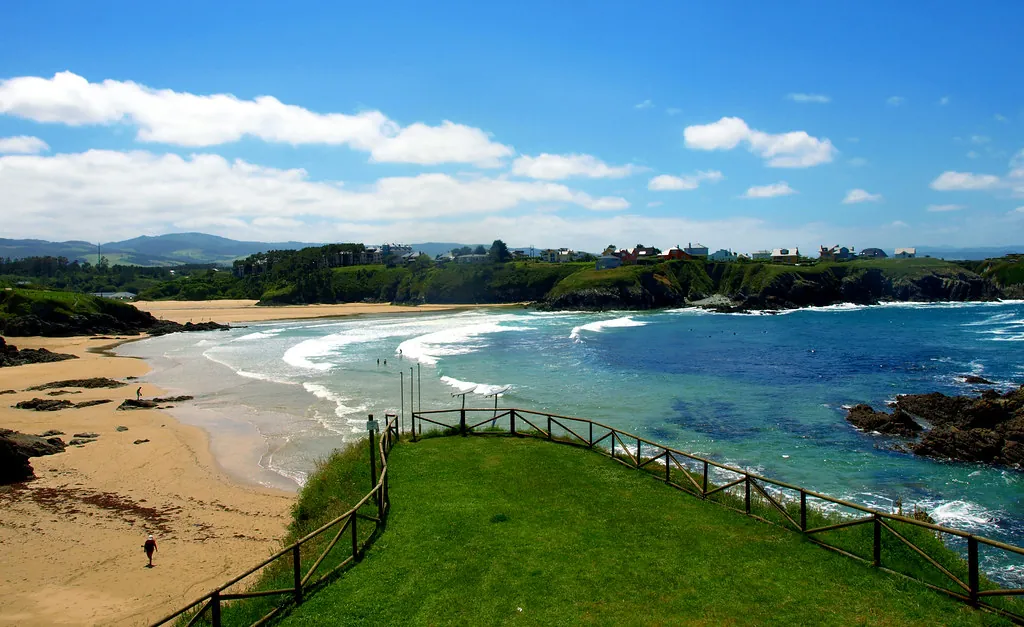
Penarronda beach sits ten minutes north by car, but the road narrows to a single track beneath eucalyptus that drop bark like sunburnt skin. The car park is a field; honesty box €2, unless the farmer hasn't unlocked the gate. What appears next is not the usual northern Spanish cove. Atlantic rollers charge in without restraint, and the sand tilts so sharply that paddling means ankle-deep water at knee-level distance. Lifeguards plant a flag system that changes hourly; green can flip to red while you're still unfolding the beach towel. Between tides the beach doubles in width, exposing rock pools warm enough for small children to hunt shrimps. Bring change for the ice-cream van: they close at six regardless of sunshine, because the operator likes his dinner hot.
Walkers can sample the Camino del Norte without committing to the full 825 km to Santiago. The path enters Vegadeo along a disused railway line, flat and shaded, then climbs gently through pine plantations that smell of burnt toffee in summer heat. One afternoon out-and-back reaches a stone crucifix with views back over the estuary; the round trip is 12 km and requires only one cereal bar and the ability to say "Buen Camino" to passing pilgrims. You'll meet Brits from Guildford doing the whole route with aluminium walking poles, and locals in trainers walking the dog who overtake them while rolling a cigarette.
Eating out is refreshingly un-touristy. Restaurante Asturias looks like a 1970s Berni Inn from the outside, inside it serves scallops still twitching on the half-shell. A half-ración of grilled vieiras arrives as four shells, no garnish except lemon and a bottle of local cider. The ritual matters: hold bottle above head, let liquid arc into glass held at waist height, drink the two-inch pour in one go while looking nobody in the eye. Repeat. Cider here is 4% ABV, gluten-free, and cheaper than Diet Coke. The house cachopo—two veal steaks the size of dinner plates sandwiched around Serrano ham and cheese—feeds two hungry adults and comes with chips that taste of actual potato. Price: €24 total, including the cider performance.
Practicalities first. Buses from Oviedo run three times daily, except Sundays when there are two and none after 19:00. The timetable is printed on laminated paper at the station and hasn't changed since 2019; believe it. A hire car transforms the visit: Galician seafood restaurants are five minutes east, the mountain village of Taramundi with its knife-making workshops is thirty minutes south, and you can park for free beside the river unless August 15 falls on a weekend. Then every space fills with family cars bearing Lugo number plates, and you’ll end up three streets away beside someone's vegetable patch. They won't mind unless you block the tractor.
Cash remains king in bars; many card machines refuse contactless payments under €10, and the ATM inside the bank closes at 14:30 for siesta. English is rarely spoken away from the front-of-house in restaurants, but willingness exceeds vocabulary. Pointing at the next table works, and the worst that happens is you eat something you didn't expect. Pack a light waterproof even in July; Atlantic clouds arrive fast enough to drench a sunbather while the ice-cream is still melting. Phone signal drops to 3G in the narrow lanes between houses built before Wi-Fi was imagined; consider it a feature.
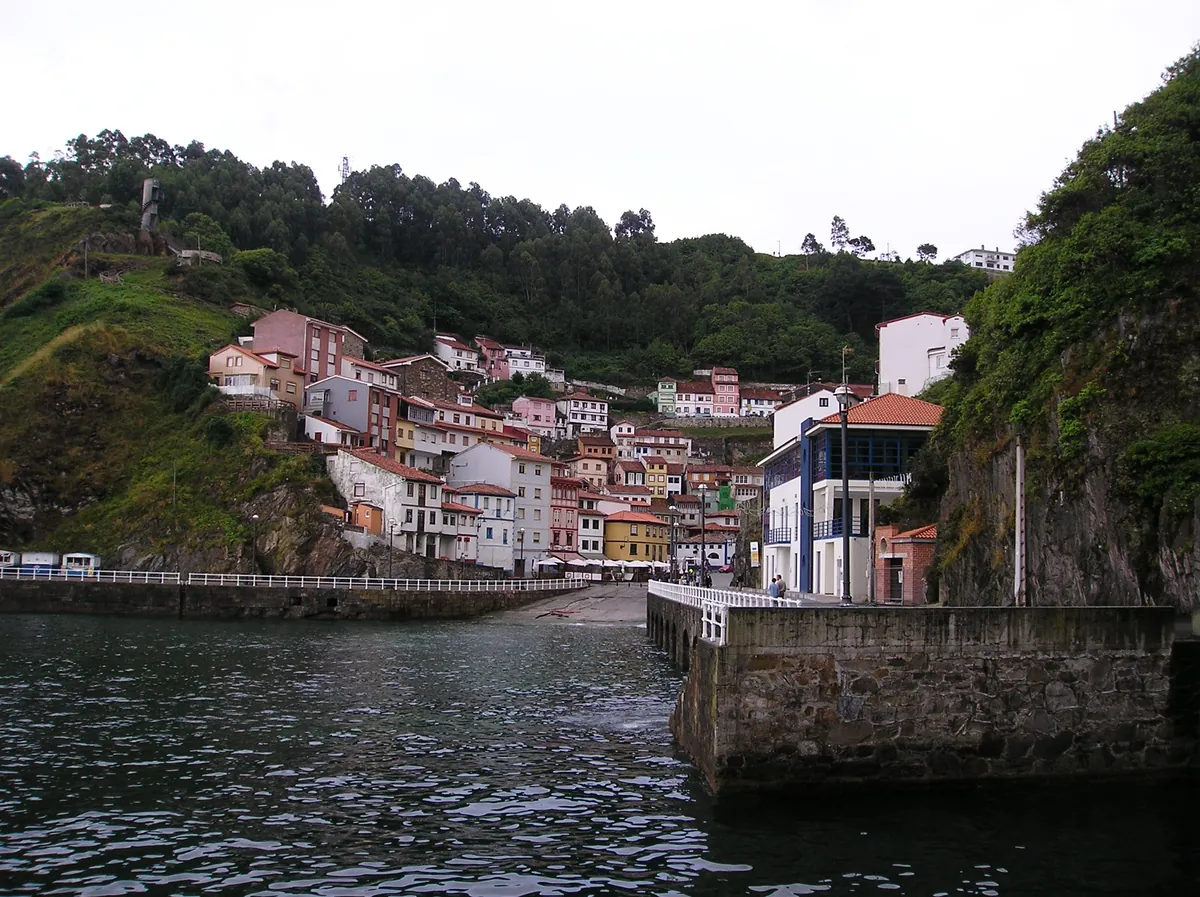
Leave time for nothing in particular. Sit on the river wall at dusk when the fishing boats chug home beneath the bridge, engines echoing off Victorian stone. Watch teenagers leap from the central arch at high tide, encouraged by grandparents who did the same jump forty years earlier. The streetlights come on one by one, sodium orange against the lilac sky, and someone further along starts practising bagpipe scales. It isn't staged for visitors; it's Tuesday evening in a village that happens to share its high street with a changing body of water. Tomorrow the tide will return, the herons will leave, and the empanada woman might set up her stall—or might not. Check WhatsApp before you set out.