Full Article
about Cangas de Onís
First capital of the Kingdom of Asturias
Hide article Read full article
Cangas de Onís begins with a bridge. The so-called Roman bridge over the Sella is a 14th-century structure, its central arch hung with a replica of the Cross of Victory. It marks a crossing point that was strategic long before the town briefly became the capital of the nascent Asturian kingdom in the 8th century.
That political chapter was short. By 774, the court had moved to Oviedo. What remained was a market town in a valley, a place between the mountains and the sea.
Geography as history
The town’s early importance is tied to the battle of Covadonga, a local conflict in 722 that later gained symbolic weight. From it, a centre of power consolidated here. The geography explains why: the Sella valley offered a route, while the massifs of the Picos de Europa provided a barrier. Pelayo established his court in Cangas, and several early Asturian kings were originally buried in the area.
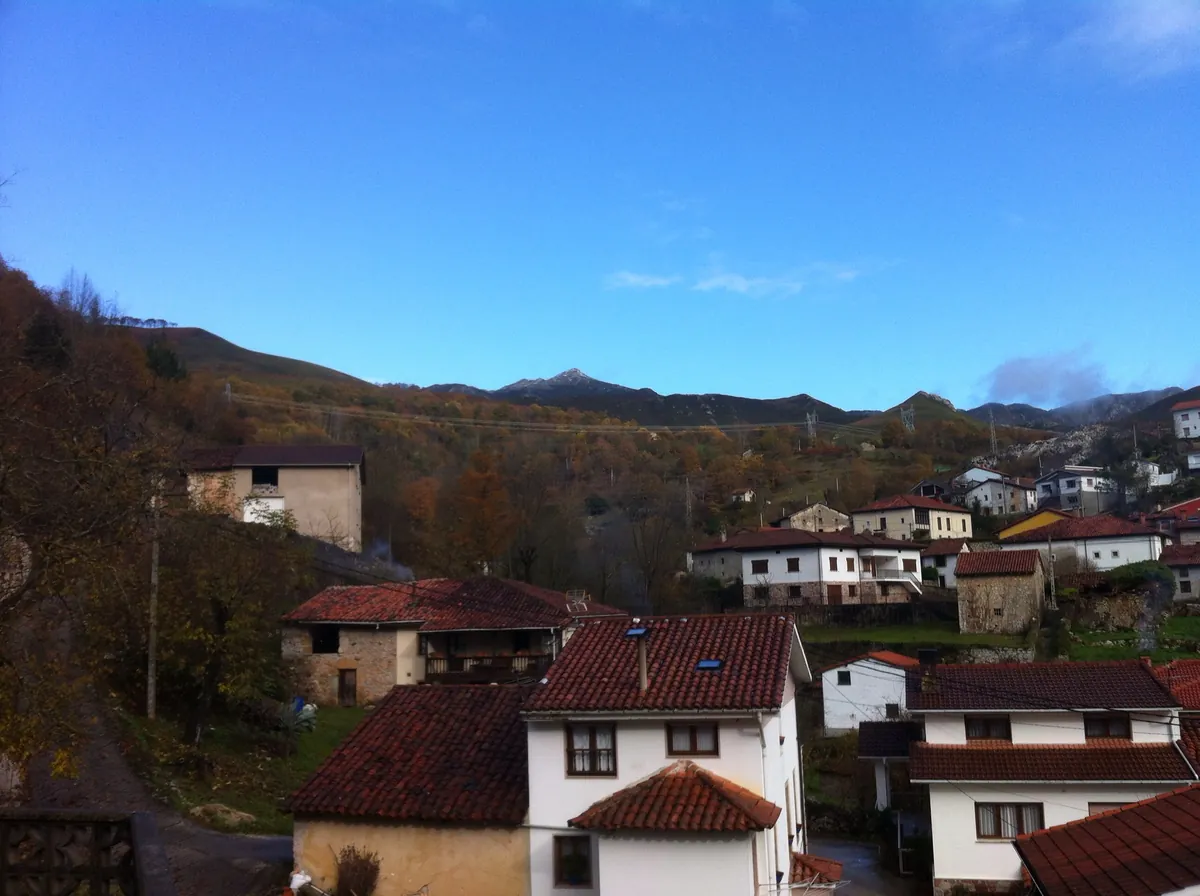
The historic centre is compact, its cobbled streets rising from the river to the town hall square. The small chapel of Santa Cruz is built directly atop a prehistoric dolmen, a physical layering of histories. This is a functional town, not a set piece. You see farmers, schoolchildren, and hikers with boots still muddy from the trails.
A working relationship with the peaks
Look south from any street and the Picos de Europa define the horizon. A large part of the municipality falls within the national park. This is not just a view; it dictates an annual cycle.
Transhumance still happens. Shepherds move herds to high pastures like those around Vega de Enol for the summer. Cheeses such as Gamoneu and Beyos are a product of this movement, often matured in the natural caves found throughout the limestone. Local festivals follow this rhythm. The Fiesta del Pastor in late July and the blessing of animals for San Antonio in June are community events, not tourist spectacles.
For walking, the most famous route nearby is the Cares trail. It follows a maintenance canal for a hydroelectric plant, cut into the limestone of the central massif over twelve kilometres. The path is largely level but exposed, with long drops to the gorge. The weather here is changeable; cloud can descend quickly, even in August.
Covadonga and the lakes
About twelve kilometres southwest, the sanctuary of Covadonga occupies a site where rock and water overwhelm architecture. The Holy Cave, with a waterfall before it, is the focal point of devotion linked to Pelayo. The larger basilica, finished in 1901 in pink limestone, sits on the slope below.
From here, a road climbs sharply to the Lakes of Enol and Ercina. It gains elevation quickly, passing through meadows used for summer grazing. On busy summer days and holiday weekends, private vehicle access is often restricted to manage congestion. Traffic builds early on the approach roads. Spring or autumn visits mean fewer cars and cooler air for walking.
Practicalities of a valley town
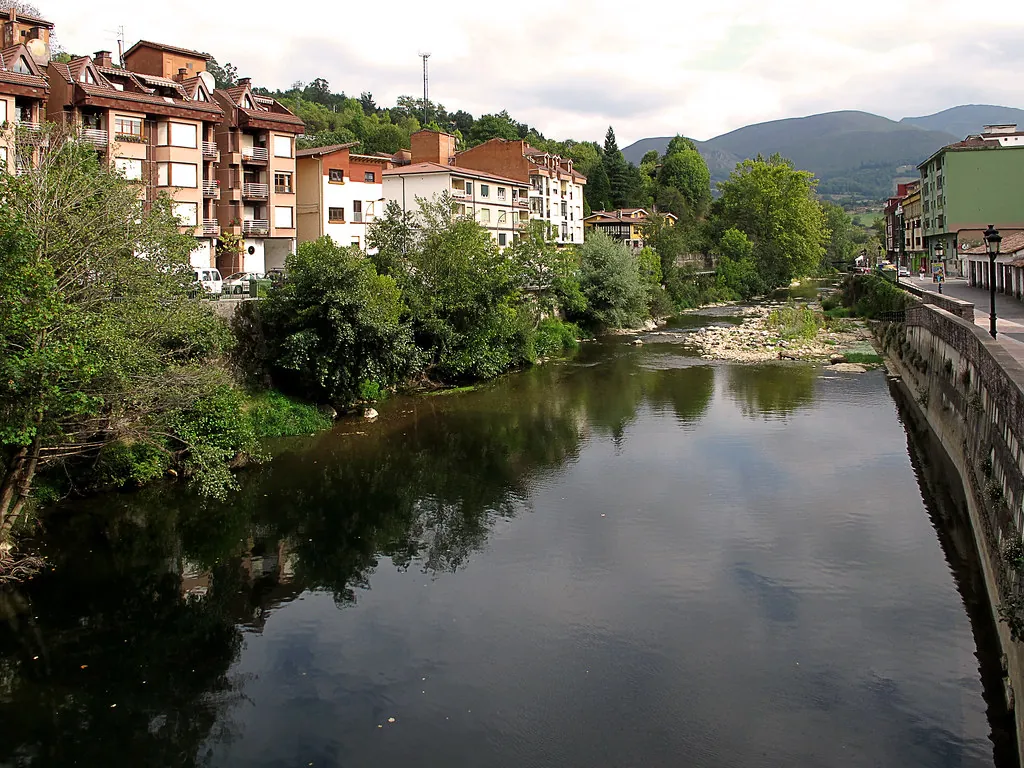
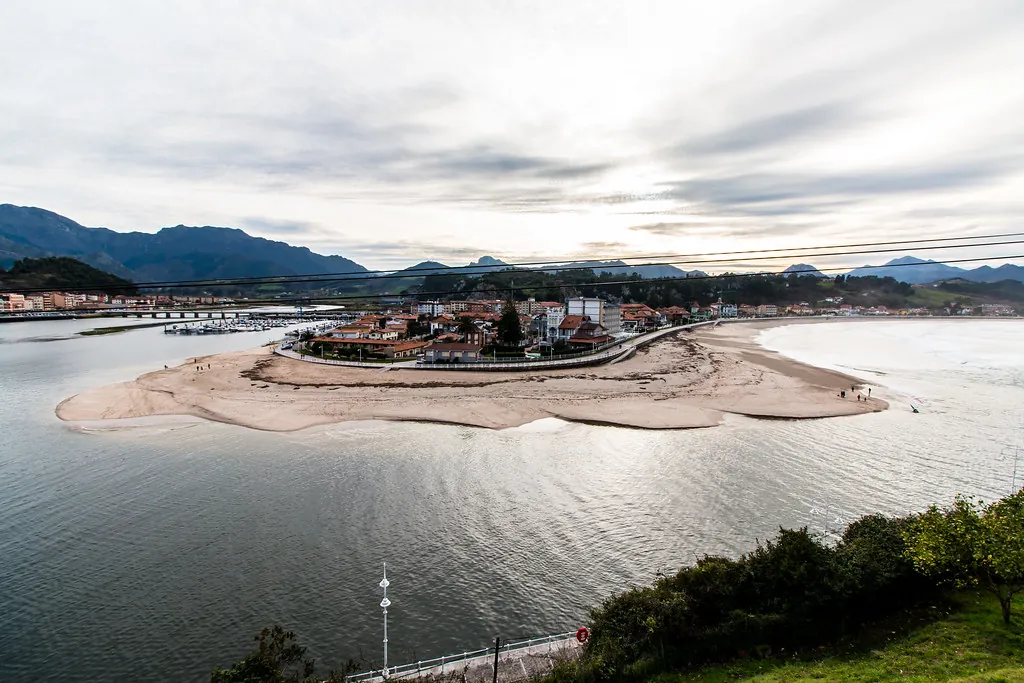
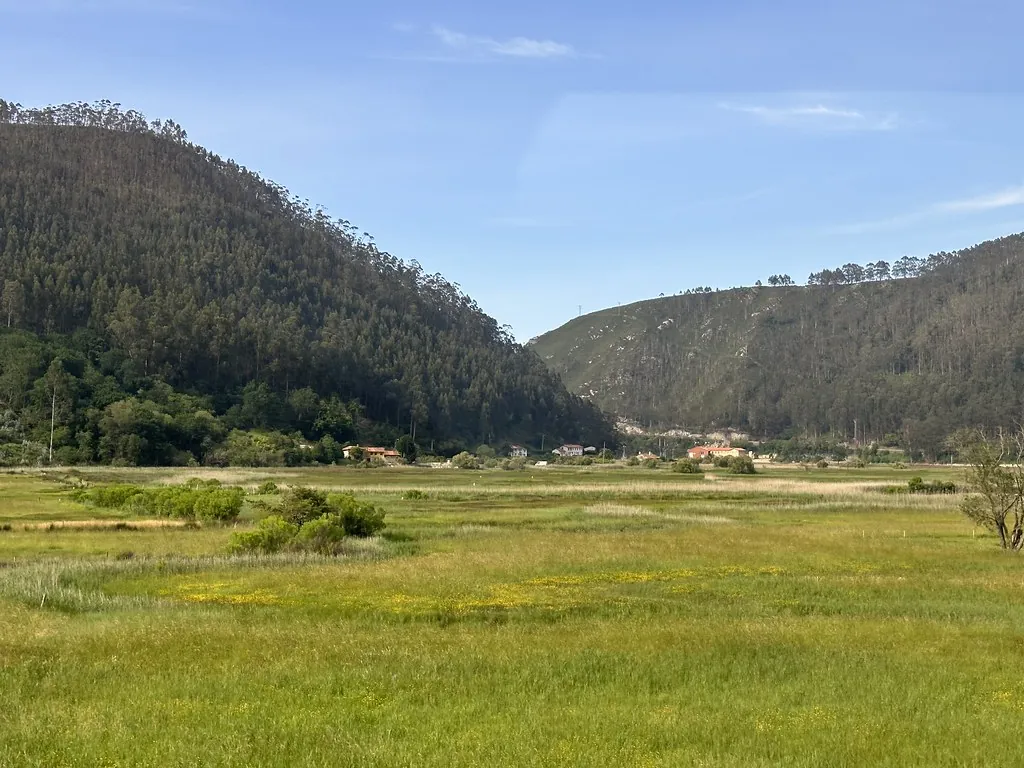
The River Sella is a corridor. Its historical role is visible in the several old bridges along the valley. Every August, the Descenso Internacional del Sella canoe race transforms the river between Arriondas and Ribadesella into a spectacle. On other days, its flow is steady and quieter.
The weekly market is on Tuesday, along the Avenida de Covadonga. Shops sell local cheeses and other products from the comarca. The medieval bridge remains the most direct way to cross the river, used by residents throughout the day.
Cangas is roughly an hour’s drive from Oviedo. Having a car is practical for reaching Covadonga, the lakes, and trailheads with flexibility. The town itself is easily walked, though some streets are steep and cobbled. Evenings are quiet; people talk at outdoor tables, and things close without ceremony.
This is a place where history is grounded in a specific topography—a valley that served as a short-lived capital, a bridge that remains functional, mountains that impose their own calendar.