Full Article
about Caravia
Sea and mountain in their purest form
Hide article Read full article
A break in the hedgerows, a flash of blue between meadows, and suddenly the Cantabrian is there. Caravia often begins like that: a glimpse of open sea that makes drivers slow down and consider pulling over. Many do. What was meant to be a brief stop tends to stretch into a long walk on the sand, the sound of waves filling the gaps in conversation.
This small council in eastern Asturias has around 500 residents. It does not operate like a village where you move from monument to monument with a checklist in hand. There is no tight historic centre arranged for strolling. Instead, Caravia spreads itself between coast and pasture, a scattering of hamlets and rural roads where daily life carries on much as it has for years. If constant activity is the aim, it may feel thin. If the idea is to ease off for a while, it fits rather well.
The long edge of La Espasa
Most visitors head first for La Espasa. It is a broad, almost kilometre‑long stretch of sand where the character shifts with the weather and the tide. On some days the sea looks measured, even inviting. On others it rolls in with force, white crests pushing steadily towards shore.
There is space here. Space to walk without weaving through rows of umbrellas, space to let children run ahead, space to stand and watch a surfer studying the swell before committing to the water. This is not a beach defined by loud music or dense services. The typical scene is simpler: a couple pacing the waterline, a family unpacking sandwiches from a cool box, someone sitting on the dry sand listening to the rhythm of the surf.
When the Cantabrian is stirred up, the noise carries far inland. You can hear it before you see it. When the sea settles, the atmosphere changes completely. Wind across the dunes, a distant gull, and little else. The same strip of sand, two very different moods.
Further east lies Playa de Morís, close to the boundary with neighbouring Colunga. It feels even more open, with ample room to wander without a clear destination. On days with decent swell there are usually a few boards in the water, though this is not a place where waves are guaranteed. Anyone travelling specifically to surf would be wise to keep expectations flexible, particularly outside the more unsettled months of autumn and winter when conditions can become livelier.
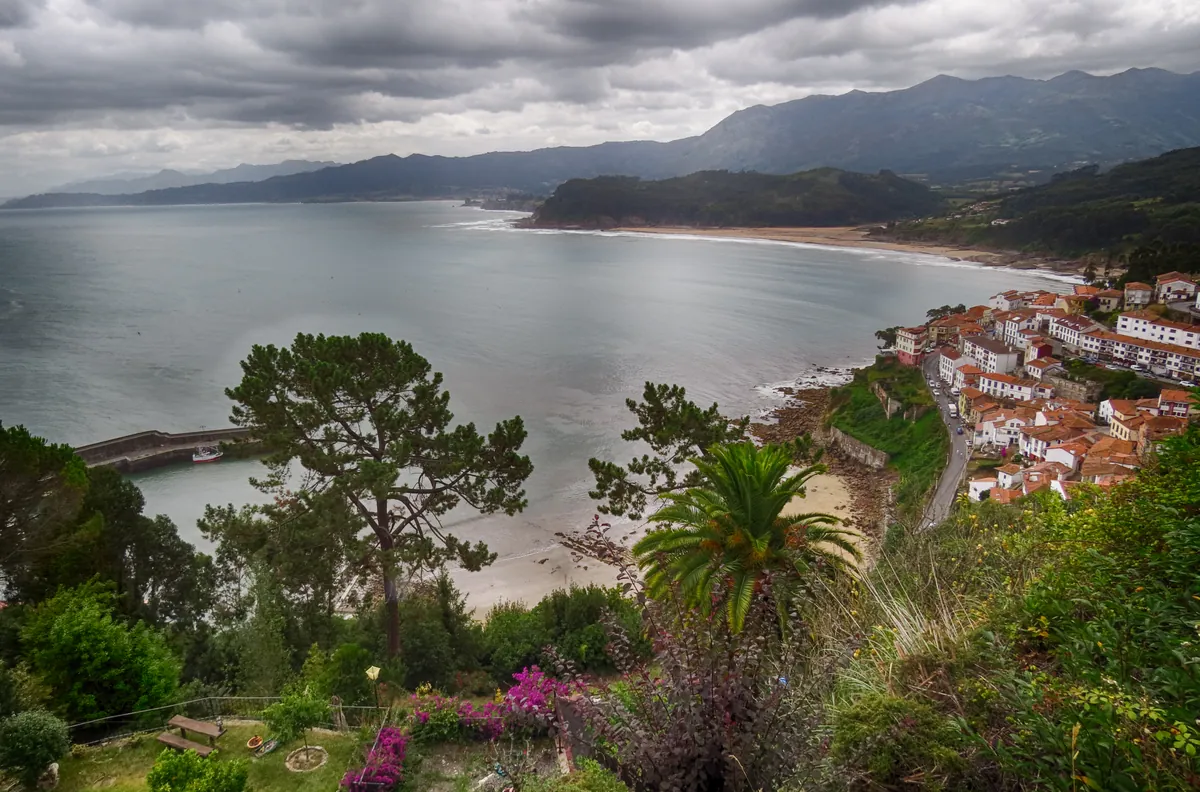
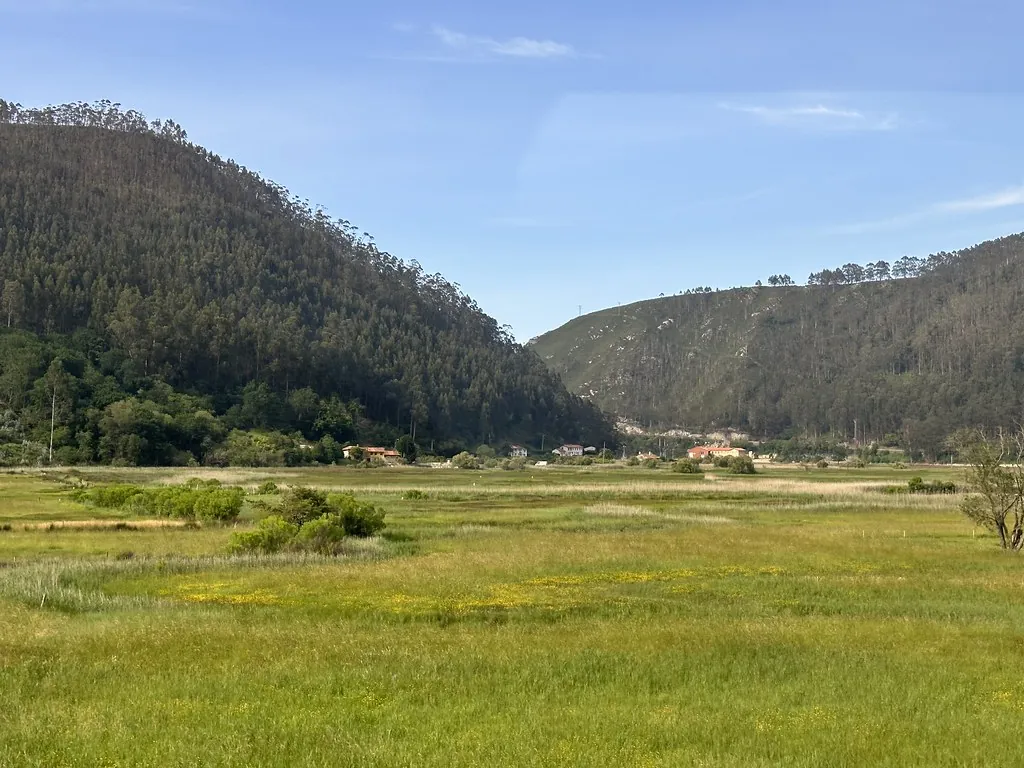
Paths rise from the beaches into surrounding meadows. A short climb rewards you with a clear view of the coastline: cliffs, long arcs of sand and small inlets shaped steadily by the sea. From above, the layout of this part of Asturias makes sense. The green of pasture runs almost to the cliff edge, and the horizon is a hard line of blue or grey depending on the day.
Up the hill: Caravia Alta and its hamlets
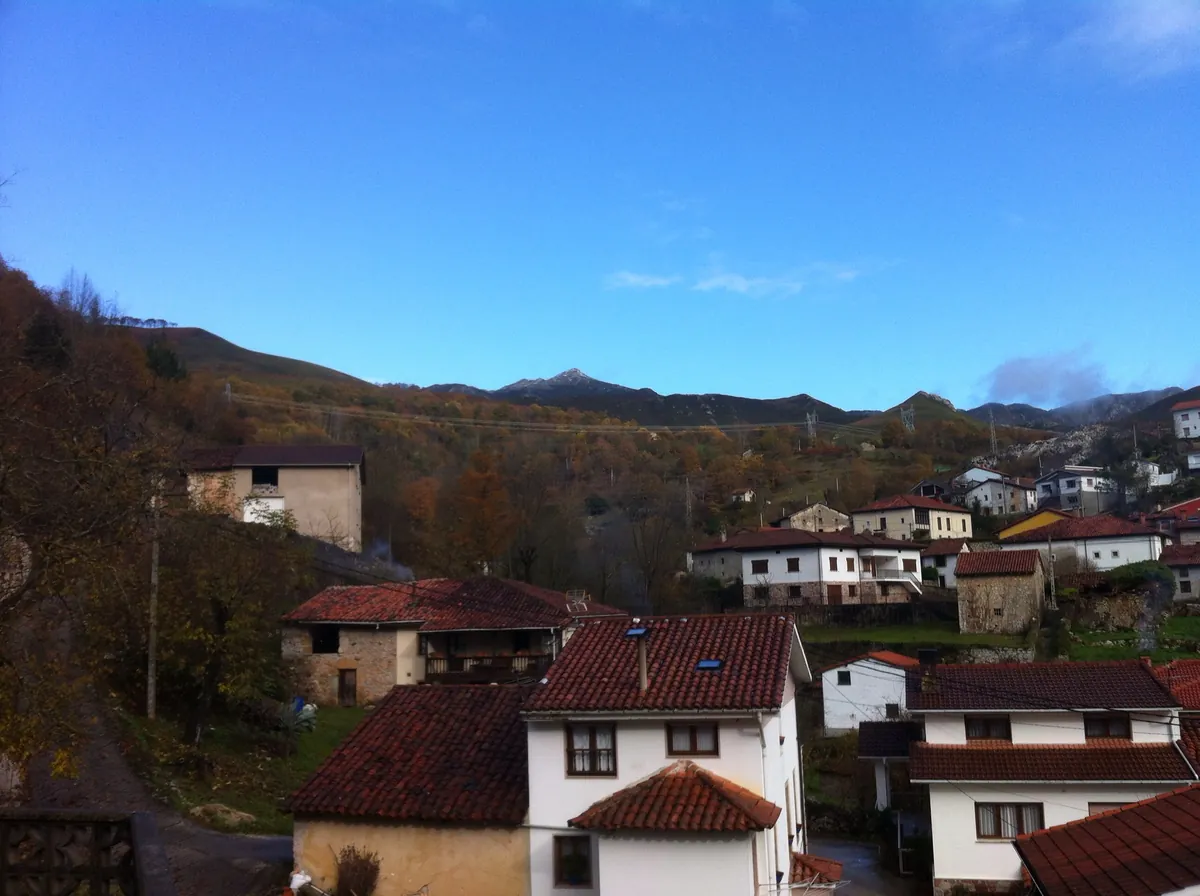
Climb away from the shore and Caravia shifts gear again. Caravia Alta and hamlets such as Duyos and Prado sit among rolling fields. Houses are scattered rather than grouped tightly together. Traditional raised granaries, hórreos, stand in some plots, practical structures that have been part of the landscape for generations.
There is no curated historic quarter. A walk along these narrow roads can feel uneventful at first. Then a tractor appears around a bend. Laundry moves gently on a line beside a stone wall. A small group of cows ambles across towards another field. These are ordinary rural scenes, and here they still set the tone.
In Prado, the parish church of San Félix is easy to spot because its bell tower rises above the trees as you approach. Elsewhere in the council there are small rural chapels where, on certain dates in the local calendar, residents still gather. Caravia’s cultural life is not displayed daily for visitors. It surfaces at specific moments and otherwise returns to its quiet rhythm.
A pause between places
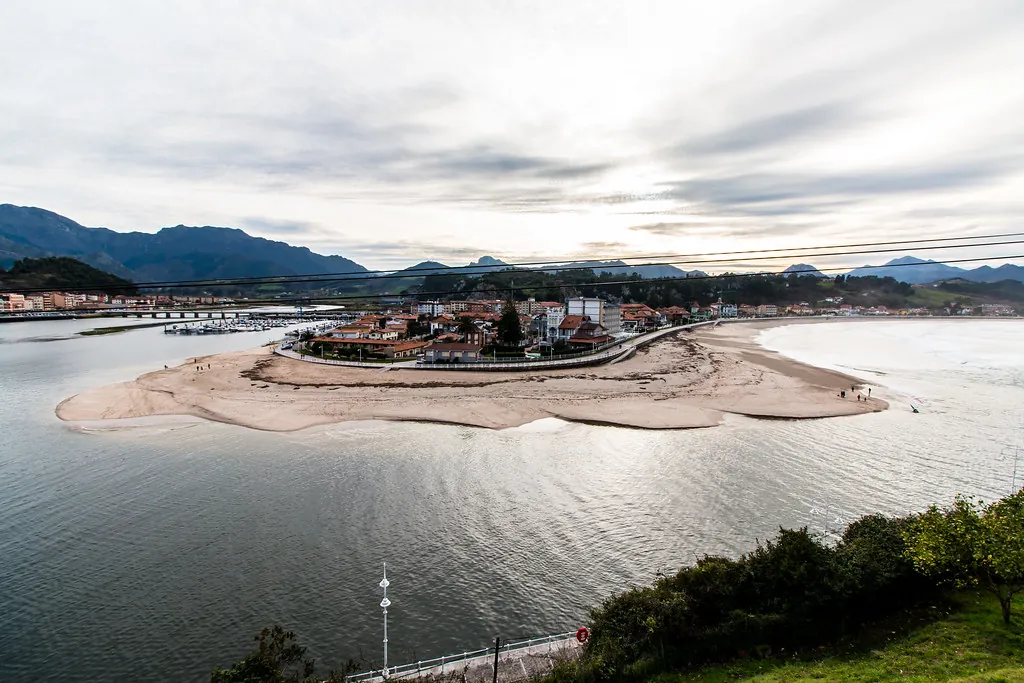
Caravia works well as a stop between Ribadesella and Colunga. It sits neatly in the middle, making it straightforward to break a journey along the eastern Asturian coast. A couple of hours are enough to grasp its essence: a walk along La Espasa, a drive or cycle up towards the hamlets, a pause at a viewpoint to take in the meeting of pasture and sea.
That brevity is part of the appeal. There is no pressure to organise a full itinerary. The most logical plan is often the simplest. Start at the water, let the length of the beach set the pace, then head uphill for a wider perspective before continuing along the coast.
Visitors who enjoy more active seas might find interest on windier days, when swell builds and the beaches feel more dramatic. Those seeking sun‑lounger ease and guaranteed calm may need patience. The Cantabrian does not always cooperate.
Practicalities to know before you go
Reaching Caravia is straightforward by car. From the A‑8 motorway, the usual approach is via Colunga, followed by local roads that wind towards the coast and up into the hills. Distances are short, but expect curves and the occasional steep stretch that demands slower driving. Public transport in this part of Asturias is limited, so having your own vehicle makes life easier.
The terrain is undulating. Paths leading up from the beaches or across the fields can involve noticeable climbs. Sturdy footwear is sensible, particularly if planning to explore beyond the sand.
Weather deserves attention too. Even in summer, a sea breeze can cool the air quickly. A light jacket in the car is rarely wasted space. Conditions can shift within a few hours, with bright sun giving way to Atlantic drizzle. Checking the tide is worthwhile if you intend to walk near rocks or along the water’s edge, as the sea here can advance faster than expected and sections of sand may narrow considerably.
Services within the council are limited. There are not many facilities, so it makes sense to arrive with essentials or to stop in a larger nearby town beforehand. Caravia is better suited to short stays or day visits than to elaborate, service‑heavy holidays.
Sea in front, meadows behind
Caravia leaves an impression less through landmarks than through atmosphere. The defining image is simple: open water ahead, green fields rising behind, very little rush in between. It is a place that asks for time measured in tides and short walks rather than in packed schedules.
For travellers moving along Asturias’s eastern coast, it offers a natural pause. For those content with a beach, a hillside road and the steady presence of the Cantabrian, it may be enough in itself.