Full Article
about Piloña
Land of asturcones
Ocultar artículo Leer artículo completo
The first thing that strikes you about Pilona is the silence. Not the eerie sort, but the kind that makes you realise how much background noise you normally tolerate. Stand on the Romanesque threshold of Santa María de Villamayor at nine on a weekday morning and you'll hear nothing louder than the river turning over wet stones a hundred metres below. The church door is unlocked; let it thud shut behind you and the temperature drops five degrees. That cool stone smell—rainwater, woodsmoke, wax—hasn't altered since the thirteenth century.
Pilona isn't one postcard village; it's a scatter of parishes threaded along a winding valley road. Infiesto, the administrative centre, is where locals collect pensions, buy school shoes and argue over football in the sidrerías. The through-traffic still pauses for herdsmen guiding tan-and-white Asturian cattle across the AS-117. Drivers wait without honking; nobody's in that much of a rush.
Valley floors and mountain logic
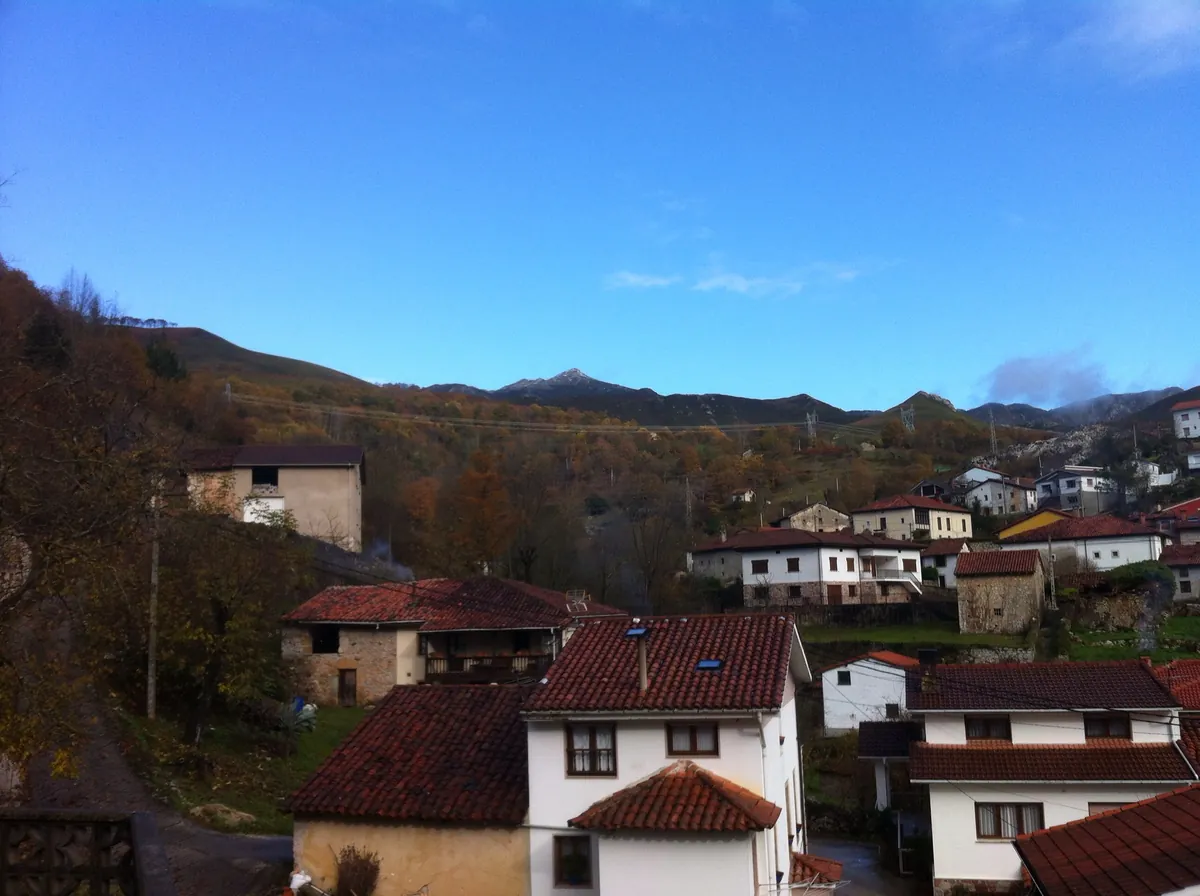
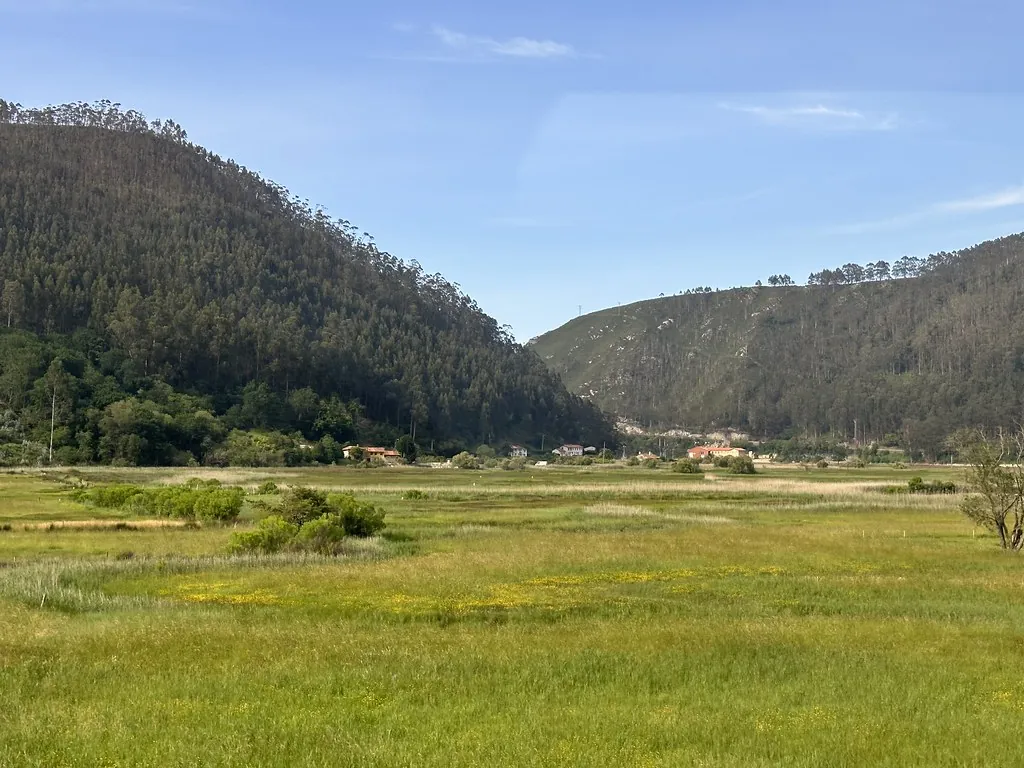
The council stretches 35 km from end to end yet holds barely 5,000 souls. Settlements cling to whichever slope catches the morning sun; hamlets of twenty houses can be fifteen minutes apart by car because the direct distance ignores a 400-metre climb in between. If you arrive expecting compact lanes around a market square, you'll spend the day driving in frustrated circles. Treat the entire basin as one slow itinerary, however, and the rhythm clicks. Stop where the road widens, walk the track that ducks into a hay meadow, and the valley rewards you: red-chalk soil, oak groves loud with jays, and stone barns whose slate roofs are held down with quartz rocks the size of loaves.
Spring is the kindest season. Between April and early June the high pastures glow an almost aggressive green, buttercups reflect like yellow light bulbs and the air smells of broom and cow parsley. October is equally reliable: chestnut trees turn copper, morning mist pools in the river bends and wood-smoke drifts from every chimney. Summer brings Spanish families from Oviedo and Gijón who own stone cottages here; August afternoons edge towards 28 °C but nights stay cool enough for a jumper. Winter is when you discover whether your hire car's tyres have decent tread. Snow can close the mountain spur to the shrine of Nuestra Señora de la Cueva, and daylight is scarce by five. Locals keep the bars humming with card games and dominoes, but visitors thin out dramatically.
What deserves your petrol
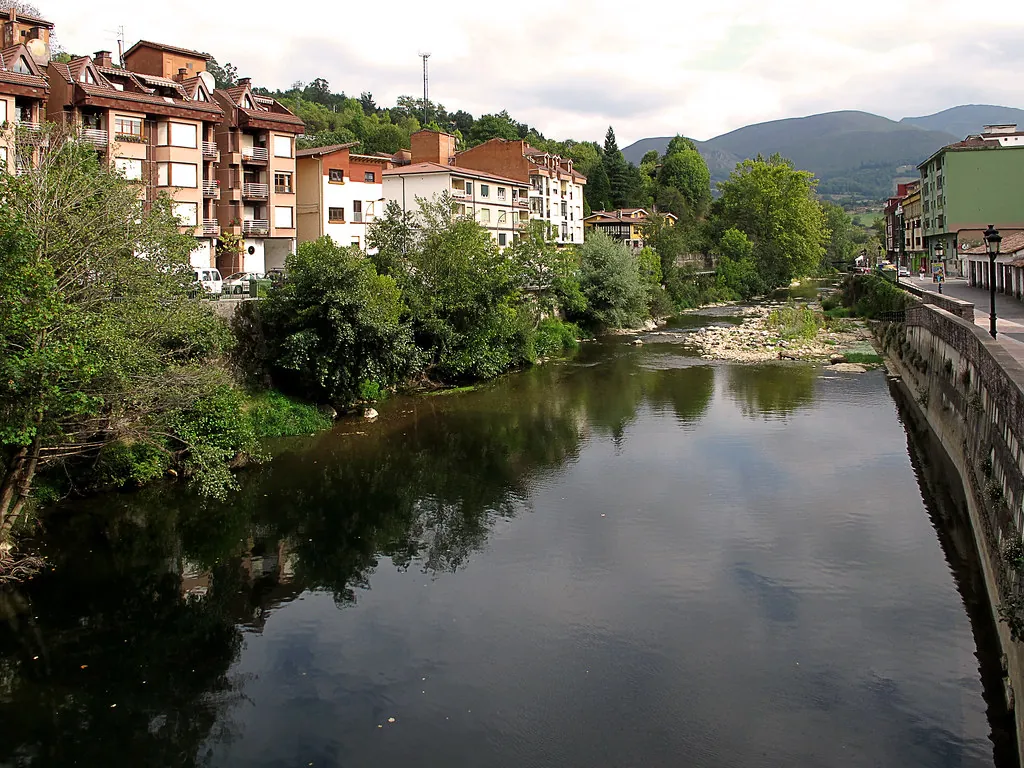
Start in Infiesto itself. Park behind the orange-brick health centre (free) and walk the pedestrian spine. The church square hosts a morning market on Tuesdays: tarpaulins piled with cabbage, bunches of coriander still flecked with soil, and fish lorries selling hake that left the Cantabrian coast at dawn. Two-storey mansions with glass-fronted balconies betray nineteenth-century emigrants who returned from Cuba with sugar money; their ground floors now house butchers, a bakery that opens at 06:30 and a hardware shop selling everything from rubber boots to hunting rifles.
A ten-minute drive south, the sanctuary of Nuestra Señora de la Cueva is wedged under a limestone overhang beside the Piloña river. Legend says medieval shepherds saw a glow emanating from the rock and unearthed a small wooden Virgin. Whatever your theology, the setting is compelling: ferns brush the stone roof, votive candles flicker in alcoves and the water below provides a constant, low soundtrack. Sunday Mass is celebrated at noon; the priest arrives on a motorbike, helmet under one arm. Visitors are welcome but photography inside is considered poor form.
Santa María de Villamayor, five minutes north-east of Infiesto, is the pick of the rural churches. The south doorway is carved with rope-pattern moulding and two rather startled lions; inside, a faded fresco of St Christopher fords a river you can still identify in the landscape outside. Don't expect guides or tickets—there's only a perspex donations box for roof repairs. Lock up when you leave; the key hangs on a nail by the porch.
Moving on foot
The council maintains no glossy trail centre, yet dozens of routes exist, way-marked by farmers rather than rangers. Download the Wikiloc app before you set off: phone reception is patchy once you leave the valley floor. The most straightforward circuit starts at the hamlet of San Xuan, 4 km above Infiesto, and follows a grassy lane to the abandoned village of Las Xanas. You'll pass stone threshing circles and a tiny meadow bar where an elderly man serves cider from his own press on Saturdays; payment is dropped into an honesty tin. The round trip takes two hours, gains only 250 m of height and delivers views straight down the valley to the Bay of Biscay—visible on clear days.
Ambitious walkers can tackle the Sierra de Sueve ridge along the southern edge of the council. The classic traverse from Tándara to Priesca tops out at 1,161 m, crossing limestone pavement grazed by feral horses. Allow six hours and carry water; there are no taps above the tree line. The summit trig point is crowned, improbably, by a concrete picnic table. On Bank Holiday weekends you may share the view with local families firing small-bore rifles at paper targets—ear plugs recommended.
Cyclists need low gears. The AS-262 from Infiesto to Espinaredo averages a six per cent gradient for 9 km, then tips to twelve. Traffic is negligible but cows have right of way; freewheeling down at dusk requires nerves of steel and good brakes.
Eating and drinking like you mean it
Casa Pando on Calle San Juan dishes out fabada bean stew in half raciones—sensible if you want space for the next course. Expect to pay €14 for the casserole plus €2 for a bottle of cider; they'll pour it the traditional way (arm aloft, liquid arcing into a tilted glass) whether you're proficient or not. Café Venecia facing the church does proper coffee and sells custard-like pastries called hojaldres filled with crème pâtissière, ideal at elevenses. Most bars close the kitchen by 15:30; dinner service rarely starts before 21:00, so plan accordingly.
For something more liquid, drop into Vinos Alvarez Nava on the industrial estate east of town. The family has fermented apples since 1820 and will talk you through barrel ageing and tannin levels even if your Spanish is limited to "buenos días". A guided tasting of three sidras naturales costs €8 and you'll leave with the correct pouring technique splashed up your sleeve.
Where to lay your head
El Gran Sueño, a converted farmhouse on the road to Villamayor, offers five pastel-coloured rooms from €95 including breakfast. Owners Alan and Claire (expat Brits) provide waterproof OS maps and will shuttle luggage to your next stop if you plan a multi-day walk. Cheaper, simpler rooms are found above Bar El Norte on Infiesto's main street—€45 a night, shared bath, church bells on the hour. August and Easter week sell out months ahead; outside those peaks you can usually find space with a day's notice, but don't bank on it at weekends.
The practical grit
A car is essential. The A-8 motorway from Santander to Oviedo skirts the valley mouth; leave at junction 326 and it's 25 minutes to Infiesto. Public buses from Oviedo run twice daily on weekdays, once on Saturdays, never on Sundays, and terminate in the valley floor—useless for most trailheads. Petrol stations close at 20:00; the nearest 24-hour pump is in Arriondas, 18 km away. ATMs exist in Infiesto yet many village bars are cash-only—stock up before you head uphill.
Weather forecasts come with caveats. A front can trap cloud on the ridge while the valley basks in sunshine, or vice-versa. Pack a lightweight waterproof even if the sky looks innocent; afternoon storms in May build faster than you can descend.
Parting shot
Pilona offers no blockbuster sights, no souvenir arcades, no cocktail mixologists. What it does give you is the rare sensation that daily life continues with or without the tourist gaze—an experience increasingly hard to find in Europe. Visit on its own terms: allow wrong turns, linger over cider, accept that the church key might be missing and the bar may run out of tortilla. Slow your internal clock to valley speed and the place seeps in. Leave expecting to be entertained and you'll drive away muttering about poor signage and early closing hours. Arrive curious, however, and Pilona repays with details you can't photograph: the hiss of a cider pour, the sweet smell of freshly cut maize, the way dusk light flares on a red corrugated roof. Remember those moments on the flight home and the map in your mind will already be planning a return—preferably in spring, when the high meadows glow like they've been plugged in.