Full Article
about Ponga
Ponga Natural Park
Hide article Read full article
At eight in the morning, the Desfiladero de los Beyos feels like a different element. Light cuts between limestone walls and lands on a river pressed tight against the rock. The road threads through in tight bends. Water, stone and forest crowd the tarmac. In Ponga, the landscape takes charge before you’ve even parked.
This is a municipality of abrupt geography. Villages cling to steep hillsides above tilted meadows, each one separated by dense woodland. Distances are measured in curves and gradients, not kilometres. Part of the territory lies within a Biosphere Reserve. You hear it first: the constant sound of water from streams running down the slopes, through beech and oak woods that swallow the mountainsides whole.
The place feels shaped by terrain first, people second.
Villages on the slope
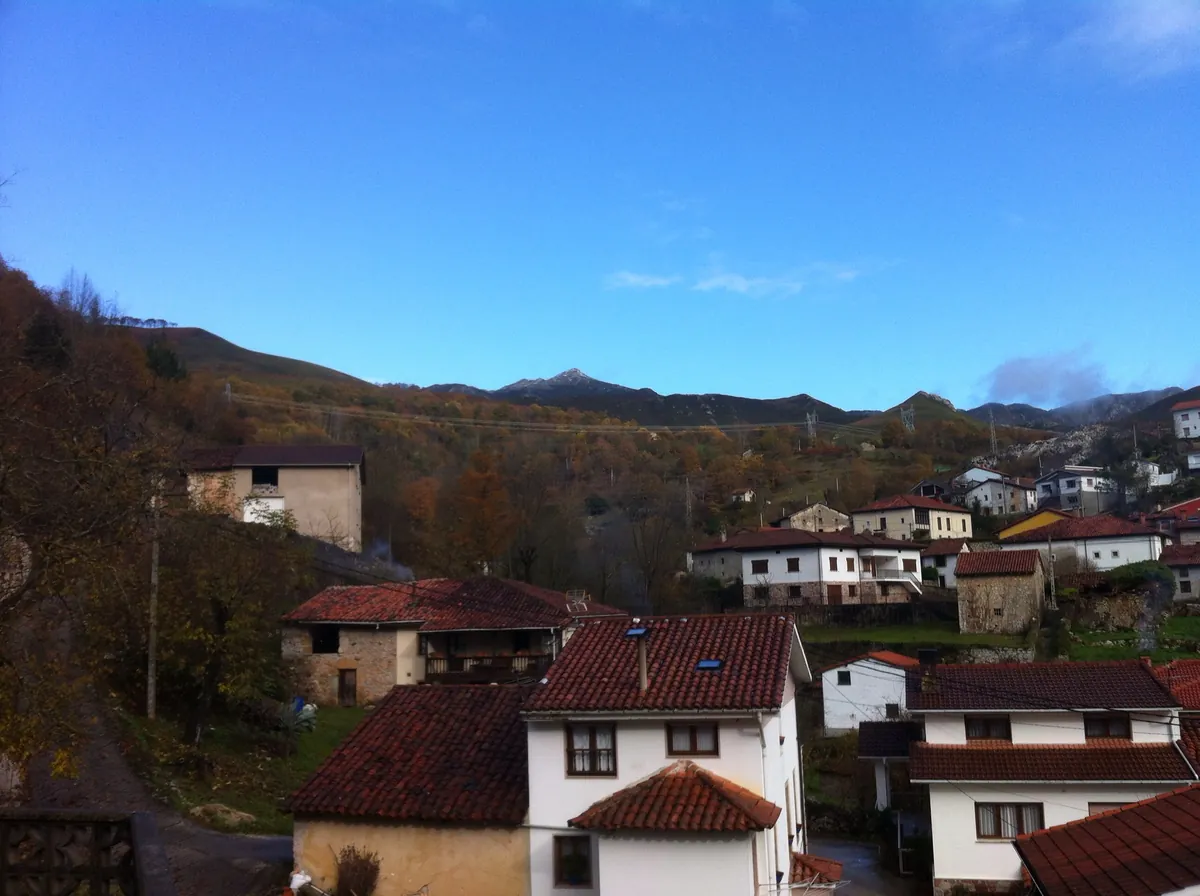
San Juan de Beleño acts as a reference point, a cluster of dark stone roofs angled towards the valley. The square is small. By mid-morning, the slow chug of a tractor up the main street marks the time. At the village edge, the ground falls away into a relief of pale meadows and rising woodland.
The pattern repeats with slight variations. In Casielles, Sobrefoz and Taranes you see low houses, dark wooden balconies and hórreos on stone stilts. Chickens scratch at the lane margins. Stacks of firewood lean against walls. These are settlements built for daily life, not for visitors.
The hermitage of Santa María de Viego sits alone in open meadows. On some days a light wind moves across the grass. Further in, the Bosque de Peloño changes everything. Tall beech trees lift a high canopy. The ground is soft with leaves. In autumn, the light turns green and the air feels cooler, stiller than in the valley.
A few words of Spanish help here. A willingness to slow down matters more.
Walking demands respect
Old routes like the Ruta del Arcediano cross these mountains. They remain long walks where damp ground can make footing uncertain. Peaks such as Tiatordos look deceptively close from below. The ascent is steady. The gradient registers in your legs quickly.
You might see a chamois high above, or a bird of prey circling. More often there are just signs: prints in mud, a rustle in the undergrowth that fades as you turn.
Carry water and food. Check the forecast. Mist can spill over the passes without warning and close down visibility in minutes. Even in summer, pack a warm layer. When the sun drops behind the ridges, the cold arrives fast in the valleys and woods.
Spring and autumn suit Ponga well. Meadows are bright after rain and the forest shows its texture. Summer brings longer days, but services often reduce hours outside peak season. Winter access depends on conditions; snow and low cloud complicate plans, and the narrow roads demand extra care.
The rhythm of the road
You reach Ponga by driving through Cangas de Onís and following the AS‑261 towards Beyos. The carriageway tightens and runs between rock and forest for miles. The gorge is the most direct approach.
Stopping in the wrong place here leads to awkward manoeuvres. Safe pull‑ins are limited. Traffic can appear suddenly on blind bends. Patience helps. Accept that journeys take longer than you expect.
Between villages, curves stack one after another. Livestock sometimes roam near the roadside. The terrain is rarely flat. Good footwear with a solid sole makes a difference on dirt tracks and stony paths alike.
Public transport is limited. A car offers flexibility, especially if you want to explore more than one village or start a walk early. Fuel and supplies are best organised before heading deep into the municipality; options thin out quickly.
Phone signal falters in valleys and forests. Have offline maps or a paper backup in your rucksack.
Two hours, or longer if you can spare it
With limited time, drive the gorge slowly. Pause where it is safe to look down at the river from above. Climb to San Juan de Beleño and walk its lanes to the natural viewpoints at its edges. From there, you see the full scale: pasture giving way to woodland, woodland rising to rock.
If you have another hour, head towards Sobrefoz or Taranes. The repetition of stone houses and wooden balconies shows how closely these places are tied to their surroundings. Mountains press in from all sides.
Ponga does not cater to hurry. Roads require attention. Walks require stamina. Weather has the final say. Those constraints shape the experience as much as any viewpoint. Come prepared for gradients, shifting cloud and long stretches of quiet. Then the place begins to make sense on its own terms