Full Article
about Ribadedeva
Home to Indiano architecture
Hide article Read full article
A glance at the map suggests Ribadedeva can be covered in an afternoon. The stretch of coast is short, the inland area compact, and the name often overshadowed by larger neighbours. Then you arrive and realise this corner of eastern Asturias works differently. It unfolds in fragments: a wide beach at low tide, a quiet village street, a clifftop where the sea booms through rock.
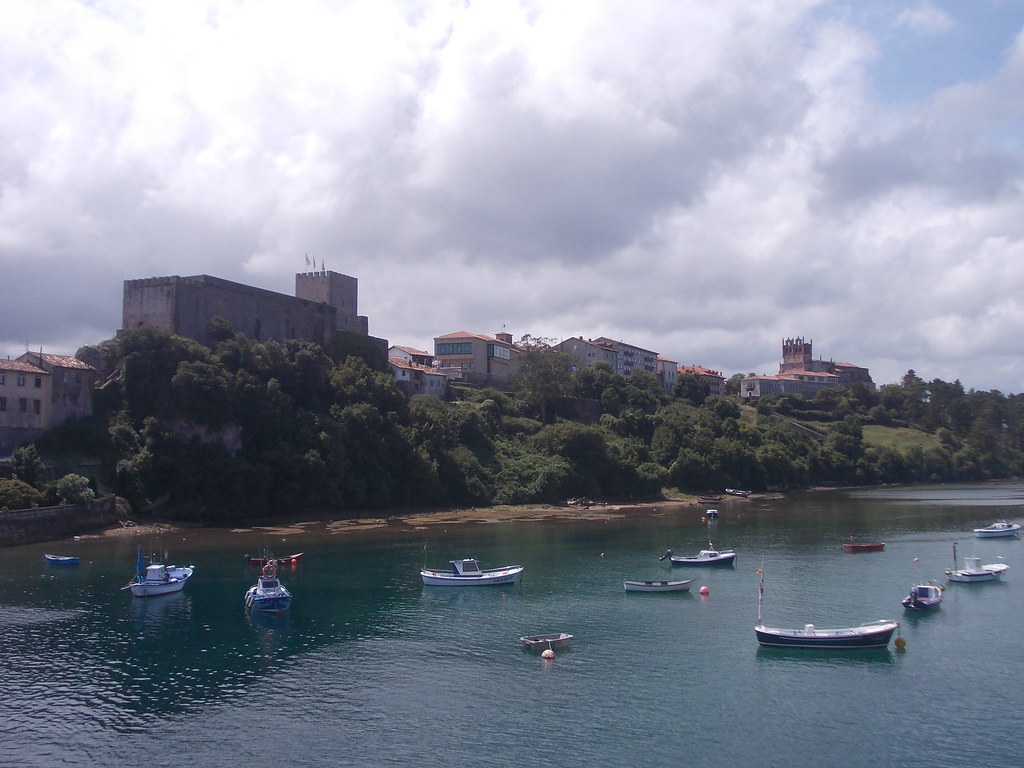
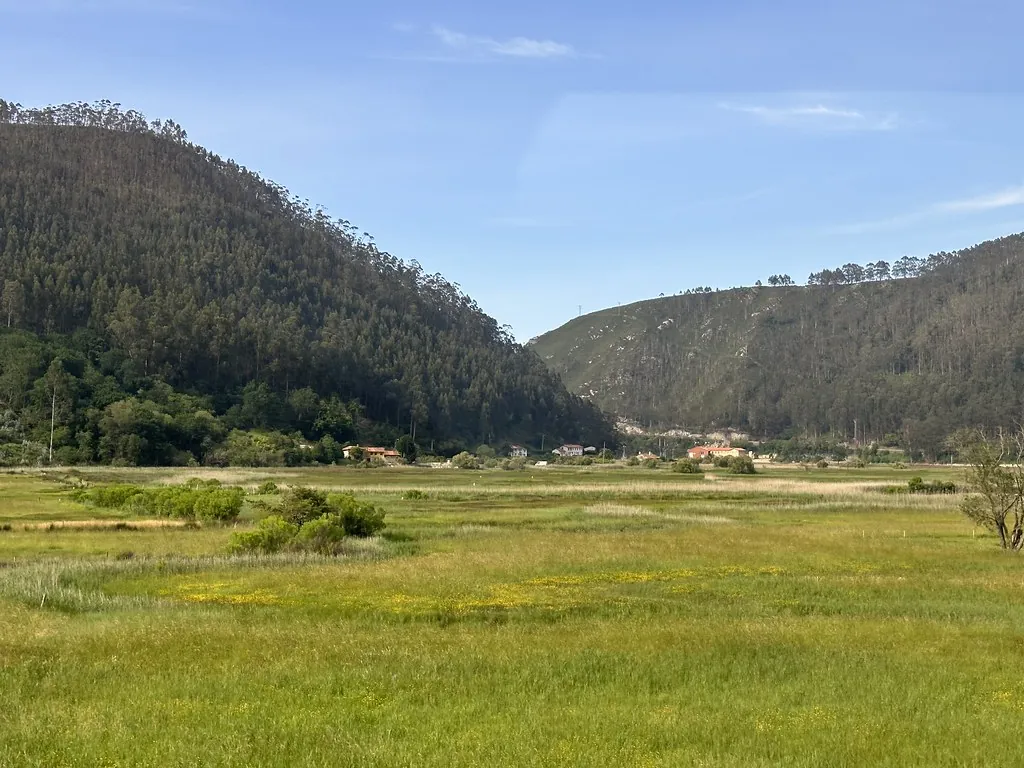
Ribadedeva sits right on the edge of Asturias, pressed against Cantabria. The River Deva marks the boundary before slipping into the Cantabrian Sea. In a matter of minutes you can move from sheltered meadows to open coastline. There is no single landmark that gathers everything around it. The appeal lies in linking places together and accepting that a short drive on a narrow road is part of the rhythm.
The Shape of the Coast
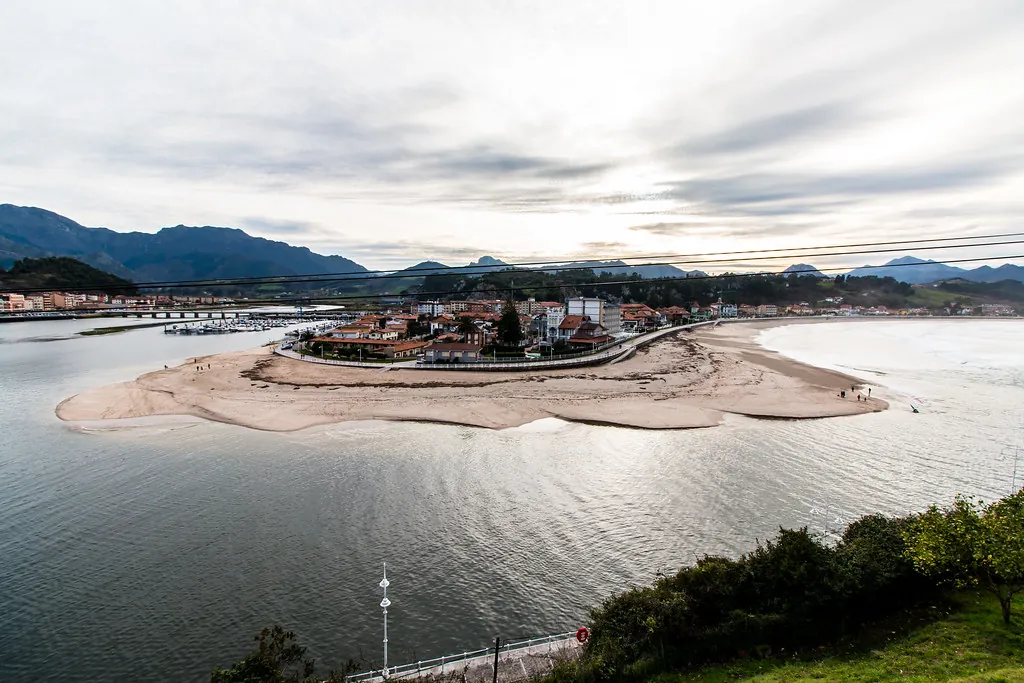
Most visits begin at La Franca. At low tide the beach stretches far out, revealing rocks and sandy channels that tempt you to wander further than planned. Families and couples drift across the exposed sand, peering into pools and picking their way between outcrops. It is easy to lose track of distance here.
The mood shifts when the sea is rough. Waves push in, space shrinks, and the sand that seemed endless only hours earlier feels tighter. Tides matter. Check them before you set out because La Franca can look like two different places in one day.
Summer brings another change: traffic. Arrive mid-morning in high season and parking close to the beach may require patience and a few slow circuits. This is not a resort built for volume. It remains a popular local beach with limited room for cars.
A short distance away lies San Pedro. It feels more tucked in and is usually quieter. There is no grand seafront promenade and little in the way of infrastructure. A boat or two on the sand and the sense that visitors have come with purpose give it a discreet atmosphere. Those who prefer a simpler setting often gravitate here.
Above the shoreline, the cliffs hold one of Ribadedeva’s most dramatic features: the bufones of Santiuste. These natural blowholes puncture the rock. When the sea surges beneath, water shoots upwards through the openings. On a day with swell the display is obvious. On a calmer day you may only hear the sea breathing through the cracks.
Expectations need adjusting. The bufones are not permanently erupting fountains. They depend entirely on the force of the water below. Distance matters too. Cliff edges can be slippery and the wind changes quickly along this stretch of coast. Take time to watch, but keep well back.
Colombres and the Return from America
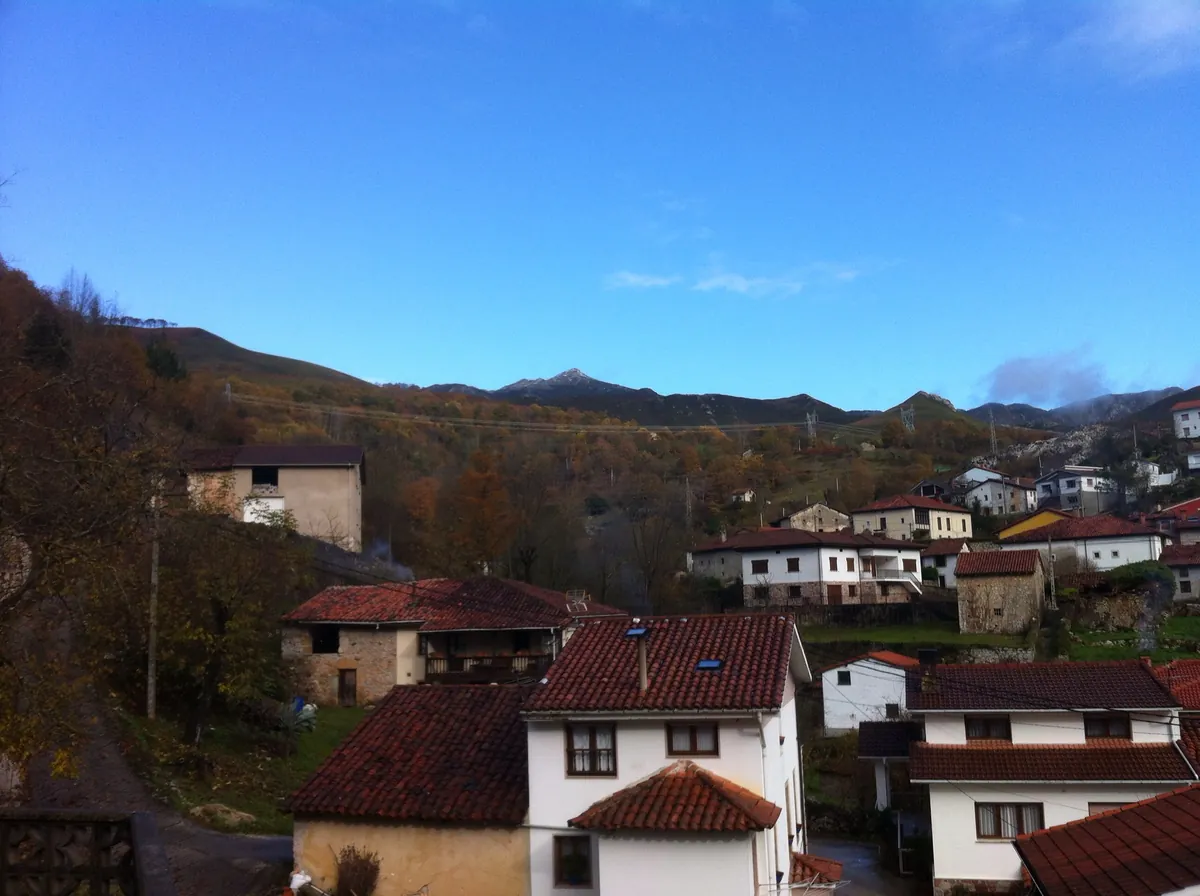
Inland, the administrative centre of the municipality is Colombres. Those anticipating a tight medieval core may be surprised. Streets spread out rather than cluster, and the eye is drawn to something else entirely: the indiano houses.
These large homes were built between the late nineteenth and early twentieth centuries by locals who made their fortunes in the Americas and returned. They stand in gardens, often set apart from their neighbours, and their scale feels slightly out of place in rural Asturias. That contrast is precisely what makes them memorable. A stroll through Colombres becomes a quiet architectural trail, each house hinting at transatlantic stories without spelling them out.
The church of Santa María is a natural pause point. After that, the best approach is simply to walk without agenda. Colombres moves at an unhurried pace. There is no pressure to tick off sights because Ribadedeva does not present itself as a checklist destination.
Between Meadows and Clifftops
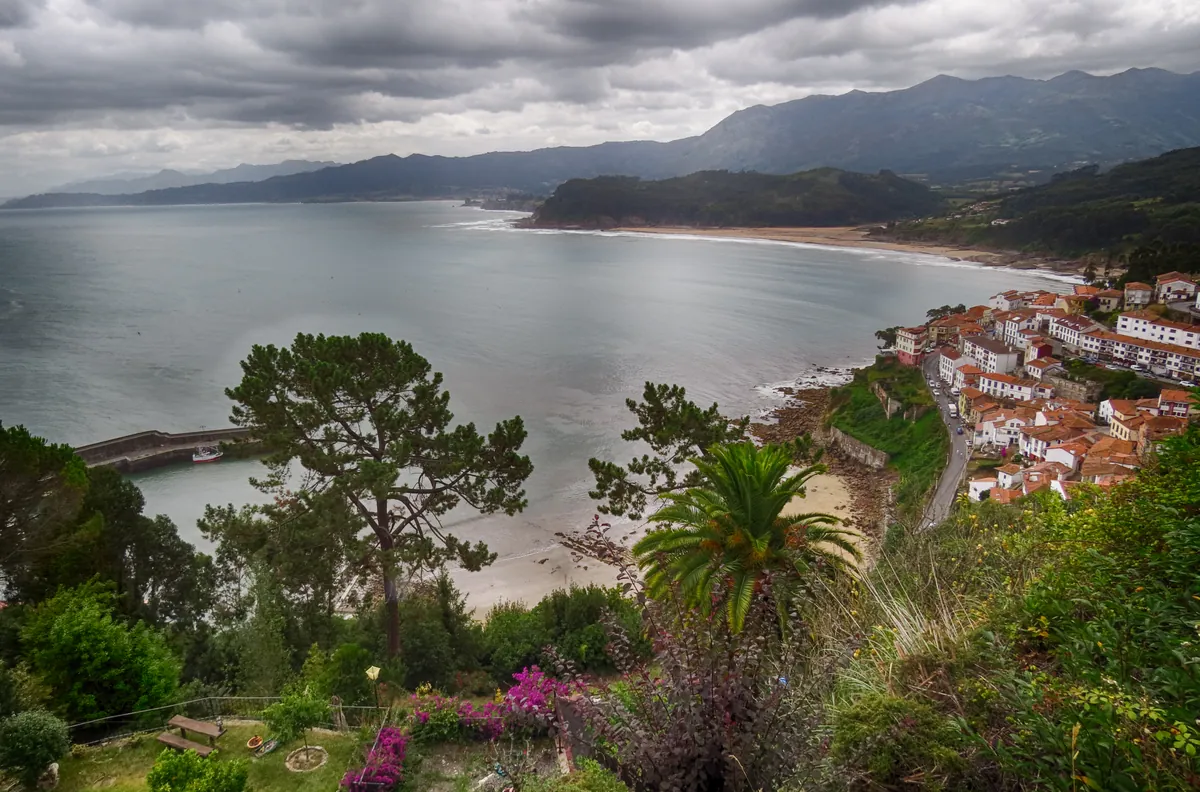
Higher ground near La Franca provides a clear sense of geography. To one side lies the Cantabrian Sea. To the other, hills that already belong to Cantabria. In between, the River Deva threads its way towards the coast. The view explains the municipality better than any description.
Several straightforward paths connect pastures with stretches of shoreline. None are especially technical, yet the terrain demands attention. After rain the ground can be very wet. Clifftop sections feel exposed when the wind picks up. Proper footwear is sensible. Flip-flops are not.
The landscape reinforces an important point: Ribadedeva does not function as a single village. It is a collection of small pieces scattered between coast and countryside. Moving from one to another usually involves getting back in the car and taking a narrow road at an easy pace. Public transport is limited, so having your own vehicle makes exploration far simpler.
Eating the Cantabrian Way
Food here follows the logic of the Cantabrian coast. Fish and seafood appear when available. Local cured meats and Asturian cheeses sit comfortably on menus. Dishes tend to be straightforward rather than experimental. Ingredients take centre stage.
Asturian cider often accompanies a meal. It is tart, flat and traditionally poured from height to aerate before being drunk immediately. It is shared and consumed in one go rather than sipped like British cider. The ritual can feel unfamiliar at first, but it suits the region’s social style.
Portions in Asturias are rarely modest. Bean stews enriched with pork, large breadcrumbed fillets filled with ham and cheese, and strong blue cheeses such as Cabrales reflect a hearty culinary tradition. Vegetarian options exist but are not always extensive. A light lunch is not the default setting.
Sunday retains a sense of pause in this part of northern Spain. The pace slows further and the working week’s rhythm is noticeable. Plan ahead if you rely on shops, as long lunch breaks are common.
Practicalities and Timing
Ribadedeva is best reached by car, typically via the A‑8 with a turn towards Colombres, or along the slower N‑634 that threads through the north. Once inside the municipality, patience helps. Roads are narrow and can become busy in summer.
Weather along this coast changes quickly. Even in warmer months, a light waterproof is wise. Mid-summer temperatures are milder than in southern Spain, though humidity can be high and shade limited on exposed walks. Spring and autumn often provide the most balanced conditions, with fewer cars competing for beachside spaces.
If time is short, a simple plan works well. Start at La Franca for a walk along the sand, then head up to Colombres to see the indiano houses. In a few hours you gain a clear sense of how coast and countryside interlock here.
Ribadedeva does not shout for attention. It asks for small adjustments instead: check the tide, allow for a slow drive, watch the wind on the cliffs. The reward is a stretch of Asturias where sea, river and meadow sit within easy reach of one another, and where the journey between them forms part of the experience.