Full Article
about Sant Antoni de Portmany
Famous tourist spot known for its legendary sunsets and bay; blends nightlife with pretty coves.
Ocultar artículo Leer artículo completo
At 07:00 the harbour still belongs to the fishermen. Nets drip onto the quay, diesel fumes mingle with salt, and the only sound is the slap of waves against hulls. Two hours later the same stretch of water is a runway of inflatables, pedalos and €25 sunset catamarans blasting pre-loaded Spotify playlists. Sant Antoni never quite decides whether it’s a working port or a giant open-air bar, and that tension is what gives the place its momentum.
The town sits halfway down Ibiza’s west coast, 20 minutes from the airport by the L9 bus. The fare is €4—exact change only—and the driver will not slow down for stragglers. Most passengers are already scrolling Google Maps, plotting the quickest route to a sun-lounger. They disembark at the harbour, wheel-cases clattering over the blue-and-white mosaic that spells out the town’s name in Comic Sans. Step away from that tile and things improve.
The bay and the old guard
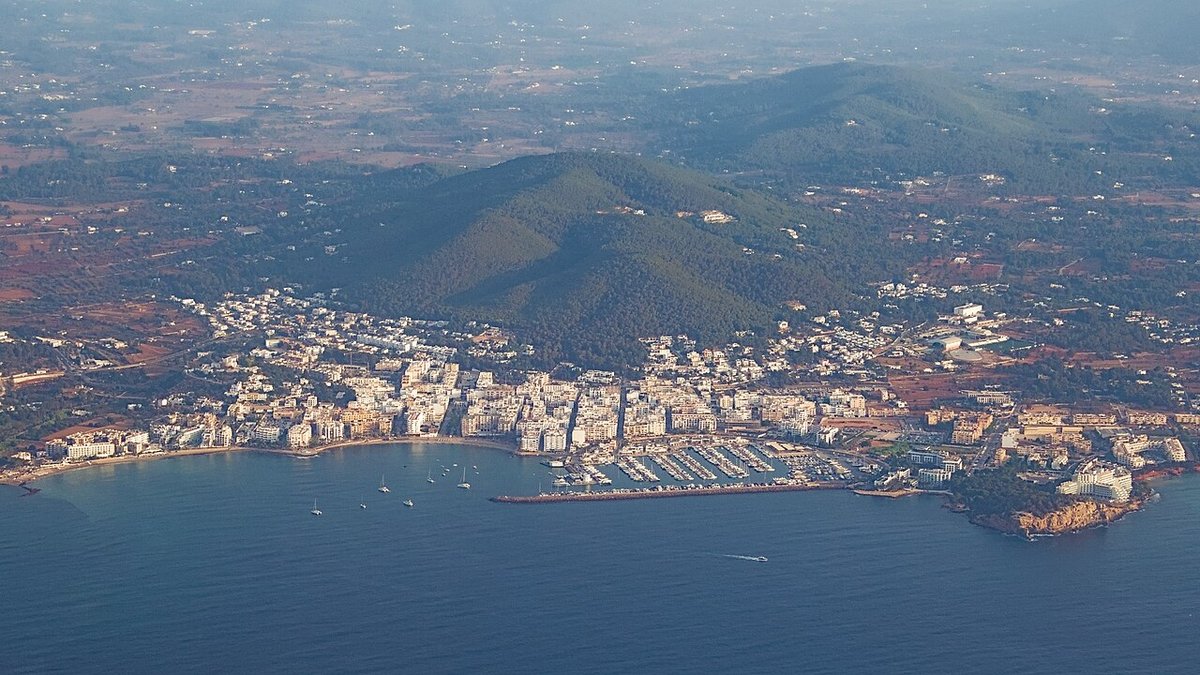
The natural inlet is shallow, safe and wide enough to let the evening light stretch itself. A flat 1.8-kilometre promenade traces the curve; bikes are free for the first hour from the stand opposite the tourist office. At the southern end the fortified church of Sant Antoni keeps watch, built in the 14th century when pirate raids were routine. The stone is warm to the touch after midday, and the squat tower gives no quarter to architectural flourish—its job was to shelter people, not impress them. Sunday mass is still announced by a single bell that can be heard on the far side of the car park.
Behind the church, three streets of low whitewashed houses survive from the pre-boom era. Their ground floors are now bakeries, locksmiths and a solitary bookmaker showing La Liga on a cracked TV. Coffee here costs €1.20, half the price of the strip, and the croissants are flown in frozen from mainland Spain—no one apologises for it. Locals read the Diario de Ibiza at the bar and pretend not to notice the occasional lost tourist in search of “authentic Ibiza”. Authentic here means a photocopied menu del día taped to the door and a waitress who calls you cariño even when she’s annoyed.
Sand, rocks and the parking nightmare
Five kilometres north, Cala Salada is the first cove to run out of space. The water is bottle-green over posidonia seaweed, and pine roots twist down the cliff like arthritic fingers. Arrive before 09:30 and you’ll share the beach with two retired German swimmers and a dog called Luna. Arrive at 11:00 and the Guardia Civil are already turning cars away, waving them towards an unofficial overflow field that charges €10 and may or may not be legal. The same story repeats at Cala Bassa (now with sunbed app payments) and Cala Conta, where the sand is flour-fine and the sunset view competes with the Formentera skyline. These coves are beautiful, but they know it—and the price is congestion, not entrance fees.
Boats shuttle back to town every 45 minutes, €15 if you bargain after 18:00. The ride doubles as a nightclub preview: staff hand out neon wristbands and discount flyers for Eden and Es Paradis. By the time the skipper cuts the engine so everyone can film the sun dipping, the deck resembles a pre-drinks session in fresh air.
Walking it off
A coastal footpath heads south to Cap Blanc, a limestone shelf where the sea has drilled circular baths big enough to sit in. The route is 3.5 km each way, mostly flat, but trainers help on the rocky final 200 m. Mid-afternoon in July the stones radiate heat; go early, or take the bus to the aquarium and walk back. The aquarium itself is a flooded sea cave with grouper fish that look as old as the rocks. Children are given a laminated scavenger hunt; adults get a glass of cava for €3 if they ask nicely.
Inland, the land rises gently towards Sant Mateu. Olive terraces replace hotels, and the only soundtrack is a distant quad bike. A signed 8 km loop leaves from the petrol station on the PM-803 and passes a 400-year-old finca that sells its own wine. Tasting is free; posting a bottle home is not—couriers refuse alcohol, so wrap it in beach towels and hope for the best.
What to eat without the theatrics
Harbour restaurants display photos of every dish, a warning sign if ever there was one. Walk five minutes inland to Can Gust, where the bullit de peix arrives in two acts: chunky monkfish and potatoes first, then rice simmered in the same broth. The portion feeds two hungry dock workers or three British holidaymakers who’ve been told to pace themselves. Bread is charged at €1—accept it or they’ll take offence.
For breakfast, the bakery opposite the police station does an ensaïmada the size of a steering wheel. Powdered sugar drifts onto your clothes; the plastic forks snap under pressure. Pair it with a cortado and you’ve had the closest thing the town offers to a civilised start.
Evening crowds migrate to the Sunset Strip from 18:00 onwards. Café Mambo and Café del Mar face due west; arrive 90 minutes before sunset or you’ll be three-deep at the bar, clutching a £12 mojito that tastes of washing-up liquid. Across the road, Kumharas serves the same view with fewer stag parties and a decent veggie tagine. DJs start at 17:00, volume creeping up until conversation becomes mime. The actual sunset lasts six minutes; the applause afterwards is ritual, slightly ironic, and immediately followed by a mass exodus to the clubs.
The other night
The West End—two pedestrian streets behind the harbour—is where Britain’s youth policy plays out abroad. PR staff every two metres promise two drinks for €5 and a free shot “if you come now”. Hen parties in matching T-shirts navigate cobbles in flip-flops; the smell is of sunscreen, spilled lager and chip-fat. Police patrol on foot, mostly directing traffic and confiscating inflatable dolls. Most Britons do one circuit, buy a neon yard glass, then retreat to their hotels glad that Snapchat evidence expires.
Families and couples tend to stay south-east of town—Cala Gració, Cala Salada—where all-inclusive complexes have their own gated beaches. After 22:00 they might stroll the promenade for ice cream, but they rarely cross the invisible line into the club zone. The divide keeps peace: nobody wants a toddler at the pre-club warm-up, and nobody on a stag wants parenting.
Getting about without losing the will
Taxis after 01:00 are a contact sport. The rank by the harbour queues 200 people; the one behind the police station is shorter but still counts as a night out in itself. Pre-book via WhatsApp (+34 971 34 34 34) and save yourself the lecture from a driver who has “been on shift since six this morning”. Fares are metered; expect €8–12 within town, €25 to the far coves. UK phone roaming drops to 3G at peak times—screenshot your confirmation before you lose signal.
Buses run every 30 minutes along the coast road until midnight. A T-10 card gives ten journeys for €15 and works on airport routes. Hire cars start at €35 a day in May, €85 in August, but hotel parking is scarce and the town’s underground car park closes at 22:00 sharp. Miss the curfew and you’re locked out until 07:00, a fact they only mention in Spanish on level minus three.
When to show up
May and late September deliver 24 °C days, water warm enough for a 20-minute swim, and hotel rates 40 % lower than August. June is the sweet spot: clubs are open, beaches not yet at capacity, and the island’s wild fennel perfumes the roadsides. October can throw in a thunderstorm—spectacular, but boat trips get cancelled and sunset crowds scatter mid-song.
Winter strips the town back to its bones. Many restaurants board up; others switch to weekend-only menus. The upside is space: you can park at Cala Salada, walk the promenade without dodging promoters, and hear that church bell again. Average daytime highs of 16 °C mean a fleece at night, but the light remains sharp, and hotel rooms dip under €60 with breakfast.
Sant Antoni will not whisper to you. It is loud, commercially confident and occasionally tacky. Yet if you synchronise your expectations—sunrise for solitude, sunset for theatre, side streets for something approaching normality—it still delivers the elemental Mediterranean promise: salt on skin, garlic in the air, and a horizon that keeps moving farther away the closer you think you are.