Full Article
about Santa Eulària des Riu
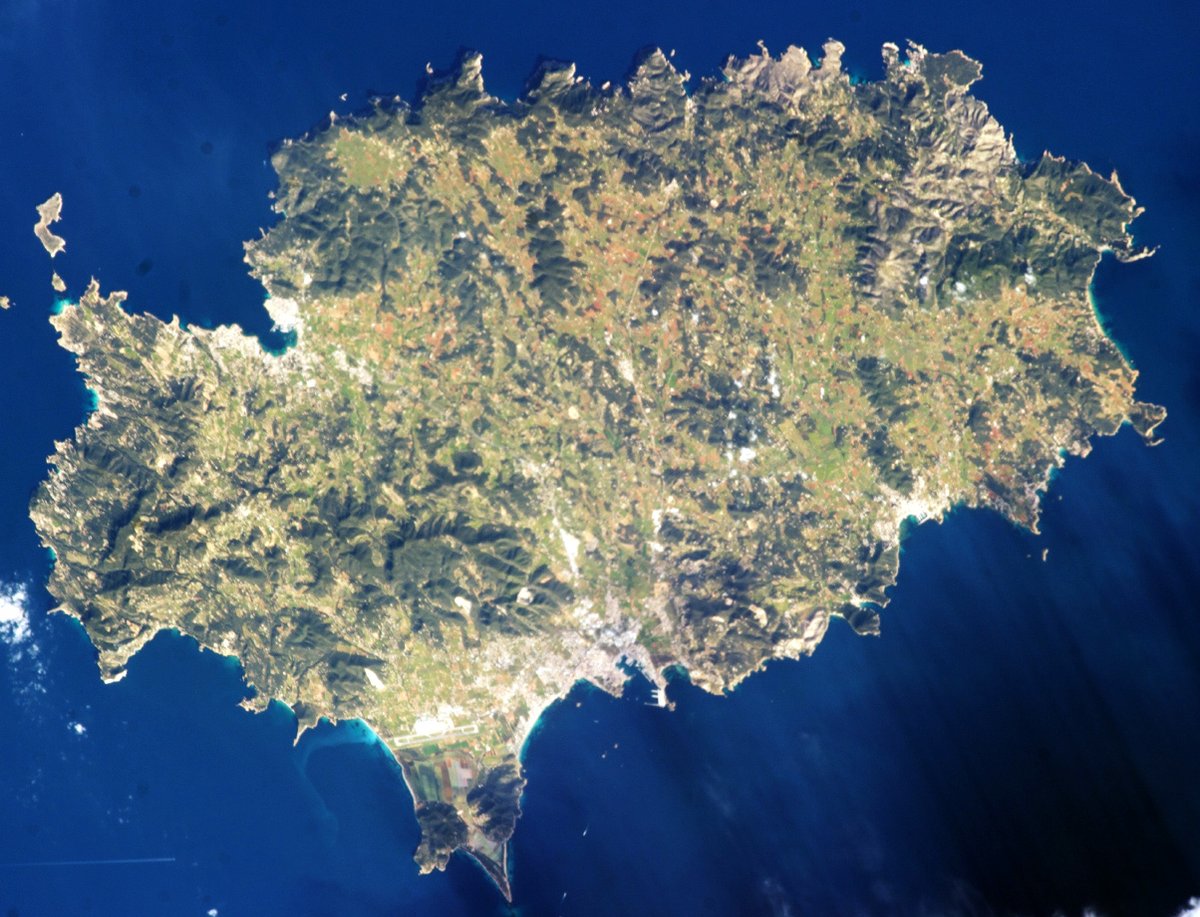
Second-largest municipality in Ibiza; quiet family tourism, home to the Balearics’ only river and a pleasant seafront promenade.
Hide article Read full article
A place where water actually flows
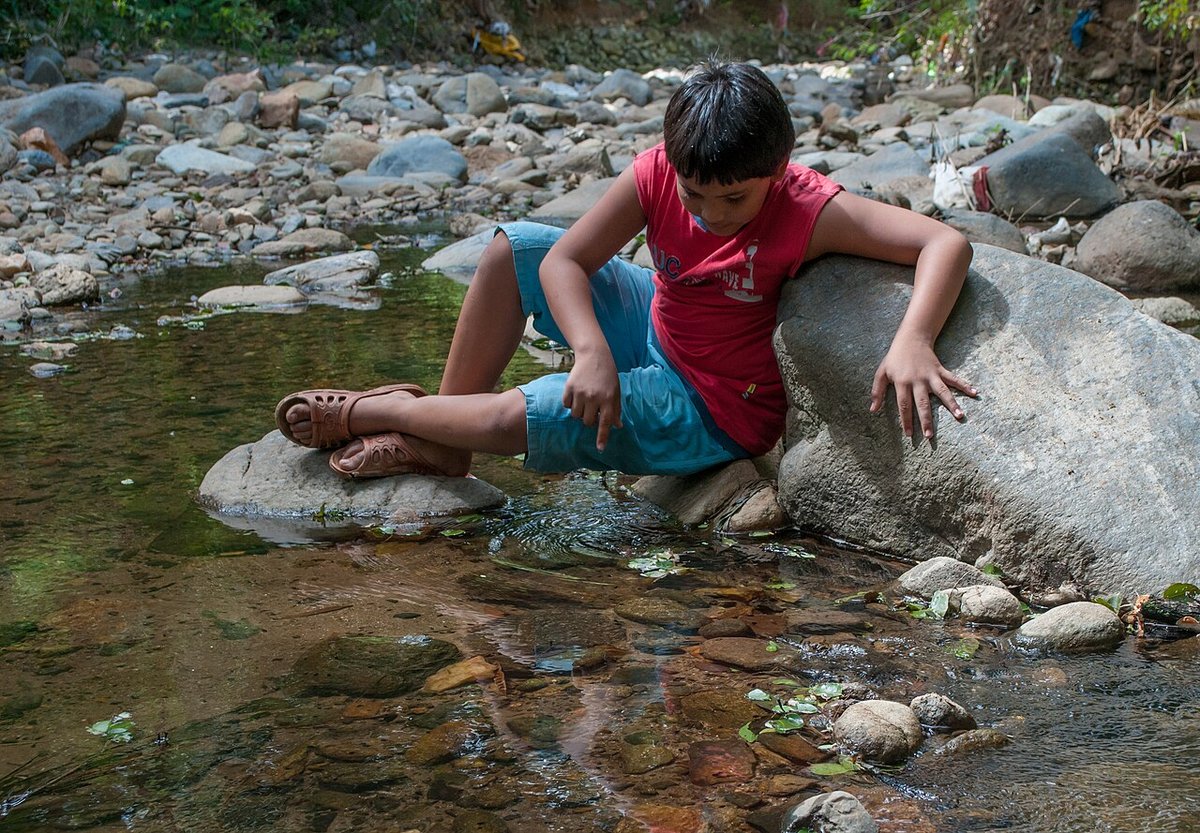
There is something unusual about tourism in Santa Eulària des Riu that rarely happens elsewhere in the Balearic Islands: it has a real river. Not a dry channel that only fills after heavy rain, but the Riu de Santa Eulària, around 11 kilometres long, reaching all the way to the sea. It might sound like a small detail, yet after travelling around the islands and seeing mostly empty riverbeds, finding water flowing all year stands out.
The town sits where that river meets the coast. It shapes how the place feels, even if it is not always the first thing visitors notice. Life gathers around the promenade, where palms line the walkway and terraces fill with people moving at an easy pace. There are fountains that try to add a touch of elegance, though the easterly wind sometimes disrupts the display and sends water drifting onto nearby tables.
That seafront gives a first impression, but it does not explain the whole place.
The hill that explains everything
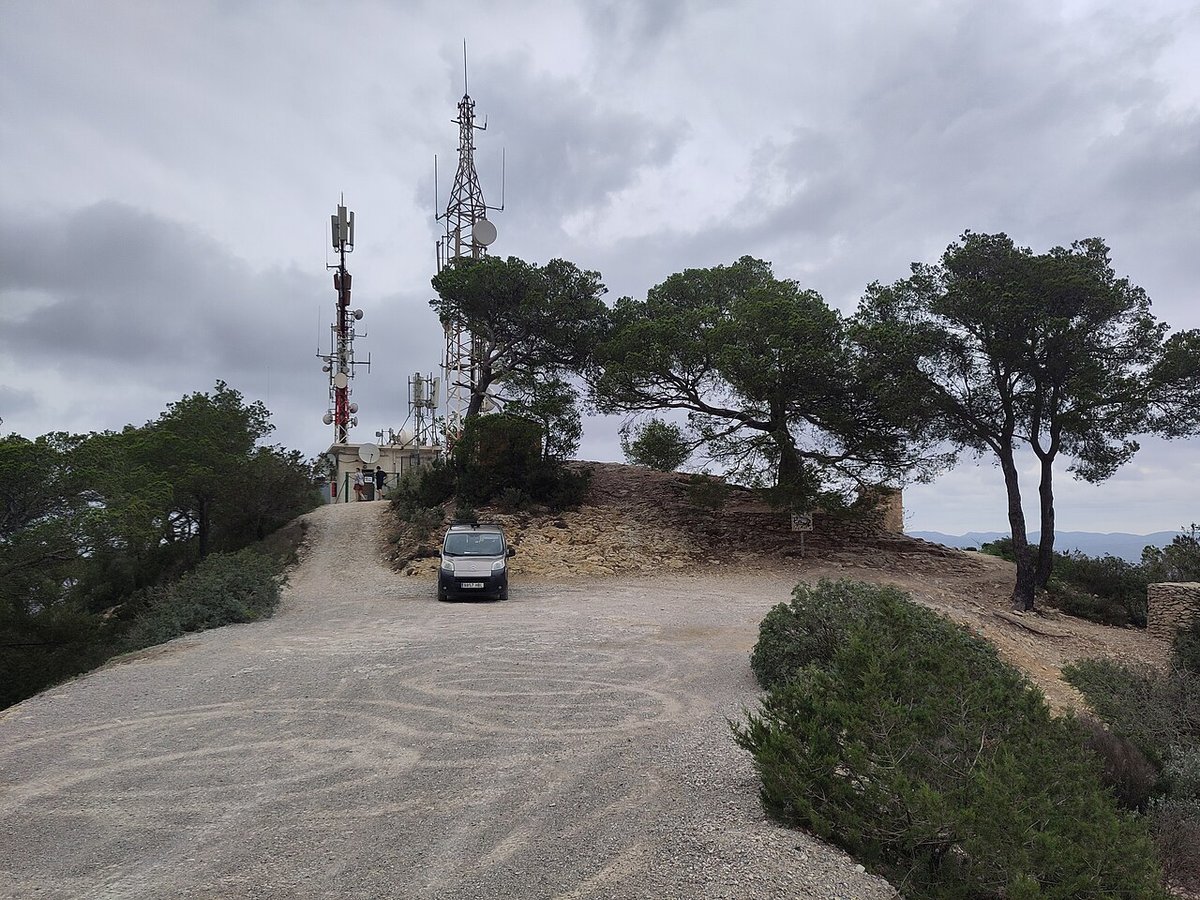
To understand Santa Eulària des Riu, attention turns uphill. Puig de Missa rises above the town, topped by a white church that dominates the view. Up there stands a fortified church from the 16th century, built with a practical purpose in mind. When pirates appeared along the coast, residents could take refuge inside its walls.
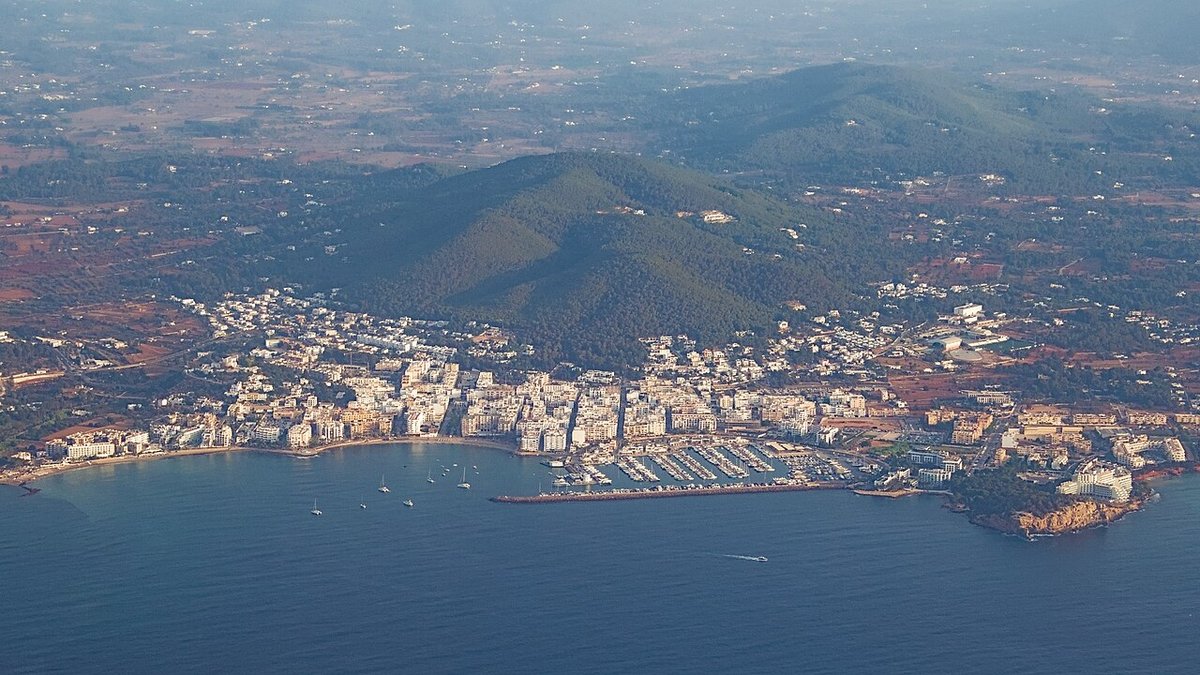
From that height, the layout of the town becomes clear. The earliest settlement clustered around the hill, where safety mattered most. Over time, the urban area expanded downhill towards the sea. Looking out today, the river can be seen entering the bay, houses stepping down the slope, and the port stretching into the distance.
It is a simple view, but it ties together the different layers of the town in a way that the promenade alone cannot.
Markets shaped by the 1970s
In this part of Ibiza, recent history often revolves around its markets. Some began in the 1970s, when the first hippies arrived and decided to stay longer than planned.
One of the largest has been running since 1973 and takes place באמצע the week. Walking through it feels like moving across generations. There are artisans who have been setting up the same stall for decades, visitors who return every summer, and younger sellers offering handmade items much like their parents once did.
On Sundays, in Sant Carles, the atmosphere shifts. The market there is smaller and more personal. Encounters tend to be closer, conversations longer. It is not unusual to meet people who arrived decades ago for a short visit and never left. Ibiza has a long track record of brief stays turning into lifelong ones, and these markets quietly reflect that story.
Local flavours that still hold their ground
Food in Santa Eulària des Riu still shows strong ties to the island’s cooking traditions.
Bullit de peix is one of the clearest examples. It is a fish stew usually served in two stages. First comes the fish with potatoes, then rice prepared using the same broth. At first it can seem straightforward, but by the end it makes sense why meals like this tend to stretch on.
Flaó moves in a different direction. This cheesecake with mint can feel unexpected at first taste, yet it quickly settles into something familiar. During local festivities, orelletes appear as well, thin and crisp fried sweets that disappear from tables almost as soon as they arrive.
After a meal, if hierbas ibicencas are offered, they are worth trying. This traditional herbal liqueur is best taken on its own, without ice.
From the town beach to quieter coves
The main beach in Santa Eulària is wide and well organised. There is sand, a long promenade and everything close at hand. Many local residents use it regularly, especially families, which gives it a steady, everyday feel.
The coastline becomes more varied when moving away from the centre.
Cala Llonga is a broad, sheltered bay where the sea is usually calm, almost like a large natural pool. It is an easy contrast to what lies further north, where smaller coves begin to appear.
Cala Mastella is one of those places where the landscape matters more than infrastructure. There is little sand, a few boats pulled up on the shore, and an atmosphere that recalls an earlier Ibiza. A small spot there prepares grilled fish in a simple setting, with wooden benches and a pace that does not rush for anyone.
Timing the visit
August is intense. The town fills up, and even simple things like parking near the centre can turn into a minor challenge.
September tends to work better. The sea remains warm, the number of visitors drops, and the overall rhythm becomes calmer. Many locals consider it the most pleasant time to get around the area.
February brings the fiestas of Santa Eulària, with traditional events and sweets that appear only during those days. In spring, especially in May, the inland paths turn green and the river carries a steady flow.
A straightforward plan often works well here: drive up towards Jesús, only a few minutes away, continue on to Sant Carles, wander through the market if it is a Sunday, and end the day at one of the northern coves. With just a handful of stops and without covering long distances, the character of this part of Ibiza starts to come into focus.
As evening approaches, the port settles into a slower rhythm. Boats move gently, and the light softens over the water. It is a familiar moment for many visitors, one that tends to linger longer than expected.