Full Article
about Es Mercadal
Geographic center of Menorca at the foot of Monte Toro; known for its cuisine and traditional pastries.
Hide article Read full article
A Thursday that smells of cheese and bread
It is Thursday morning and the village smells of fresh cheese and newly baked bread. That is not a figure of speech. Head towards the square in Es Mercadal on any Thursday and you will see vans unloading boxes of local produce while half the square is still waking up. The market has been held here for centuries, and it sits naturally in the rhythm of the place, much like a Sunday match or a mid-morning coffee.
That atmosphere says a lot about tourism in Es Mercadal. It is less about postcard scenes and more about everyday life continuing as normal.
A village that does not try to impress
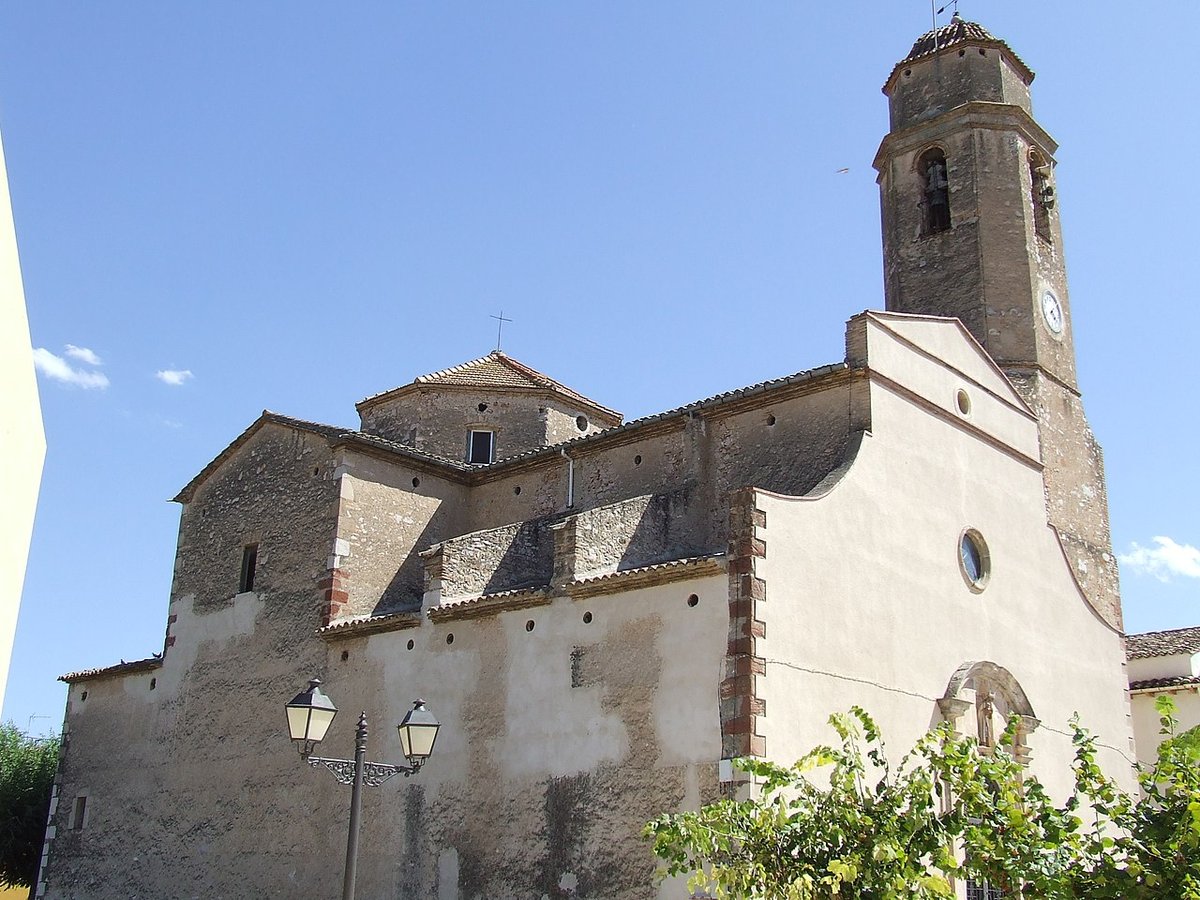
Es Mercadal does not win you over at first glance in the way other spots in Menorca might. That is not a criticism. It does not have the carefully composed look of Binibeca or the seafront setting of Fornells. In many ways it is a crossroads in the centre of the island, with low white houses, quiet streets and a fairly plain church on the main square.
Yet it works.
There are bars where someone always seems to know someone from your family, a bakery that smells of lard-based pastries halfway down the street, and food shops where cured meats still hang and cheeses mature at their own pace. The rhythm belongs to a village that lives all year round, not a stage set for visitors.
It helps to arrive with the right expectations. There are no streets lined with souvenir shops or displays designed for photographs. What you find instead is people doing their shopping, long conversations in the square, and local products that come without layers of marketing.
And yes, if ensaimadas or Menorcan pastries are your thing, this is one of those places where people queue before opening time. Ensaimadas are a traditional spiral pastry, light and slightly sweet, and here they are taken seriously. It feels a bit like the bakery in your own neighbourhood that everyone quietly agrees is the best.
Monte Toro without turning it into a challenge
Monte Toro is a constant presence in Es Mercadal. Wherever you look, the hill rises above the centre of the island.
At just over 350 metres, it may not sound like much until you start walking up. From the village there are several kilometres of road that can be done on foot if you feel like stretching your legs, though many people go up by car or bike.
At the top there is a sanctuary and a viewpoint that helps make sense of Menorca’s landscape. To one side, the rougher north. To the other, the clearer beaches of the south. On a clear day, a large part of the island spreads out in front of you.
One thing to keep in mind: it is often windy up there, even in summer. It is worth remembering that before setting off in short sleeves assuming the temperature will match the village square below.
Fornells and its well-known caldereta
A short drive away is Fornells, which belongs administratively to Es Mercadal and changes pace quite noticeably in summer.
For much of the year it is a small village gathered around its harbour. In July and August things become busier. Boats come and go, people stroll along the quay, and tables fill up at lunchtime.
Caldereta de langosta, a lobster stew, is the best-known dish. For years there has been a widely repeated story that King Juan Carlos I used to come here to eat it, and that anecdote still circulates as a kind of informal seal of approval.
The dish is good, of course, but it is worth knowing that it is not cheap and tends to be generous in portion. Many people share it, which in the end makes sense.
The most appealing moment in Fornells is not necessarily the meal itself but what comes before. A walk along the harbour, watching boats move in and out, then sitting on a bench for a while without doing much at all. That kind of simple plan can be surprisingly hard to find in a city.
Thursday nights in summer
In summer, Thursday takes on a different role, this time after dark.
During July and August, a night market is usually held in the centre of the village. Streets fill with stalls selling crafts, cheese, local sweets and the typical handmade Menorcan abarcas, the traditional sandals seen all over the island.
It is not a loud fair or a large-scale event. It feels more like a village gathering where something has been set up in the square and everyone comes down for a wander after dinner. Children run around, people browse slowly, and musicians play somewhere on a corner.
Even though visitors arrive from other parts of the island, the atmosphere remains largely local. There is plenty of conversation, many familiar faces, and that slower pace that feels welcome after a day by the sea.
Keeping things simple
A couple of practical notes help make a visit easier.
The streets in the centre are narrow. If you arrive in a large car, it is usually more comfortable to park on the outskirts and walk in. The village is small, and within a few minutes you are in the square.
When stepping into a bakery or a local food shop, it is worth asking what has been made that day. Quantities are often limited, and what is available can change depending on the day.
One final detail: avoid comparing Menorca with Ibiza by saying it is “the same but quieter”. That phrase does not tend to go down well here. Menorca moves at its own pace, and Es Mercadal is one of the places where that becomes clearest.