Full Article
about Ses Salines
Southern municipality known for salt production and the Cabo lighthouse; includes the Sant Jordi tourist resort.
Ocultar artículo Leer artículo completo
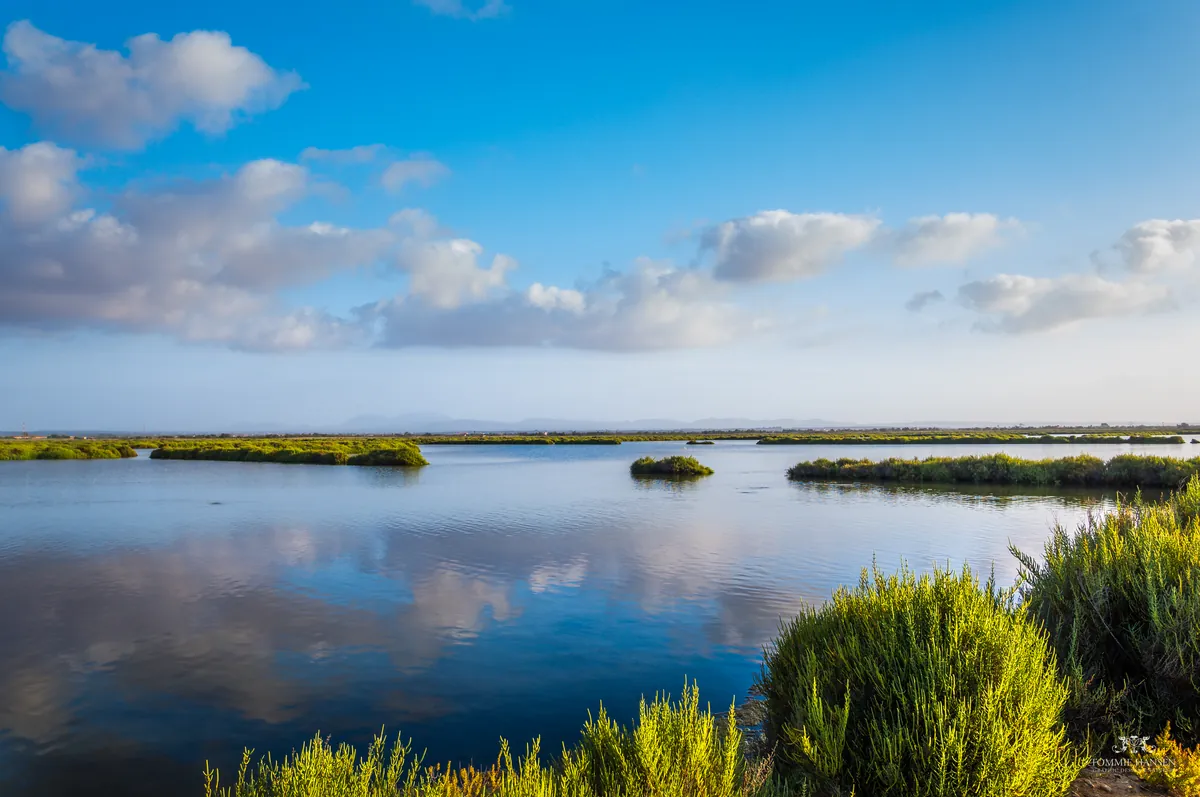
The first thing you notice is the light. At dawn the evaporation pans west of Ses Salines turn into mirrors, doubling the sky so cleanly that flamingos sometimes land on their own reflection. By mid-morning the water has vanished and the basins glare white like fresh snow, forcing drivers on the Ma-6040 to drop their sunglasses. This is the southernmost municipality on Mallorca, a place where the island’s famous salt harvest still pays the bills and the sea is never more than six kilometres away.
A town that keeps its back to the coast – on purpose
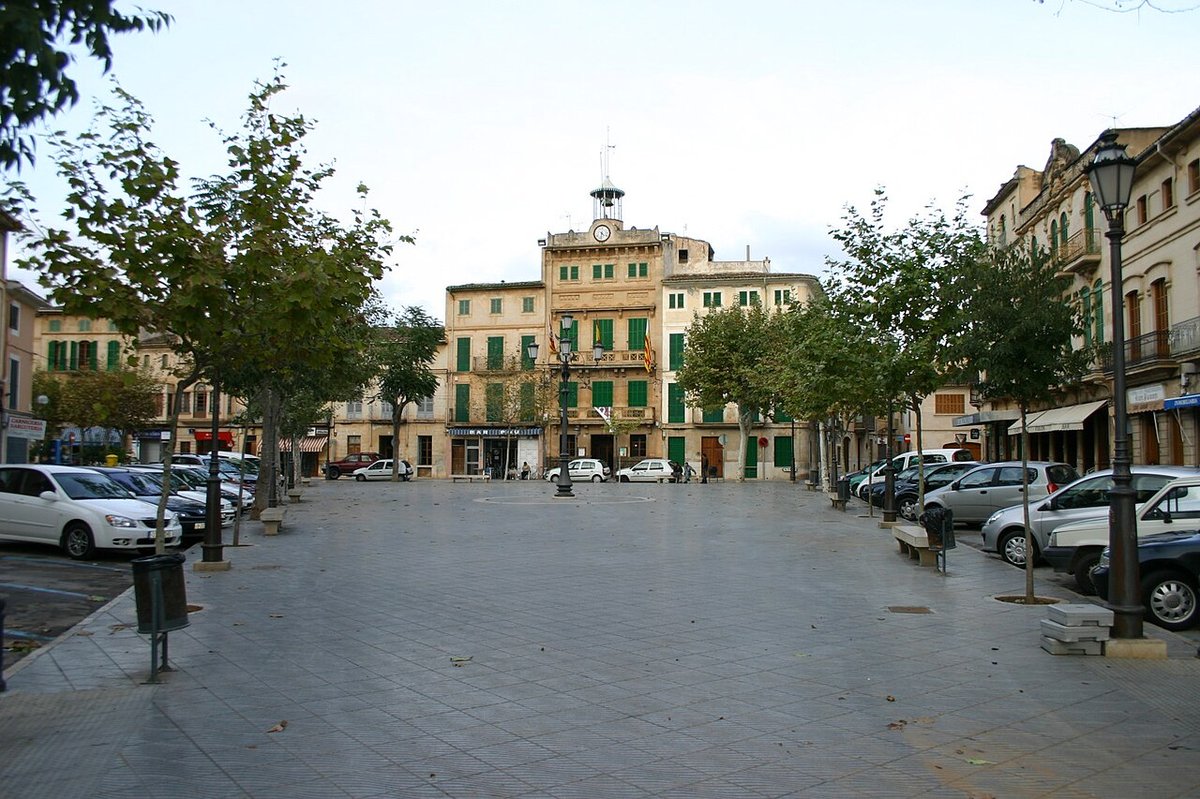
Ses Salines village sits on a low ridge five kilometres inland, which confuses first-time visitors who assumed the name guaranteed a sea view. The arrangement is medieval, not forgetful: pirates once cruised this coast, so houses clustered around the stone church of Sant Bartomeu where look-outs could spot lateen sails. The layout still works. Afternoon traffic rolls up the hill from the beaches, fills the cafés on Plaça Sant Bartomeu, then melts away again, leaving pensioners to finish their cards under the plane trees.
Stone façades are the colour of wheat toast; shutters are the regulation green you see across the Balearics. There is no picturesque arcaded high street, just three parallel roads and a Saturday produce market that fits comfortably under ten awnings. Enough English is spoken in the bakery and the small Eroski for self-caterers to survive, but you will still hear Mallorquí in the queue for the butchers. House prices have risen since Love Island filmed nearby, yet the place remains a working village rather than a film set.
Salt mountains and a beach that refuses to build anything
Follow the lane signposted “Salines de Levante” and you reach the operating pans: rectangular lakes edged by low mud walls, wooden windlasses creaking as workers rake the crust. August is harvest month, when pyramids of coarse white salt rise under tarpaulins waiting for the ships that will take half the load to Scandinavia for winter roads. The wetland is a Ramsar site, so access is strictly on foot or bike; bring binoculars and you can tick off black-winged stilts, avocets and the occasional glossy ibis.
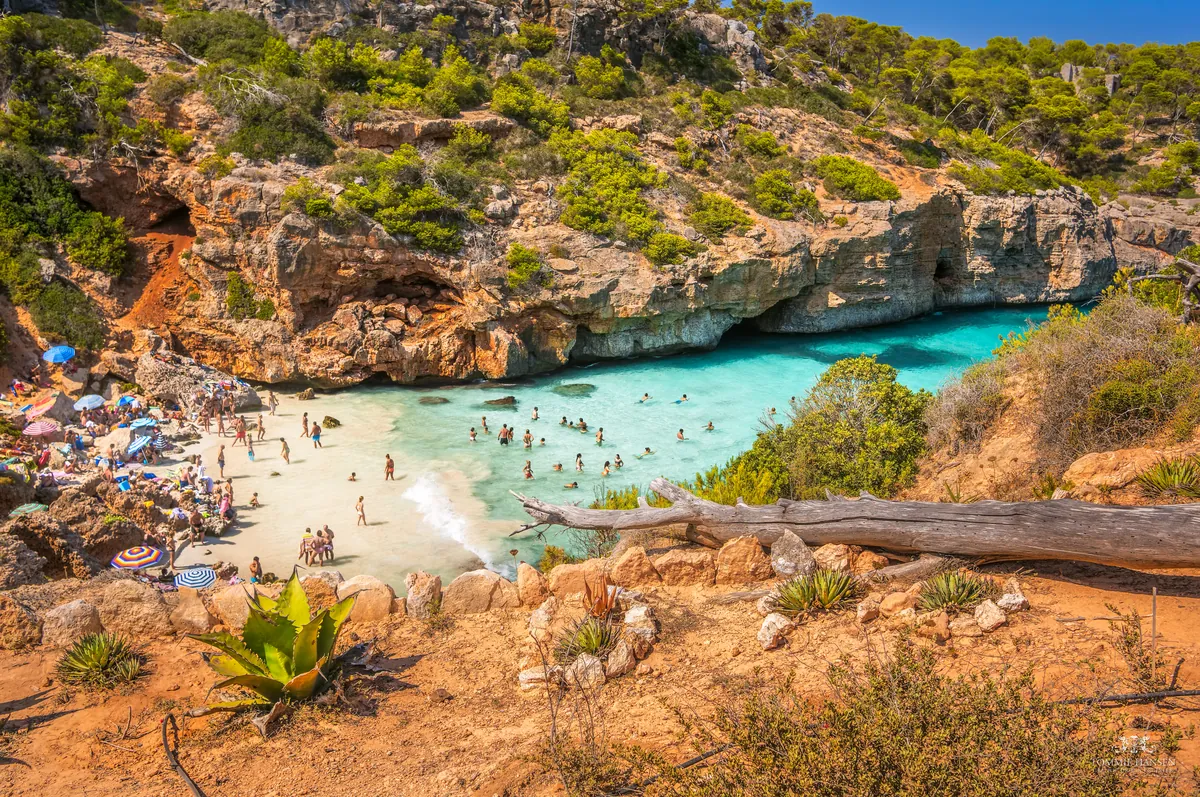
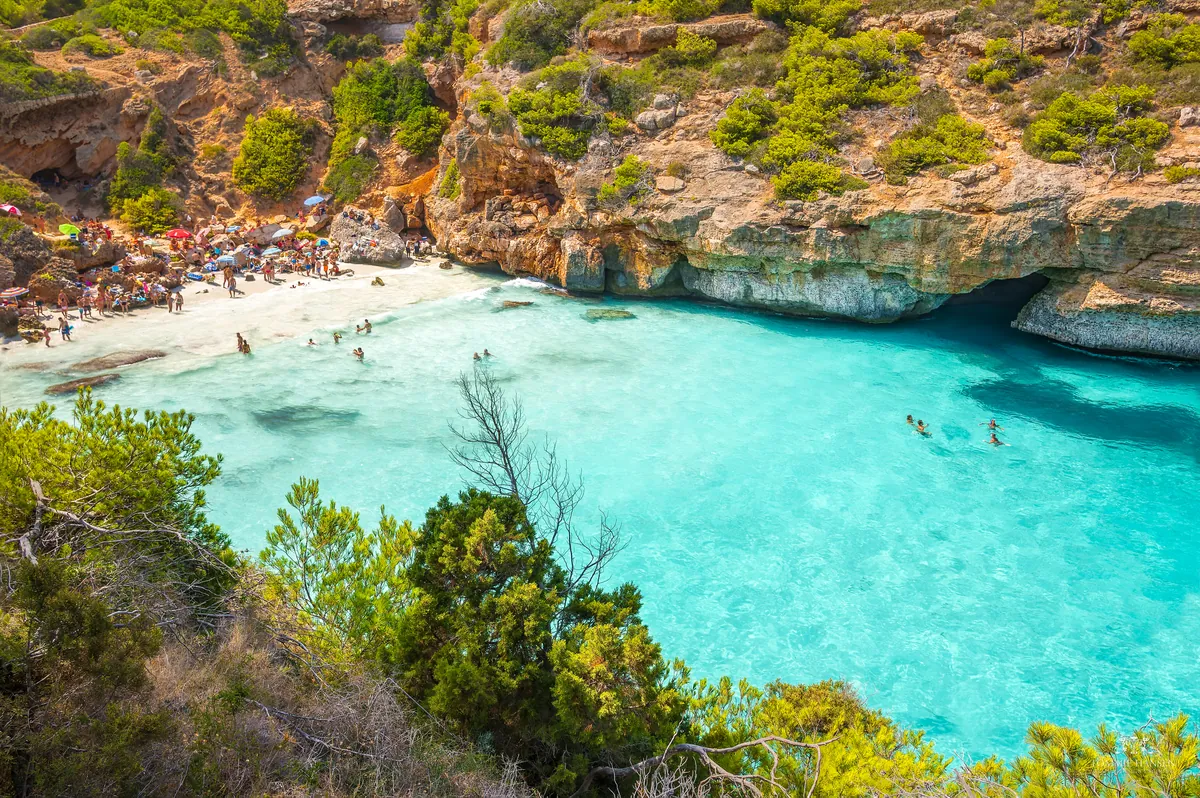
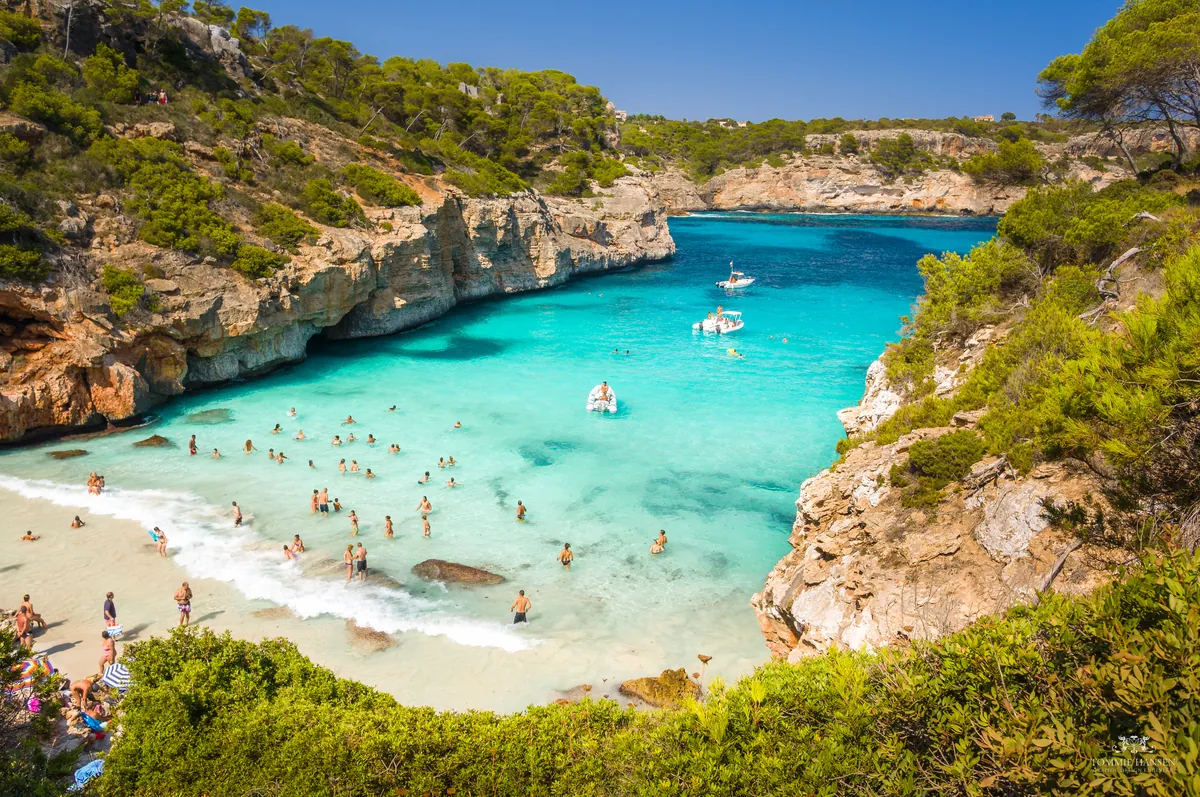
Continue south-east and the tarmac stops at the car park for Es Trenc, the four-kilometre sweep of sand that justified the coast’s protection order. No hotel blocks, no promenade, just dunes held in place by sea-daffodil roots and a couple of timber chiringuitos renting sun-loungers at €15 a day. The water stays knee-deep for fifty metres, ideal for paddle-boarding toddlers, but the breeze can pick up without warning and the rip on the western end has pulled even strong swimmers seaward. Lifeguards plant a green-yellow-red flag system; check it before you spread your towel.
Space runs out fast. By 10 a.m. in July the main car park is grid-locked and stewards direct latecomers to a satellite field a twenty-minute walk inland. The council now runs a summer shuttle from Colònia de Sant Jordi every fifteen minutes; tickets are €2.50 return and children under twelve travel free. Cyclists can lock bikes to rails by the access gate, though bring your own chain – the hire stand ran out long ago.
Flat lanes, sharp wind: cycling the salt roads
The municipality is a rectangle of almost-level countryside between the foothills of the Serra de Llevant and the sea. Country lanes are asphalted but single-track, edged by dry-stone walls and pine shelter-belts that give no shade after four o’clock. A signed 17-km loop links the village to the salt pans, the Roman quarry of Sa Codolada and the 1863 lighthouse at Cap de Ses Salines, where the only sound is the autopilot beep of a passing yacht. Gradient is negligible; effort comes from the tramuntana wind that can turn a gentle return leg into a teeth-clenched slog. Bike hire shops in Colònia de Sant Jordi will lend hybrids for €18 a day; helmets are compulsory and sizes start at 54 cm, so larger heads should pack their own.
Drivers are generally courteous, but headlights are essential after dusk – there is no street-lighting between hamlets and the verges drop straight into drainage ditches. A front white LED and rear red clip cost less than a café cortado and save a taxi ride home.
What locals eat when the tourists aren’t looking
Mallorcan cooking here is heavy on vegetables and salt cod, a legacy of the trade that once paid for the baroque altar inside Sant Bartomeu. In winter you will find tumbet (aubergine, potato and red-pepper bake) served with a fried egg on top, and escaldums of chicken slow-cooked with almonds and cinnamon. Spring brings frit de pasqua – offal, peas and fresh mint – while September is the month for raïg des peix, a broth of rock fish thickened with bread and saffron.
Casa Manolo on the main square still prints a daily menu in Catalan only; ask for the “arroz brut” (meat and vegetable paella) which arrives dark with mushrooms and a whiff of rosemary. A three-course lunch with wine is €19.50, bread and aioli included. Cassai Gran Café occupies a 1712 manor house whose courtyard fountain keeps temperatures ten degrees cooler than the street; they will swap chips for salad if you have overdosed on oil. Vegetarians do better at Es Pinaret, two kilometres towards Campos, where the open kitchen turns out goat’s-cheese timbales and a respectable pad thai when the Thai chef is on site. Book by WhatsApp – voice messages are answered faster than emails.
Coffee drinkers should know the Spanish rule: order after midday and you will get an espresso unless you specify “café amb llet” (latte). Decaf is “descafeïnat de sobre” – a sachet on the side – and plant-based milk appears only in August when German tourists outnumber locals.
When to come, and when to stay away
The micro-climate of the Migjorn plain delivers the island’s lowest rainfall and highest sunshine figures – roughly 300 clear days a year. May and early June are the sweet spot: sea temperature nudges 21 °C, wild gladioli colour the verges and hotel rates are still pre-summer. September is warmer (water 24 °C) but evenings shorten quickly; by the third week restaurants start closing for staff holidays.
July and August are reliable for sunbathing but brutal for everything else. Daytime highs sit at 34 °C, the salt pans shimmer at 40 °C and Es Trenc’s car park thermometer has recorded 52 °C on the tarmac. Accommodation prices rise 70 %, the Saturday market is a traffic jam of hire cars and the village water pressure drops when every garden pool is back-washed at once. If school holidays are non-negotiable, arrive before nine, siesta between two and five, then reclaim the beach after six when shadows lengthen and the sand stops burning feet.
Winter is quiet, occasionally wild. December storms can whip the sea right over the road to Colònia de Sant Jordi, and several cafés shut completely from November to March. Yet daytime temperatures hover around 16 °C, perfect for hiking the coastal path to the 14th-century watch-tower of Torre de Ses Animes, and hotel rooms cost a third of summer rates. The Sunday market in Santanyí (ten minutes’ drive) sells ceramics and honey to a handful of German pensioners; you will hear more Mallorquí than English.
The practical bit, without the brochure chat
Palma airport is 48 km away – 35 minutes on the Ma-19 if you land before noon, an hour if you join the afternoon swarm. Car hire desks are in the terminal; Goldcar and Record usually have the cheapest weekly rates but queue longest. Full-to-full fuel policies save money: the closest cheap petrol is the Eroski hypermarket in Llucmajor, 15 km north.
Public buses exist but obey school, not tourist, timetables. Line 517 links Palma to Ses Salines twice daily; the last return leaves at 17:10, too early for a beach day. A taxi from the airport is a fixed €70; Uber is unavailable on the island.
Cash is still useful. Many bars refuse cards under €20 and the village ATM runs dry at weekends. Supermarkets stock Cathedral City cheddar and Weetabix if children stage a sobrasada revolt, but open-packet food is frowned on at the checkout – weigh fruit before you reach the till.
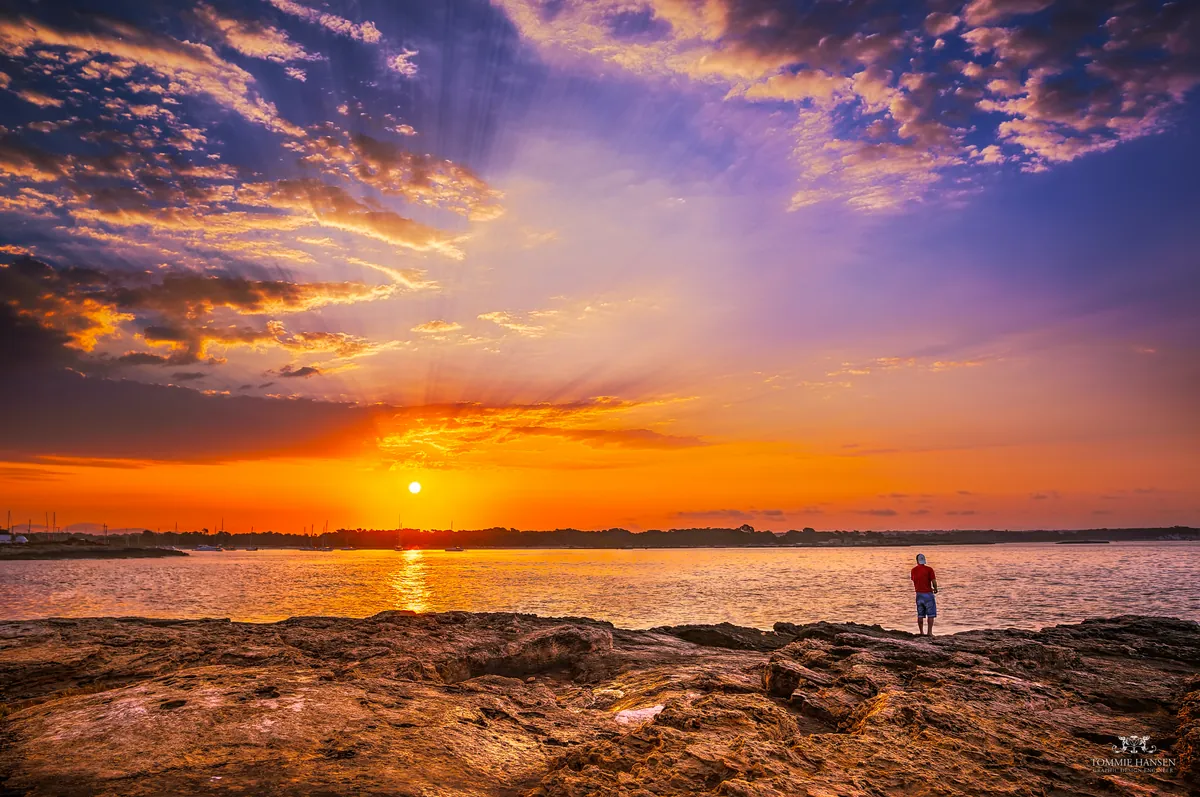
Finally, the view from the lighthouse. Stand on the rampart at Cap de Ses Salines on a clear evening and you can see the cliffs of Cabrera national park 19 km south, the outline of Menorca 90 km north-east and, on the horizon, the silver thread of a Barcelona-bound ferry. It is the same vista that once warned villagers of pirate galleys, now shared by a handful of campers who have cycled out with picnic blankets and tins of Estrella. Stay until the sun drops into the sea and the salt pans below fade from rose to grey; you will understand why, for all the talk of Es Trenc, the real attraction of Ses Salines is the space in between.