Full Article
about Montuïri
A hilltop town with a medieval feel, known for its traditional Cossiers dances.
Ocultar artículo Leer artículo completo
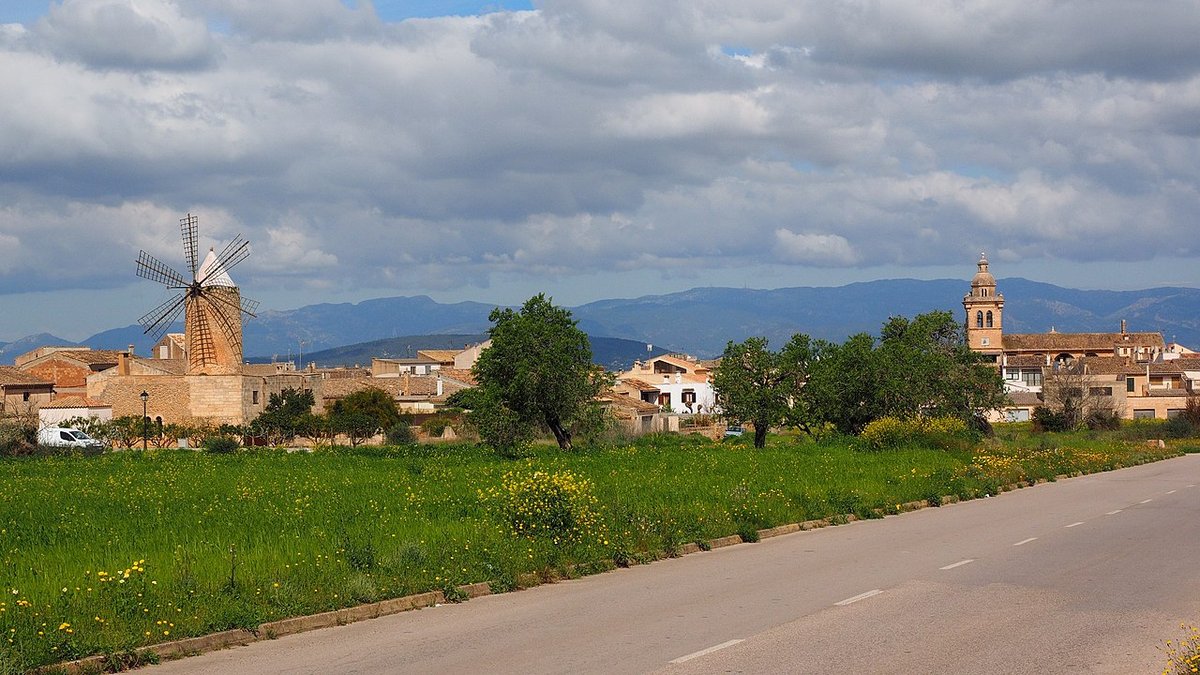
The stone windmill above Montuiri has no sails anymore, yet it still sets the pace. At 172 metres above sea level, the village sits high enough for the Tramuntana peaks to float on the horizon like a distant reef, while the plain below ripples with almond orchards that flush white in February. Most visitors race past on the Ma-15, bound for coastal villas, which is precisely why cyclists and second-home owners from Surrey to Sheffield now treat the place as a low-noise base camp.
A Plateau that Breathes
Montuiri is not tucked anywhere—it simply rises. The road from the airport climbs steadily for the final eight kilometres, and the air loses the salt that clings to Palma. Mornings can be five degrees cooler than the coast; in August that matters. Winter, by contrast, is mild and brisk: perfect walking weather, though you will want a jacket after sundown when the tramontana wind slides across the plain.
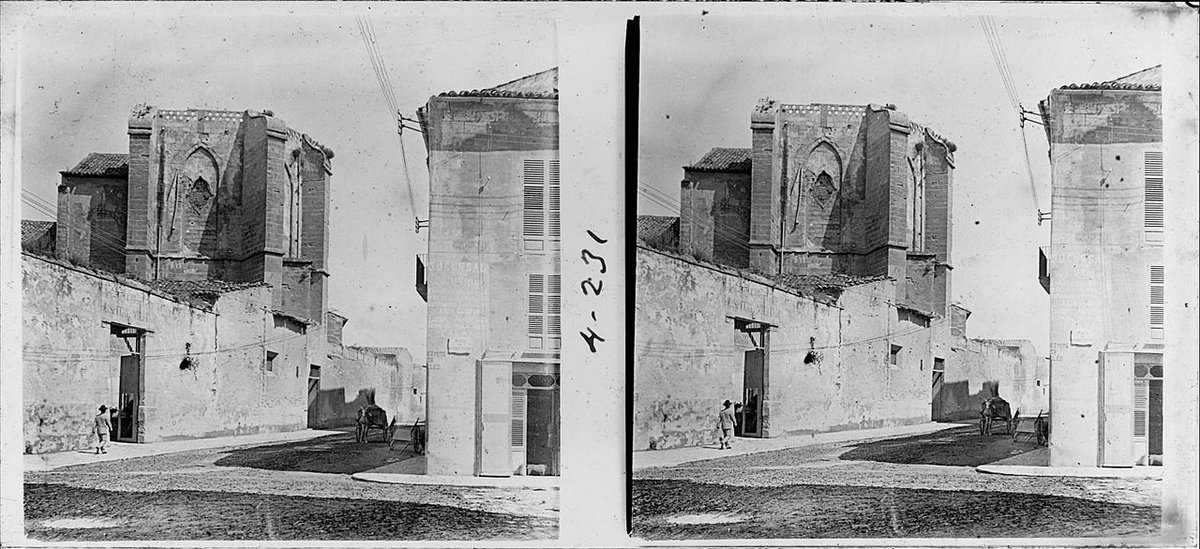
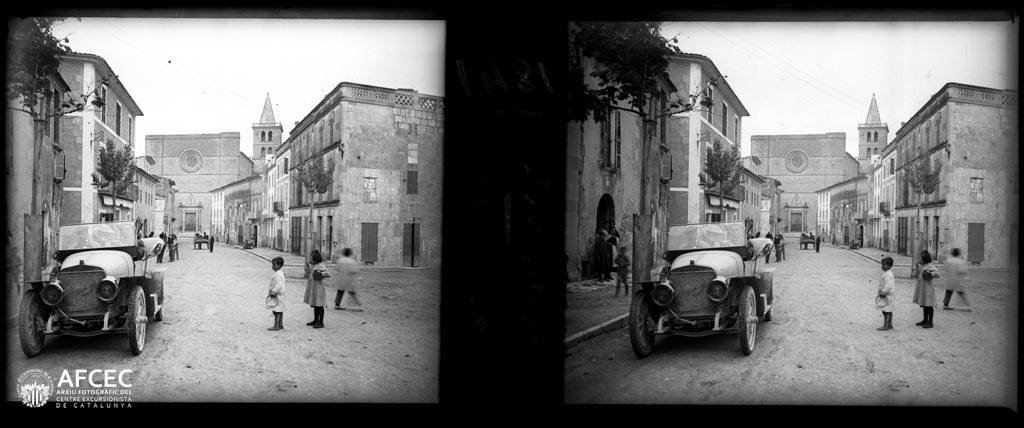
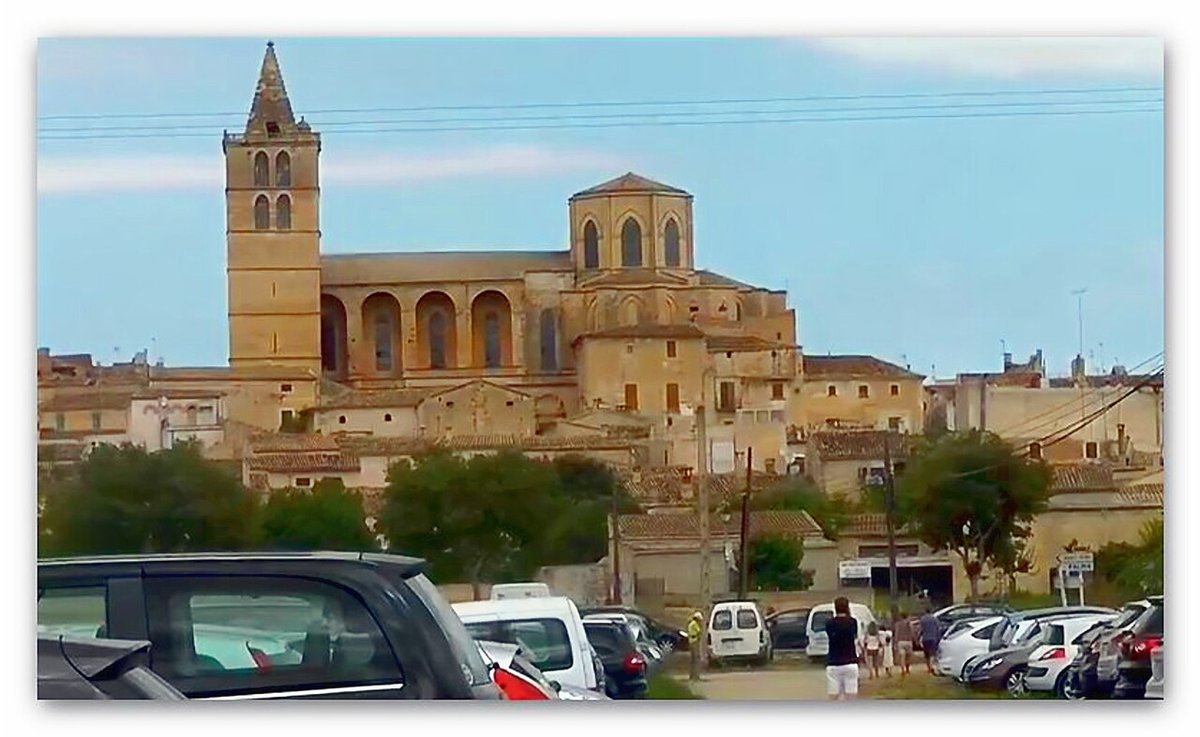
The village core is a ten-minute stroll from edge to edge. Carrer Major, barely two cars wide, tilts up to the parish church of Sant Bartomeu, its sandstone tower patched over centuries. Stone benches in the adjacent plaça give the first proper perch; order a café con leche from Celler-es Bar and you will notice the other tables are speaking Mallorquín, not marketing English. Wednesday adds a produce market—stalls of honey, dried peppers, and the island’s new-season olives—yet even then the square never feels crowded. Parking is free on the side streets, but arrive before eleven or you will circle with the locals.
Windmills and Dry-Stone Mathematics
From almost any rooftop you can count half a dozen windmills. Some have been converted into weekend studies; others stand roofless, their wooden ladders fossilised mid-climb. A five-kilometre signed loop, the Ruta de los Molinos, strings together the best examples without trespassing on private land. The path starts behind the church, drops into a limestone track, then re-emerges beside a mill whose mechanism is intact enough to show how grain was hoisted two storeys above the grinding stones. Allow ninety minutes, longer if you stop to read the interpretation panels—Spanish and English—and remember the maths: each sail turned a set of volcanic stones shipped from Sa Pobla, a detail that once decided where entire villages could be built.
Cyclists usually ignore the loop and head straight onto the lanes that web the Pla. The gradients are gentle, the tarmac smooth, and drivers politely cross the white line. A popular 40-kilometre circuit swings south to Sant Joan, west to Randa monastery, then back via Montuiri’s only petrol station—handy for a Coke and a cassette-clean under the canopy. Road-bike hire can be delivered from Palma (about €30 a day); ask for compact gearing if you plan to tack on the Randa climb, because the final kilometre touches ten per cent.
Food that Forgives a Timid Palate
Mallorcan cooking can be offal-heavy, but Montuiri’s restaurants know their audience. At Celler-es Bar the tumbet arrives looking like a terrine of aubergine and potato capped with red-pepper sauce; it works as either vegetarian main or generous side. The frito mallorquín mixes liver and pork, yet you can request a "sin hígado" version—chunks of shoulder, garlic and bay leaves, no questions asked. Expect to pay €14–16 for a menú del día that includes wine poured from a plastic jug; quality is higher than the price suggests.
Evening options thin out after nine, when kitchen staff themselves cycle home. For something smarter, five-minute taxi rides lead to two very different experiences. Finca Serena is the glossy agroturismo photographed by Tatler: tasting menu at €95, infinity pool facing the almond terraces, and a no-children policy after seven. In the opposite direction, family-run Son Mercadel lets non-residents swim for the price of lunch—burger or pa amb oli—a tip printed in Cycling Weekly and still honoured. Call ahead; the pool gate is otherwise locked.
When the Plain Turns White
The almond bloom is the village’s most photogenic fortnight, usually mid-February to early March. Tour operators run coach trips from Magaluf, but coaches cannot enter the old lanes; visitors decamp at the sports pavilion and walk, which keeps numbers sane. If you rent a car, approach on the minor road from Lloret de Vistalegre: the alignment gives windmill silhouettes with blossom foreground, and you will not block farm gates. Sunrise is at 07:30; by 09:00 the light flattens and tractors begin their rows.
Outside bloom season, spring and autumn remain ideal. Summer is doable provided you shift activities to the bookends of the day. Mid-July thermometer readings of 36 °C are common, and shade is scarce on the Puig de Sant Miquel, the 300-metre hill that screens the village to the north. The hike up takes twenty-five minutes on a stony switchback; start early, take water, and you will share the summit only with swifts and the occasional German trail-runner. Views stretch from the Tramuntana all the way to the airport’s shimmer, a reminder of how close the infrastructure lies.
The Catch in the Idyll
Honesty requires admitting the limits. Nightlife is a couple of bar terraces and the click of dominoes in the social club. If it rains, the agricultural roads turn to barro—sticky clay that clogs tyres—and the windmills look forlorn under low cloud. Public transport exists but edges towards hobby status: two TIB buses from Palma on weekdays, one on Saturday, none on Sunday. A taxi back from the coast costs €40; keep the number of Montuiri’s single radio-cab firm in your phone because Uber does not cruise this far inland.
What you gain instead is cadence. The bakery opens at 06:00, the church bell tolls the quarter, and swallows return to the same stone ledges each evening. Visitors with a car can pair Montuiri with neighbouring Sineu (Thursday market, train connection) or Porreres (wine cooperative offering €5 tastings). Stay three nights, longer if you are training for a sportive or simply want to read on a terrace while the plain changes colour below.
Pack walking shoes, a lightweight jacket, and enough cash for the baker who still writes totals by hand. The windmill sails may be gone, yet something in Montuiri keeps turning.