Full Article
about Santa Margalida
Town with an inland historic center and the popular beach resort of Can Picafort; rich ethnological heritage
Hide article Read full article
Three places, one thread
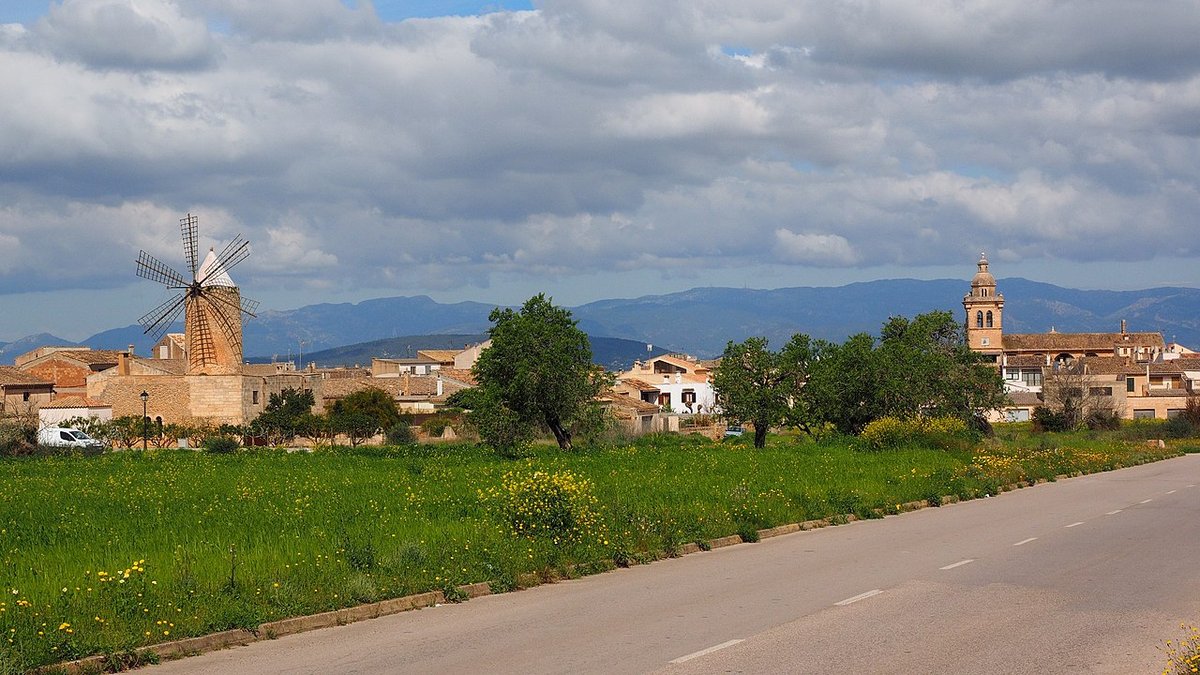
Can Picafort is a bit like the cousin who moved to the city and came back reinvented. Everyone talks about it, yet fewer people remember where it comes from. That origin is Santa Margalida, a municipality in the Pla de Mallorca that has split itself into three distinct centres without quite losing its sense of unity. There is the inland town, the coastal resort, and a quieter stretch of shoreline. They coexist like siblings who only meet occasionally: familiar, but each firmly in their own world.
Arriving via the Ma-13, Can Picafort is the first to appear. At first glance it resembles many seaside promenades in Mallorca, then the details shift. There are more German cyclists than you might expect, and cafés serving coffee in the late afternoon as if the day were only just starting. Staff often switch languages before a word is spoken.
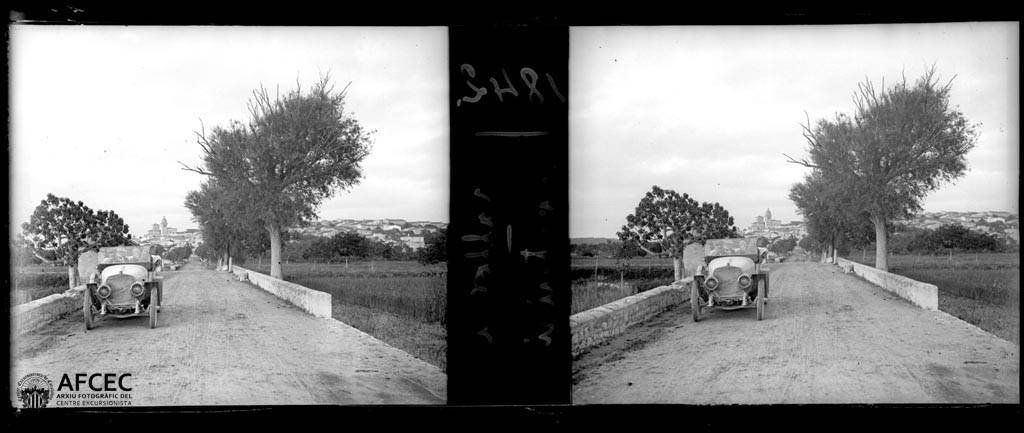
Roughly ten kilometres inland, the atmosphere changes quickly. Santa Margalida comes into view with little warning. The scent of sun cream fades, replaced by something closer to freshly baked bread. The central square is small and very much a village space, functioning as a shared living room. Souvenir shops are not the focus here. Instead, there are practical shops and everyday routines that feel anchored to local life.
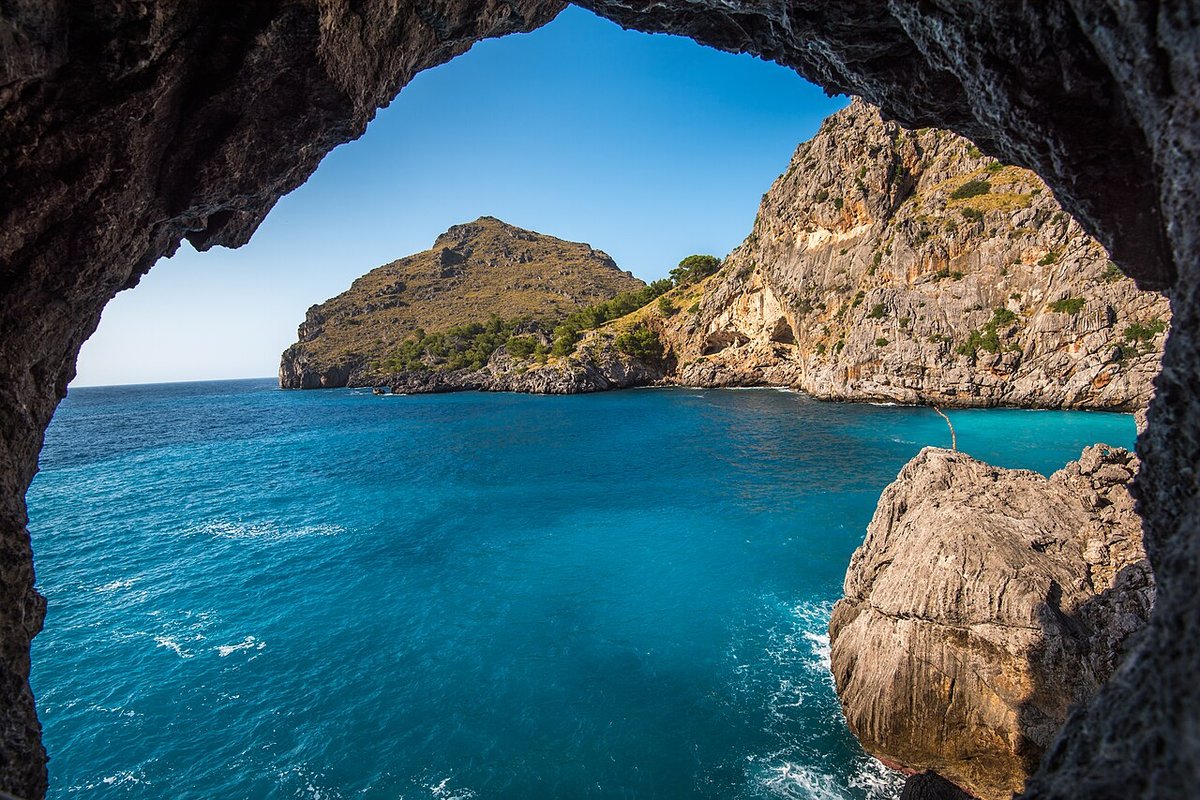
The third point of this triangle is Son Serra de Marina. It is made up of a handful of streets, low houses and a long beach where the wind often sets the tone. The road leading there runs straight through open countryside, and the shift in mood is noticeable. It feels slightly removed from the main circuit. Many people based in Can Picafort head here when they want a stretch of coast that feels less managed.
A saint, a dragon and a village
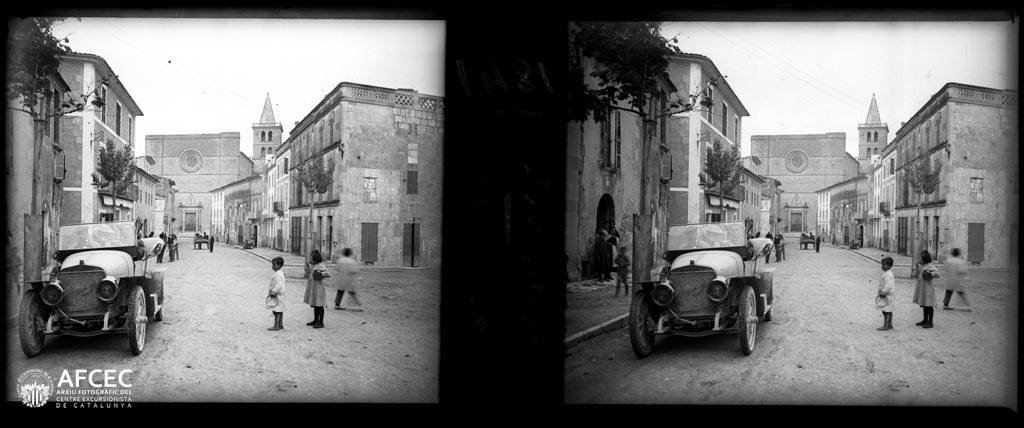
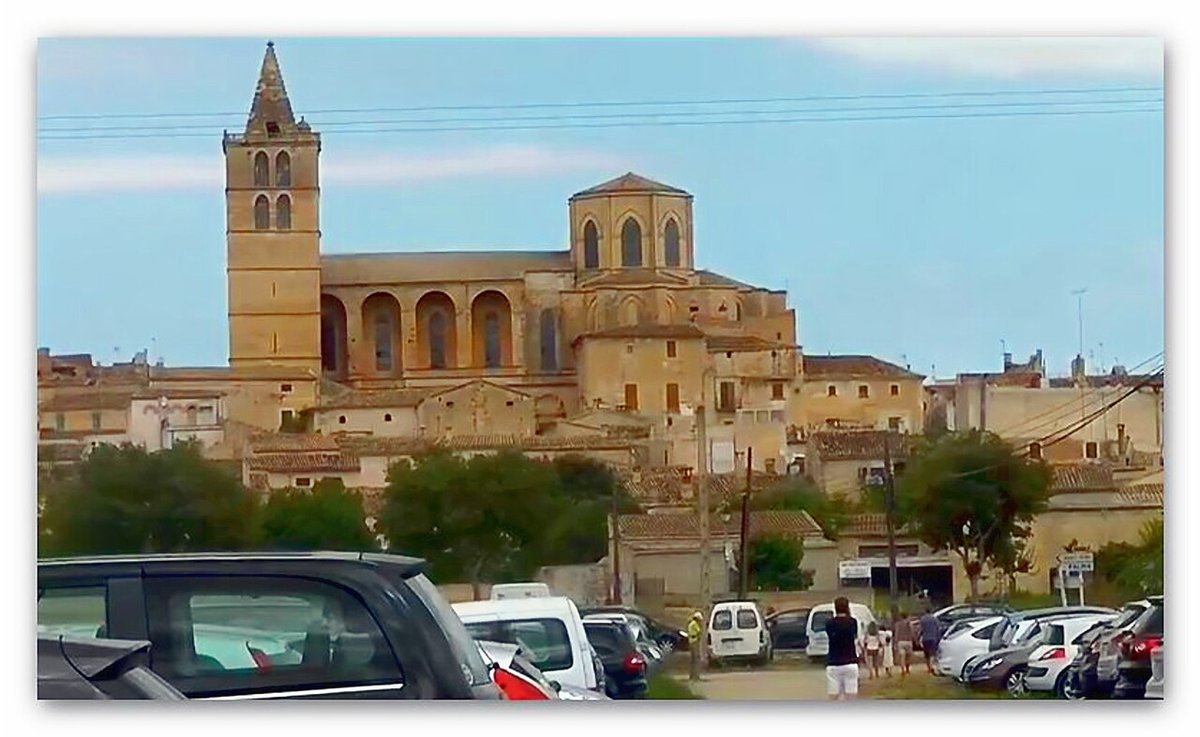
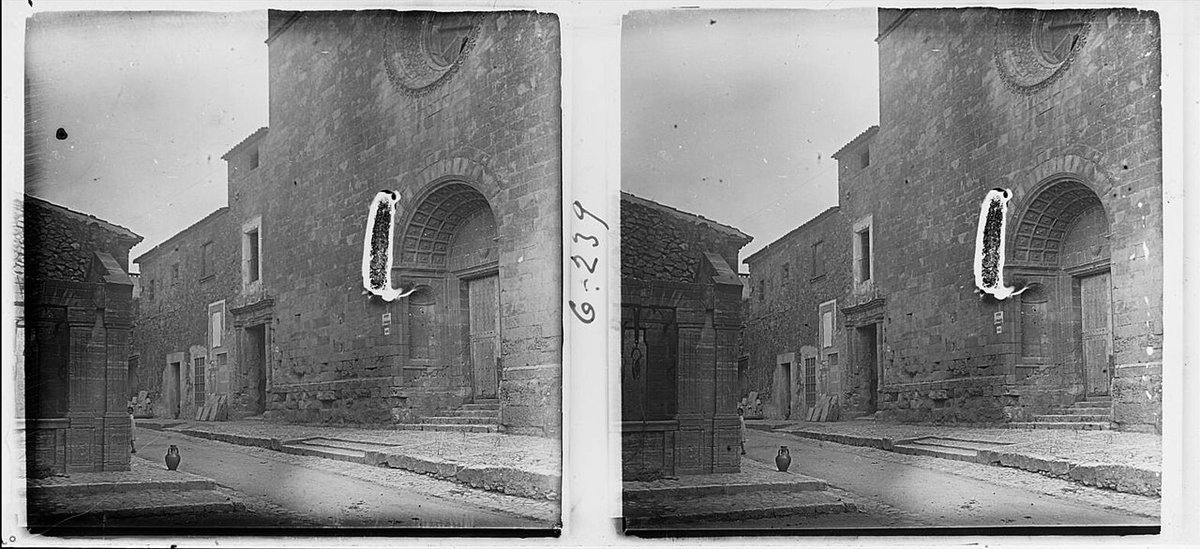
The parish church in Santa Margalida holds a detail that tends to catch attention. Beyond its baroque façade and a bell tower that seems to lean just enough to suggest it is listening, there is a striking emblem: a woman emerging from the mouth of a dragon.
This image refers to Santa Margarita of Antioch, the figure who gives the town its name. According to tradition, she was swallowed by a dragon and escaped thanks to the cross she carried. It is the sort of story that stays with a place.
Inside the church, the air carries the scent of wax and old stone. There was already a Gothic church here in the 14th century, although what stands today reflects later changes and additions. The town also keeps alive the memory of Catalina Tomás, known as the Beata, one of Mallorca’s best-known religious figures. She was born in a house on these same streets, and her presence still shapes local identity.
By the sea and above the plains
The Son Real necropolis is one of those places that quietly alters your pace. Its impact comes as much from its setting as from the remains themselves. It sits beside the sea, with the wind coming in from the Bay of Alcúdia.
The tombs visible today are linked to communities from the Phoenician period and later. Low stone structures stretch across the ground, and the sound of waves carries in the background. The path to reach the site is flat and relatively short, an easy walk of a couple of kilometres there and back.
Closer to the interior stands the ermita de Bonany. The climb is around three kilometres and includes some steeper sections, but the view at the top makes the effort worthwhile. The Pla spreads out in all directions, and on clear days the coastline appears in the distance. Cyclists often treat the ascent as a friendly challenge. Reaching the top without falling out tends to be taken as a good sign.
Food and everyday traditions
In this part of the Pla, conversations still turn to matanzas when colder weather arrives. These traditional pig slaughters are a longstanding custom, and families who continue the practice prepare sobrasada and other cured meats. The products are then hung to dry in pantries and garages, much like laundry in winter.
The village square regularly hosts a market on several days of the week. It is the kind of place where a quick look often turns into a purchase. Among the typical finds are garrofas, with a flavour somewhere between cocoa and roasted carob, along with freshly prepared almonds.
Bread from the local ovens also leaves a clear impression. It has a character that makes comparisons inevitable once you return to ordinary supermarket loaves.
When the town fills up
Certain dates bring a noticeable change in rhythm. The celebration of Santa Catalina Tomás draws large crowds. On the first Sunday of September, the procession of the Beata moves through the streets. The urn carrying the saint is accompanied by bells and firecrackers, setting a distinct tempo for the day. For those interested in traditional festivities, it is an intense and lively occasion. Anyone who prefers to avoid crowds often finds Can Picafort comparatively calm at the same time.
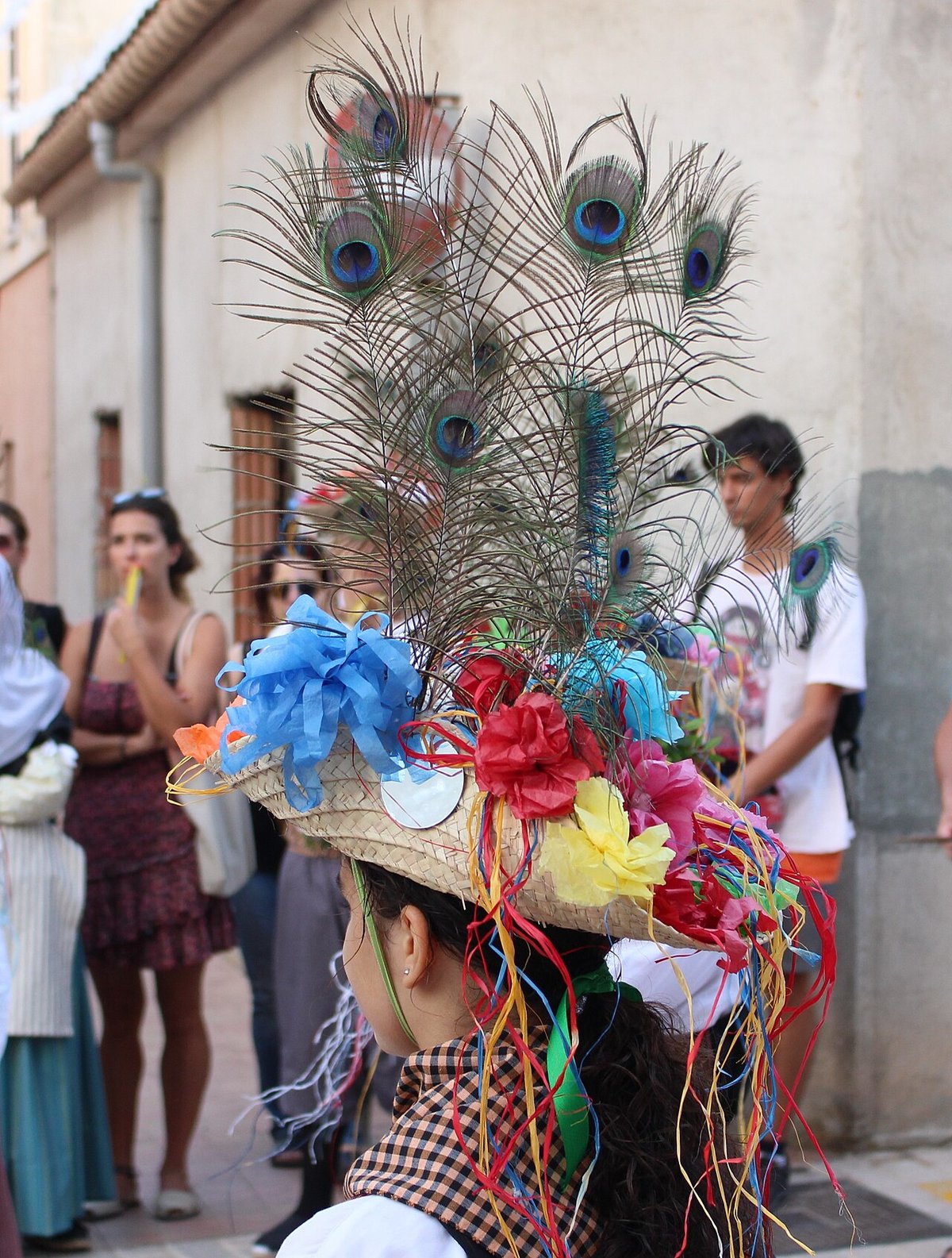
January brings another key moment with Sant Antoni, a widely celebrated festival across Mallorca. Bonfires are lit in the squares, and dimonis run through the streets with fire while music continues late into the night. Or early, depending on how it is counted, as the noise begins well before the evening settles.
A place to mix, not to choose
Santa Margalida does not fit neatly into a single idea of what a destination should be. Can Picafort has a beach, though it is not the wildest on the island. Son Serra de Marina has a stronger, more rugged feel, yet the wind can reshape the experience from one day to the next. The inland town itself is not designed for postcard views.
The appeal lies in combining these elements. A calm start in the village, time by the sea, then a shift again to a quieter stretch of coast. Each part adds something different, and none fully defines the place on its own. Together, they form a municipality that feels varied without losing its connection to a shared centre.