Full Article
about Candelaria
Spiritual heart of Tenerife, home to the Basílica de la Patrona de Canarias; coastal town with aboriginal caves and a pilgrim atmosphere
Hide article Read full article
At six in the evening, the sun turns the basalt the colour of honey. Nine bronze statues cast long shadows across the square. The Guanche menceyes face the sea while the palms barely move. At that hour, Candelaria loosens its pace. The soft scrape of waves carries from the harbour, and footsteps cross the square without hurry.
The town’s rhythm is tied to light and water. When the brightness fades, the place settles into a quieter version of itself.
Inside the basilica
The basilica appears almost suddenly as the square turns. Early in the morning, the air brings a mix of salt and coffee drifting from nearby doorways. Inside, warm wax and cold stone shape the atmosphere.
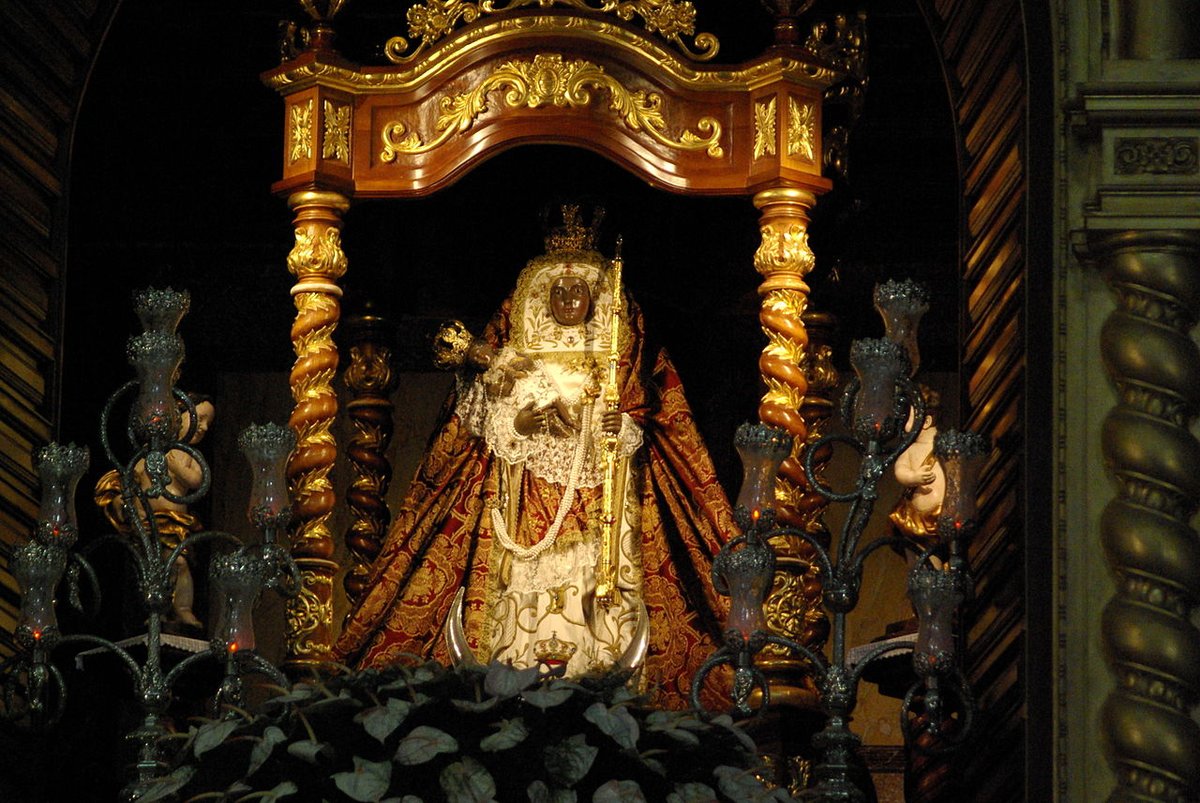
At the main altar stands the dark-skinned Virgin, dressed in an embroidered cloak. For many Canary Islanders, the relationship with her feels calm and familiar. People come in, sit for a moment, then move on.
Enter early, before organised groups arrive. The quiet stretches the space, making the basilica seem larger than it appears from outside. Later in the morning, the square often fills with brief visits from those on their way elsewhere.
The cave beneath
Beneath the basilica complex sits the Cueva de Achbinico. It is small, a hollow of dark rock where moisture settles on the walls and the air turns noticeably cooler.
According to tradition, this is where the image of the Virgin was kept for decades after being found on the coast. Long before the current basilica existed, this cave already served as a place of worship.
Pilgrims still pass through throughout the day. Some leave candles, others photographs or folded pieces of paper. Outside sounds filter in: pigeons shifting, water echoing against rock.
Between two tempos
Candelaria moves between two clear rhythms: that of the square and that of the sea.
Early mornings bring locals walking along the seafront and fishermen near the harbour. By midday, the sun hits the basilica façade directly and many shutters close for a while.
During the week, especially outside summer, conversations are brief and unhurried. At weekends, visitors arrive from other parts of Tenerife, and families fill the promenade.
For a quieter sense of town, try a weekday morning or late afternoon.
On volcanic sand
The beaches here are volcanic, their dark sand heating quickly under strong sun. The constant background is the sound of the Atlantic, steady and present. When the northeast wind rises, palms along the seafront give a faint creak.
Towards evening, light changes the colour of the sand from deep black to a brighter grey. As tide goes out, small pools form among rocks where children search for crabs.
Further south are stretches of beach and areas of rounded stones known locally as callao. Not all sections are set up for swimming; check conditions before going in.
Days when everything shifts
There are moments when Candelaria loses its calm.
One comes in February during Candelaria festival. From early on, people fill the square carrying candles and flowers; melted wax lingers in air for hours.
The other arrives in August when thousands walk overnight towards town from across Tenerife. Nearby roads fill with groups carrying backpacks and torches. By sunrise Candelaria is full of walkers who arrive tired and quiet as if still on their journey.
Outside these dates town returns to usual pace; those looking for more space avoid these days entirely.
A walk by water
A simple way to experience Candelaria is follow seafront without rushing From square path runs along ocean several kilometres On clear days Mount Teide appears distance rising above valley houses
Benches face water stretches where sound sea drowns conversation Sometimes runners pass sometimes only local walking dog evening falls
Even winter carry water some protection sun Light reflects strongly off sea dark stone heat builds more than sky might suggest