Full Article
about Santa Brígida
Upscale residential area with a winemaking tradition; known as the village of flowers and wine; close to the capital
Hide article Read full article
Santa Brígida: el pueblo donde el vino es conversación
Santa Brígida es como ese amigo de Las Palmas que tiene una casa en las afueras. Cuando la ciudad te agobia, le dices "¿subimos?" y en quince minutos estás en su terraza, con otra temperatura y la capital ahí abajo, como un mapa extendido. No vengas buscando playa. Esto es otra cosa: un municipio a cuatrocientos metros de altura, pegado a una caldera volcánica y con el olor a gofio tostado los domingos por la mañana.
La gente sube por aire, por vistas y, sobre todo, por vino. Aquí se habla de cosechas como en otros sitios del fútbol. Es normal.
Un cráter que te desconecta
La Caldera de Bandama es el vecino incómodo y espectacular. Desde arriba parece un agujero hecho con precisión, de casi un kilómetro de ancho. Bajas por el sendero y el mundo cambia: se calma el viento, el aire se vuelve húmedo y el móvil pierde cobertura. No es una excursión épica, pero si bajas al fondo, calcula tiempo y agua. La subida se nota.
Arriba, en el mirador, siempre hay alguien haciendo fotos. Abajo, entre las viejas viñas del interior, puedes cruzarte con quien está podando. Te mira con curiosidad tranquila, como preguntándose qué haces ahí.
El mercado que no es para turistas
Los domingos hay mercado agrícola. No es enorme, pero lo hueles antes de verlo: gofio recién tostado, quesos compactos, tomates que parecen de otro tiempo. No hay puestos de souvenirs con imanes. Aquí la gente compra la verdura de la semana y charla con quien cultiva las lechugas.
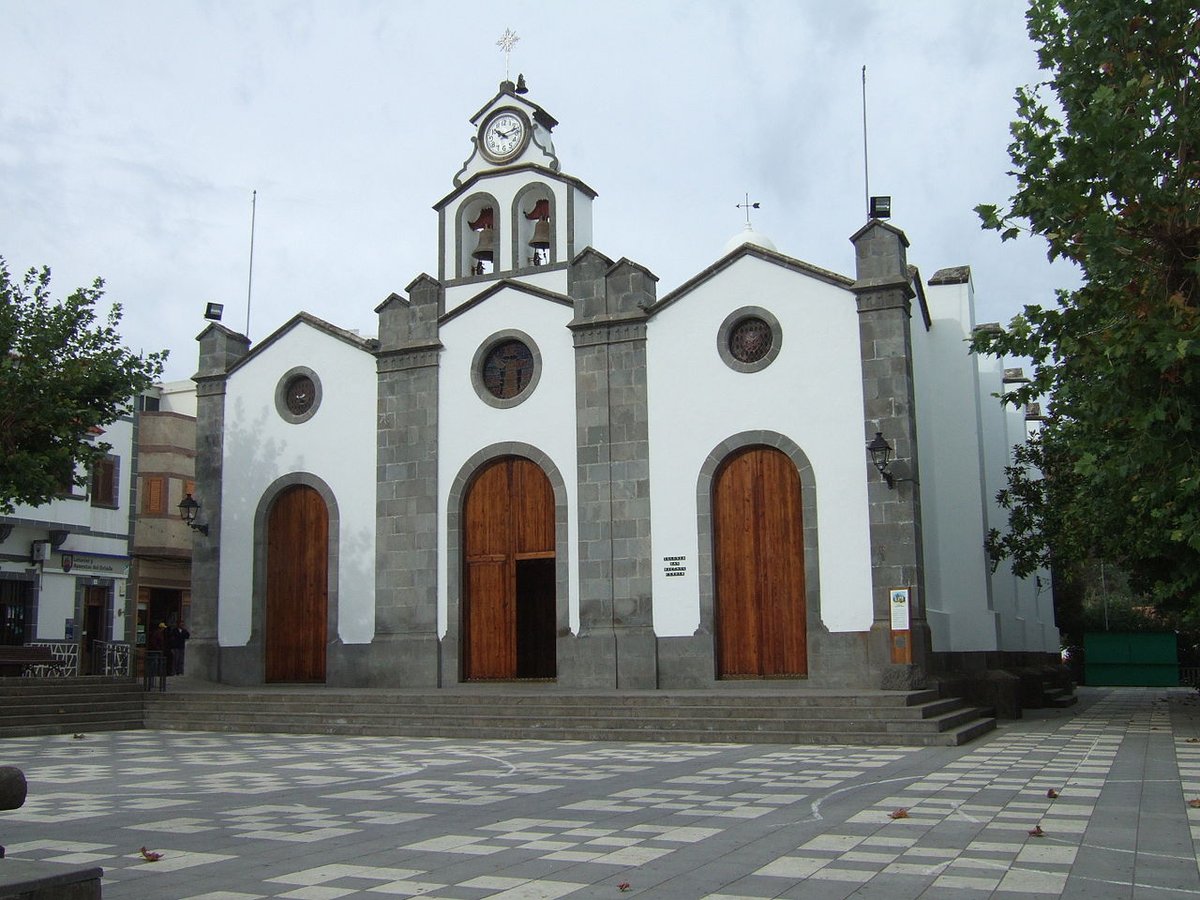
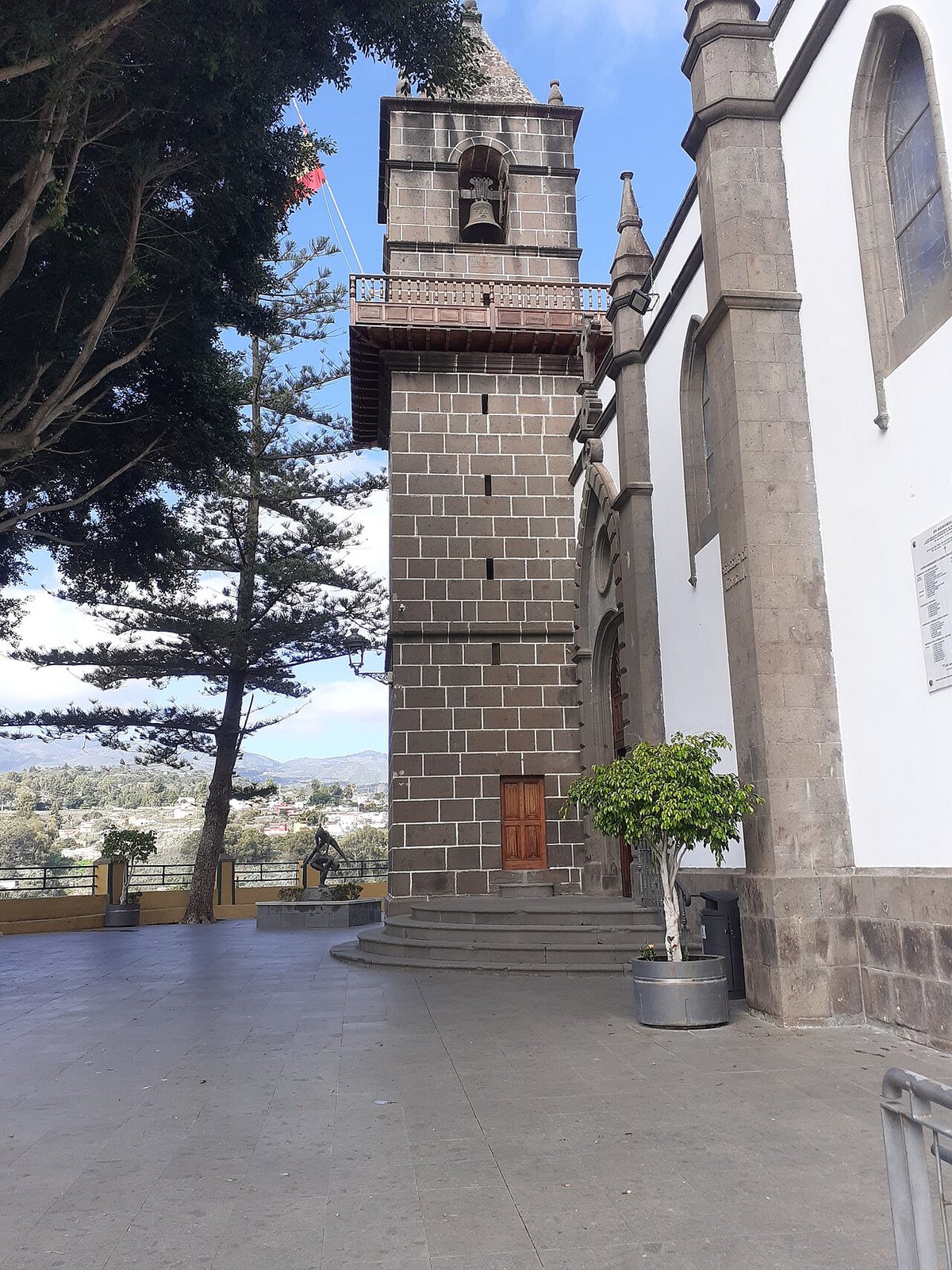
El casco antiguo tiene balcones de madera que crujen bajo los pies. La iglesia principal muestra su historia a medias: un incendio en el siglo XIX quemó buena parte, pero la torre barroca se quedó ahí, plantada. El conjunto resulta extraño y honesto.
Carreteras entre viñas
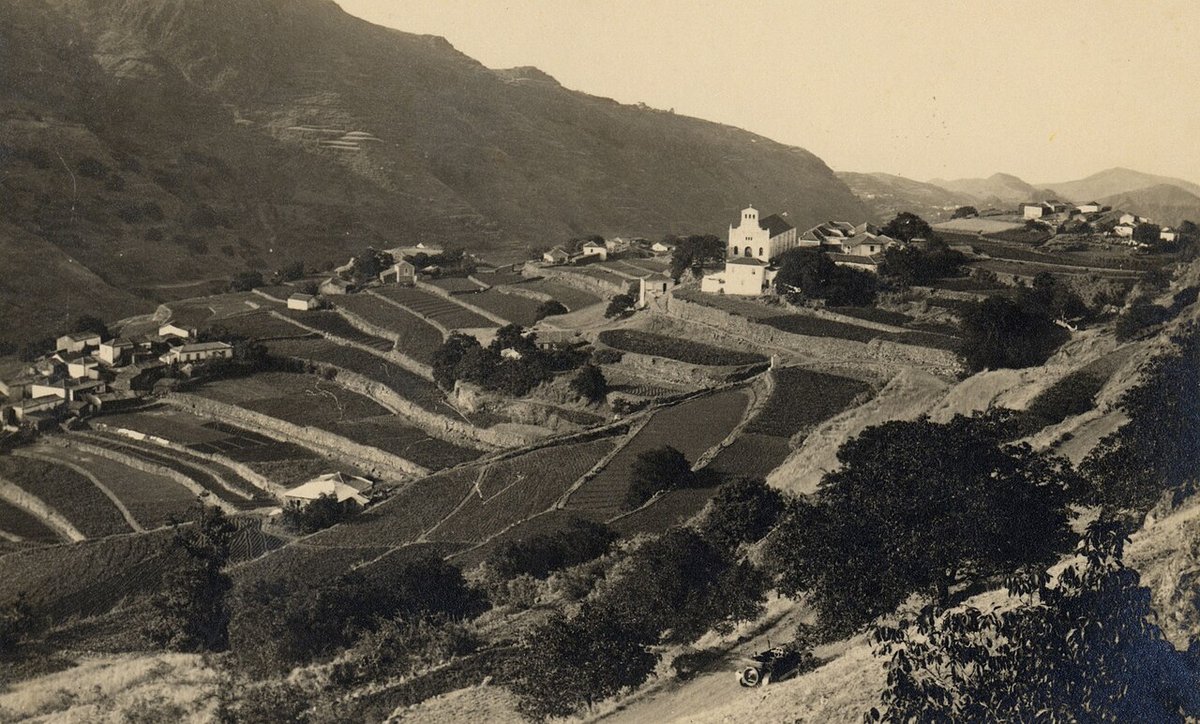
Por aquí no hay una ruta marcada. Lo que funciona es coger el coche y perderse por las carreteras entre Bandama, Monte Lentiscal y La Atalaya. Subes y bajas entre terrazas de viñedos escalonados, algunos sobre tierra volcánica negra que parece de otro planeta.
Hay una casa señorial reconvertida en centro de interpretación del vino. Cuenta cómo la malvasía canaria viajó medio mundo hace siglos. Es interesante si te pilla de paso, pero lo bueno está fuera: ver las parcelas familiares, los tipos cargando cajas al atardecer o simplemente parar donde la vista te obligue a hacerlo.
Ven cuando quieras (pero lleva jersey)
No hay temporada alta definida. En verano hay más romerías y ambiente en las plazas; el resto del año todo es más tranquilo. También hay ferias ganaderas que llenan el pueblo de animales y plantas, eventos muy locales donde tú serás el forastero.
El tiempo aquí hace lo que quiere. En Las Palmas puede hacer sol de manga corta y aquí arriba estar entrando la niebla con un fresco que te pide chaqueta. Llevar una en el coche no es precaución; es sentido común.
Aparcar en el centro un domingo es deporte local. Las calles son estrechas y los vecinos conocen cada hueco mejor que cualquier app. A veces es mejor dejar el coche un poco más lejos y subir caminando.
Al final, Santa Brígida no te va a sorprender con grandes monumentos ni paisajes postales perfectas. Te ofrece un respiro rápido desde la ciudad, un cráter para bajar sin prisa y la sensación de estar en un sitio donde la vida rural no es decorado; simplemente sigue pasando mientras tú pasas por allí