Full Article
about San Sebastián de La Gomera
Island capital and main port; historic Columbus stopover where Columbus took on supplies; quiet, genteel atmosphere
Hide article Read full article
Arrival at the edge of the island
The ferry edges towards the harbour and, for a moment, it seems far too large for the space. White buildings line the waterfront so closely that the approach feels almost unreal, as if the ship might brush against them. It never does, but the impression stays with you. Tourism in San Sebastián de La Gomera often begins exactly like this, watching a vessel slip into a port that looks smaller than the movement it handles.
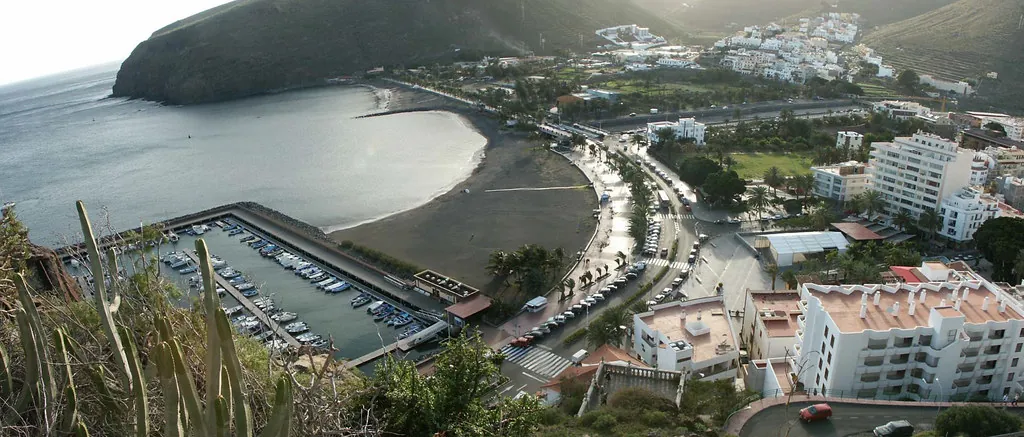
The town sits tightly between the sea and the slope behind it. There is no sense of sprawl or gradual expansion. Instead, everything appears fitted into place with little room to spare, as though the settlement had to adapt quickly to its surroundings rather than reshape them.
Where Columbus paused before crossing the Atlantic
There is a strong sense of history here, shaped by both fact and local storytelling. Christopher Columbus passed through in 1492 before setting out across the Atlantic. His stop was not brief. He remained for a while, preparing the expedition and taking on water and supplies. According to local tradition, some sailors chose to stay behind on the island rather than continue into the unknown. It is easy to understand the decision. After weeks at sea, a calm port with palm trees and solid ground would have been hard to leave.
The Torre del Conde still stands from the 15th century. Today it is surrounded by parked cars and everyday streets, which makes the structure feel even more grounded in the present. It is compact and solid, built with defence in mind rather than display. Inside there is a well, along with stories linked to ships returning from America, carrying wealth and fearing pirate attacks. These days the mood is far quieter. Most visitors come to walk around or take photographs, with little hint of the tension that once defined the place.
A small historic centre with its own rhythm
The old town can be covered quickly, although the map does not quite prepare you for the slopes. Streets are narrow and lined with low houses. Wooden balconies appear here and there, and there is a familiar coastal scent in the air, a mix of salt, dampness, and kitchens beginning to come to life as the morning moves on.
The church of La Asunción dominates one of the main squares. What stands today reflects different phases of construction and later alterations, something quite common in the Canary Islands. The building has changed over time, but the site itself has long been central to the town.
Step just beyond the historic core and the surroundings shift. The harbour, wider avenues, and growing areas of parking show how the town has adapted over the years. This contrast is typical of many Canarian ports, where ferry traffic shapes daily life and sets the pace.
Food that fits the setting
Eating here tends to leave a strong impression. Almogrote appears frequently on tables. It is a paste made from cured cheese with pepper and oil, with just enough heat to keep you reaching for another piece of bread without thinking.
Papas arrugadas con mojo are another constant. These small potatoes, cooked in salted water until their skins wrinkle, come with a sauce that varies but rarely disappoints. Then there is rancho canario, a hearty soup with noodles and chickpeas. It makes particular sense after a morning spent walking through the town’s slopes.
Palm honey, or miel de palma, deserves its own mention. It is made from the sap of the palm tree, known locally as guarapo. The liquid is collected and slowly reduced until it thickens. The process takes time and effort, which explains the value placed on it here. A small amount poured over cheese or added to coffee changes the flavour completely.
A black-sand beach and everyday routines
The main beach in the town has dark volcanic sand. It can be surprising at first, especially if you arrive expecting lighter tones, but it works well for a quick swim after time in the centre.
The water is usually clean, and the atmosphere feels local rather than busy. Some people come early to swim, while others head down later in the day to fish once the heat begins to ease.
A little further north lies Playa de la Cueva. It is smaller and often used by residents. Families spend the afternoon there, and it is common to see children coming out of the water with snorkelling goggles and a bucket holding limpets or small crabs.
Up to the Cristo viewpoint
The walk up to the Mirador del Cristo looks manageable at first glance. In reality, it is a steady climb over several kilometres, the kind that makes you reconsider your pace halfway through.
At the top stands the statue of Cristo, along with a view that brings the whole setting into focus. From here, the valley that holds San Sebastián becomes clear. You can see the port, the houses rising up the slope, and the open sea stretching ahead. On clear days, Tenerife appears on the horizon.
What stands out most is the quiet. When activity in the harbour fades, the only sounds are the wind and the occasional boat moving in or out.
A few practical notes
If arriving by ferry with a car, it often makes sense to leave it parked near the harbour and explore the centre on foot. Distances are short, and the hills feel easier when you are not searching for parking every few minutes.
In early autumn, the Fiestas Colombinas take place. These celebrations recall Columbus’s stop on the island. During those days, the atmosphere shifts noticeably, with music, events in the streets, and many people returning to the town for the occasion.
There is also a particular moment worth noting: late afternoon. As the sun lowers and the heat softens, people begin to come out. The centre and the seafront promenade slowly fill with movement, and the town settles into its natural rhythm.