Full Article
about Breña Baja
Tourist and residential area that includes Los Cancajos; good beaches, close to the airport, and a quiet setting.
Hide article Read full article
A place that smells of fruit and volcanic soil
Bananas ripen at night. That idea takes shape in Breña Baja, on the island of La Palma, where the air can turn unexpectedly sweet in the early hours. Around Montaña de La Breña, the scent drifts in from the surrounding plantations, heavy with bunches beginning to yellow. Under the faint glow of streetlights, the leaves catch a dull shine and the ground holds the dampness of volcanic soil.
Tourism here does not carry the usual notes of sun cream or crowded terraces. It smells of fruit and earth, of fields that cling to your shoes when you walk between fincas. The rhythm is slow, tied to the land and its cycles rather than to packed itineraries.
The Atlantic from La Condesa
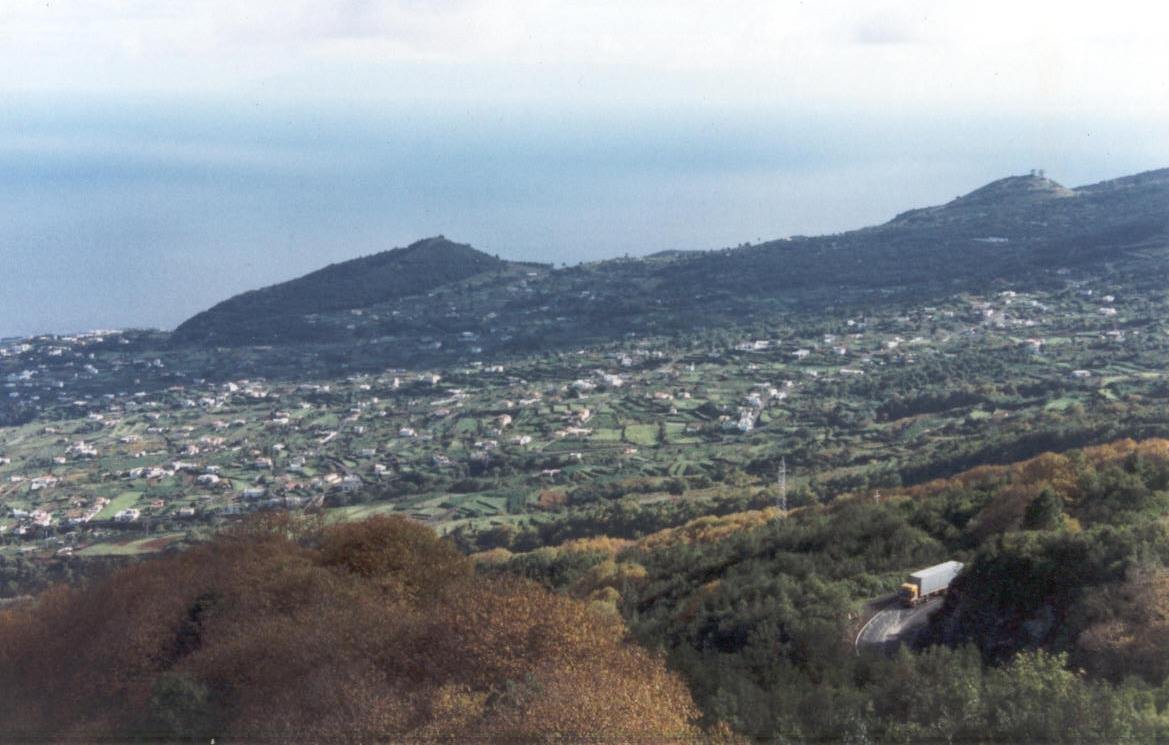
The road up to the mirador de La Condesa takes its time. It winds through pines bent by the alisio wind and passes stretches where the hillside suddenly opens out. At the top, the Atlantic appears all at once. Some days it looks dark blue, almost metallic, set against the intense green of banana plantations filling the ravines.
From this height, the curve of Los Cancajos is easy to make out. It forms a half-moon of black lava beside the hotel area. At certain times of day, small figures move along the seafront promenade, reduced to silhouettes against the coast.
There is not much at the viewpoint itself. A concrete bench sits facing the view, and the occasional car passes on its way to higher ground. The place rewards a slower pace. Early in the day often works best. Before mid-morning, a layer of mist can hover over the sea for a few minutes, like a thin grey veil that gradually dissolves.
Los Cancajos: a different kind of shore
Los Cancajos does not match the image of a long stretch of pale sand. The coastline here is volcanic, with dark rock, natural platforms and small coves where water remains trapped as the tide goes out. Low plants grow between the cracks, adapted to the salt in the air.
The sea enters through natural channels and creates calmer areas. Many local families choose these spots for a swim when the ocean is rough. The sound of water striking the lava is constant and low, a background note that stays with you even as you move away towards the promenade.
Winter brings a quieter atmosphere. People from the neighbourhood walk along the coast or take their dogs out as evening falls. Travellers from northern Europe still arrive, drawn by a few hours of sun while their own countries sit deep in winter.
January offers a curious contrast. The air can feel cool, yet the sea often seems relatively mild by comparison. In summer, small jellyfish appear on some days, which is common along many Canary Islands coasts. A quick look at the water before entering is a sensible habit.
Between banana fields and low houses
Breña Baja stretches across different heights. From the coast up to the higher neighbourhoods, narrow roads connect areas lined with volcanic stone walls and banana plantations. Many of these fields are covered with mesh or blue plastic bags that protect the fruit as it grows.
Around the church of San José, clusters of low houses gather together. Wooden balconies and softly coloured façades give the area a quiet, lived-in feel. In the late afternoon, as the sun drops towards the western side of the island, the light arrives at an angle and turns the walls briefly golden.
Driving along the main road towards Santa Cruz, the banana plants sometimes form green tunnel-like stretches overhead. The passing of the year becomes visible in the fields. First come the blue coverings around the bunches. Later, for weeks at a time, lorries travel the road carrying harvests towards the local packing areas.
On clear days, Mount Teide on the neighbouring island of Tenerife can be seen on the horizon, rising beyond the sea. When calima arrives, bringing dust-laden air, everything shifts to a yellowish tone and the outline disappears.
Choosing the moment
April and May tend to be particularly pleasant. The light is crisp, the countryside appears very green, and the busiest periods along the coast have not yet arrived. September also has its appeal. The sea retains the warmth gathered over summer, and the evenings carry a little more breeze.
August changes the mood noticeably. More visitors arrive, joined by many families from across the island heading down to the coast. Towels fill the beach and the promenade takes on a louder, busier rhythm. Early starts help during these weeks. At first light, the sun falls gently on the lava and the water is usually calmer.
Breña Baja leaves a quiet impression that builds over time. Nights can feel especially still. The sky turns so dark it resembles velvet, with stars appearing sharply overhead. Down in the ravine, the banana plants barely move. The same sweet scent lingers in the air.
Life here unfolds slowly, and that pace shapes the experience. It may take a while to notice, but the place tends to stay with you long after you leave.