Full Article
about Hermigua
A farming valley wedged between mountains with a unique microclimate; known for its old pescante and the El Cedro forest.
Ocultar artículo Leer artículo completo
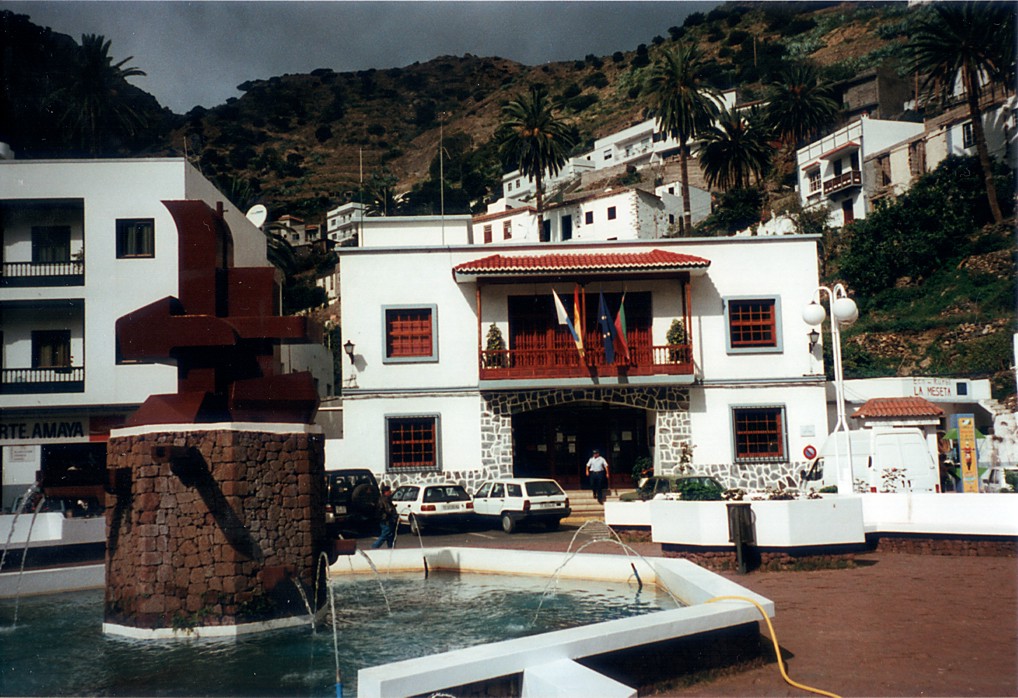
The morning mist clings to the upper slopes of Hermigua like cotton wool, while down in the valley, water channels gurgle between terraces of banana palms. This isn't a carefully staged photograph—it's Tuesday. A farmer in wellies hoses down his pickup, a woman hangs washing beneath a dragon tree, and the smell of woodsmoke drifts from a chimney. Life carries on here exactly as it has for centuries, just with better mobile reception.
Valley of Living History
Hermigua stretches eight kilometres from the Atlantic up to Garajonay National Park, its white houses scattered along the steep sides of a ravine that once carried molten lava to the sea. The 1,838 residents don't live in a museum piece—they're farmers, teachers, the occasional Berlin graphic designer who thought Tenerife looked too busy. Their terraces climb the slopes in neat stone steps, each one held together by dry-stone walls that predate the Reformation.
The valley's agricultural heartbeat is impossible to miss. Irrigation channels—some dating from the 16th century—run beside the roads, feeding small plots of papaya, avocado and the ubiquitous plataneras that give the valley its improbable tropical air. These aren't hobby gardens. Local regulations dictate that land must remain productive, so even the smallest terraces work for their living. Drive up the GM-1 on a weekday morning and you'll share the road with battered Toyotas loaded with banana bunches, the driver nursing a cortado from the bar in El Pescante.
Religious architecture here comes without the bombast of mainland Spain. The Church of Santo Domingo de Guzmán squats modestly in the village centre, its volcanic stone walls and Mudejar ceiling more barn than basilica. Next door, the ruined Convent of Santo Domingo shows what 400 years of Atlantic weather can do to even the most devout intentions. What's left—an arch here, a cloister there—feels more honest than many perfectly restored monasteries. The stones are soft to the touch, worn by actual pilgrims rather than coach parties.
Between Mountain and Sea
Hermigua's relationship with altitude is complicated. At sea level, Playa Santa Catalina offers a narrow strip of black sand where waves crash with theatrical violence. Swimming is technically possible but rarely pleasant; the beach serves mainly as a reminder that this agricultural valley must eventually concede to the Atlantic. Fishermen still launch small boats from the ramp, though most locals buy their fish from the Monday market in San Sebastián.
Climb 400 metres to the medianías and everything changes. The air cools, palm fronds give way to laurel forest, and suddenly you're in a different climate zone. This is where British hikers tend to get caught out—what started as a gentle valley stroll becomes a mountain trek with zero warning. The path to El Cedro enters Garajonay's cloud forest within twenty minutes; temperature drops of ten degrees aren't unusual. Pack a waterproof even when the coast looks perfect.
The mountain weather delivers its own surprises. That thick cloud layer locals call "panza de burro" (donkey's belly) can park itself on the ridge for days, turning what your Instagram feed promised would be Teide views into something resembling Scottish mist. It's not a disappointment—it's the valley's personality. When it clears, usually around sunset, the contrast makes the wait worthwhile. Tenerife's volcano appears 60 kilometres away, floating like a mirage above the sea.
What Tastes Like Home (and What Doesn't)
Food here favours the functional over the fancy. Potaje de berros—watercress soup thickened with potatoes and gofio—tastes like something a Cumbrian grandmother might make if she had access to better vegetables. The local cheese, queso palmito, slices into neat semi-circles with a texture somewhere between Wensleydale and Caerphilly. It's produced by three family dairies; buy it at the ethnographic centre where they'll wrap it in paper like a proper deli.
British visitors expecting tapas crawls will find the valley wanting. There are perhaps six proper restaurants, none open past 9 pm, and the concept of vegetarian options remains negotiable. What you get instead is ingredients that actually taste of something—tomatoes with proper acid, goat that grazed on mountain herbs, bananas that never saw a shipping container. Casa Efigenia in neighbouring El Valle serves rabbit stew that converts even devoted bunny-huggers, while Bar Rajero does a perfectly respectable fish and chips using local cherne instead of cod.
The Practical Bits That Matter
Getting here requires commitment. No UK airport flies direct to La Gomera; you'll change planes in Tenerife South, then take the 45-minute ferry to San Sebastián. From there, it's 25 minutes up a road that switchbacks like a Scalextric track. Car hire is essential—public transport runs four times daily and stops entirely at weekends. The nearest cash machine is in Agulo, 5 kilometres away, and it has been known to run dry on Saturday nights.
Accommodation splits between restored farmhouses and modern villas, most booked through German agencies who've been coming here since the 1980s. Prices range from €70 for a basic casita to €200 for somewhere with a pool you'll never use. The smartest option might be Casa Rural La Portela, where British owners Sarah and Mark converted a banana packing shed into two-bedroom apartments with views straight up the ravine. They'll also tell you which walking paths are currently washed out, information that saves considerable swearing.
Winter brings its own challenges. January storms can isolate the upper valley for days; roads wash out, electricity fails, and suddenly that romantic isolation feels less appealing. Summer, conversely, can be brutal. The valley funnels heat downwards—temperatures regularly hit 35°C by midday, when sensible people retreat indoors until 4 pm. Spring and autumn deliver the sweet spot: warm enough for shorts, cool enough for walking, green enough to justify the flight.
The Honest Truth
Hermigua won't suit everyone. If you need nightlife beyond the occasional fiesta, if you measure holiday success by beach hours, if the idea of a valley where everything closes on Sunday sounds like purgatory—book elsewhere. The village offers something more specific: a working agricultural landscape where you can stay without feeling like you're wrecking the place.
What it delivers is rhythm. Wake to goat bells, buy bread from the van that toots its way up the valley, walk until the clouds roll in, then descend for beer and conversation with people who chose altitude over ambition. The valley doesn't perform for visitors—it barely notices them, which might be the rarest commodity in modern travel. Come prepared for that, and Hermigua gives you something no amount of boutique hotel investment can manufacture: a place that was interesting before you arrived and will remain so long after you leave.