Full Article
about La Oliva
Northern municipality that includes Corralejo and Isla de Lobos; known for its white-sand dunes and pristine beaches.
Hide article Read full article
A shifting landscape in the north
Wind pushes through the open car window like something alive. At nine in the morning, the temperature in Corralejo reads twenty-four degrees, yet the air feels dry, clinging to your shirt and making it easy to forget it is winter. Outside, the dunes shift slowly. Each gust redraws the surface of the sand. In the north of Fuerteventura, time in La Oliva often begins like this, with the landscape changing in front of the windscreen.
From the ferry arriving from Lanzarote, La Oliva looks almost flat, as if the wind has pressed down the entire northern part of the island. Once you travel across it more slowly, the detail starts to appear. Volcanic calderas rise from the ground. Flatlands still show signs of cultivation. White villages recall a period when colonels governed much of life in Fuerteventura from their large houses.
Salt air and changing seas in El Cotillo
In El Cotillo, the Atlantic is heard before it is seen. Waves strike the cliffs with a steady force, echoing through the rock and carrying into the streets when the wind picks up. The Faro del Tostón stands over this stretch of low, stony coast where the sea shifts character within short distances. To the north, the water hits hard. To the south, calmer lagoons form, protected by small ridges of rock.
Light here feels almost mineral. It reflects off black lava, catches on the white salt that gathers on the rocks, and settles over ochre fields where tuneras and aloe grow. On Playa de la Concha, much of the sand comes from crushed shells and coral. Walking barefoot makes that clear. The grains feel coarser, slightly rough underfoot, while the water is often so clear that fish can be seen moving close to the shore.
Summer brings stronger winds, especially around midday, when sand starts to sweep across the beach. Earlier in the day or later in the afternoon tends to feel calmer.
The quiet centre of La Oliva
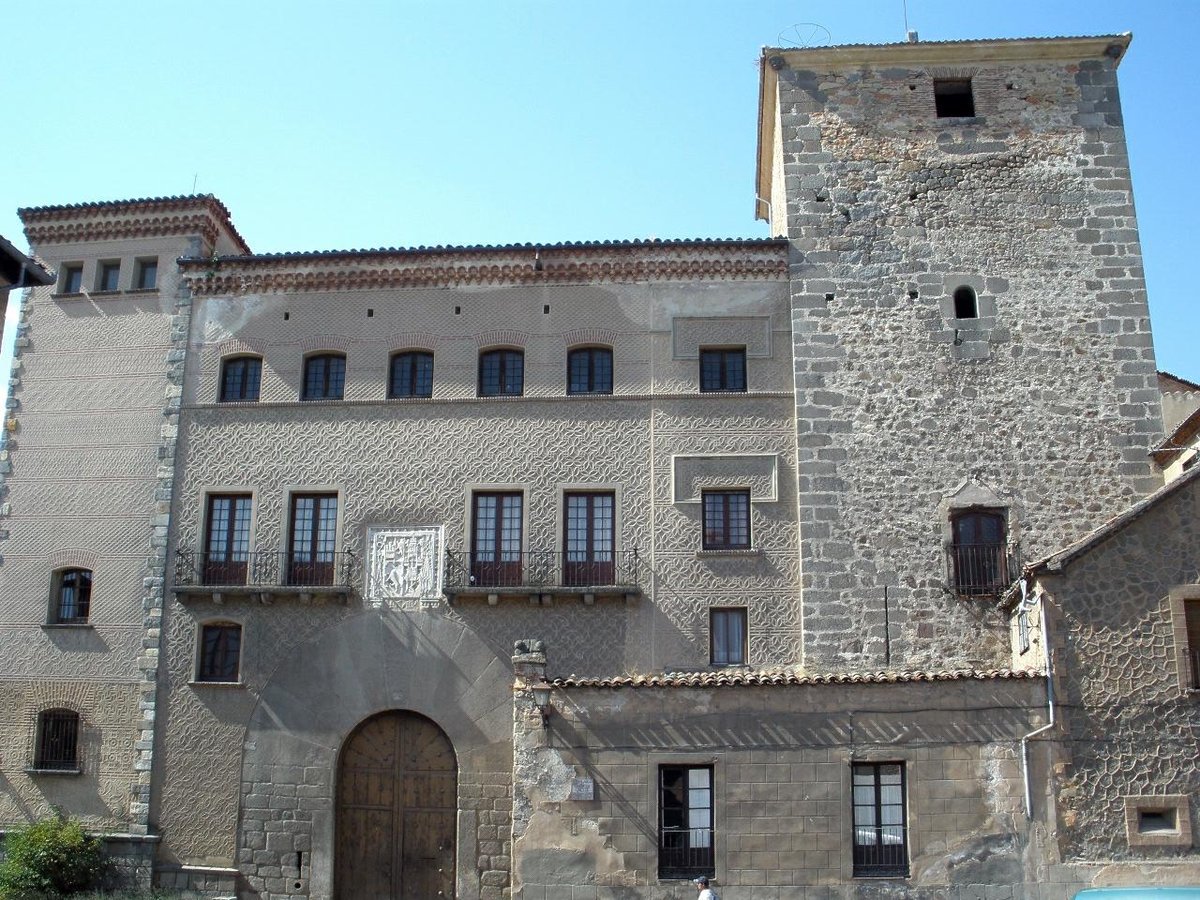
La Casa de los Coroneles appears suddenly as you arrive in the village. It is a large building made of dark stone, set in a fairly open area, with an الداخلية courtyard and wooden balconies. For centuries it served as the residence of the colonels who administered the island. The building still carries that sense of past authority, which contrasts with the calm atmosphere of the village around it.
A short walk away stands the church of Nuestra Señora de la Candelaria. Around midday, the doors are usually closed and the square falls into near silence. Pigeons can be heard, along with the occasional low conversation and the wind moving through the leaves of a tamarind tree that shades the benches. It is a natural pause before continuing further north.
Tindaya, the solitary mountain
The mountain of Tindaya rises from the plain as a dark, solid mass. Its slopes hold dozens of carved podomorfos, footprints created by the island’s early inhabitants and oriented towards different points on the horizon. For that reason, it is considered a highly sensitive archaeological site.
Access to the summit is very restricted and visitors are generally not free to climb it. Even so, the mountain is clearly visible from the roads and paths that cross this part of the municipality. As evening approaches, its colour shifts. The volcanic rock moves from dark grey to a purple tone that stands out against the lighter ground surrounding it.
Lajares and nearby volcanoes
Lajares sits among low, rounded volcanoes. In recent years, the village has seen an increase in workshops, small artisan studios, and people from elsewhere who have chosen to settle here. Despite that, the surrounding area still shows everyday rural life, with herds of goats and trucks carrying fodder passing through.
One of the best-known walking routes in the area begins here, leading up to Calderón Hondo. The climb is short but uneven, over volcanic gravel that crunches underfoot. From the top, the structure of the crater is clearly visible. Beyond it stretches the northern plain, where windmills, rectangular fields and the sea appear in the distance.
Sun exposure remains strong even in winter, and there is very little shade along the route. Carrying water and wearing a hat makes a noticeable difference.
When the north changes its rhythm
The north of Fuerteventura receives visitors throughout the year, though the atmosphere shifts with the seasons. In high summer, Corralejo becomes busier, and the roads leading towards the dunes or El Cotillo can feel more crowded than expected for such an open island.
Spring and early autumn tend to be quieter. The sea remains relatively warm, the wind sometimes eases, and the area can be explored at a slower pace. Winter brings a different kind of light, clearer skies often following days of strong winds.
Air defines this part of the island more than anything else. Some days, gusts are strong enough to push sand across the road. On others, everything falls still. Late in the afternoon, as the shadows of the volcanoes stretch across the ground, La Oliva becomes easier to understand. It is an open landscape of black and ochre tones, shaped constantly by the wind and marked by long stretches of silence.