Full Article
about Valle Gran Rey
Main tourist hub of La Gomera; known for its sunsets; black-sand beaches and bohemian vibe among palm trees
Ocultar artículo Leer artículo completo
The road down to Valle Gran Rey demands attention. Forty kilometres of switchbacks from San Sebastián, each bend revealing another terraced slope of banana palms clinging to volcanic stone. By the time the hire car emerges at sea level, drivers have earned their first glimpse of the Atlantic—though the view comes with a price: parking anywhere near the port during peak season requires the patience of a saint and the spatial awareness of a London cabbie.
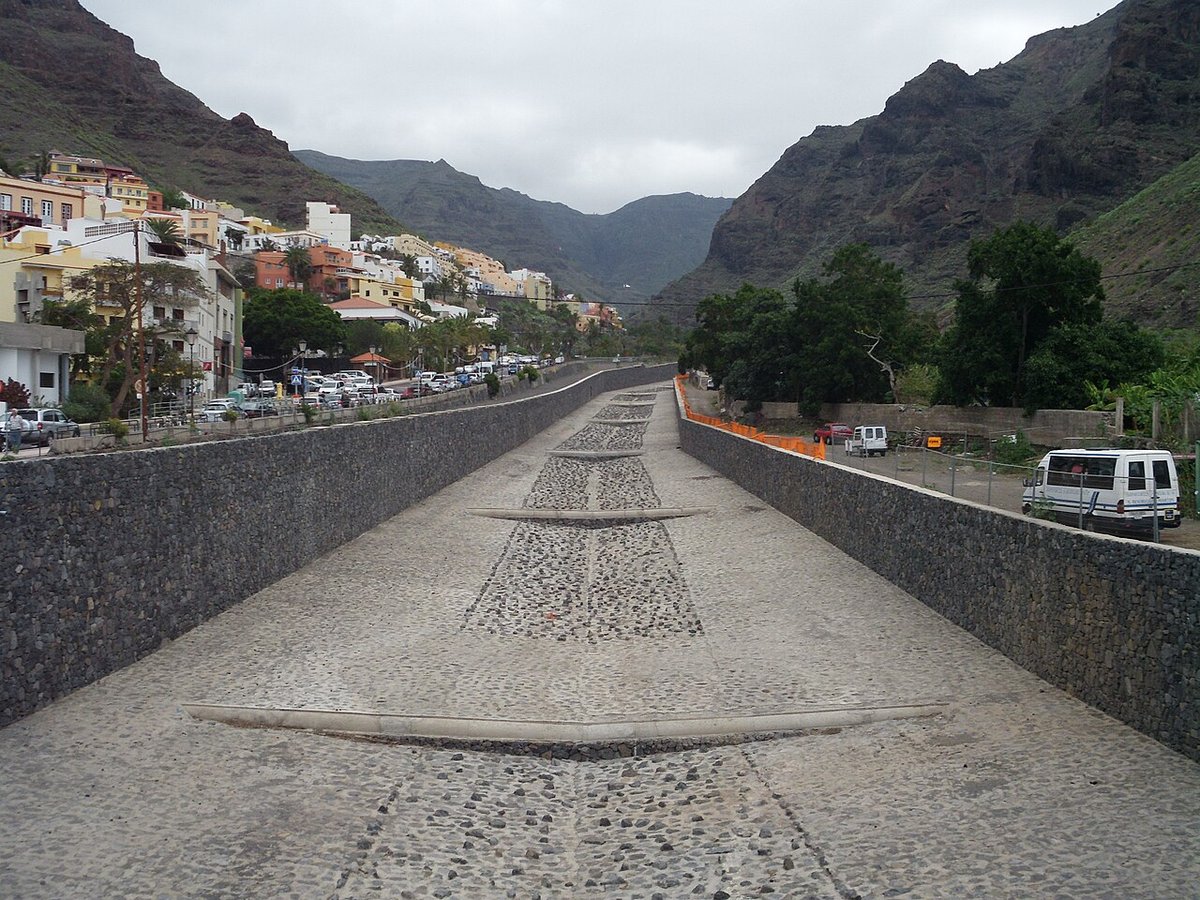
What unfolds below isn't quite the Canarian idyll promised in brochures. The valley walls rise steeply, their grey basalt streaked with pale volcanic ash. Black sand beaches stretch between concrete promenades, while apartment blocks stack up the hillside like a child's building blocks. It's raw, functional, honest—this is a working valley that happens to have tourists, not the other way round.
The Vertical Village
Valle Gran Rey operates on two levels, both literal and metaphorical. Down by the harbour, fishing boats jostle with whale-watching catamarans in Vueltas port. Their engines mingle with the scent of diesel and salt, while German-speaking regulars occupy harbourfront cafés with the territorial confidence of long-term residents. They've claimed this stretch as surely as Britain colonised Costa del Sol, though here the influence feels more benign—think organic bakeries and yoga studios rather than full English breakfasts.
Climb higher—either by foot via ancient stone paths or on the local bus that wheezes up the incline—and the tourist veneer peels away. Smallholdings carved into terraces reveal the valley's true economy: bananas, avocados, and the occasional plot of vegetables wrestled from thin soil. Farmers work these plots much as their grandparents did, though now they supplement income by renting spare rooms to hikers who've discovered the island's walking trails.
The contrast between agricultural upper valley and tourist coast creates a peculiar rhythm. Morning sees locals heading uphill with tools while visitors descend towards beaches and boat trips. Evening reverses the flow, though not entirely—many residents have learned to time their movements to avoid the sunset ritual on La Playa, where two drummers collect tips for a performance that ranges from hauntingly beautiful to merely persistent, depending on your tolerance for repetitive rhythms.
Between Rock and Ocean
The beaches here require recalibration for British expectations. Black volcanic sand absorbs heat with enthusiasm—flip-flops aren't optional, they're survival equipment. The main beach at La Playa offers the widest stretch, though sunbeds remain stubbornly absent. Visitors spread towels on sand that reaches temperatures capable of frying eggs, while the Atlantic delivers waves that vary from playful to properly intimidating depending on Atlantic mood swings.
Smaller coves like Argaga reward those willing to walk, though the path demands proper footwear and a head for heights. Grey cliffs loom overhead, their industrial appearance softened by the occasional palm tree finding purchase in impossible crevices. The reward comes in relative solitude—rare in a valley that can feel overwhelmingly German during school holidays, with British voices notable mainly by their absence.
Whale-watching boats operate from Vueltas harbour, offering glimpses of pilot whales and bottlenose dolphins that frequent the channel between La Gomera and Tenerife. The experience varies wildly: calm days deliver mirror-flat conditions perfect for cetacean spotting, while Atlantic swells can turn the trip into an exercise in endurance. Local operators judge conditions accurately—when they recommend staying ashore, believe them.
Walking Through Layers
Valle Gran Rey's hiking potential reveals itself gradually. Ancient paths connect neighbourhoods, following contour lines carved over centuries. The route to Arure climbs through palm groves and past smallholdings where farmers still use donkeys for transport. Each turn offers perspectives impossible to appreciate from sea level: the valley's amphitheatre shape, the way settlements cling to any vaguely flat surface, the relationship between altitude and agriculture.
Coastal paths present different challenges. Routes follow cliff edges with minimal safety barriers—health and safety hasn't reached La Gomera yet. The walking remains spectacular but demands respect: surfaces range from smooth stone to loose scree, while exposure increases exponentially with height. Mobile signal disappears within minutes of leaving settlements, making offline maps essential rather than optional.
Winter walking brings its own rewards. January and February see the valley green and lush, with waterfalls cascading down normally dry gullies. Temperatures remain mild—think Cornwall in late spring—but Atlantic weather systems can arrive quickly. That light jacket recommended for evenings becomes essential kit for anyone planning upper valley routes.
Food Without Fanfare
Local cuisine reflects geography rather than gastronomic ambition. Restaurants serve what the valley produces: goat cheese, bananas, fresh fish landed that morning. Papas arrugadas arrive properly salty, their wrinkled skins protecting fluffy interiors. Mojo sauce ranges from gently herby to properly fiery—request the green version if spice tolerance runs to korma rather than vindaloo.
Cherne, a meaty white fish unknown in British waters, appears on every menu. Grilled simply with lemon, it offers substance without pretension. Goat stew arrives thick and rich, perfect after hiking. Prices remain reasonable—expect to pay €12-15 for main courses in local restaurants, though harbourfront establishments catering to German tastes charge premium rates for identical dishes.
Self-catering reveals the valley's rhythms. The SPAR in Vueltas receives fresh bread deliveries around 8 a.m.; by 10 o'clock, shelves stand empty. Local fruit and vegetables appear sporadically—availability depends on what farmers bring down from upper plots. Planning ahead isn't just sensible, it's necessary.
The Reality Check
Valle Gran Rey refuses to conform to holiday brochure expectations. The valley's industrial past remains visible in concrete apartment blocks that architectural taste forgot. Noise carries surprisingly far in the amphitheatre—bars in Vueltas can disturb sleep in La Calera, a kilometre away. British visitors expecting sleepy Canarian village charm often find themselves sharing space with German party groups who've been returning annually since the 1980s.
Access remains challenging. The ferry from Tenerife arrives in San Sebastián, requiring either car hire or bus journey along roads that motion-sensitive travellers should approach with caution. Parking difficulties compound during peak periods—arriving after 11 a.m. in high season means walking considerable distances from available spaces.
Yet these frustrations form part of the valley's authentic character. Valle Gran Rey hasn't been sanitised for mass tourism. It remains a place where agriculture and tourism coexist uneasily, where local residents live real lives rather than museum pieces, where the landscape dominates rather than merely decorates. For visitors willing to adjust expectations—and perhaps learn a few German phrases—the rewards come in experiencing a working Canarian valley that happens to tolerate tourists rather than existing purely for them.