Full Article
about El Paso
Inland municipality home to the Caldera de Taburiente; known for its silk tradition and Canary pine landscapes.
Hide article Read full article
A place people skip, and why that’s a mistake
El Paso has no beach. Anyone on La Palma knows that, and it’s exactly why some travellers skip it altogether. That’s a mistake. El Paso is the gateway to the Caldera de Taburiente, one of the island’s defining landscapes. If your plan involves walking or heading into the pine forest, you will almost certainly pass through here.
This is not a town built around strolling its streets or ticking off sights. It works differently. El Paso is more of a launch point, a place that connects you with the mountains rather than competing with them.
Getting there without overthinking it
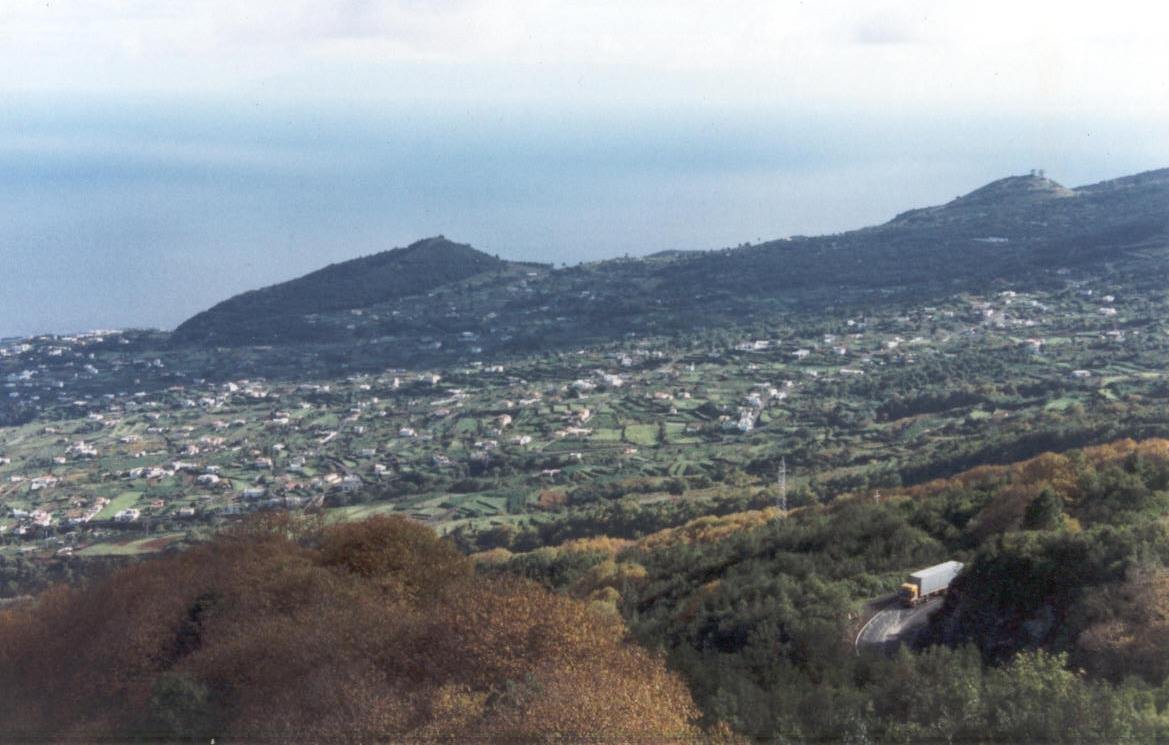
El Paso sits on the LP-3, the road that crosses the island via Cumbre Nueva. From Santa Cruz de La Palma, the journey usually takes around 45 minutes. From Los Llanos, it’s closer to 20 minutes.
The road climbs steadily and often runs into mist. When the weather turns higher up, temperatures can drop more than expected for the Canary Islands. That contrast catches people out, especially those arriving with beach weather in mind.
Parking in the centre is usually straightforward. The bigger issue is not space, but expectations. The centre itself is quite limited: a square, the church of Nuestra Señora del Pino, and not much else. El Paso isn’t really about wandering from street to street. It’s a practical base for heading into the hills.
Into the pines and the Caldera
Just outside the town stands the Pino de la Virgen, one of the larger Canary Island pines on La Palma. It sits beside a small hermitage and is easy to reach, just a couple of minutes from the road. No planning needed here, you stop, take a look, and carry on.
The main draw lies further on, inside the Parque Nacional de la Caldera de Taburiente. One of the most commonly used access points is La Cumbrecita, only a few kilometres from El Paso. Driving up usually requires a permit, as the car park is small and fills quickly.
From La Cumbrecita, several short walking routes lead to viewpoints overlooking the Caldera. These are manageable walks and give a clear sense of the scale of the landscape. For anything more demanding, you need to descend into the interior of the park using other access points and set aside a full day.
Preparation matters here. Bring water and something to eat. There are no services inside the Caldera, and mobile signal is often unreliable. Once you’re in, it’s just terrain and distance.
The scenery defines everything: vast ravines, steep rock faces and Canary Island pine stretching in every direction. It’s not about individual landmarks, but about the overall sense of space and scale.
Food that matches the setting
Food in El Paso reflects the inland character of La Palma. Expect traditional dishes rather than anything experimental. Potajes, which are hearty stews, appear regularly. So does carne de cabra, along with papas arrugadas and queso palmero.
There are plenty of places in the town where you can sit down for a meal. Menus tend to be similar from one spot to another, and prices are in line with the rest of the island. If time is short, a simple bocadillo does the job before heading back out.
This is food that fits the rhythm of a walking day, filling and straightforward, without distractions.
Timing your visit
Spring and autumn are generally the most comfortable times for walking. Conditions tend to be milder, which makes a difference once you’re out on the trails.
Summer brings more heat, especially in lower areas, and the park sees more visitors. In winter, it depends entirely on the day. Skies can be clear, or cloud can roll over the summit and block visibility completely.
September stands out for a different reason. The town celebrates the fiestas of the Virgen del Pino, and it shows. There’s more traffic, more people, and a noticeable change in atmosphere.
A place to pass through, for the right reasons
El Paso, taken on its own, is an ordinary town. It doesn’t have a striking historic centre, and it doesn’t try to compete with coastal destinations.
Its value lies in how it’s used. Many people on La Palma treat it as a stepping stone to the Caldera and the surrounding pine forests. That’s the mindset that makes sense here.
Arrive with walking boots and a plan to explore the landscape, and El Paso fits naturally into your route. Come looking for a beach or a promenade, and you’re on the wrong side of the island.