Full Article
about Ampuero
Patroness of Cantabria and bull runs
Hide article Read full article
A place built on movement
The name Ampuero is often linked to the word Amporium, meaning “place of trade”. The connection is not entirely certain, yet it fits with the role the town once played. For centuries, this was a small river port in the Asón valley, at a time when the river served as a route between inland areas and the Cantabrian coast.
That activity has long disappeared, but the layout of the town still reflects its past as a place people passed through. Streets are relatively open, stone houses line up in an orderly way, and everyday life combines local services with traditional rural homes. It feels practical rather than ornamental, shaped by use rather than display.
A municipality of many small centres
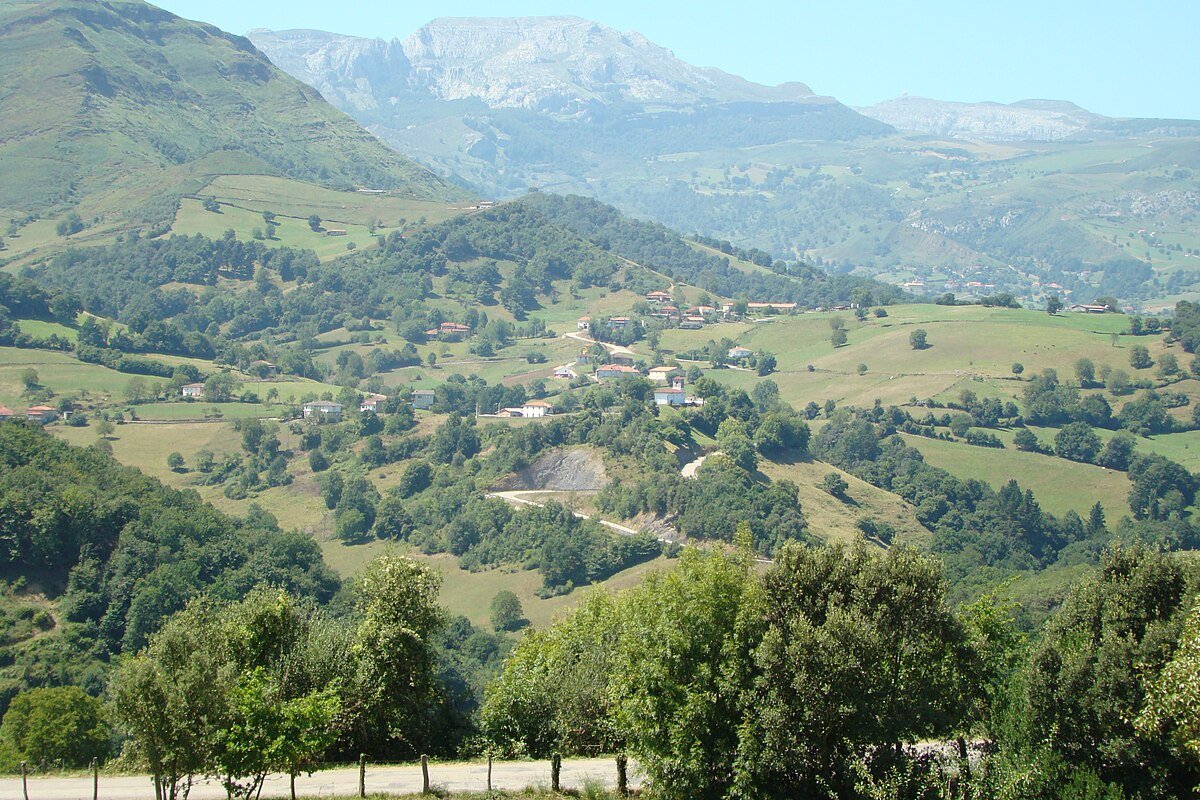
Ampuero is more than its main town. The municipality is divided into 24 separate settlements, some of them very small. From the centre, which sits only slightly above sea level, the land rises quickly towards hills that reach around 700 metres in areas such as Somahoz.
This uneven terrain explains why people settled in a scattered way. Each small valley and hillside gradually formed its own neighbourhood or village. Names such as Marrón, Udalla, Cerbiago, La Bárcena and Las Garmillas appear in medieval documents and old parish records, showing that communities here have deep roots.
The administrative centre brings together the essentials, including the town hall, a health centre, a secondary school and a small industrial area. Beyond that, much of daily life continues in the outlying settlements. Small-scale farming, kitchen gardens and local workshops remain part of the rhythm of the area.
In Las Garmillas, for example, a very local cheese has traditionally been produced. It rarely circulates beyond its immediate surroundings, which says a lot about how production here is still tied to close-knit networks rather than wider markets.
From river port to small administrative town
The earliest written reference to this area mentions Marrón at the end of the 11th century. In the early 13th century, King Alfonso VIII extended the fuero of Laredo to this territory. A fuero was a set of legal privileges, and in this case it linked the area more closely to the economic network of the Cantabrian coast.
That connection to maritime trade helps explain why later records show a high proportion of hidalgos, members of the lower nobility. Ampuero never grew into a large town, but it did take on a modest administrative role within the valley. In the 18th century it was granted the title of a villa with its own jurisdiction.
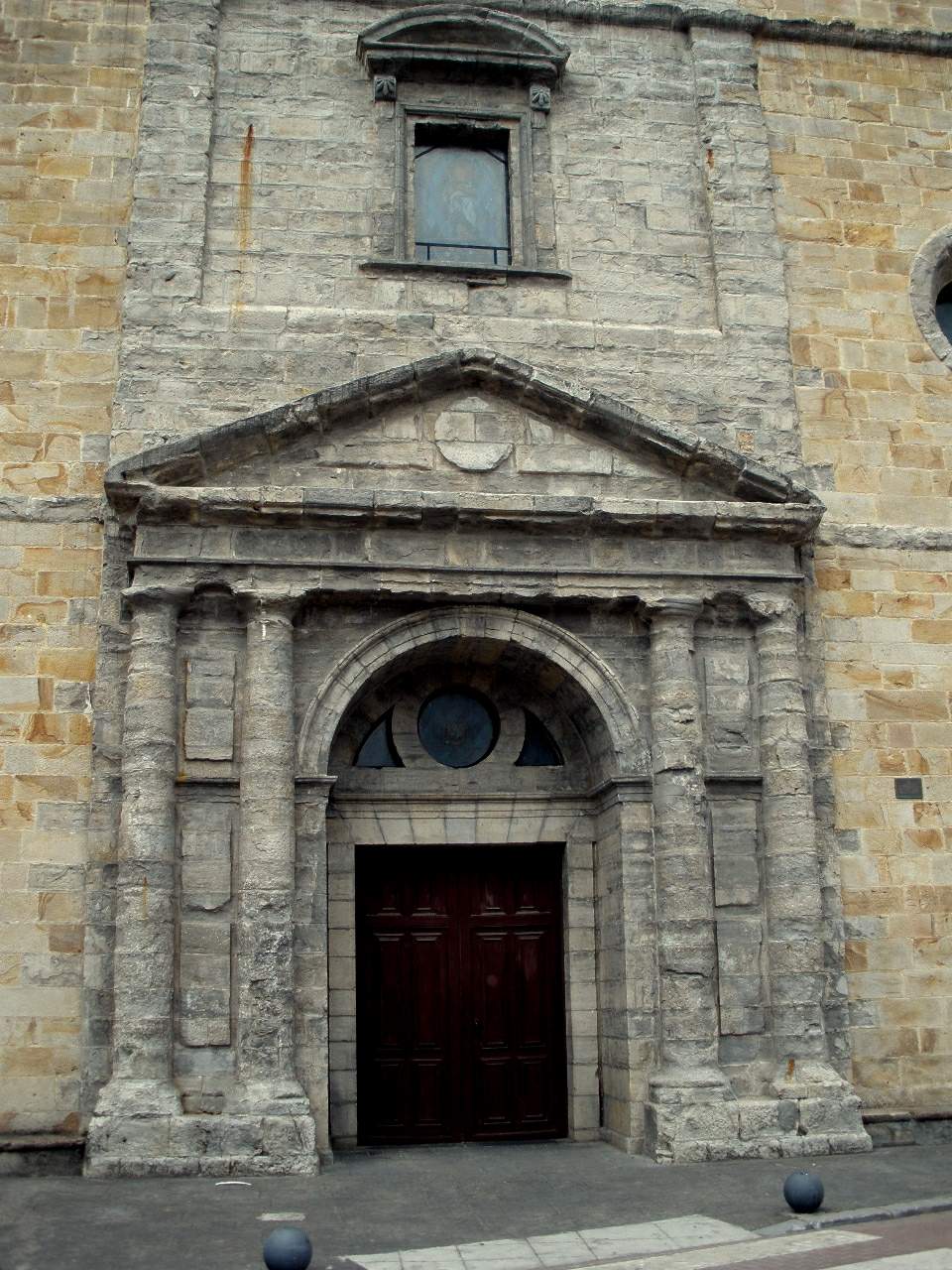
The church of Santa María reflects this gradual development. Built between the 15th and 16th centuries, it combines elements from different periods. The structure still follows late Gothic forms, while the main doorway points towards Renaissance styles. Inside, the main altarpiece belongs to the early Baroque period in Cantabria and is attributed to workshops active in the region at the end of the 17th century. It is not a grand monument, but it shows how even small valley parishes kept pace with artistic trends of their time.
The sanctuary of the Bien Aparecida
A few kilometres from the centre, on the heights of Hoz de Marrón, stands the sanctuary of the Virgen Bien Aparecida. This is one of the most widely venerated figures in Cantabria. According to tradition, the image was discovered in the early 17th century when shepherds found it among the vegetation on the mountainside.
The carving itself is small, only a few centimetres tall. It is now kept in the sanctuary built later on that same site. From this elevated position, there are wide views over the Asón valley and, on clear days, a distant line of the sea.
The sanctuary can be reached on foot from Ampuero along a path that climbs steadily through oak and chestnut trees. This route is known as the Vía Crucis path and usually takes a little over an hour to complete.
During the festival held in September, the area fills with pilgrims. At other times of the year, the atmosphere is much quieter. It is common to see local residents walking up or people from the valley visiting simply for a stroll.
When the town turns outward
September is also when Ampuero’s main festivities take place, centred on the encierros, a tradition involving the running of bulls through the streets. During these days, the pace of the town shifts noticeably. People from across the valley gather, and many families return for the celebrations.
This is not an event designed primarily for visitors. It remains strongly local in character. Children take part in simulated runs in the days leading up to the main events, and evenings usually include popular activities and processions. Most of the activity is concentrated in the town centre.
Arriving during these dates means adapting to a busier, more crowded setting, where the usual routines give way to celebration.
The Asón river and everyday life
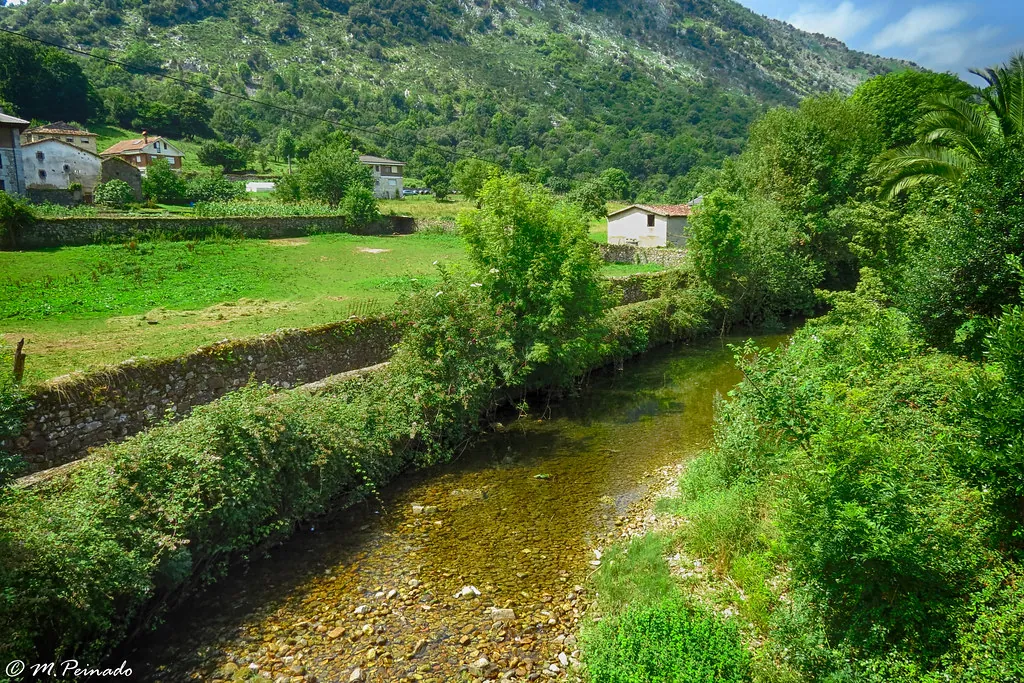
The Asón river runs through Ampuero before widening towards the estuary of Limpias. For centuries, it shaped the local economy. Mills operated along its banks, small vegetable plots spread across the fertile plain, and in winter there was fishing for angulas in authorised stretches downstream.
Today, a riverside path follows part of the bank. It is short and mostly flat, used more by residents than by hikers. With a bit of patience, it is possible to spot herons, kingfishers and sometimes even otters.
In nearby neighbourhoods, certain homemade products are still made in small quantities. These include local liqueurs, quesadas and produce from kitchen gardens. Rather than appearing widely in shops, they tend to circulate through informal local networks, exchanged or shared within the community.
Moving through the valley
Ampuero sits within the Asón valley, shaped by its river and its dispersed settlements. Distances are short, but the terrain is uneven, which has always influenced how people move through the area and how communities developed.
The town itself acts as a practical hub, while much of the character of the municipality lies in its smaller villages and surrounding landscape.