Full Article
about Arredondo
Caving paradise
Hide article Read full article
Morning in a quiet valley
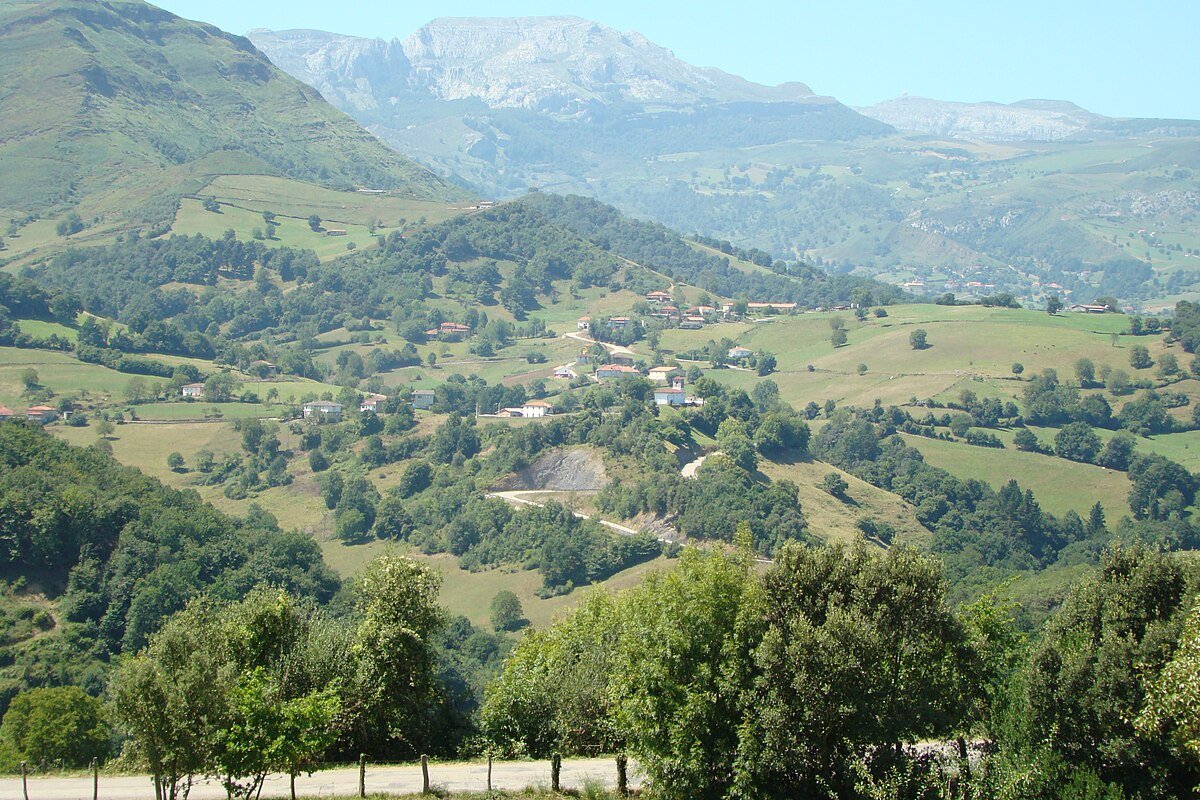
Early in the day, when the grass still holds the night’s damp and shutters remain half closed, tourism in Arredondo begins almost without a sound. Now and then a car moves slowly along the valley road, and the steady presence of the River Asón can be heard slipping between stones. Light takes its time here. It first reaches the higher crags, then slides down across the meadows, and only later touches the scattered stone houses spread across the different neighbourhoods.
Arredondo does not gather around a central square or a compact old quarter. Instead, the municipality is made up of small, separate barrios, each divided by pastureland, winding roads and rural tracks. Between them stand moss-covered stone walls, dark wooden gates and barns attached to homes, clear signs of a way of life closely tied to livestock farming.
Limestone and the shape of the land
The landscape around Arredondo has a certain roughness. Limestone is everywhere: in the rocky ridges that enclose the valley, along the edges of paths and on slopes where the stone breaks through the grass. In the Mortillano area, this character becomes even more pronounced. It is a karst landscape, marked by cracks, sinkholes and underground cavities that are not always visible from the surface.
Even without going far, the signs are easy to notice. Pale rocks scattered across the fields, small openings hidden among shrubs, or hillsides where water disappears beneath the ground. It quickly becomes clear that beneath the surface lies a network of unseen voids and passages.
On overcast days, which are fairly common, the grey of the rock blends into the deep green of the meadows and the nearby woodland of beech and oak. The effect is subdued but distinctive, with colours that feel close to the ground.
Neighbourhoods shaped by land and work
Walking through barrios such as Rucandio or Vallejo means moving between houses separated by enclosed fields. Many of the buildings still have wooden balconies and thick masonry walls. Some appear to lean directly against the slope, making use of the terrain rather than reshaping it.
Stables can still be seen next to homes, along with small sheds used for storing hay. At certain times of day, the air carries the smell of freshly cut grass or damp wood.
This is not a place to rush through. The roads linking the barrios are often narrow and winding, sometimes shared with tractors or livestock. The usual rhythm is slow, with drivers pulling aside to let others pass, often someone who knows the road well and takes it at an unhurried pace.
Short paths through meadow and woodland
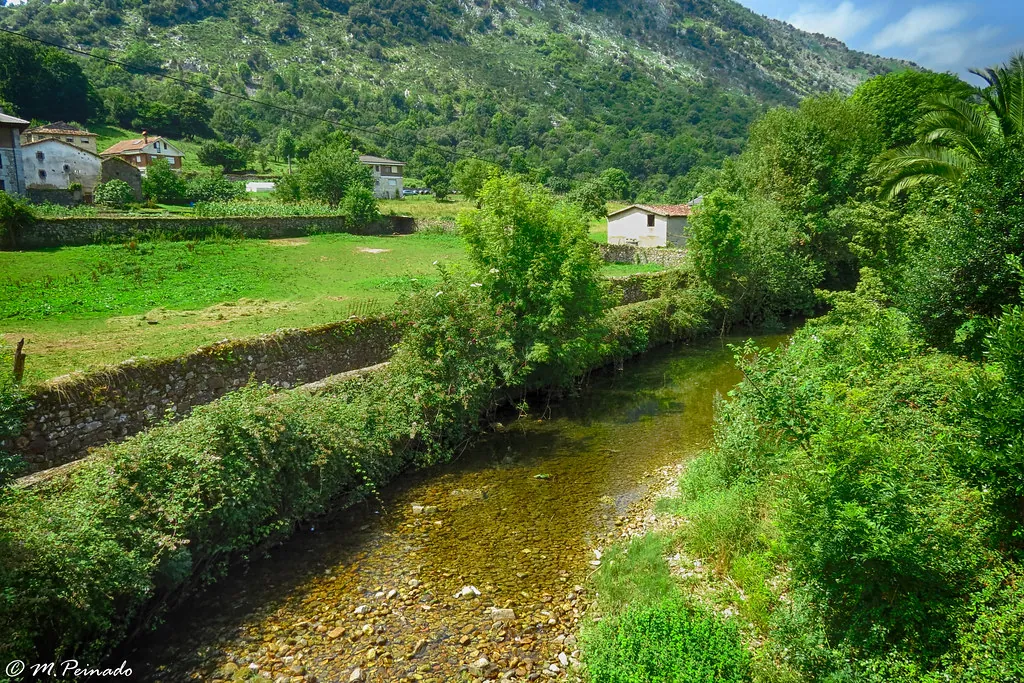
Around the main settlement, a network of paths and tracks crosses meadows and small patches of woodland. These are not especially long routes, but they change constantly. A stretch of earth path might lead to a small bridge over a stream, followed by a short climb between stone walls.
After several days of rain, mud appears quickly, especially in shaded areas. Footwear with a firm sole is useful, even for short walks.
As you move along these paths, water is the dominant sound. Streams are everywhere, some visible, others hidden behind hedgerows. At times, the faint ringing of cowbells drifts across from nearby fields, adding to the sense of a working landscape rather than a staged one.
San Pelayo and the open centre
The church of San Pelayo stands in a more open area where the land briefly levels out. Surrounded by a grassy expanse, it feels less like a focal point of activity and more like a reference within the landscape. The building itself is simple, constructed from grey stone, and does not seek to stand out.
From this spot, the structure of Arredondo becomes easy to read. Houses are scattered rather than grouped, fields stretch almost to the doorsteps, and mountains close in from every side.
On clear days, the afternoon light falls at an angle across the façades, bringing out the uneven texture of the stone and giving the buildings a more defined presence within the valley.
When to come and what to expect
Spring and early autumn are often the most comfortable times for walking in Arredondo. The grass is at its most vivid, and temperatures are mild enough to spend time outdoors without strain.
Winter changes the valley noticeably. Thick fog can settle in, and moisture lingers on paths for days. The atmosphere becomes very still, though moving around requires more care, both on foot and when driving.
In summer, it makes sense to head out early in the morning or later in the afternoon. At midday, the sun can fall strongly on the more open parts of the valley. As soon as a path enters a wooded area, shade returns along with cooler air.
One or two hours is enough to explore one of the nearby barrios and begin to understand how this valley is organised. With more time, it works well to link together rural paths without following a rigid plan. In Arredondo, much of what stands out lies in small details: a stream passing under a path, a stone wall covered in lichen, or mist lifting slowly between the crags.